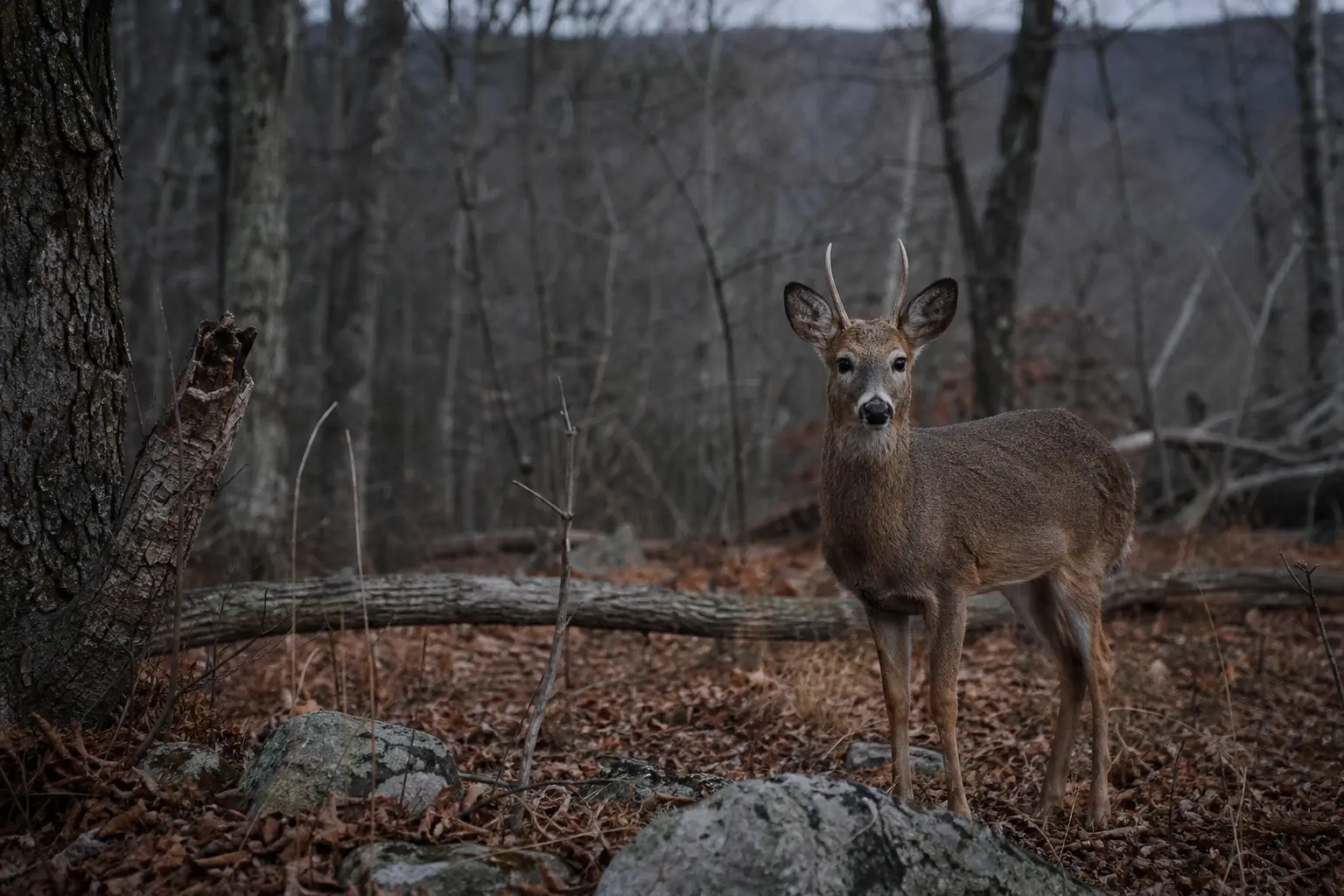
My first season with a deer tag, I shot the first buck I saw. Button buck. I didn’t know the difference. He was brown, he had tiny nubs, and my brain screamed “antlers.” I pulled the trigger at forty yards and felt like Daniel Boone. Then I walked up to him and realized he was maybe seventy pounds soaking wet. The guy at the check station looked at me like I’d kicked his dog.
I didn’t get it. I killed a deer. Isn’t that the point?
That was over a decade ago, and I can tell you now: no, that is absolutely not the point. I just didn’t know any better. Nobody taught me. My dad wasn’t a hunter. I learned everything from YouTube, hunting forums, and trial-and-error on public land. The problem with learning that way is that YouTube doesn’t teach you herd dynamics. It teaches you how to rattle and grunt and which broadhead flies straightest. Nobody makes a clickbait video about shooting does.
The Buck-Only Brain Rot
For five seasons, I was strictly a buck hunter. Does were boring. Does didn’t have antlers for the wall. Does were what you shot on the last day when you were desperate and your freezer was empty. Every conversation at camp was about the big eight-pointer someone glassed, the monster that crossed the road at dusk, the trail camera photo that made everyone lean in and go quiet. Nobody talked about does. Nobody talked about herd health. We talked about antlers like they were lottery tickets.
I was in my fourth season when I noticed it. The public land I’d been hunting since day one was getting worse. Fewer rubs. Fewer scrapes. Trail camera went from thirty pictures a week to maybe four. By season four I was lucky to see two deer a sit. I blamed the other hunters. Too much pressure. I blamed the logging operation two years back. I blamed the DNR for issuing too many tags. I blamed everything except the obvious thing: the way I was hunting, and the way every other guy in those woods was hunting too.
The Guy at the Gas Station Who Called Me Out
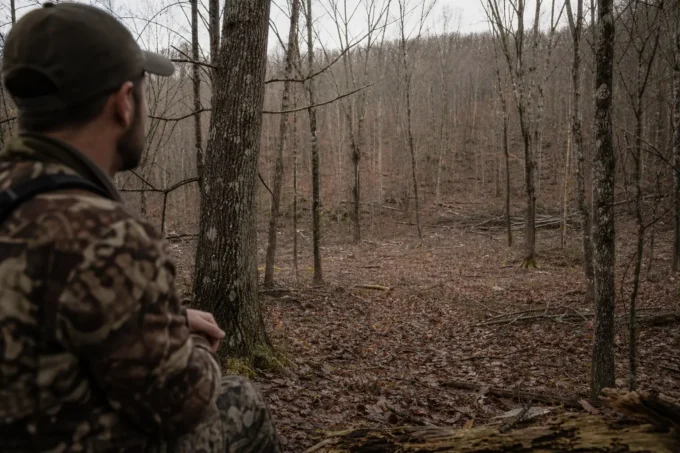
Opening weekend, season five. I stopped at a gas station two towns over from my spot. An old guy in a faded Mossy Oak jacket was pumping gas next to me. He saw my bow case in the back seat and nodded.
“You hunt that WMA down the road?”
I said yeah, been hunting it for years.
He kind of snorted. “Used to be good down there. Lot of guys took too many bucks out of it. Now the ratio’s all screwed up. Buck to doe ratio’s probably one to seven, eight by now. Nobody shoots does anymore. Everyone’s waiting on a wall hanger that’s never gonna show up because there’s no bucks left to breed.”
I had no idea what buck-to-doe ratio even meant. I nodded like I did. Then I went home and looked it up, and what I found made me feel stupid in a way that actually mattered.
What I Learned (Way Too Late)
Here’s the thing nobody explained to me: if you only shoot bucks, you eventually run out of bucks. That sounds obvious when you type it out. But when you’re twenty feet up a tree and a spike walks by, nobody’s whispering “herd management” in your ear. You’re thinking about backstrap and the story you get to tell at work on Monday.
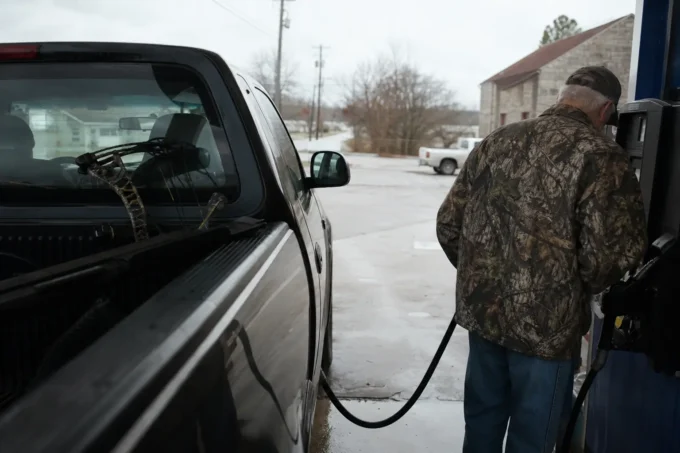
Does are the factory. They make the deer. If you have too many does and not enough bucks, the rut drags out across two months. Fawns drop late. Late fawns go into winter small and underweight. Coyotes hammer them. Survival rates tank. Meanwhile the doe population keeps growing because nobody’s shooting them, and the habitat can only support so many deer before they eat everything down to dirt. Then you get disease, starvation, and more deer through windshields than through the woods.
A healthy herd needs roughly one buck for every two or three does. Most public land east of the Mississippi is running one to five, one to six, sometimes worse. And the reason is guys like me – guys who shot every spike and forkhorn they saw legally and never pulled the trigger on a doe because does weren’t fun to brag about.
The First Doe I Wanted to Shoot
Year six, I decided to do something different. Not because I suddenly became a wildlife biologist, but because I was tired of eating tag soup every December. I wanted meat more than I wanted antlers.
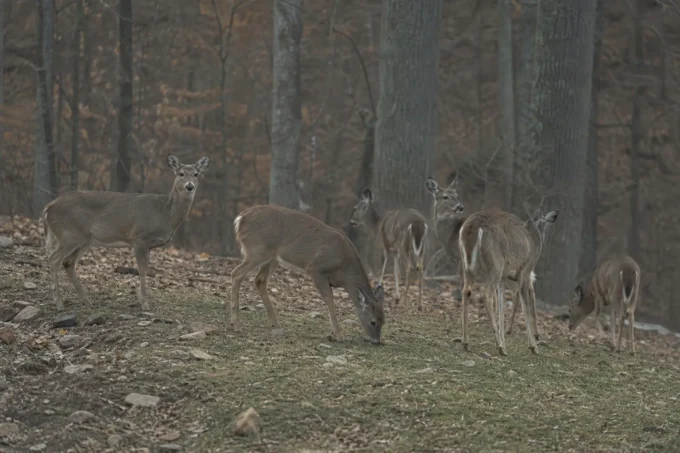
Early October, first cold front. I was in my climber on a ridge between a bedding area and a cut corn field. About an hour before sunset, four does came in from my left. Big mature does, the kind that have been running the woods for years. They moved like they owned the place. In the past I would’ve let them walk and waited for horns. This time I picked the biggest one, settled the pin behind her shoulder, and let it go.
She ran sixty yards and piled up. Double lung. Better shot than half the bucks I’d taken over the years.
She filled my freezer better than that button buck ever did. The meat was different too – less rutty, less gamey. My girlfriend, who had politely suffered through four years of tough buck steaks with the texture of a boot sole, actually asked for seconds on the backstrap. That had never happened before. I didn’t know deer could taste that good.
The Numbers Don’t Lie
I started paying attention to the harvest data my state publishes. Most states have it publicly available – spreadsheets of how many deer were taken, what sex, what age class, county by county, going back decades. It’s a PDF you can download in thirty seconds. It took me five years to bother.
What I found: the WMA I hunted had an antlered harvest rate three times higher than the doe harvest, every single year, for ten years. Ten years of guys like me. No wonder the hunting got worse.
State biologists don’t set antlerless tag quotas for fun. They set them because the math says the herd needs a certain number of does removed to stay balanced with the habitat. When hunters ignore those tags because they’re waiting for horns, the models break. The herd gets lopsided. Eventually the carrying capacity maxes out and you get disease, starvation, and more car accidents. None of that is activist rhetoric. It’s arithmetic.
What Changed
I still get excited about bucks. A big eight-pointer at twenty yards will always make my heart slam against my ribs. I don’t want that feeling to go away. But now my season looks different. I fill my antlerless tag first, every year, as early as I can. That meat is the base of my freezer. Then I hunt bucks with the pressure off. If I get one, great. If I don’t, I still ate well all winter.
I also stopped being quiet about it. When a newer hunter at camp talks about passing does because they’re waiting for a buck, I tell them about the WMA I watched decline. I tell them about the button buck and the old guy at the gas station who knew more about that piece of ground than I’d learned in five years of hunting it. I tell them that shooting does isn’t an admission that you couldn’t find a buck – it’s the reason there will be bucks to find next year.
Conservation isn’t something that happens at a desk in a state office. It happens when you make a decision in the woods. Every single time. You’re either helping the herd or hurting it. There’s no neutral position. There’s no “I’m just one hunter, it doesn’t matter.” Multiply “one hunter” by a hundred thousand and you get the harvest report I stared at with my stomach turning.
I wasted five seasons being part of the problem because nobody told me different. Now you know. Do what you want with it – but if you’ve never shot a doe because you thought they weren’t worth your time, maybe give it a try. Your freezer will thank you, and so will the woods twenty years from now.