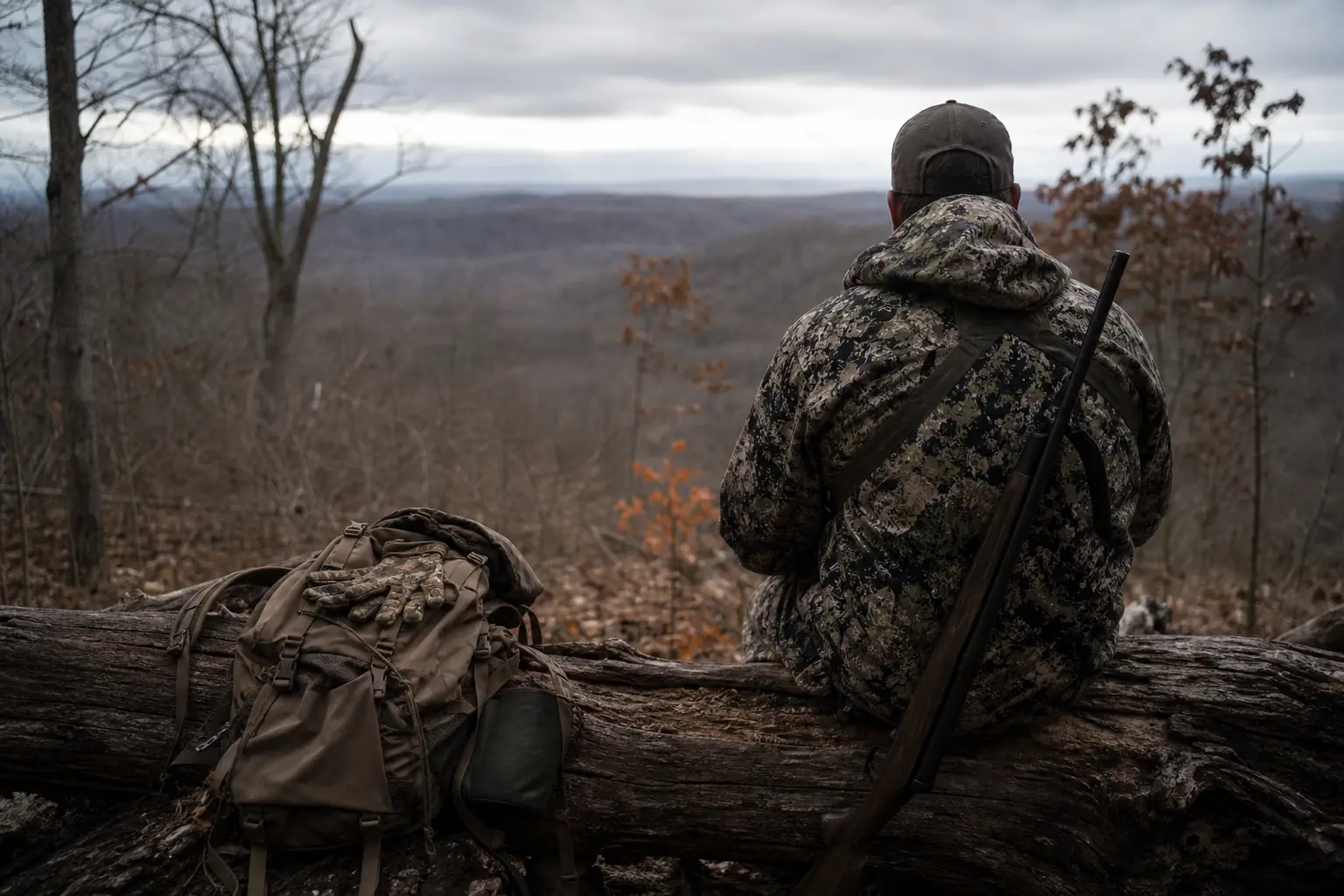
I don’t know why I thought it would be different this time. I’d hunted the same public land spot for three seasons — a patch of oak flat I could navigate blindfolded. Park at the pull-off by the old cattle gate, walk east twenty minutes, climb the ridge, sit. It was boring. But boring works. Boring fills freezers.
Last November I convinced myself I needed to get adventurous. I’d been reading forum threads about spot-and-stalk mule deer out west, watching YouTube guys glass ridges and make heroic two-mile stalks. I live in Missouri. We don’t have ridges like that. But I found a new chunk of public ground on OnX — 1,400 acres of hardwood ridges and creek bottoms about an hour from my usual spot — and decided that was going to be my western hunt on a Missouri budget.
I was not ready. In any way that matters, I was not ready.
The Plan That Wasn’t
I scouted the spot exactly once, three weeks before season. I drove out there on a Sunday, walked maybe half a mile from the parking area, looked at the topo on my phone, and thought: yeah, this’ll work. I saw deer sign. I saw a rub line. I dropped a pin on the map and called it scouted.
That was my first mistake, and it should have been obvious. But when you’re sitting at home looking at satellite imagery with contour lines overlaid, everything looks manageable. Two miles on a screen is not two miles in the Ozarks. A saddle between two ridges that looks like an easy crossing on a topo map becomes a nightmare of blowdowns, briars, and loose rock when you’re actually standing in it.
I didn’t know that yet. I was still in the planning phase, which is the phase where you feel like a genius because nothing has gone wrong.
Opening Morning
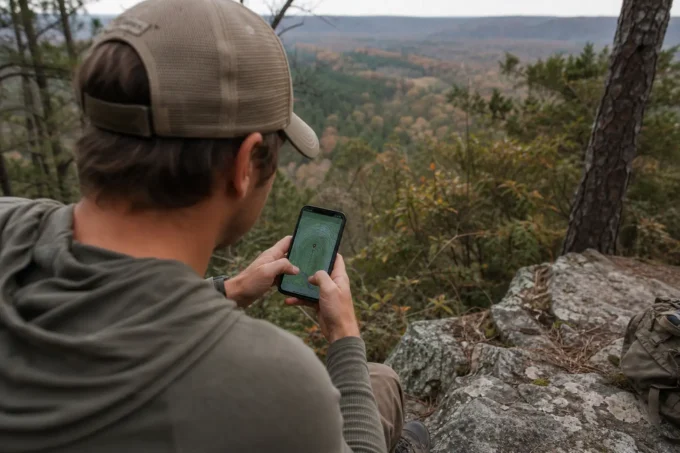
Opening day, 4:30 AM. I packed light. Too light, it turns out, but I’ll get to that. Rifle, six rounds, a granola bar, a bottle of water, my rangefinder, and my phone with the OnX app loaded up with my pinned waypoints. I didn’t bring a compass. I didn’t bring a paper map. I didn’t bring an extra battery pack. I glanced at the phone — 87% — and thought, plenty.
Plenty. Jesus Christ.
The plan was to hike about a mile and a half to a ridge I’d marked, sit there until mid-morning, then slowly work my way along the ridge system and loop back to the truck. Four, maybe five miles total. The kind of plan that sounds reasonable when you say it out loud to yourself in a warm kitchen with coffee in your hand.
I got to the parking area at 5:15. Nobody else there. Perfect. I pulled on my boots, grabbed my rifle, and started walking in the dark with a headlamp. The trail — and I use that word generously — was more of a suggestion through the timber. But the GPS dot on my phone said I was heading the right direction, so I kept going.
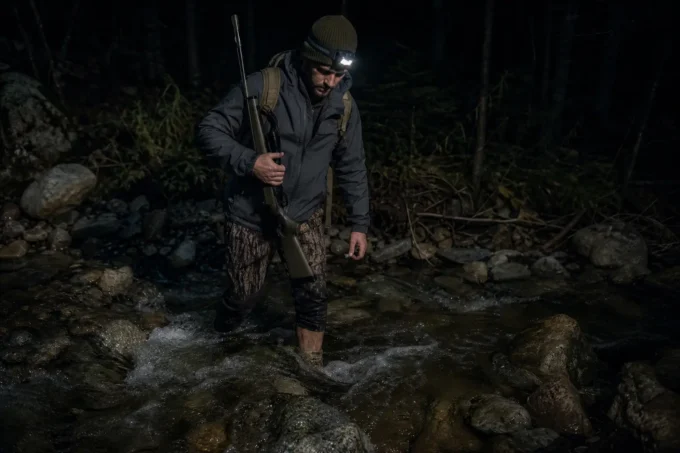
An hour in, I realized I’d climbed a lot more elevation than I’d planned. The ridge I was aiming for was still ahead, but the terrain between us was a steep creek drainage I hadn’t noticed on the map. I had to drop 200 feet into a dark hollow, cross a creek, and climb back up the other side. In the dark. Carrying a rifle.
I slipped crossing the creek. Not a dramatic fall — just one foot into knee-deep water. The kind of slip that fills your left boot completely and makes a sound you can feel in your soul. I stood there in the dark, one dry foot and one wet foot, and seriously considered going back to the truck.
But I was already an hour in. Sunk cost. The dumbest reason to keep going, and the one I use most often.
The Phone Dies
I made it to the ridge by about 7:15, wet boot and all. The sun was coming up. I found a decent spot overlooking a bench with a well-used game trail cutting across it. I sat down, ate my granola bar, and settled in.
Nothing moved for two hours. That’s not unusual. But around 9:30 I decided to relocate — my spot was fine, but I could see a better vantage point about half a mile further along the ridge. I pulled out my phone to check the map.
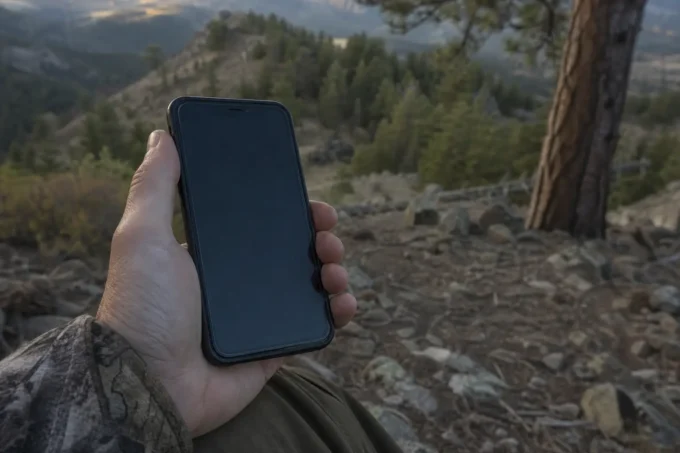
Four percent battery.
I stared at that number like it was personally insulting me. I had been using the GPS tracking feature, which I’d forgotten drains battery like crazy. No problem, I thought. I know where I am. I’ll just navigate by landmarks. I’d looked at the map enough times. I had a mental picture of the terrain.
Reader, I did not have a mental picture of the terrain. I had an overconfident blur of green and brown lines that dissolved the moment my phone screen went black.
Lost
I decided to head back to the truck. Simple enough — the parking area was roughly southwest of where I was. I’d keep the morning sun on my left and walk downhill. How hard could it be?
I walked for forty minutes. The terrain looked nothing like what I remembered from the hike in. Everything in the Ozarks looks the same after a while — oak trees, rocks, another ridge, another creek bottom. I hit a drainage I didn’t recognize and followed it downhill, figuring it would eventually lead me to a road or at least a recognizable landmark.
It led me to a beaver pond. A very active beaver pond, with fresh cuttings and standing water and loud, angry tail slaps every time I got close to the edge. I was not on my map. I was not anywhere near where I was supposed to be. I was standing in knee-deep mud next to a beaver dam with a soggy left boot, a dead phone, and a rifle that was starting to feel very heavy.
Around noon I finally found a gravel road. Not the one I’d parked on — a different one, about three miles from where the truck was, as I’d later learn. A guy in a beat-up Ford saw me walking the shoulder with my rifle slung and stopped. Old man, probably seventy, with a dog in the passenger seat and a look on his face that said he’d seen this exact situation before.
“You lost?”
“No, I’m — ” I started, and then stopped. Because yes. I was very lost. And there was no point pretending otherwise to a man who had clearly already diagnosed the situation.
He gave me a ride back to the parking area. Didn’t say much. Just kind of nodded when I got out. That nod contained more judgment than any words could have.
What I Actually Learned
I didn’t see a deer that day. Didn’t hear one. Didn’t find a single fresh track past 7 AM. I spent five hours in the woods and the most productive thing I did was get my boot wet.
But the deer weren’t the problem. The problem was that I’d done everything wrong before I even left the house. I scouted once and called it good. I relied on technology I didn’t back up. I made a plan that assumed everything would go smoothly, and when it didn’t, I had no fallback.
I went back to that spot two weeks later. Properly this time. Paper map and compass in my pack. Backup battery. Extra socks — because apparently I can learn from a wet foot. I spent the whole day just walking the property, learning the drainages, finding the landmarks that actually matter when you’re on the ground instead of looking at a satellite image. I didn’t even bring my rifle. It was just a scouting day, the kind I should have done three weeks before opening morning.
I killed a doe there on the last day of the season. Nothing special — eighty yards, quartering away, dropped where she stood. But getting to that shot required knowing the ground well enough to predict where deer would move when the wind was out of the northwest. You can’t get that from an app. You get it from being there, being wrong a few times, and paying attention.
I still use OnX. It’s a good tool. But it’s not a replacement for knowing the ground with your feet. And I don’t walk into new public land anymore without paper and a compass. Not because I’m some kind of purist, but because I don’t want to be the guy standing on a gravel road at noon waiting for a stranger in a Ford to rescue me from my own arrogance.
That old man probably tells his friends about the idiot he found wandering the shoulder with a rifle. I’d tell it too if I were him.