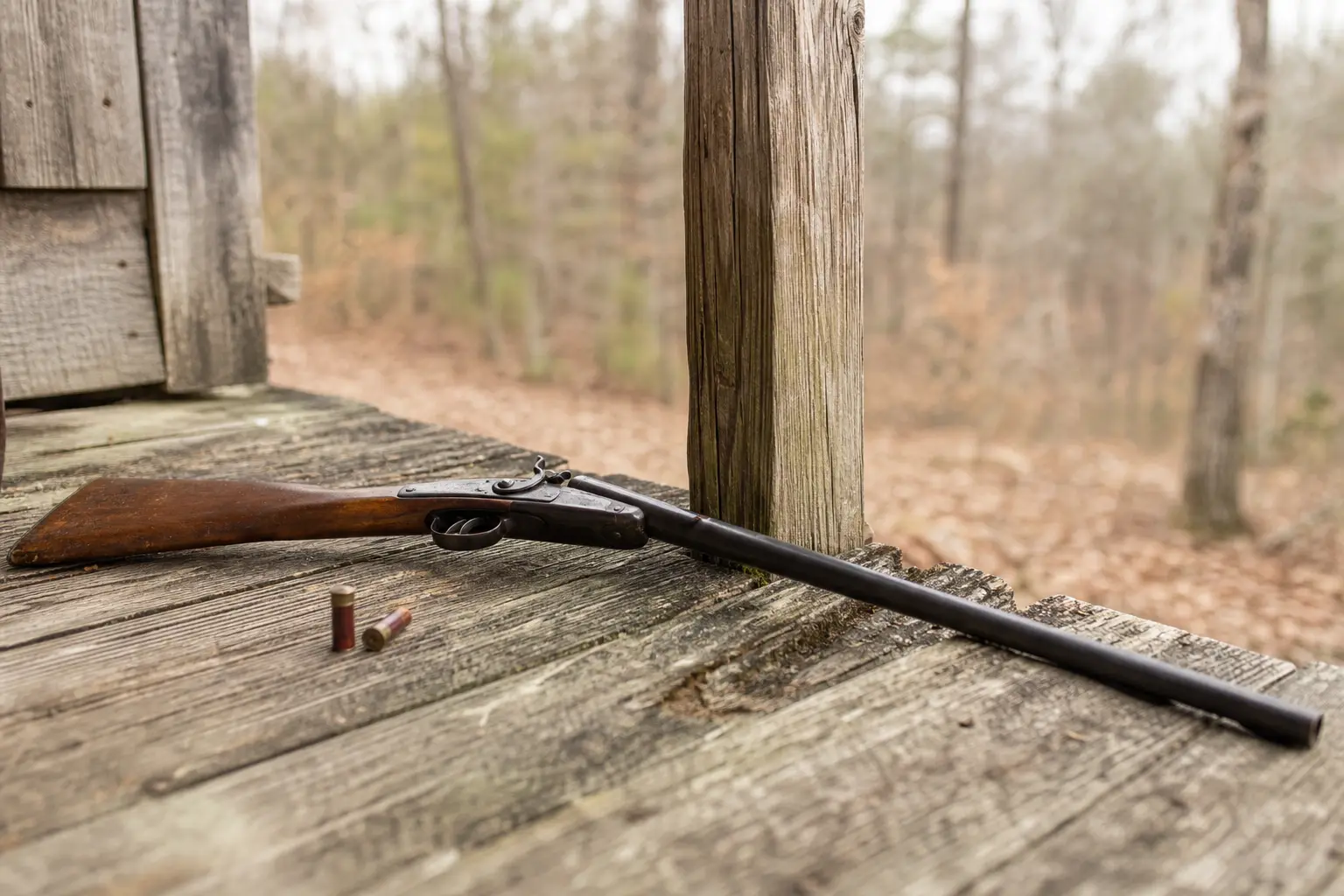
My first gun was a single-shot .410 with a barrel so worn you could watch a squirrel grin through the gap while you tried to remember which direction the sight wanted you to point. My old man bought it at a yard sale for forty dollars and handed it to me like he was passing on a family heirloom, when really he was passing on a forty-dollar mistake he didn’t want to admit to.
“Squirrels and rabbits,” he said. “That’s all you need. Start there and you’ll know how to shoot before you ever point a rifle at a deer.”
What he should have said was: “Here’s a gun that kicks like a mule with a grudge, throws a pattern the size of a dinner plate at thirty yards, and will teach you more about missing than any man ever learned by hitting.” But old men don’t say that. They just grin and watch you figure it out.
The First Twenty Shots Are Just Noise
I was twelve. I’d been running the same strip of creek timber behind the house for two years with a BB gun, and I thought that made me a hunter. It didn’t. A BB gun teaches you to hold still. A shotgun teaches you that holding still is only the first lie you tell yourself.
The first squirrel I shot at was thirty yards up an oak, flat out on a limb like he owned the place. I pulled the trigger and the .410 barked, and the squirrel didn’t even flinch. He just turned his head and looked at me like I’d farted at a funeral. The pattern had gone somewhere behind him, over his back, into the tree, probably halfway to the next county. I’d closed both eyes the second the trigger broke, which is a thing you do exactly once and then spend the rest of your life trying to unlearn.
My old man, sitting on the porch with a coffee, didn’t look up from his mug. “Did you hit him?”
“No.”
“Good. Now you know what missing feels like. Shoot again and you’ll know what wasting shells feels like. Both are worth more than hitting, early on.”
I hated him for that. He was right, and I hated him for being right, which is the whole history of being twelve years old in one sentence.
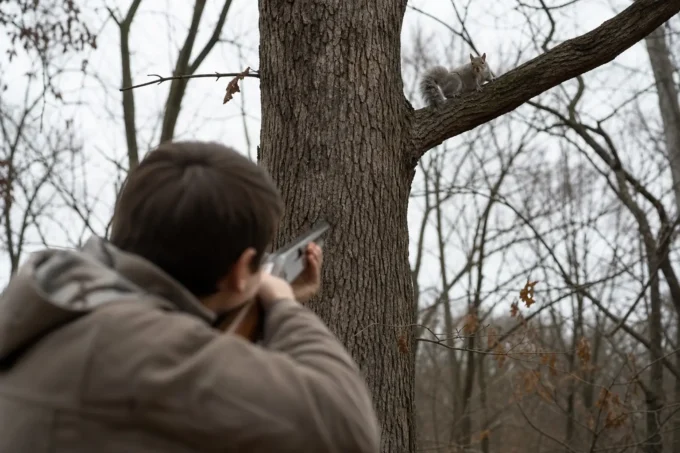
The .410 Is a Liar, and So Is a Kid With a New Gun
Here’s the thing nobody tells you about a .410 when you’re twelve and full of ambition. The gun is small, so you think the job is small. It’s not. The .410 throws about half an ounce of shot, and half an ounce of number six out of a cylinder bore turns to dust past about twenty-five yards. That thing sits somewhere between a BB gun and a real shotgun, a clay-pigeon toy wearing grown-up clothes, and it’ll kill a rabbit fine if you stand close enough to smell it.
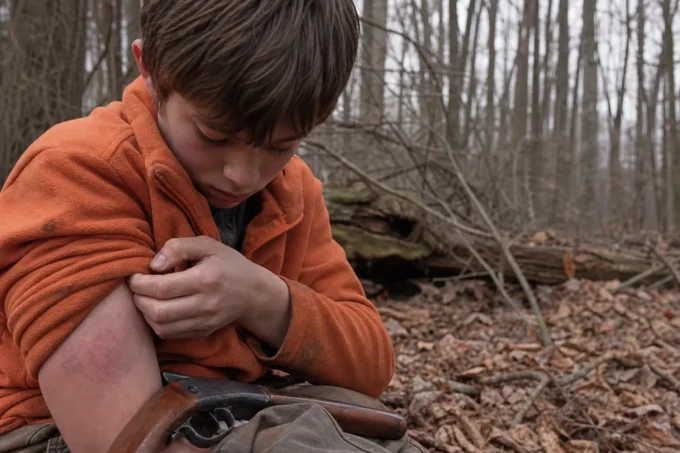
I learned this the expensive way, which is the only way I’ve ever learned anything. I burned through an entire box of shells one fall afternoon and hit exactly one squirrel, and I’m not fully convinced the squirrel didn’t just have a heart attack from the noise. I walked five miles that day. My shoulder was black and blue from the little plastic buttplate, because a .410 with a hard stock will still whack a twelve-year-old hard enough to make him flinch before the shot, and flinch before the shot is how you miss a rabbit that’s sitting in the open at fifteen steps begging you to take him.
I flinched. I got mad. I flinched again. That’s the loop. That’s the whole sport, until you break out of it.
My Cousin and His .22
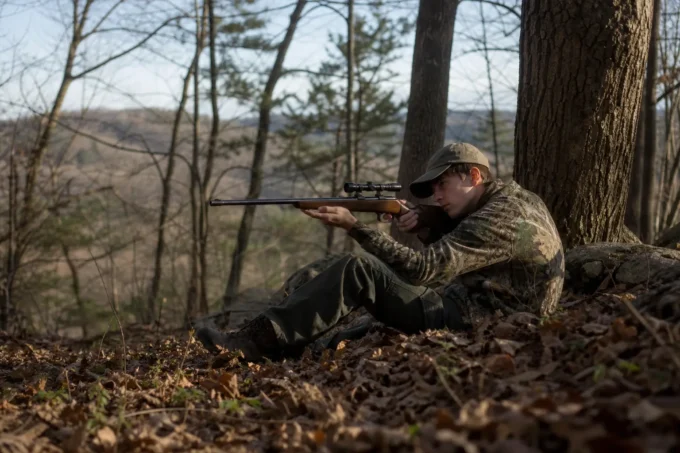
The summer I turned thirteen, my cousin Danny showed up with a bolt-action .22 and cleaned my clock every single trip. He’d take a squirrel at forty, fifty yards, head shots, the kind of shots I couldn’t dream of with a .410. I’d sit there next to him burning shells and cussing while he dropped them one clean shot after another, and I started to think the problem was the gun.
It wasn’t. The problem was me, and I knew it, and I didn’t want to know it, so I blamed the gun like every kid blames the gun before he grows up enough to blame himself.
But here’s what Danny’s .22 actually taught me, and it’s the reason I’m glad I started with the .410 instead. A .22 makes a kid careless, because the shot is easy and the ammo’s cheap and you don’t feel a thing. You poke and poke until you wing something and have to chase it down a fence line with your heart in your throat. A .410 makes you earn it. You have to get close. You have to be still. You have to wait until the shot is a sure thing, because you’ve only got one shell in the pipe and if you miss, that squirrel’s going to the next county at the speed of a rumor.
The .410 taught me patience. Danny’s .22 taught him that he could shoot first and think later. Ten years later he’s a fine rifleman who had to unlearn the careless part, and I’m a slow hunter who got the careful part carved into him with a forty-dollar shotgun and a black-and-blue shoulder. I don’t know which of us came out ahead. I know which of us learned the harder lesson cheaper.
The Rabbit That Made Me Sit Down
There was one January morning I remember better than any deer I’ve ever killed. Frost on the briars so thick it looked like the whole field had been dusted with glass. I’d been out since dark-thirty, freezing, and I’d missed twice, and I was about to walk home and call the whole sport a waste of a Saturday.
And then a rabbit jumped up not twenty feet in front of me and sat there, ears back, and looked at me. Twenty feet. Close enough to smell the woodsmoke from my own coat. I had one shell in the gun and a squirrel-size charge of sixes and a prayer.
I made myself breathe. I made myself not close my eyes. I made myself squeeze instead of yank. The gun went off and the rabbit dropped stone dead before I even finished the thought, and I stood there in the frosted grass with my ears ringing and my knees shaking like I’d just shot a world-record buck.
My old man came out on the porch when he heard the shot and watched me walk up the yard holding that rabbit by the hind legs. First one I ever killed clean.
“Now you understand,” he said, and went back inside for more coffee.
He never did explain what I was supposed to understand. He didn’t have to. I’d figured it out standing in that frost: the gun was never the point. The waiting was.
What I’d Tell a Kid Starting Out
If I could hand one thing back to the twelve-year-old version of myself, it wouldn’t be a better gun. It’d be this:
- A .410 will teach you to get close, stay still, and make the first shot count, because there isn’t a fast second shot. That’s not a handicap. That’s a coach.
- Close your eyes on the trigger and you’re shooting at ghosts. Keep both eyes open and watch what the muzzle does.
- Learn to squeeze, not yank. A flinch is just your brain betting against the kick, and you can train it out with a couple empty shells and a dry fire.
- Don’t blame the gun until you’ve missed with it enough to know the difference. Usually you’re the one that’s worn out, not the barrel.
- Start on rabbits and squirrels, and when you finally point a rifle at a deer, that forty-dollar single-shot will already have taught you the only two things that matter: patience, and the fact that one clean shot beats ten loud ones.
I still have that old .410. It’s hanging over the workbench in the shop, barrel loose, stock cracked, not worth cleaning. Every few months I take it down and work the action once, and it still makes that same little click that scared the hell out of a million squirrels and exactly one twelve-year-old boy who thought he was already a hunter.
He wasn’t. But he was getting close, one missed shot at a time.