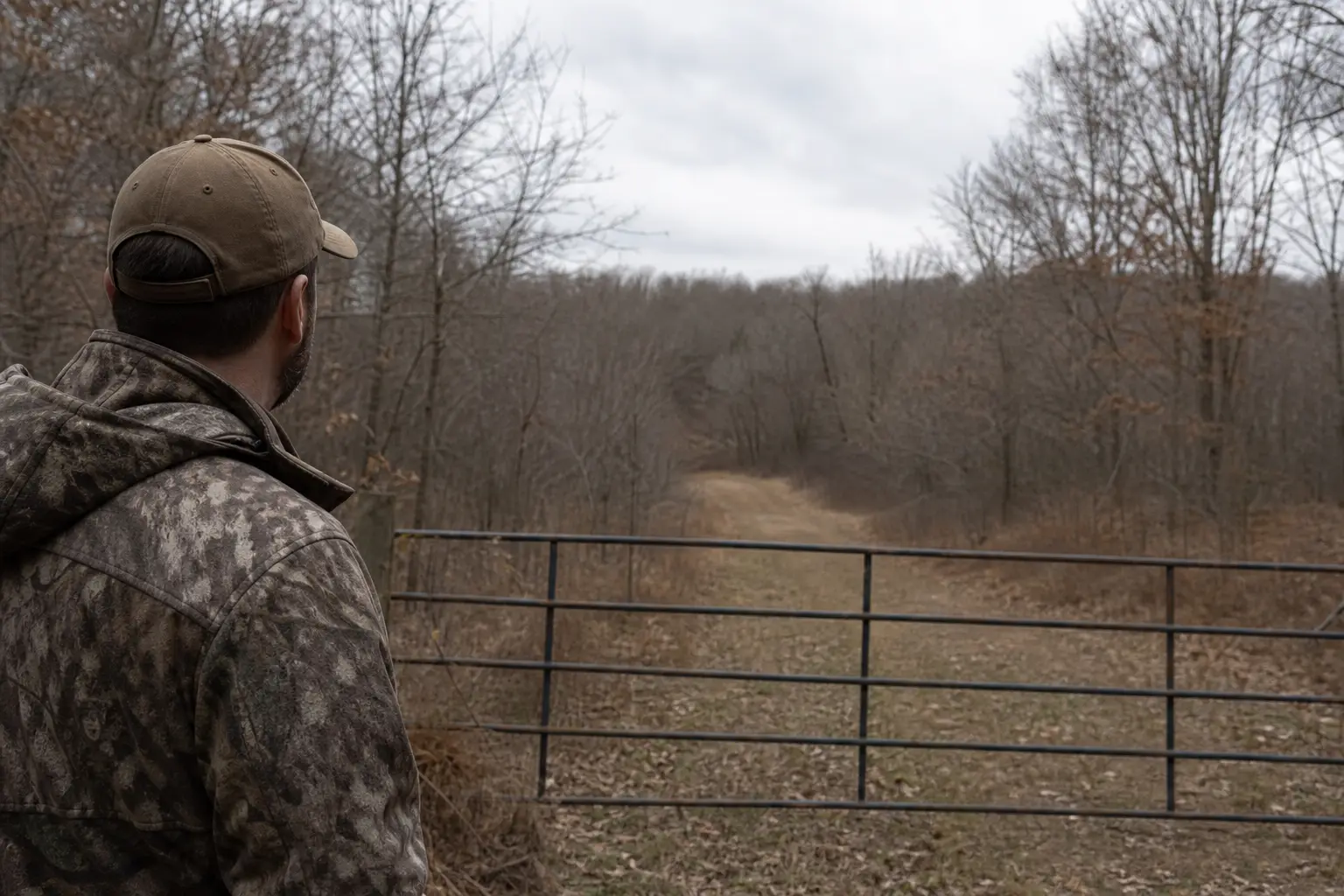
I did not grow up hunting. That is the first honest thing I ever said about the subject, and it took me until I was thirty-one to admit it out loud. Nobody in my family owned a deer stand. My grandpa drove a forklift and watched baseball. My dad fished twice a summer from a dock with a bobber and considered that the whole of his outdoors. So when I decided, at thirty-one, with a brand new job and a house in the suburbs and a growing feeling that I had spent my entire adult life inside a building, that I was going to kill a deer, I had to learn the whole thing from a phone screen and a borrowed rifle and a man named Curt who barely had the patience for either.
Curt was my neighbor, two houses down, the kind of guy whose garage permanently smelled like gun oil and whose freezer was a bottomless source of summer sausage. He hunted the way other men mow their lawn, easy and unbothered. When I told him I wanted to learn, he looked at me the way you look at a dog that has just dragged in a dead thing, half proud and half sorry for it, and said, “Alright. But you’re gonna be the worst hunter in those woods for a while, and that’s fine.” He did not say it like an insult. He said it like a weather forecast.
The Season I Spent Chasing a Wall
Here is the thing nobody warns you about when you start late and learn from videos. I had never killed anything in my life, and I was already a trophy hunter before my boots ever touched a leaf. Every video I watched was ten minutes of a giant buck stepping out of the fog followed by a man whispering about B-C score and age class. So I showed up to my first season with a head full of antlers and a heart full of nothing. I passed a six-point in the first week because he was not “the one.” I passed two does a week later because I had convinced myself a real hunter does not burn a season on a doe. I sat through eight weekends of gray pre-dawn light and came home every single time with an empty cooler and a full ration of excuses, which is a different kind of meat, and worse for you.
Curt would ask how it went and I would launch into whatever thin reason I had spared another deer that morning, and he would nod and say nothing and go back to whatever he was loading into his truck. Looking back, I know exactly what he was doing. He was watching a grown man starve himself in front of a full plate because the plate did not have a trophy on it, and he was polite enough to let me be the one to learn it.
The First One, Small and Enough
The second season changed, because Curt changed it. He drove us to his lease, a flat timber bottom he had hunted for twenty years, and before we unloaded he said the only thing I needed to hear all year. “You don’t have a freezer full of antlers yet, so quit shoppin’ like you do. Shoot a deer. Any legal deer. Eat it. Then we can talk about being picky.” He was not being mean. He was being the kindest man in the county and I was too proud to read it that way.
That is how, on the third Saturday morning, with frost on the oak leaves and my fingers too cold to feel the trigger shoe, I shot my first deer. A small six-point, nothing for the wall to brag about, stepped out at forty yards and stood broadside and gave me all the time in the world. I made the shot the way I had practiced a thousand times, and he ran maybe sixty yards and went down, and then it got very quiet. The woods go quiet after the first one. You do not expect that. You have watched the videos a hundred times and none of them prepare you for the quiet.
I walked up on him faster than Curt tells anyone to, and I stood over him with my own breath loud in my ears, and the feeling that came up through my chest was not what the videos promised. It was not a fist pump. It was a kind of ache, heavy and warm, right beside the pride. There was blood, more than you picture, and a stillness that I had just put there. I stood in it and I did not know what to do with my hands, and I will tell this part straight because somebody else who started late might be out there right now thinking the same thing hit them means they are broken. It does not. That ache is the respect finally showing up. It was supposed to be there all along.
What Curt Taught Me With His Hands
Curt came up quiet, because of course he did, and he never said a word about the rack being small. He knelt down and put a hand on the deer’s neck and said, “Good animal,” like he was thanking the thing, and then he walked me through the whole job, slow, with his hands doing half of it so I could learn the other half. Field dress, gut, drag. We hung him and quartered him, and Curt ground most of it, and that winter I ate backstrap I had watched run and venison chili I had watched breathe, and something in my head finally got quiet enough to admit the truth.
The truth was this. I had spent a full season and two hundred dollars on tags and gas chasing a wall I had not earned, and the whole time the point had been hanging in coolers in garages all down my street. The point was meat. The point was sitting down to a meal and knowing exactly where every ounce of it came from and what it cost. The antlers were never going to feed anybody. I had just needed a season of being an idiot, and a small buck, and a man patient enough not to say I told you so, to get my head on straight.
What I Tell the Guy Who Is Starting Late Now
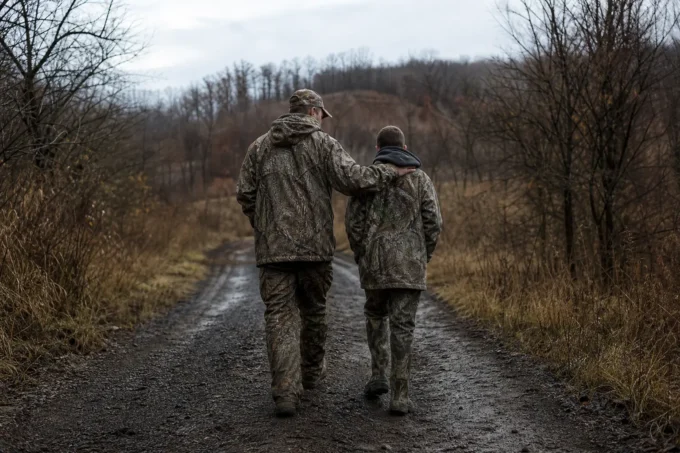
I am not the worst hunter in those woods anymore, but I am still closer to that end than the other, and I am fine with it. Somebody asks me now how to start, and I tell them the same four things Curt never said in a neat list but taught me with his hands over one cold morning.
Shoot a legal deer and eat it before you worry about what it scores. You cannot develop a taste for antlers. The first one teaches you that killing something is heavy, and that weight is not a defect in you, it is the whole bargain you sign up for. Take the shot you practiced, not the shot you are imagining. And find a Curt, somebody who has done it a long time and does not need to impress you, because the internet will teach you to hunt a wall and a good man will teach you to hunt meat, and only one of those keeps you fed.
The small buck is gone now, mostly, eaten down to a handful of wrapped packages at the back of the chest freezer, and his rack sits on a shelf in the garage where I see it every time I go for something. It is a small rack. It is the best thing in that garage, because it is the one that finally taught me the point was never the rack at all. I was thirty-two years old and I had killed exactly one deer, and I understood the whole thing better than I did the year before, when I had killed none and thought I understood everything. If that is not the whole lesson in one sentence, I do not know what is.