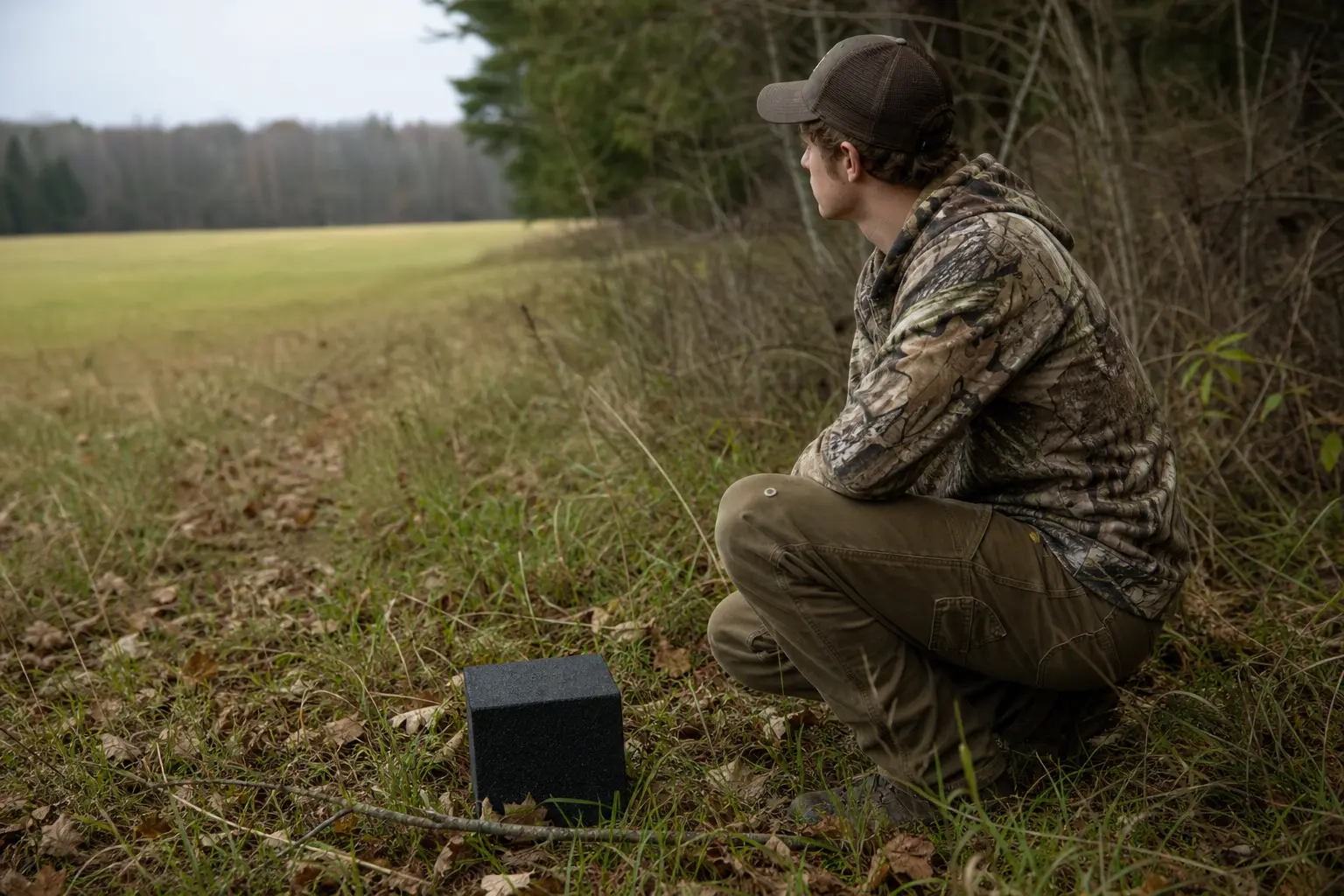
I spent all summer shooting flat.
That was the problem, only I didn’t know it in September. I’d set up a foam block out back, paced off exactly twenty and thirty yards on level ground, and burned through arrows like I was training for the Olympics. Every group was tight. Every pin was dialed. By the time opening day rolled around I was whispering to myself that this was finally going to be the year I stopped being the guy everybody laughed at around the campfire.
Twenty-two years old, two seasons of bowhunting under my belt, zero bucks. That was my resume. I’d blown my first season on a shot I never should have taken, and my second season I basically sat in a tree and watched the woods happen to me. So that summer I decided discipline was going to be my weapon. I shot every single evening after work until my fingers went numb and I could do it in the dark.
The Tree Changed Everything
Then I climbed a tree and everything I knew turned out to be worth about as much as a screen door on a submarine.
The stand sat in a big white oak about eighteen feet up, on the edge of a ridge where the deer funneled down toward a creek bottom. I’d hung it in July. I’d trimmed one tiny shooting lane through the canopy and told myself it was plenty. On the third morning of the season, a good eight-point came through that lane at what I figured was twenty-five yards, quartering away just enough to be perfect.
I drew, settled the pin, and let it go. Clean release. Confident as hell.
The arrow clipped a limb I’d never seen from the ground, dropped, and smacked the dirt three feet in front of the buck’s chest. He was gone before the arrow stopped quivering, and I sat there with my bow across my lap, replaying it, trying to figure out what in the hell had just happened.
What Flat-Ground Practice Missed
I’d done everything right. That’s what I kept telling myself. I’d practiced. I’d sighted in. I’d waited for the shot. And I’d still missed, because there was one thing I’d been too damn smart to think about: shooting from a tree is not shooting from the ground.
When you aim at a deer from eighteen feet up, the arrow doesn’t behave the way it does on level ground. The angle changes everything. Gravity pulls on the arrow less along a steep downhill angle, so the arrow actually flies a little high compared to a flat shot at the same distance. Distance itself lies to you too. What looks like twenty-five yards through the air from up in a tree might be more like twenty if you happened to range the tree trunk, or thirty if you ranged past it to the far bank. Your eye gets fooled by the drop and the angle, and a pin that was dead on at level ground is suddenly not dead on at all.
I didn’t know any of that at the time. I just knew I’d missed, and I was too proud to admit the real reason. So I did what every dumb kid does. I blamed the limb. Blamed the light. Blamed the deer for walking faster than I’d guessed. I blamed everything except the guy holding the bow, because admitting the bow was fine and the deer was fine and the only broken part of the whole equation was me sitting in that tree was too bitter to swallow.
It took me three more blown chances that season before I finally crawled off my high horse and went looking for an answer. And the answer, it turned out, was sitting in my own backyard the whole time.
The Question I Could Not Answer
I found a buddy who’d been killing deer from treestands since before I could spell my own name. He listened to me whine about the limbs and the light and the fast-walking deer for a full five minutes, then he said one thing that cut through all of it.
“Son, you ever actually shoot your bow out of a tree, or you just shoot it flat and hope it works out?”
I opened my mouth to say of course I’ve shot out of a tree, and then I realized I hadn’t. Not once. Not with a broadhead. Not with a field point. I’d hung my stand in July and then spent the next two months standing in my flat backyard, flat as a pancake, shooting at a flat foam block. My pin was set for a reality I never once stepped into.
That weekend I hauled a ladder stand up into the oak in my yard, which my wife referred to as “the dumbest thing I’ve ever watched you do,” and I climbed up with my bow. First arrow at the block from about the same height and angle as my hunting stand went a solid four inches high and drifted right. Four inches. At eighteen yards. That’s a clean miss on a deer or, worse, a high hit through the top of the back that you spend the rest of the day tracking through brush with your stomach in your boots.
I shot a dozen more and the pattern held. The downhill angle was flying my arrows high and left just enough to matter, and the broadheads and field points didn’t agree at all. I’d been sighting all summer with field points and then screwed on broadheads the night before the season, because of course I had. That’s the kind of cost-free ignorance that feels fine right up until a buck is standing broadside and your arrow buries itself in the leaf litter instead of the lungs.
So I did the thing I should have done in August. I cut my broadheads into the block from the actual stand, at the actual angle, and I moved my pins until they told the truth. Then I went back to level ground and shot until flat and steep both felt like the same boring, repeatable motion.
Practice the Actual Shot
The difference the next season was night and day. Same stand, same oak, same ridge. A buck came through that same lane, this time broadside at what I’d been practicing. The pin settled like it belonged there. The shot felt almost boring. That’s the funny part about getting a thing right, it stops feeling like magic and starts feeling like work you already did.
He ran forty yards and piled up. A clean double-lung through the crease, the kind of shot I’d spent years imagining. When I walked up on him and saw where the arrow had gone in, it was exactly where I’d been practicing it for months. And for the first time in my life as a bowhunter, the outcome matched the picture in my head, because the picture finally matched what was actually up in that tree.
Here’s the part I’d tell any kid who’ll listen, and it’s the part I was too hardheaded to hear at twenty-two. Flat-ground shooting is a lie you tell yourself. The deer in your freezer isn’t standing on a level back yard. He’s in a treestand reality, downhill, angled, half lit, moving, broadside for about three seconds after you’ve been sitting still for four hours. If you haven’t practiced that exact thing, in those exact boots, with those exact broadheads, then you’re not prepared for it. You’re just hoping, and hope doesn’t put venison in the freezer.
Climb the tree you’re going to hunt from and shoot. Cut a broadhead and see what it actually does out of that stand, at that height, at that downhill angle, because it won’t do the same thing your field points did on the flat. Move your pins there, not in the backyard. And when opening day comes and the shot finally shows up, it won’t be a prayer. It’ll just be the same boring shot you’ve made a hundred times, and that’s the whole damn point.