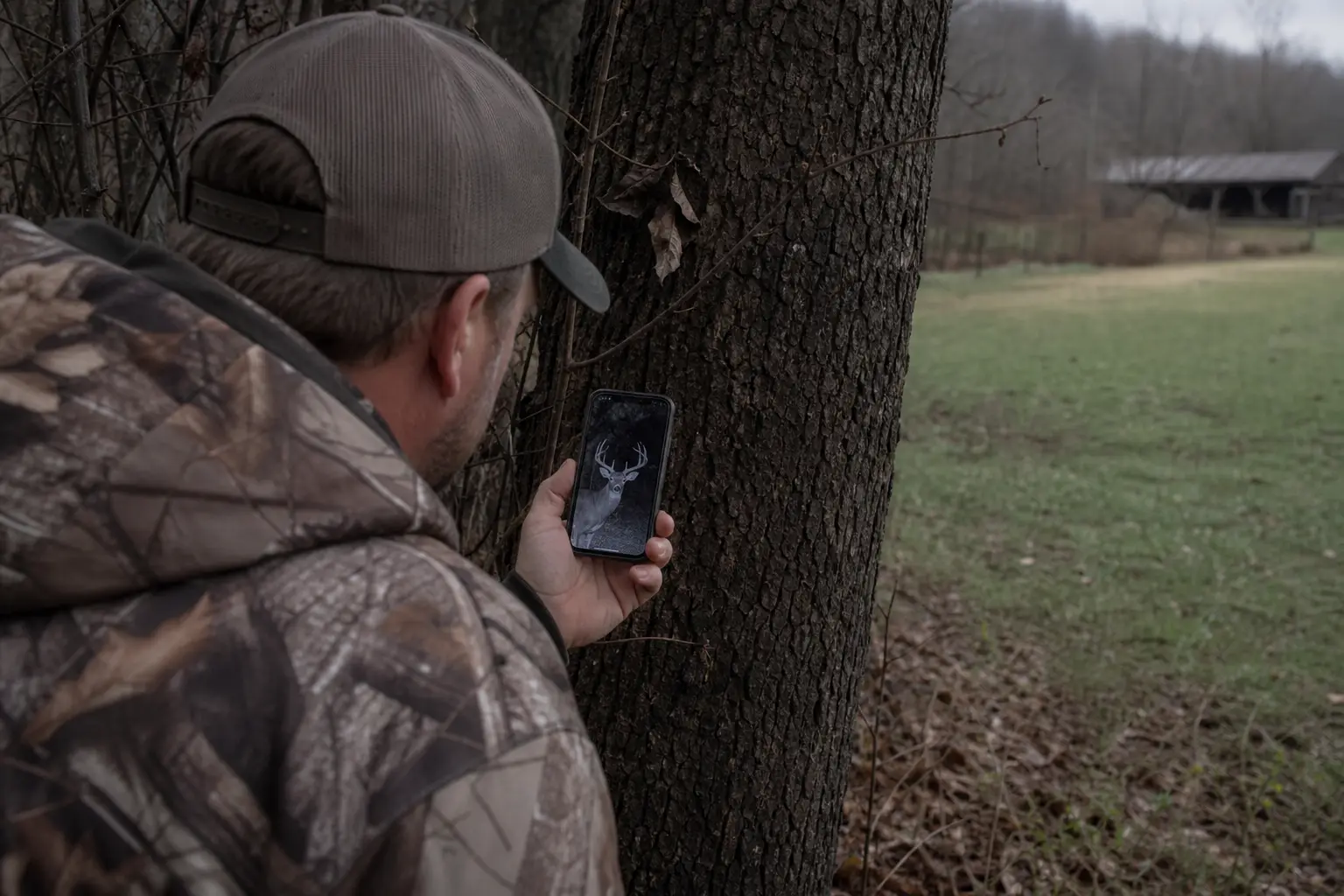
His name was Ghost, and for three months last fall, he owned me. It started in late August with a single trail camera picture sent to my phone at dusk. A heavy, wide ten-pointer with a split G2, standing in the clover plot behind the barn, looking right at the lens like he knew I was watching. My heart did a little jump in my chest, the kind you get on the first day of the season. I saved the picture. I sent it to my brother-in-law, Dale, with the caption, “This is the one.”
That was my first mistake. You don’t name them. You don’t call them “the one.” The moment you do, you’ve stopped hunting a deer and you’ve started hunting a ghost, a story you’re telling yourself. And that story will cost you.
The Digital Rabbit Hole
For the next month, Ghost was a digital obsession. I got maybe a dozen pictures of him, almost all of them in the dead of night. I’d wake up to the notification buzz and fumble for my phone like a teenager waiting for a text message. There he was, a gray, infrared king standing in my food plot while I was three hundred yards away, sleeping. I started a folder on my phone just for him. I patterned him, or at least, I told myself I was patterning him. He was nocturnal, moving between my neighbor’s cornfield and the thick bedding cover in the swamp behind my property. I knew his route. I knew his times. I knew everything about him except what he looked like in the daylight.
Opening day of bow season came. I sat in the stand overlooking the clover plot, the one where he’d first shown up. I passed on a clean shot at a healthy eight-pointer at twenty-five yards. My brain screamed, “That’s a good deer! That’s meat in the freezer!” But the little voice in the back of my head, the one that had been looking at Ghost’s picture every night before bed, whispered, “He’s not Ghost.” So I let him walk. Dale texted me later. “See anything?” I texted back, “Just a decent eight. Waiting for the big one.” He just replied, “Ok.” I know Dale. That “Ok” was doing a lot of heavy lifting.

Passing on a Sure Thing for a Maybe
I hunted every chance I got. October wore on. I passed on two more bucks that would have made any other season a success. I passed on a fat doe that would have filled the freezer with chops and burger. Every time, the same thought process: if I shoot this deer, I can’t shoot Ghost. My tag was a one-buck ticket, and I’d stamped his name on it before the show even started.
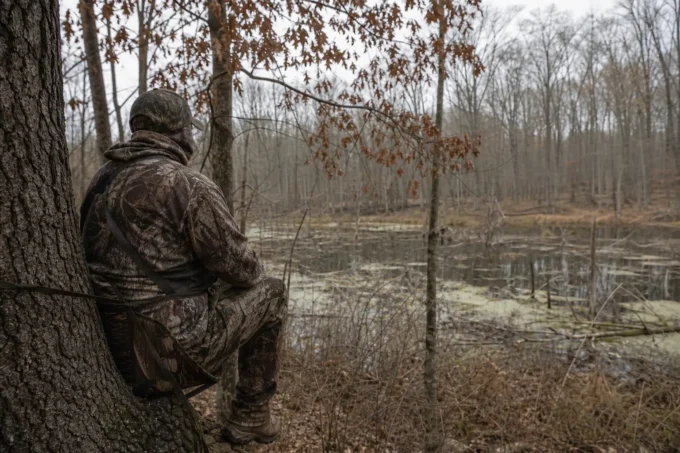
The trail cam pictures of him stopped coming in mid-October. The rut was starting. He was out cruising, looking for does. My digital intel had dried up, and now I was just sitting in a tree, hoping. I moved my stand closer to the swamp, trying to intercept him on his way to bed. I sat through cold, drizzly mornings and windy afternoons, fueled by the memory of those infrared photos. I wasn’t hunting deer anymore. I was hunting one specific, idealized animal, and anything less felt like failure.
The week before Thanksgiving, I was in my stand, feeling the season slip away. It was that last hour of daylight, the magic hour. And then, a doe trotted out into the cut bean field, followed by a young four-pointer. And behind him, limping a little, was Ghost. He was bigger than his pictures. His rack was dark and heavy, and that split G2 was unmistakable. But his left front leg was hurt. He was favoring it, moving slow. My neighbor, I figured, must have clipped him. My heart was hammering against my ribs. This was it. The whole season came down to this moment.
He was at eighty yards, too far for a clean bow shot for me. He was working his way towards me, but the light was dying fast. I watched him through my binoculars, my hands shaking. I had a doe tag in my pocket. The doe was at thirty yards, broadside, feeding peacefully. But I just sat there, frozen, watching Ghost limp around eighty yards out until it was too dark to see my pins. I let them all walk away into the black timber, and I climbed down out of the tree with an empty tag and a hollow feeling in my gut.
The Hard Lesson in an Empty Freezer
I never saw him again. I ate tag soup for Thanksgiving dinner, and every bite of store-bought turkey tasted like pride and stubbornness. Dale, of course, had shot a nice nine-pointer in early November. When he dropped off a package of summer sausage, he didn’t say, “I told you so.” He just said, “There’s always next year.”
He was right, but he was also wrong. There’s always next year, but you never get the last one back. I wasted a whole season on a ghost. I let a handful of pixels on a screen convince me that the real, living deer standing in front of me weren’t good enough. That’s not hunting. That’s ego. And ego doesn’t fill a freezer.
Here’s what I learned the hard way:
- Hunt the Herd, Not the Picture: Trail cameras are a tool, not a catalog. Use them to know what’s in your area, but don’t let one deer become an obsession. The goal is to hunt, not to fulfill a personal vendetta against one particular animal.
- A Bird in the Hand: A legal, ethical shot on a good deer in front of you is worth more than a ghost you might see tomorrow. Don’t pass up good opportunities early in the season waiting for a specific buck that may never show up in daylight.
- Your First Priority Is the Freezer: Unless you’re in a strict trophy management area, your job as a hunter is to put healthy meat away for your family. A doe in early October is a successful season, period. Antlers are a bonus, not the whole point.
- Stop Naming Them: The moment you give a buck a nickname, you’ve made it personal. You’ve turned him into a character in your story, and that makes you do dumb things, like letting perfectly good deer walk because they aren’t the main character.
This year, I’ve got one rule: shoot the first good, legal deer that gives me a clean, ethical shot. My freezer will thank me. And if a big ten-pointer shows up on my camera, I’ll delete the picture. I’m done hunting ghosts.
