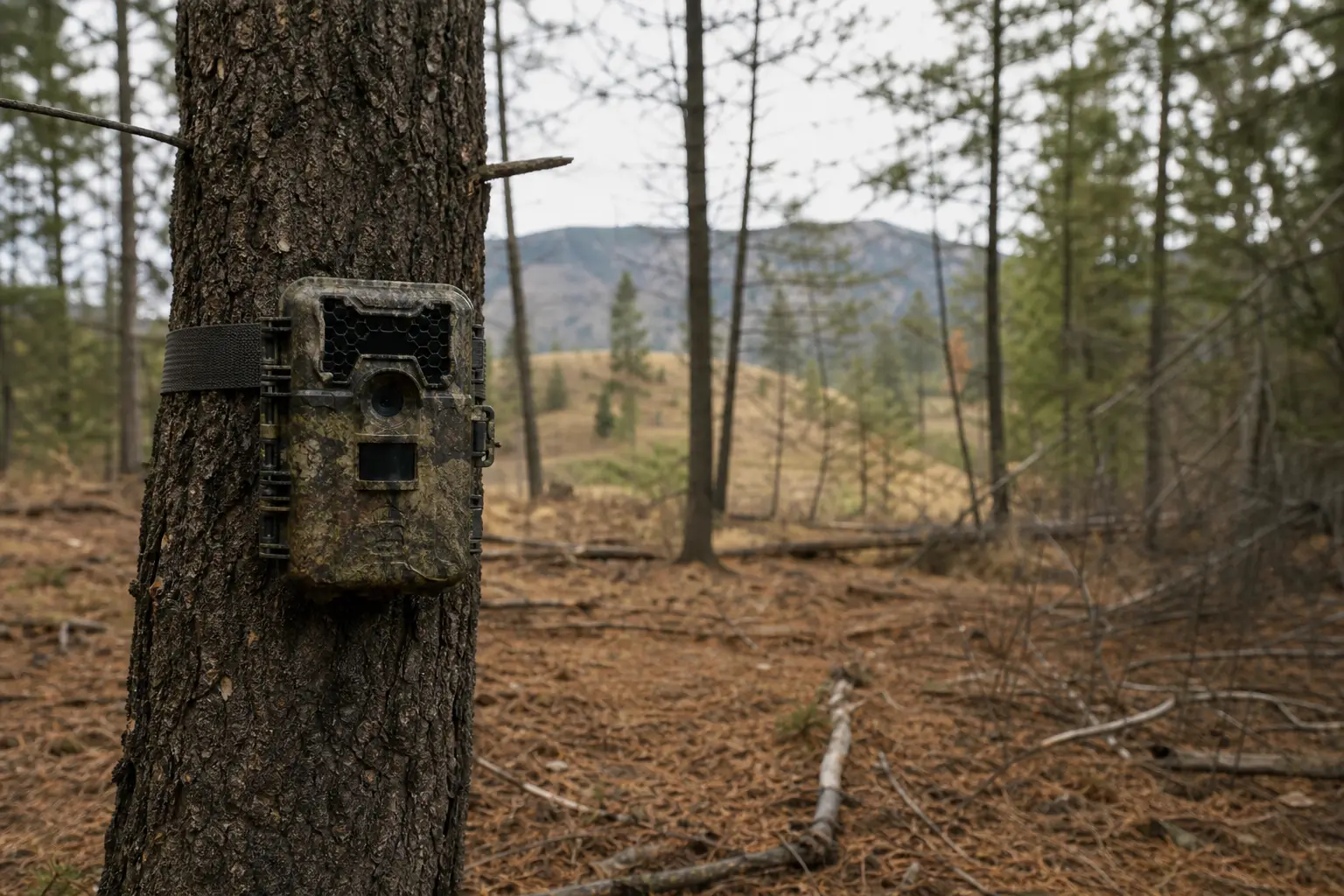
I still remember hanging my first trail camera and the ritual that went with it. Drive out, bolt the camera to a tree, wait two weeks, drive back, pull the SD card, sit at the kitchen table and click through five hundred blurry pictures of a branch moving in the wind. You found out an animal had passed through, eventually. Now my phone buzzes while I am eating breakfast and shows me a buck standing at the waterhole at that exact second. That gap, between "he passed through sometime" and "he is there right now," is the entire fight happening right now in statehouses across the country.
Three Kinds of Cameras, One Real Difference
Most hunters talk about trail cameras like they are all the same thing. They are not, and the law is starting to treat them very differently.
A standard SD camera is dumb in the best way. It takes pictures and stores them on a card. You physically retrieve the card. You learn what happened while you were gone.
A cellular camera sends every photo to your phone the moment the sensor trips. You do not have to go anywhere. You can sit in a truck, or at a desk, and build a live inventory of every deer using a piece of ground, down to the minute.
The newest layer is AI. Cameras now recognize species, sort photos, count animals, and flag the buck you are after. Smart scopes and rangefinders with ballistic computers are a separate rabbit hole, but they ride the same wave. The camera is no longer just a memory card. It is a remote set of eyes that never blinks.
The Bans Are Already on the Map
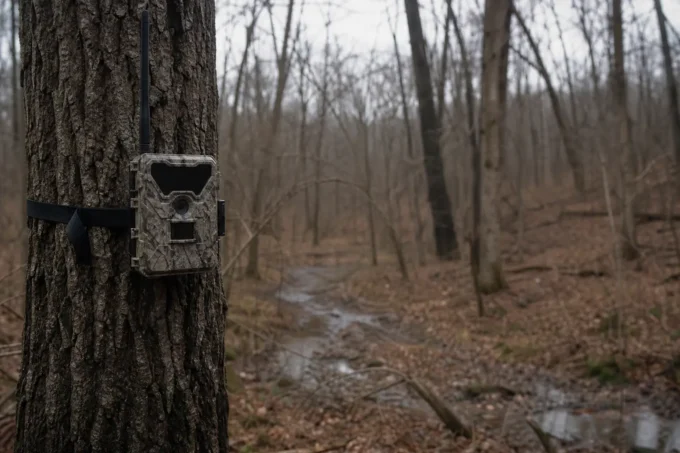
If you think this is theoretical, look at the 2026 map. Arizona sits at the strict end, with a year-round ban on using trail cameras to locate or take wildlife for hunting. Nevada splits the two types, ordinary trail cameras are banned from August 1 through December 31, while transmitting cameras are banned from July 1 through December 31. Utah bans all trail cameras on public land from July 31 through December 31. Kansas bans all trail cameras, not just wireless ones, on KDWP public lands and Walk-In Hunting Access areas. Alaska, Colorado, Montana, and New Mexico restrict or prohibit wireless cameras for hunting, each with its own definitions and seasonal windows.
Idaho is the clearest recent example of where this is going. Rules that took effect in 2026 ban transmitting trail cameras on public land, federal, state, or local, for hunting or scouting from August 30 through December 31. The same package reaches thermal imaging, night-vision optics, and drones for big game and game birds. It carves out exceptions for wolves, mountain lions, and other predatory wildlife, for recovering wounded game, and for monitoring traps, but the core message is plain: a live feed to your phone during the fall is no longer scouting.
Where Scouting Ends and Surveillance Begins
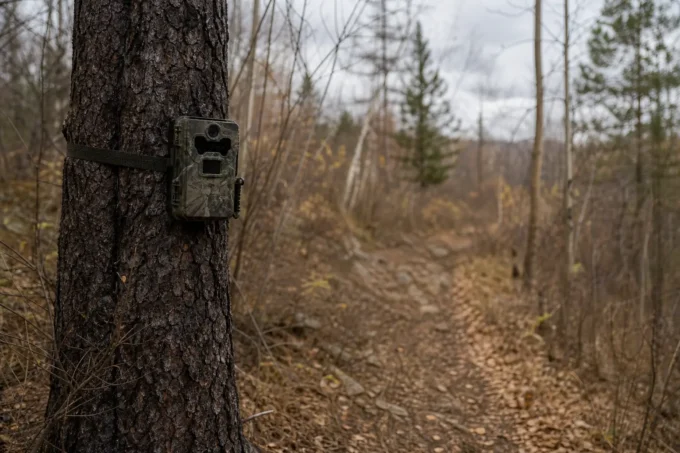
The debate is simple once you strip the marketing off it. A standard camera tells you an animal passed by. A transmitting camera tells you an animal is there right now, and it tells you immediately. To a lot of wildlife managers, that tips fair chase, the idea that the animal keeps a real chance to slip away, too far in the hunter's favor.
The people pushing the bans also point at public land. When a spring or a trailhead has a bank of fifteen cameras bolted to trees, hunters fight over the spot, and game gets pressured harder. It is not just philosophy. It is crowding and conflict in places everyone has to share.
The other side has real points too. A camera does not shoot the animal. Less walking in and out means less scent and less disturbance, which is good for the game. A working guy with two jobs can scout from his kitchen instead of burning every weekend in the field. Plenty of hunters will tell you the camera is just a notebook that fills itself in.
The line, as far as I can tell, sits right where the phone buzzes. Knowing a buck passed through last Tuesday is scouting. Knowing he is standing at the waterhole right now, while you are a half mile away with a rifle, starts to feel like something else.
What Is Actually Coming Next
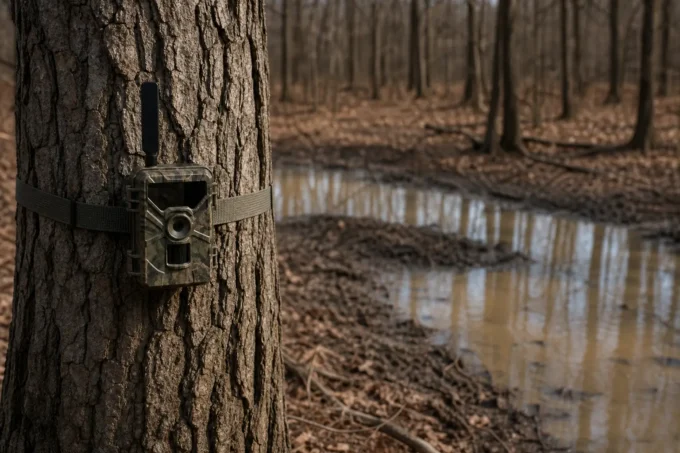
Idaho is not even the first. Arizona, Nevada, Utah, and New Mexico had restrictions in place before Idaho acted, and each new season brings another state writing its own version. State wildlife agencies watch each other, and once the pattern is set, more states copy it within a season or two. Expect more seasonal transmitting bans on public land. AI is already on the regulatory radar. Idaho's Hunting and Advanced Technology Working Group stopped short of recommending AI restrictions, but specifically told the commission to keep watching the technology as it evolves. The line between a camera, a drone, and a thermal scope is blurring because all three are now just remote sensing, and regulators are starting to treat them that way.
For the guy in the field, the rule is simple and boring. Read your state's regulations before every season, not once every five years. Watch two distinctions above all else. Public land and private land are treated very differently, several states restrict cameras on public ground while leaving private property alone. And a standard camera is not the same as a transmitting one, because some laws ban only the cellular feature and leave the dumb camera untouched. When the language is fuzzy, call your wildlife agency instead of guessing. A camera is a small investment next to a citation, a forfeited tag, or a screwed-up reputation.
The cameras are staying, and the argument is staying with them. What is changing is where you are allowed to point one, and how fast it is allowed to talk back to you.