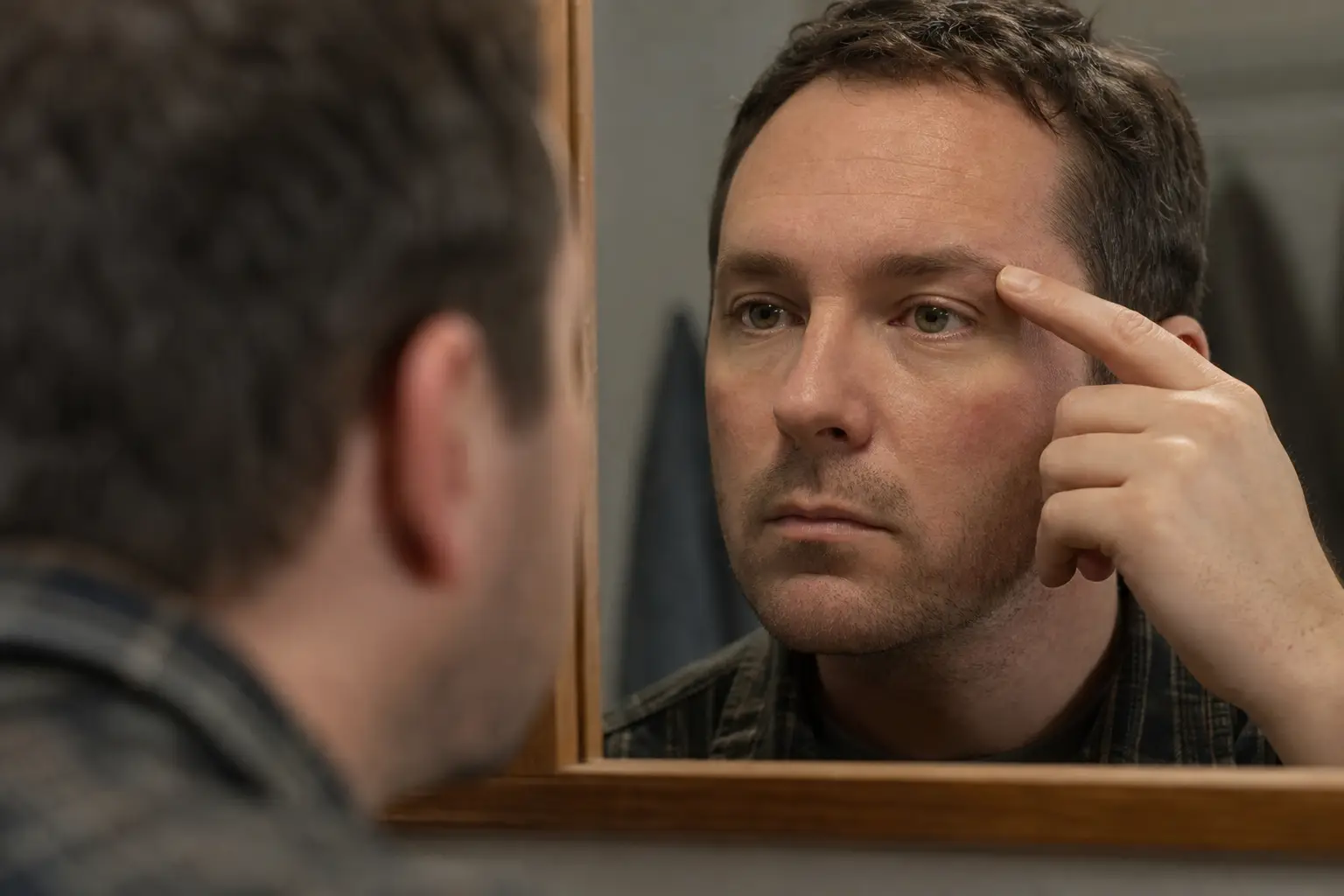
The first buck I ever had a clean shot at, I never got to shoot. I got to bleed instead. Which is its own kind of lesson, the kind that leaves a scar you can feel with your knuckle every time you shave, a thin white line right through the middle of my left eyebrow where the scope kissed me harder than I have ever let a rifle kiss me before. Fifteen years later the scar is still there, and every time I see it in a mirror I remember the sound, not the gunshot, because there was no gunshot, there was just the buck standing broadside at sixty yards in the crab apple thicket, and then there was the scope, and then there was the blood.
Here is the thing nobody tells you when you are twenty-two and you just spent four hundred dollars on a used bolt gun and a scope you bought from a guy in a gas station parking lot. Somebody, somewhere, has to mount that scope, and if you are too proud to pay a gunsmith twenty-five dollars because you watched one video on YouTube, that somebody is you. And mounting a scope is not like hanging a picture. The picture does not come back sixty yards later and knock your eye out of its socket because you hung it a half inch too close.
Four Screws and a Whole Lot of Wrong
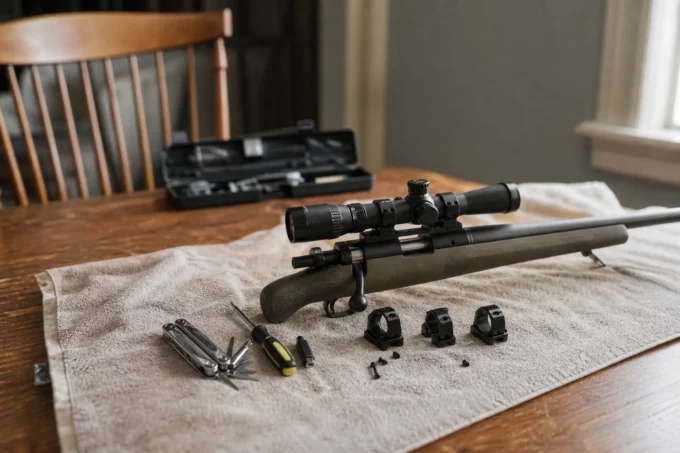
I mounted that scope on a Saturday morning in my kitchen, the rifle laid out on the table on an old bath towel, the rings I had bought because they were the cheapest ones in the blister pack, the whole job done with a leatherman and a wobbly dining room chair. I did not know what eye relief was. I thought eye relief was something you did not have to worry about, like the warranty, something that existed for other people. I tightened the rings down hard, because tight felt like correct, and I looked through the glass and saw the crosshairs and thought, good, it shoots now, and that was the entire extent of my thinking.
The scope sat a good two inches closer to my face than it should have, and I did not know because I had never shot a scoped rifle from a seated position before, let alone with gloves on, let alone from the kneeling crouch I ended up in when that buck stepped out of the crab apple and stopped and looked the wrong direction and gave me, free of charge, the whole of his left side. I settled in. I got my cheek on the stock where I always put it, which was too far forward. I wrapped into the gun hard because I was hunting now, and you hunt hard. And I squeezed, and the rifle went off, and the earth did a small thing where it moved my whole skull backward exactly far enough for the scope to reach out and open my eyebrow for me like a zipper.
I sat there bleeding into my hand and I might have said a couple of words I will not repeat, and the buck, who had heard the shot and smelled the blood and decided this whole arrangement was no longer to his liking, was already three ridges away by the time I could see straight again. I never found a drop of blood from him, because the shot had gone somewhere I still do not want to think about, high and wild, opened by a flinch I did not feel because my own rifle had just punched me in the face.
The Guy at the Range Who Fixed Me for Free
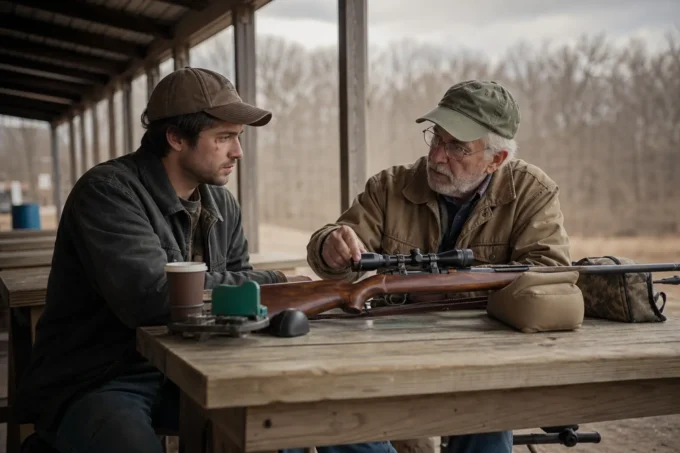
Two weeks later I told the story to an old man at the public range, mostly because I wanted somebody to agree with me that the scope was defective and it was not my fault, and I got neither. He set his coffee down and looked at the scar and he said, real slow, “boy, that rifle didn’t hit you. You leaned up and let it.” And then he did the thing that old men at ranges do, which is reel off twenty years of knowledge in about ninety seconds while I stood there pretending I was not embarrassed.
Eye relief, he said, is the distance between your eye and the back of the scope, and if you mount the scope too far back, or if you crawl the stock, the rifle’s recoil drives the bell into your face every single shot, and you flinch, and the flinch is what ruins your groups and your shots and eventually your nerve, because a man who has been hit by his own gun starts to be afraid of it, and a hunter who is afraid of his gun might as well stay in the truck. You want that scope back far enough that at full power, in the position you actually hunt in, the picture is round and full with no black ring around the edge, and you set that relief sitting and kneeling and prone, because your body sits different in every position and your eye sits with it.
He also told me the other thing I had done wrong, which I had not even known was a thing, which was the rings. Cheap rings and a leatherman and a man who thinks “tight” is a torque spec is how you get a scope that slips and a zero that wanders and a rifle that shoots three inches left one week and three inches right the next, and you blame the gun, and you buy another gun, and you keep the same bad rings, and you keep missing, and it is never the rings and it is always the rings. He made me buy a torque wrench. A scope mount torque wrench, he said, costs twenty dollars, which is less than the eyebrow, if you measure the eyebrow at all, and he looked at the scar when he said it.
The Thing I Learned the Second Time
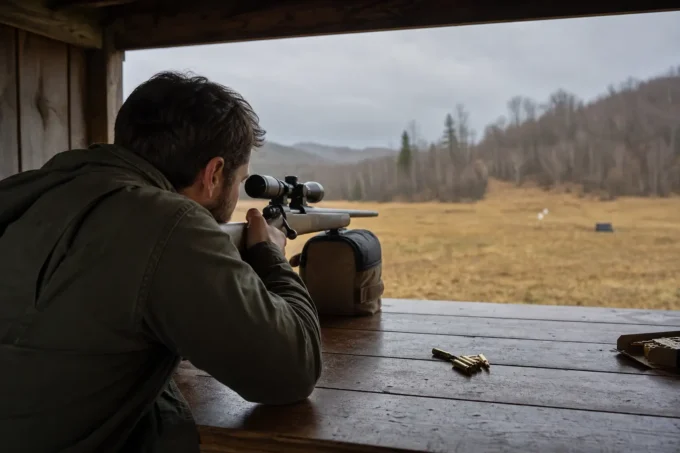
It took me a full year to undo the flinch. That is the part of this that nobody mentions, because by the time a man tells you about his scope bite he is usually already past it, but there is a long middle stretch where you point a gun at a target and your body has already decided, without asking you, that the gun is going to hurt you, and so you tighten up and jerk and pull the shot before the gun can, and you do it over and over, and you call it a bad day and then a bad month. I shot a lot of dry fire, which cost nothing, and I shot a lot of .22, which cost almost nothing, and I learned to put my cheek in the same place every single time so the relief never changed from shot to shot, and slowly, over a summer, the flinch went back into the ground where it came from.
The next fall I killed a deer, an honest deer, a little seven-point at eighty yards, and I did it with the same rifle and a scope that had been mounted by the old man at the range, pushed back where it belonged, ringed down to a proper torque with a wrench he told me to buy, and when the gun went off the scope stayed exactly where it was supposed to, which is a whole inch away from my face, and I watched the deer fold through a full, round, clear picture, and that, I want you to understand, was worth more than the deer. The deer was just what happened when the gun finally did what a gun is supposed to do.
Stop Mounting Your Own Scope Wrong
If you are new to this, or if you are not new and you have been doing it wrong so long you think wrong is normal, here is the whole thing in one place, and I am telling you this so you do not have to bleed for it the way I did. Set your eye relief for the position you actually hunt from, not for the way you stand at the kitchen table. Mount the scope, close your eyes, get your cheek on the stock where it naturally goes, and open your eyes; if the picture is not instantly round and full and black-ring free, move the scope until it is, or move your face, and do it again seated and kneeling and prone. Use a torque wrench and follow the number, because “tight” is not a number and a slipped scope will cost you a season while you blame everything but the rings. And the first time you shoot a gun with a scope, from a braced position, with a firm grip, keep your head back and your cheek honest, and if the gun fits you right you will not have to lean into it to see through the glass. If you have to lean in, the scope is too far forward or you are too far forward, and one of you is about to get hit.
I kept the scar. It is a thin white line over my left eye and it is the cheapest lesson I ever paid for, considering what lessons have cost me since, and the best part about it is that it reminds me of the one thing about this whole sport that is easy to forget once you get good at everything else: the rifle is not the thing that fails. It is almost never the rifle. It is the four screws and the twenty-five dollars and the half inch, and it is the guy who thought he knew better, sitting in his kitchen with a leatherman, about to learn what eye relief means the hard way. I do not have to guess what that guy learns. I was him. I still got the receipt on my face.