
Some bucks are just deer. Big deer, sure — but still just deer. You see the trail cam photo, you say “damn,” and you move on.
Then there are the ones that stop being deer at all. They become neighbors. Characters. Ghosts with names. Hunters don’t just want to kill them — they want to solve them. And when one of these bucks finally disappears, it leaves a hole in the community that a new set of antlers can’t fill.
Here are the bucks that earned names, kept secrets, and in some cases, outlived the men who hunted them.
Hollywood Buck — The Cemetery Celebrity
This is the best poaching conviction story in modern hunting, and it happened because a guy couldn’t keep his mouth shut on Facebook.
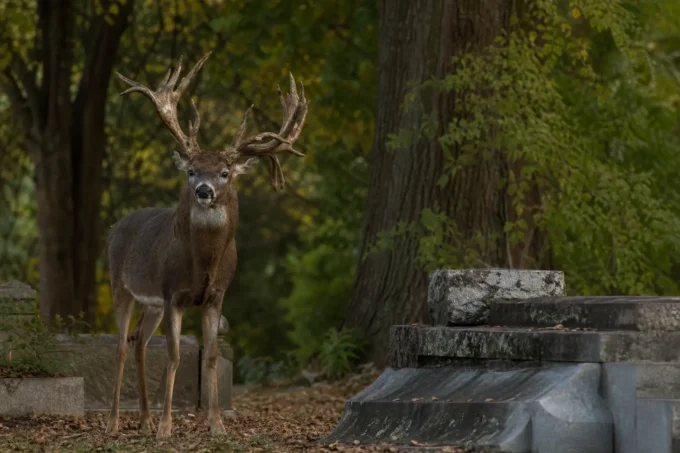
The Hollywood Buck was a massive non-typical whitetail that lived in and around Hollywood Cemetery in Richmond, Virginia. Urban deer, but not some backyard pest — this was a 29-point monster that people photographed for years. Bill Draper, a local photographer, had captured him so many times that the buck was basically the unofficial mascot of the cemetery grounds. He was protected by the city itself: no hunting, lots of eyes, and a community that treated him like public property.
In November 2023, Jason Walters shot him. Then he shot two other bucks from the same area. Then — and this is where the sheer stupidity kicks in — he submitted a photo of himself with the Hollywood Buck to Star City Whitetails, a popular hunting Facebook page, claiming he’d killed it 70 miles away in Prince Edward County.
The internet noticed within minutes. The buck’s antlers were so distinctive that Bill Draper’s earlier photographs matched the kill shot perfectly. Social media sleuths laid out the whole case before DWR officers even finished their coffee. Conservation police executed 10 search warrants and recovered two sets of antlers.
Walters was sentenced to six months in jail (three suspended), $2,500 in fines, $11,000 in replacement costs, and lost his hunting privileges for 24 years. His accomplice got 30 days house arrest and a six-year hunting ban. The Virginia DWR called it one of the “strongest enforcement outcomes in recent memory.”
The Hollywood Buck died, but he took a poacher down with him. That’s a legacy most hunters can respect.
King Louie — Shot in the Dark
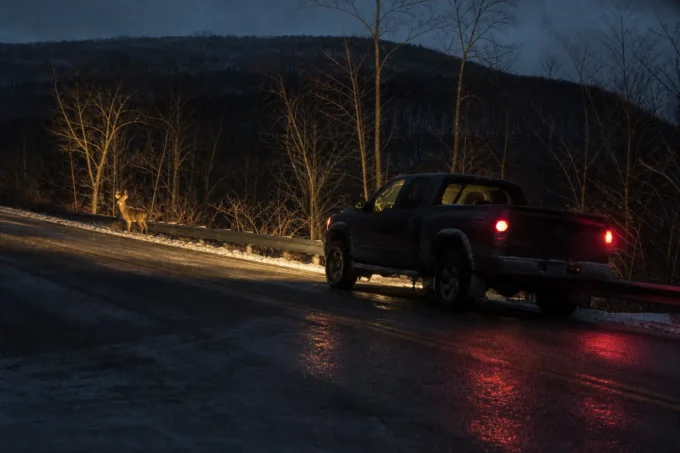
The Fonda/Johnstown area of New York had a king, and everybody knew his name. King Louie was a buck with enormous palmated antlers — the kind of rack that makes you stop breathing when it appears on your trail camera. Local hunters had been watching him since at least 2020, collecting shed antlers and trading photos. He was a community project.
On December 5, 2024, someone shot him from a road in the middle of the night. Trespassing charge. Poaching charge. A buck that could have been one of the highest-scoring non-typicals in New York state history, reduced to a criminal case.
What gets me is the reaction from other hunters. When a named buck gets poached, it’s different from losing a buck to another legal hunter. Legal kills get grudging respect — the guy earned it. Poaching a community buck feels like a betrayal. Hunters who had been competing for King Louie suddenly found themselves united in anger. The deer they all wanted to kill had been stolen from everyone at once.
The New York DEC seized the antlers and filed charges. King Louie is gone, and so is the chance to ever know what he might have scored in a fair chase.
The Bell Buck — You Could Hear Him Coming
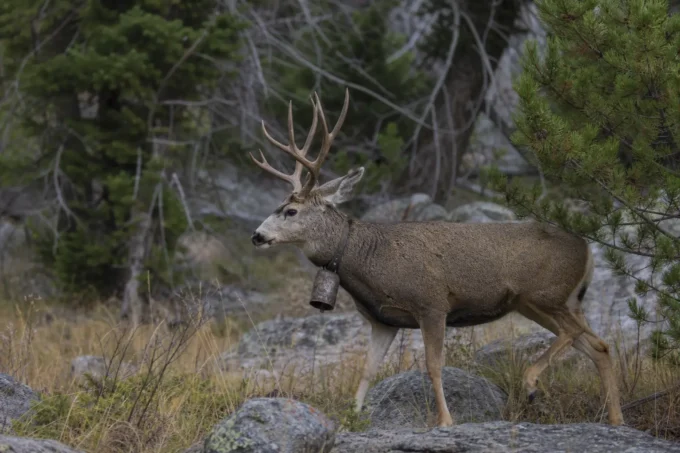
This one sounds like a tall tale, but multiple sources back it up. A young mule deer buck somehow got a cow bell tangled around his neck — and wore it for years.
Let that sink in. A wild mule deer, walking through the backcountry, ringing like a dairy cow with every step.
An outfitter in the area was so frustrated by this buck that he offered a free hunt to anyone who could kill him. Multiple hunters tried. Every single one of them failed — not because the buck was invisible, but because when they heard a cow bell clanking through the timber, they were too confused to shoot. Your brain expects livestock. Your brain does not expect a 180-class mule deer with a dinner bell around his neck.
The Bell Buck had a handicap that should have made him the easiest trophy in the West. Instead, the sound that should have given him away became his greatest defense, because hunters couldn’t process what they were hearing fast enough to react.
He disappeared eventually. No trophy photo. No confirmed kill. Just silence where the bell used to be.
Splitz — The Old Man Who Vanished
Splitz was a whitetail that people tracked for at least five years. Think about that — five hunting seasons, multiple gun weeks, bow season, rut chaos, bad winters, cars, coyotes, and everything else the woods throws at a deer. He made it to nine or ten years old, which in the wild is basically a pensioner.
He wasn’t famous for being the biggest. He was famous for being a survivor. Hunters collected his sheds. They photographed him. They knew his patterns enough to track his development year over year, watching his rack change, watching him age. He became the old man of the woods — the deer you don’t necessarily want to kill anymore because you’ve been watching him for so long that he stopped being a target.
Then one year, he just wasn’t there. No body found. No kill photo. No sheds. He walked off into the woods and never came back, the way old bucks sometimes do. Splitz died the way he lived: on his own terms, without giving anyone the satisfaction of a clean ending.
Old Crooked Horn — The Buck That Fought Back
A big Utah mule deer with a characteristic crooked antler that made him instantly recognizable. A group of experienced hunters chased him for several seasons, and he outsmarted them every time.
Here’s where it gets wild: according to the original accounts, Old Crooked Horn once attacked a horse with a rider on it. Not a bluff charge — actual contact. A mule deer buck that decided he wasn’t running from anyone anymore.
I wasn’t there, so I can’t swear to the horse attack. But I do know this: when a buck gets old enough and smart enough to know exactly what hunters are trying to do, he stops acting like prey. He becomes something closer to an opponent. Old Crooked Horn had the local hunters figured out, and he let them know it.
Whether the horse story is true or just got better with every campfire, it doesn’t really matter. The buck earned the legend.
Krabs — Three Years on a Trail Camera
An Ohio buck named for a massive drop tine that looked like a crab claw. The hunter who eventually got him tracked his growth over three years — from roughly a 140-inch younger buck to a 200-plus-inch monster.
This is the modern version of the legend buck. Not passed down through campfire stories, but documented frame by frame on SD cards. The hunter knew his bed, his routes, his seasonal shifts. He got close once and couldn’t close the deal. Then he changed his approach entirely — switched stands, switched wind, switched everything — and finally got him.
Krabs represents the serialized buck. Trail cameras turned deer hunting into a long-form drama where you watch the character develop across multiple seasons. It’s not the same as the old legends, but it creates its own kind of connection. You’re not just hunting a deer. You’re watching a series, and you want to see how it ends.
Candy Man — The Name Came From the Antlers
A Wisconsin whitetail whose distinctive brow tines curved inward like candy canes. The landowner who photographed him starting in 2014 watched the buck grow for multiple seasons, and the name wasn’t marketing — it was just what the antlers looked like.
What makes Candy Man interesting is how a single weird antler characteristic can turn a deer into a local celebrity. Most bucks are anonymous. Give one a recognizable feature — a crab claw drop tine, candy cane brow tines, a crooked beam — and suddenly the whole hunting community has a name for him. The antler becomes an identity.
Goliath — The Ghost
A 14-point North Carolina whitetail that a hunter tracked for four years. Estimated at 7.5 years old — ancient for a wild whitetail. The defining feature of Goliath’s story was the disappearing act. He’d show up on cameras for a week, then vanish for a month. The hunter started assuming he’d been hit by a car. Then he’d appear again, like nothing happened.
Ghost bucks are the ones that drive hunters crazy, because you can’t pattern what isn’t there. Every sighting feels like a gift. Every disappearance feels like the end. Goliath kept that game going for four years, and the hunter who finally connected with him had to earn it through patience that most people don’t have.
The Historical Legends
Hole in the Horn Buck
Found dead along a railroad track near Kent, Ohio in 1940. 45 points. Officially scored at 328 2/8 non-typical Boone and Crockett — the second-largest non-typical whitetail ever recorded. A group of railroad workers found the body stuck under a chain-link fence near the Ravenna Arsenal and freed the antlers.
The mount hung in a private hunting club for 40 years before anyone thought to score it. When they finally did in 1983, it was briefly declared the world record before a panel re-measured it at 328 2/8 in 1986, dropping it to number two behind the Missouri Monarch.
The name comes from a hole drilled in the right antler — not from nature, but from a guy at the bar who ran a wire through it to keep the mount level on the wall. The hole that gave the buck its name is a bar repair, not a birth defect. You can’t make this stuff up.
The original antlers now hang in Bass Pro Shops’ King of Bucks collection, and replicas sit in Cabela’s and Bass Pro stores across the country. A buck nobody ever hunted became one of the most famous whitetails in history just by being enormous and dead in the right place at the right time.
Milo Hanson Buck
The world record typical whitetail, shot by Milo Hanson in Saskatchewan in 1993. Scores 213 5/8 typical. Before the season even opened, word had spread through the community. A school bus driver spotted him first. Then farmers started seeing him in their fields, along the roadside, in broad daylight. By opening day, the whole area knew he existed.
Hanson shot him on his own land, fair chase, and the buck became the standard against which every typical whitetail is measured. The interesting part isn’t just the score — it’s that this buck was widely known before anyone killed him. An entire community was aware of a single deer, and one guy drew the lucky stand.
Why We Name Them
Most deer die without anyone knowing they existed. A hunter pulls the trigger, drags the body out, and that’s the end of the story. The deer had no name, no history, and nobody who wasn’t there that day will ever think about it again.
But some bucks refuse to be anonymous. They show up on enough cameras, or grow antlers so weird you can’t mistake them, or survive so many seasons that hunters start respecting them the way you respect a rival who’s just better at the game than you are.
When you name a buck, you change the relationship. He’s not just a target anymore. He’s a character in a story that might not end the way you want it to. Some get shot legally and celebrated. Some get poached and mourned. Some just vanish, and the hunters who knew them spend years wondering what happened.
The best ones — the Splitz and the Bell Bucks and the Old Crooked Horns — they die without giving anyone the satisfaction of a grip-and-grin photo. And honestly, that’s a hell of a way to go.