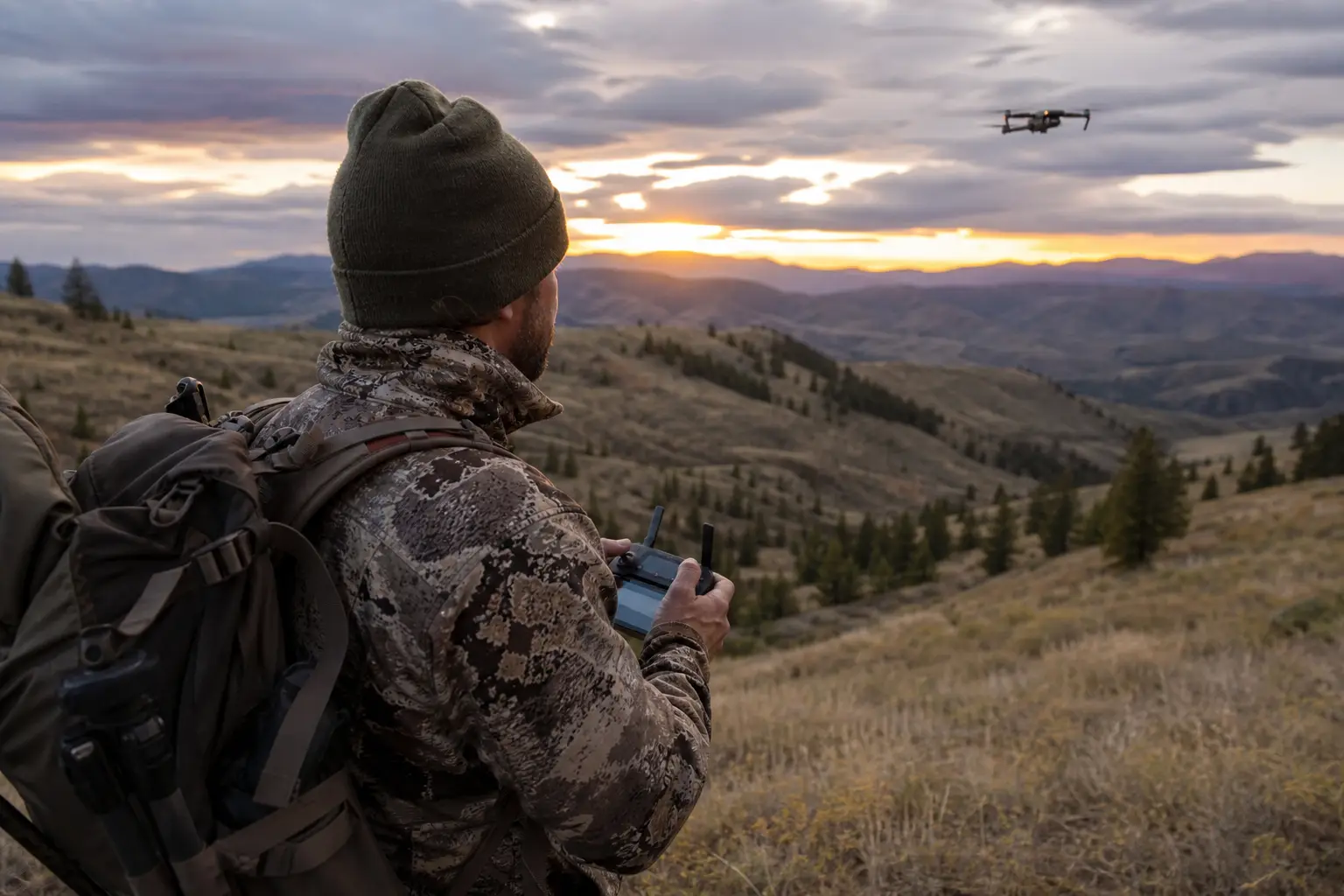
There is a moment every hunter knows, the one where a piece of gear stops feeling like a tool and starts feeling like an unfair advantage. The line used to be simple. A rifle, a set of binoculars, a pair of boots. Now the line runs through thermal scopes, drones, cameras that talk to your phone, and scopes that do the math for you. Where that line sits is no longer settled around a campfire. It is being written into law, one state at a time.
Picture it. You are sitting on the couch with a cup of coffee. Your phone buzzes with a picture from a trail camera forty miles away, a good buck standing at a waterhole, right now. You send up a drone, and it shows you the exact draw he is heading into. You grab your rifle, and the scope has already ranged him and solved the hold for you. From the couch to a dead buck in the time it takes to drive out there. That is the whole argument in one scene.
What Idaho Actually Changed
Idaho just put the clearest version of that line on the books. House Bill 939, which took effect in 2026, makes it illegal to use thermal imaging, night vision, transmitting trail cameras on public land, or drones to hunt or scout big game and game birds from August 30 through December 31. That window is the fall, the part of the year when the actual hunting happens.
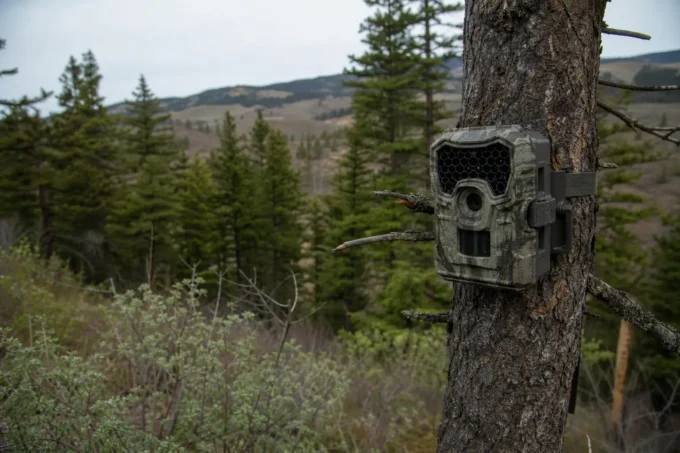
A few things matter here. A plain SD-card game camera is still legal. The ban lands on the camera that beams a picture to your phone the second an animal walks by, the scope that sees heat in the dark, and the drone that flies ahead to find a buck. The exceptions are narrow: wolves, mountain lions, and other predators, monitoring traps, and recovering a wounded animal. What the ban removes is gear that makes finding or seeing game easier than a man can do on his own: thermal and night vision see in the dark, drones find game from the air, and transmitting cameras deliver a picture in real time.
The Working Group That Recommended Where the Line Is
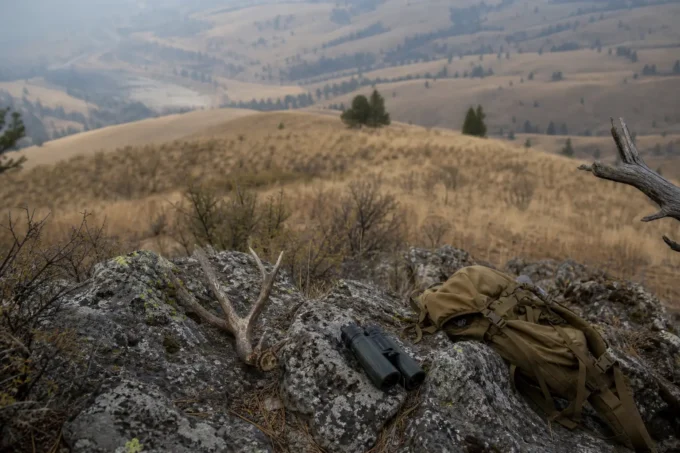
This did not come from a legislator’s desk alone. It started with the Idaho Hunting and Advanced Technology Working Group, a body the state put together in 2024 to answer one question: what is fair to use in pursuit of game. The state pulled 750 volunteers down to a group of 23 members, and those members wrote a package of recommendations for the commission. The actual rules came later, through the legislature and negotiated rulemaking, but the working group set the direction.
The list they worked through is broader than most hunters realize. Drones. Thermal and night vision. Transmitting cameras. But also AI species identification, smart scopes, rangefinding optics that solve the shot for you, long-range technology that pushes the kill out past where a man can hold steady, and e-bikes that open ground a guy on foot would never reach. The group voted unanimously to ban drones for six months of the year. Thermal, night vision, and transmitting cameras were a step short of unanimous, 22 of the 23 members backed those restrictions. On AI, they stopped short of an outright restriction but told the commission to keep watching it, because AI identification is the next thing that could shift fair chase in the hunter’s favor.
The idea behind all of it is the same idea that has always sat under hunting. The animal keeps a real chance to slip away. A scope that ranges the animal and tells you where to hold stacks the odds far enough that a lot of hunters start asking where the skill went.

The Line Is Not the Same Anywhere
Idaho is the loudest example, but it is not alone. Arizona has a year-round ban on using trail cameras to locate or take wildlife for hunting. Nevada splits the difference, ordinary trail cameras are banned from August 1 through December 31, while transmitting cameras are banned from July 1 through December 31. Utah bans all trail cameras on public land from July 31 through December 31. Each state draws the line in a slightly different place, but they are all drawing it now.
Where This Is Going
The direction is not hard to read. Idaho is not the first state to move this way, Arizona, Nevada, and Utah had similar restrictions in place before Idaho acted. What is new is how fast the rules are spreading and how broadly they now reach. The next targets are already visible: smart scopes that range and hold for you, rangefinding binoculars that solve the ballistic problem, long-range rigs that push shots past reasonable distances, e-bikes, and AI that identifies an animal from a photo before you ever glass it yourself.
The practical rule for the guy in the field is the same as it has always been, and it is boring. Read the regulations for your state before every season. Public land and private land are treated differently. A standard camera is not the same as a transmitting one. Where the language is fuzzy, call your wildlife agency instead of guessing. A citation, a lost tag, or a ruined season costs more than any piece of gear ever will.
The states are deciding, out loud and in law, where the hunt stops and the advantage starts.