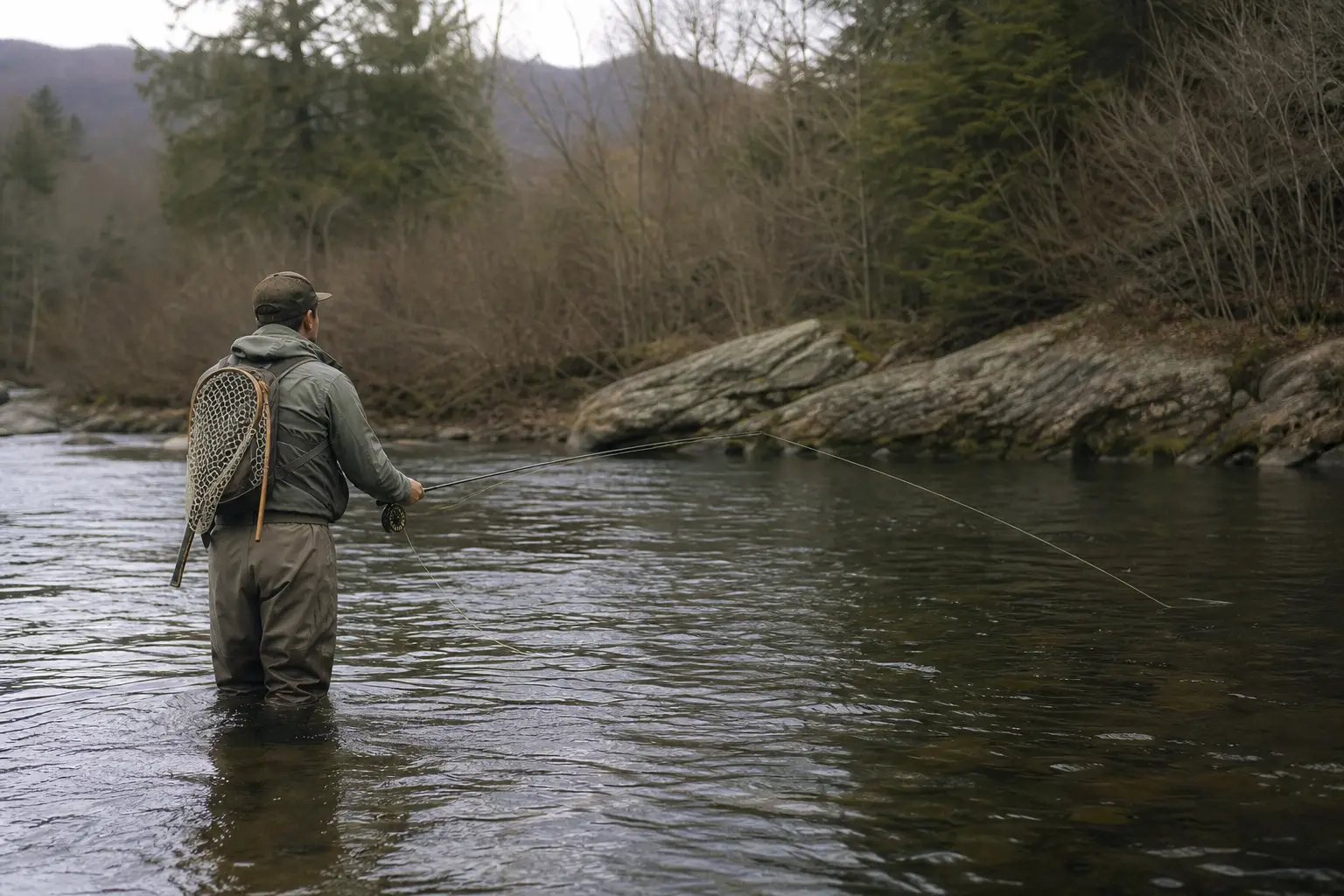
I didn’t catch anything my first three trips. Not a single fish. I watched YouTube, bought the recommended gear, tied the knots like the guy showed me, and… nothing. Cast, drift, strip, repeat. Eight hours. Zero. Twice.
The third time I went with a buddy who actually knows what he’s doing. He watched me cast for about thirty seconds, then said: “You know you’re dragging your fly line sideways across the current, right?”
I did not know that. I thought casting was just getting the fly out there. Turns out the drift is the whole thing. If your line is pulling the fly unnaturally through the water, trout look at it and go “nah.”
Mend Like You Mean It
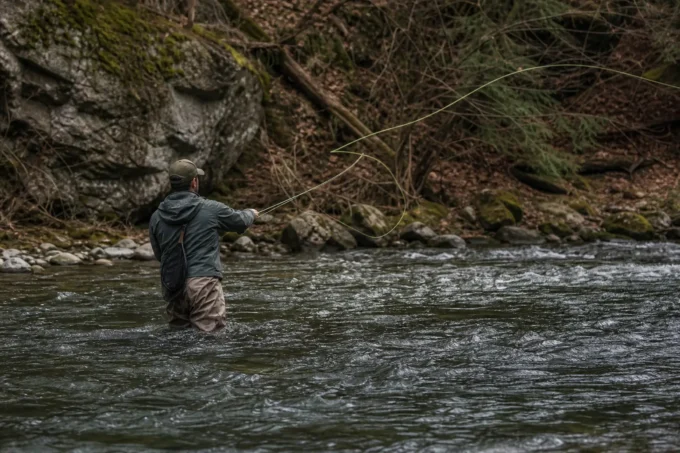
That afternoon he showed me mending — flipping the line upstream so the fly drifts naturally, no drag. First cast after he showed me: a 10-inch brown trout. Nothing big, but I stared at that fish like it was a unicorn.
Here’s the thing: you don’t need better gear to catch fish. You need to understand what your gear is doing between the cast and the next cast. That middle part is where fishing actually happens.
What I’d Tell the Guy I Was Three Trips Ago
- Stop buying stuff. You already have a 9-foot 5-weight. It’s fine. Shut up and use it.
- Learn to mend before you learn to double-haul. A perfect 60-foot cast into bad drift is still a bad drift.
- Watch the water, not your line. Look for seams — where fast water meets slow water. That’s where fish sit, waiting for food to drift by.
- Set the hook downstream. I kept setting up and to the side like I saw on TV. Wrong. Set the hook toward the bank on the far side of the river. Downstream, low, and smooth.
- If you’re not getting snagged, you’re not fishing deep enough. I was scared of losing flies. So I fished too high in the water column. You want to bump bottom occasionally. If you’re losing a fly every thirty minutes, you’re doing it right.
The One That Almost Broke Me
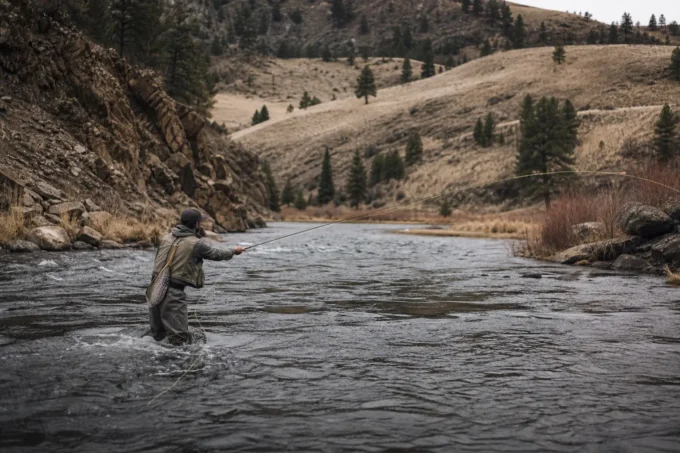
About a month later I was on a small stream alone. Found a deep pool under an overhanging tree. Saw a rise. Tied on a size 18 elk-hair caddis — tiny thing, could barely thread the tippet. Cast upstream, let it drift. A brown trout, easily 18 inches, came up and sipped it.
I set the hook. Too hard. The 6x tippet snapped like a thread. Fish gone, fly gone, and I said some words I will not repeat here.
But that was the moment fly fishing stopped being homework and started being something I needed to figure out. Not because I wanted to post a picture on Instagram. Because being that close to a beautiful fish and blowing it — on my own screwup — made me want to be better. Not for anyone else. Just so next time, I’d land it.
What I Run Now
I still use that same 9-foot 5-weight. Orvis Clearwater. Bought it used for $120. My reel is beat to hell — it’s basically a line holder. For nymphing I run an indicator setup with a tandem rig: a heavy stonefly pattern up top, a small zebra midge below. Simple, and it works in most water.
You don’t need a $900 rod. You need to spend time on the water. That’s the part I ignored for the first three trips. Don’t be me.