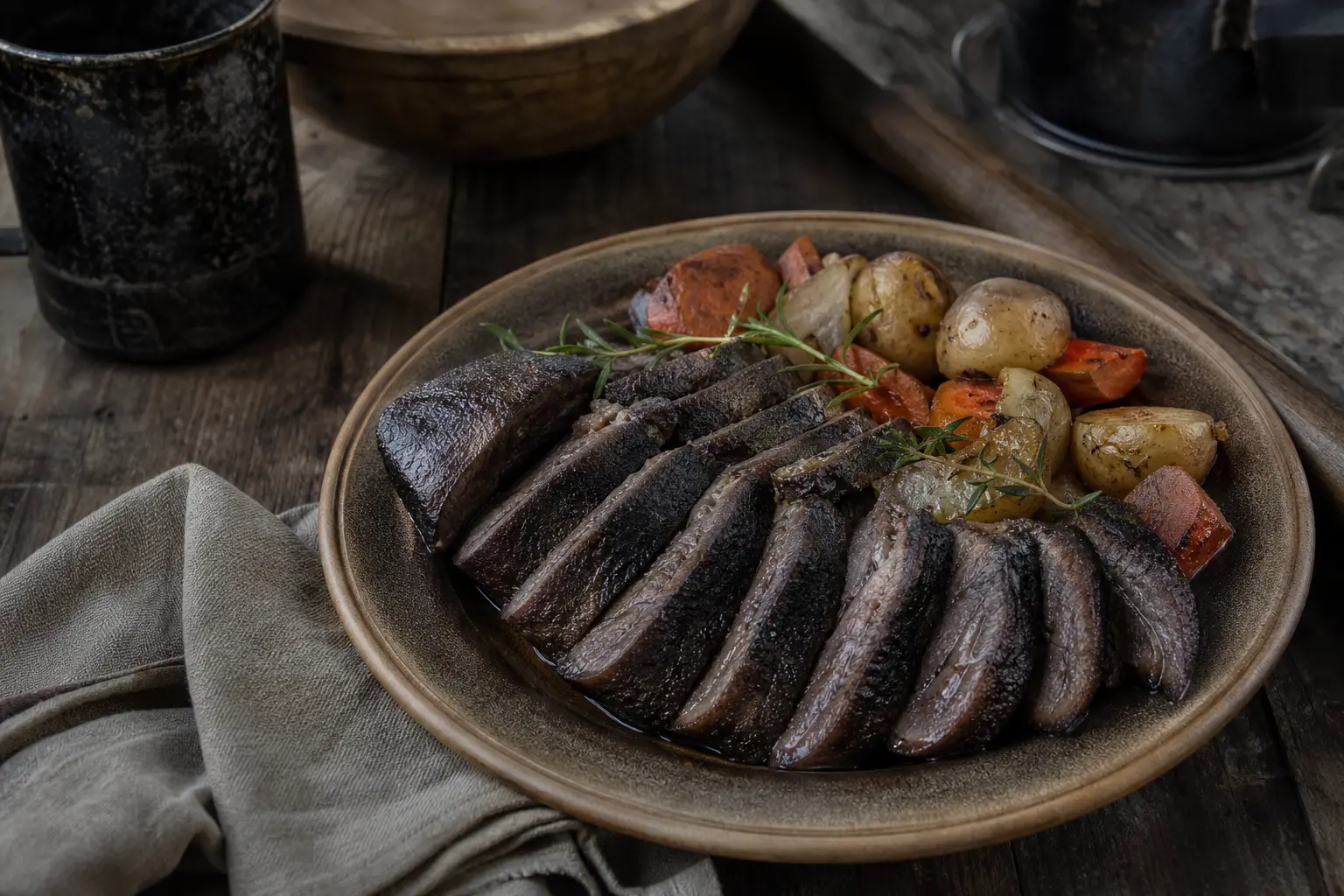
You wake because the ground is shaking. Not much, just enough that the tin cup beside your bedroll rattles against the wagon wheel in a small patient rhythm, and for one long second you think it is thunder rolling in from the far thunderheads. Then you hear Eli Miller whisper it, the boy half out of his blankets with his eyes gone wide.
“God in heaven. Look at that.”
It is late June, 1850, and you are camped west of Fort Laramie, where the Platte runs shallow and silt-colored and the grass runs to a horizon that has stopped meaning anything. You crawl out from under the wagon and it is not thunder. It is bison. A herd that fills the whole of the south, a black river of shoulders and dust and hot breath so wide you cannot see its far bank. The dust rises in a column that turns the morning sun the color of old brass, and the stink reaches you a moment later, grass-caked and heavy and alive, like a barn floor after a long rain.
You have forty pounds of flour left, a sack of beans gone weevily, and maybe three days of dry pork that everyone pretends is still good. Twelve people in this little train, counting the Miller boys who never stop moving, and not one of them has fresh meat. The hunting has been thin for two weeks. Every antelope you glassed was already spooked by the dust of some train ahead of you on the trail.
“Somebody better shoot one,” your brother-in-law Sam says, like it is nobody’s job in particular. He is sharpening the same hook he has sharpened every evening for a month, because it is something to do with his hands.
A Job, Not a Hunt
Nobody moves. Because shooting one is not the problem. Cutting one up in the open, with the flies already gathering and the sun climbing, and getting the meat back to camp before it turns, that is the problem. And underneath it, the thing nobody says out loud: a thousand bison are walking past and you want the meat, so you are going to have to walk out into the dust and kill something larger than your wagon.
You take the Hawken off the wagon brace, heavy and familiar, and you check the cap and the charge and the patch on the ball the way your father made you do before you knew what the words meant. Sam hands you his powder horn without asking. Your wife Hannah is already folding a clean cloth and stacking the salt sack and the big skinning knife on the tailgate. She does not look up. She knows what happens next, and she is doing the part that does not need saying.
The rest is up close and hard and not at all like a hunt back east, where a man rides out from the farm and comes home at dark with a deer over the horse and a story to tell. You walk out slow. Not crouching. There is no cover on the open prairie, nothing to hide behind, so you do not pretend. The herd lets you in closer than it should, because bison are not wary the way whitetail are. They live their whole lives at the top of a world with no wolves left to speak of in this stretch, and fear is a thing they only half remember.
You pick a cow, one near the edge, a fat dry cow with a thick hump. You are not picking a trophy. You are picking the most meat for the least walking. She goes down at forty yards, the shot flat and clean through the shoulder, and the herd wheels away in a wall of noise and dust and heat, and then it is just you and the work.
One Cow Is More Than One Wagon
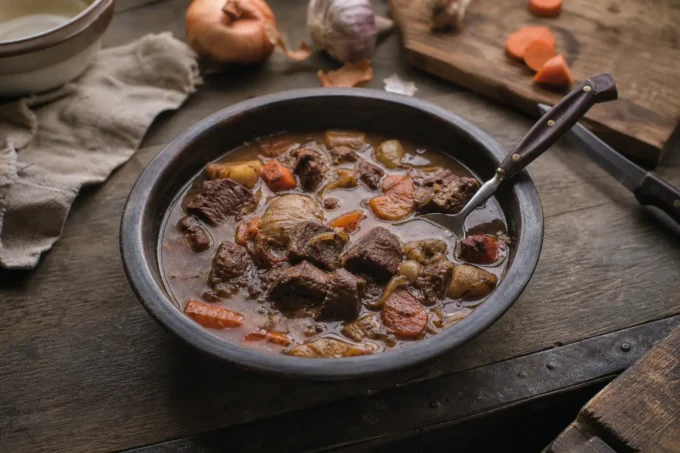
Here is what you learn in the next hour, with blood up to your elbows and the flies landing in your mouth. One cow is more than one wagon can carry. You do not take the whole thing. You take the hump, the tongue, the tenderloins, the two hindquarters. Maybe the ribs if someone helps drag. The rest, the gaunt barrel and the front shoulders and the guts and the head, you leave for the wolves and the ravens and the next train. It is not waste, exactly. It is arithmetic. You can carry three hundred pounds of meat back to camp, or you can haul the whole animal three hundred yards and rot where you stand.
You cut the tongue out first. Always the tongue. Later you will tell Eli Miller it is the best eating on the whole beast, and he will not believe you, and then he will try it fried with a little salt and he will believe you for the rest of his life.
You drag the hindquarters back two at a time, slung over your shoulder, your boot heels digging trenches in the short grass. Your shirt is black with sweat and blood and dust by the third trip. Sam meets you halfway and takes a quarter without a word, and the two of you carry it back together, and your back is a knot of fire by the time you drop it by the wagon.
The Women With the Sharp Knives
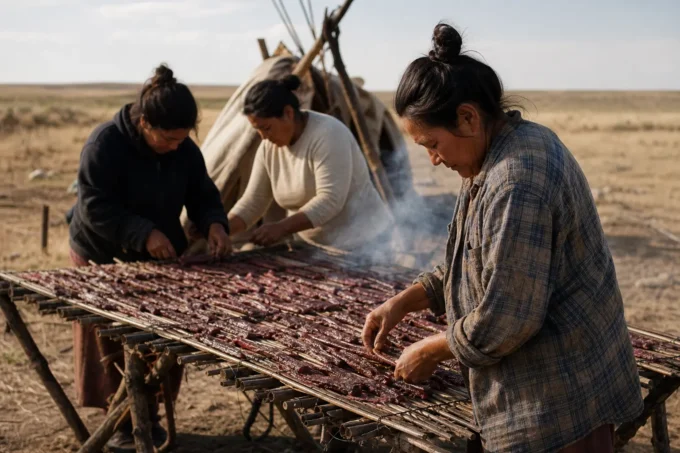
Hannah and the other women go to work with knives you did not know they kept that sharp. They strip the long muscles and lay them thin on a rack of willow Sam lashes together, high off the ground, out of reach of the first curious dogs. The flies find the fresh meat before the sun gets high enough to burn them off. Smoke from a small fire of buffalo chips slow-curls over the rack, not to cook the meat, just to keep the worst of the flies honest. Everything tastes like smoke and blood and dust, and nobody complains, because it is fresh.
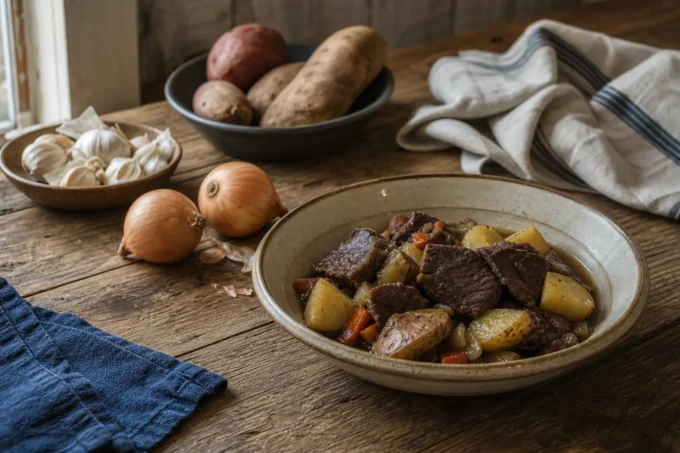
You eat fried tongue that night, the first fresh meat in two weeks, and it is the best thing you have eaten since you left the Missouri. Eli Miller asks for seconds. Old Morrison, the one who has been half sick with the flux for three days, even sits up and takes a little broth from the boiling scraps, and for one evening the camp is almost easy. You catch yourself thinking about the people back east who will sit down to a roast on Sunday and never once have to choose between the tongue and the hindquarter, and you push the thought away because it is no use.
The Next Morning, What the Ground Takes
Then the sky does what the sky does on the plains, and by dawn the next day the wind has turned and the flies are back in a cloud, and one of the racks, the one you thought was high enough, has been pulled down in the night. A coyote, or worse, and whatever got it took half of one hindquarter and left the rest fouled with dirt and hair and flies. You stand over it in the gray light and you swear until your throat is sore, and then you cut away the ruined edges and salvage what you can and set the rack higher.
It is not a victory. Nothing out here is. You just want to sit down, but there is more meat to strip, and the cow is already starting to turn in the far grass, and the next train is already a day behind you, so you pick up the knife again.
This is what hunting is out here. It is not a story to send back east to the men who shoot deer from blinds and call it sport. It is a job. You do it when the meat runs out, and you take what you can carry, and you leave the rest, and you do it again the next time the herd walks past and the flour runs low.
What Was Real
Bison were not a sport animal on the Oregon and Mormon trails. They were a walking grocery store, and for thousands of years before the first wagon they had been the single most important food source of the Plains peoples, who used nearly every part of the animal rather than just the obvious cuts.
A mature bison cow can yield well over four hundred pounds of usable meat, and a big bull more. A wagon train moving west could not possibly haul a whole animal. Emigrants routinely took only the hump, tongue, and hindquarters, plus the marrow bones and sometimes the ribs, and left the remainder on the ground. This selective harvest was standard practice, not wastefulness, and it is documented repeatedly in period diaries.
The hump was prized. It is a thick, fatty, tender muscle over the shoulders, and along with the tongue and the tenderloins it was considered the best eating on the animal. The tongue in particular was so valued that it became its own trade commodity. Later in the century, commercial hide hunters and the so-called tongue hunters would shoot bison by the hundreds and take little more than the hides and tongues, a genuinely wasteful practice that helped drive the herds toward collapse between roughly 1870 and 1884.
The word bison comes to English through Latin from a Germanic root, while the animal is more commonly called buffalo in American usage, a borrowing that came via early French and English colonists from terms for the water buffalo and other old-world oxen. The confusion is old and permanent, and both words have meant the same North American animal, Bison bison, for centuries.
Before the Spanish brought horses to North America, bison were hunted on foot, often by driving small groups over cliffs or into gullies or corrals, a technique now known by the term buffalo jump. Famous sites like the Vore Buffalo Jump in Wyoming and Head-Smashed-In Buffalo Jump in Alberta preserve these locations, with bone layers going back thousands of years.
The enormous herds that emigrants described, sometimes stretching beyond the horizon, were real. Estimates of the pre-1800s bison population on the Great Plains run to thirty million animals or more, one of the largest concentrations of large mammals on earth at the time. By 1889, after the hide-hunting era and government policy encouraged the near-extermination as a way to force Plains tribes onto reservations, fewer than a thousand bison remained. The animal recovered only through a handful of private herds, and today around half a million bison exist in North America, most on ranches, still a fraction of the historic wild population.
The Oregon Trail emigrant era ran from roughly 1841 to 1869, and over that period an estimated 400,000 people crossed to Oregon, California, and Utah. For nearly all of them, bison were a welcome and life-saving interruption in a diet of flour, bacon, beans, and hardtack, and the sight of a distant herd on the move was as much a promise of dinner as a natural wonder.