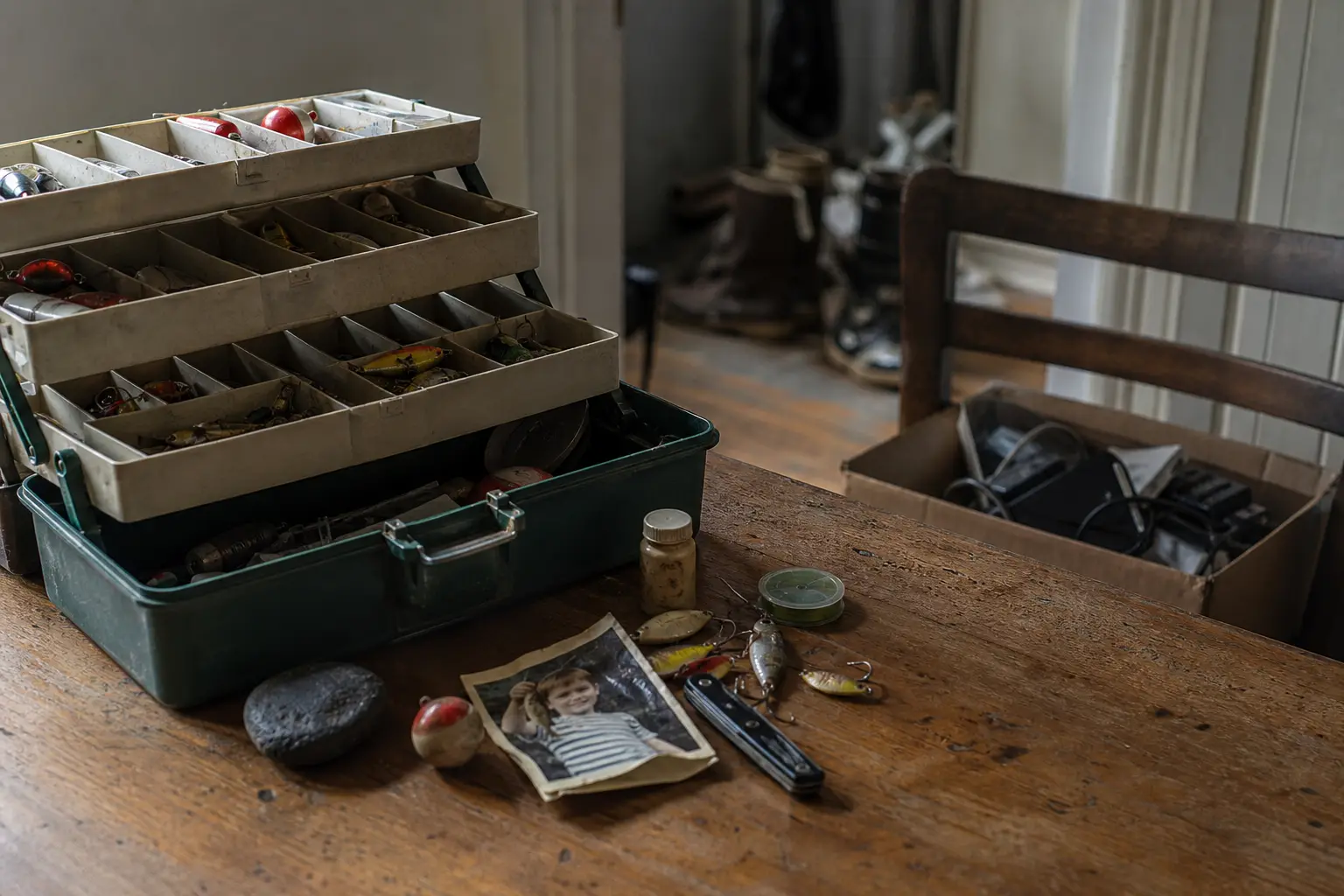
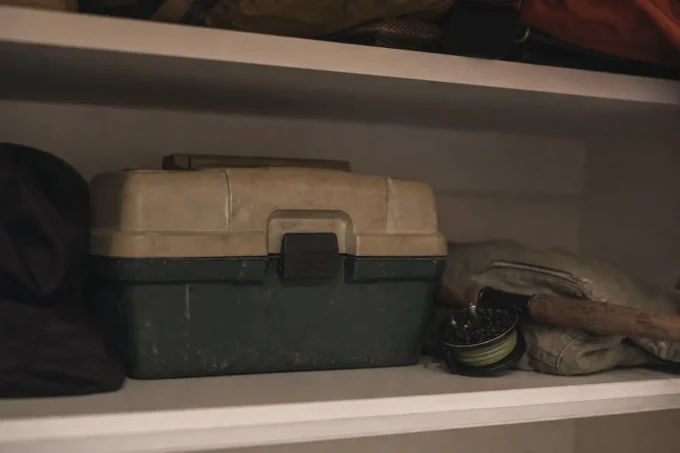
My old man kept his tackle box in the bottom of the hall closet, under a stack of rubber boots and a cardboard box of old phone chargers. I found it the week after he died, when my mother asked me to help sort through the house. I didn’t want to. You never do. But somebody has to go through it, and it’s better a son than a stranger, so I pulled the box out and set it on the kitchen table and opened it up.
It smelled like forty years. Salt, old rubber, a little bit of diesel, that particular musty smell of monofilament that’s been sitting in the dark since the Reagan administration. I sat there with it for a long time, pulling things out one at a time and laying them on the table. Of all the stuff in that house, it was the dumb plastic tackle box that almost got me.
Inside was the story of a man who never threw anything away. Crankbaits with hooks so rusted you couldn’t tell the color anymore. Spoils of fishing line still in their packages, because he’d bought more than he ever needed. A little folding knife with a broken tip. A bottle of reel oil that had leaked sometime in the nineties and glued three spoons to the bottom of the tray.
What got me was the little things he’d kept. Not gear. Not tackle. Just stuff. A smooth black river rock. A child’s bobber, red and white, with my initials scratched into it with a thumbnail. A faded photo, folded twice, of me at six years old holding up a bluegill smaller than my hand, grinning like I’d landed a marlin.
He Wasn’t a Great Fisherman
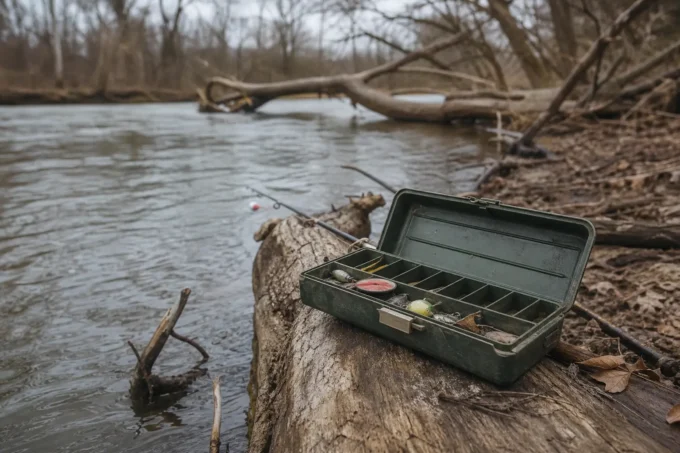
Here’s the part I kept coming back to, sitting alone in that kitchen. My dad was not a good fisherman. I don’t mean that as an insult. I loved fishing with him. But if you actually added up the hours against the fish, the numbers did not look good. He forgot the bait half the time. He had one spot he always fished, a bend in the river by a fallen sycamore, and I don’t think he ever really learned how to read the water there because he never tried anywhere else long enough to compare.
And yet he went. Year after year, weekend after weekend, packing that same tackle box into the trunk of whatever car we had at the time. Dragging me along when I was a kid, then going alone when I got too old and too busy and too cool to want to sit on a riverbank all day catching nothing.
I used to think the point was the fish. I think every kid thinks that. You sit there with a worm on a hook and you wait, and the whole time you’re waiting you’re picturing the fish, so in your head the fish is the reason. That’s the trap. The fish is never really the reason, but you don’t learn that until it’s too late and you’re holding a plastic box in an empty kitchen.
The Bobber With My Initials
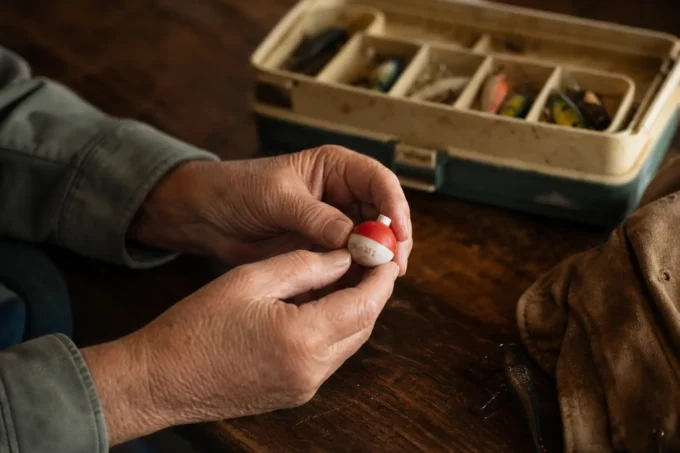
I sat there turning that little red and white bobber over in my hand. He’d kept it for probably thirty years. I couldn’t tell you what trip it was from. I don’t remember scratching my initials into it. But he kept it, which means some trip stood out to him enough that he pocketed it and never threw it out.
That’s the thing about fathers. They don’t tell you what matters. They just keep the receipt, or the bobber, or the smooth black river rock, and you find it later and have to work out the meaning on your own.
I thought about all the times I’d said no. The fishing trips I skipped because there was a game on, or a girl, or I was hungover, or I just couldn’t be bothered to sit in a car for two hours to stand by a river and catch nothing. Every single one of those no’s felt small in the moment, the kind of no you hand out without even thinking about it. Sitting at that table, they added up to something different. They added up to a pile of missed afternoons that were never about the fish in the first place.
He’d Say It Was Just a Box
My old man would’ve hated this. He would’ve watched me sitting there choked up over a plastic tackle box and said something like “it’s just a box, quit being dramatic.” That was his whole style. He didn’t do sentiment out loud. He did it in the closet, quietly, keeping a bobber with his kid’s initials on it for thirty years, because putting it back in the tackle box where he’d see it every spring was his version of saying something.
He never once told me he loved me in so many words. But he kept a photo of me and a bluegill in his tackle box for thirty years. If you can’t read that, you can’t read anything.
I closed the box up that night and didn’t finish sorting it. I took it home with me instead. It sits in my own closet now, on the top shelf, next to my own rod and reel. Every spring when the weather turns, I still mean to open it and go through it proper, and I still haven’t. Maybe I never will. Some boxes aren’t for sorting.
The Last Thing I Took Out
The last thing I pulled from the box that night wasn’t a lure or a line or a broken knife. It was a scrap of paper, yellowed and soft, folded into eighths. My own handwriting. A grocery list, probably, from some trip where I’d been put in charge of snacks and I’d written “soda, chips, gummy worms” in the loopy handwriting of a nine-year-old.
He’d kept that too.
I don’t know what I’m trying to tell you with this. I guess it’s just that if your dad, or your mom, or whoever you fish with, has a spot they always go, go sit with them. Not for the fish. The fish were never the point for them, and deep down you know it. Go sit on the bank and hold the tackle box and let them talk, or not talk, and if you’re the one with kids now, scratch their initials into a bobber and put it away somewhere you’ll find it in thirty years.
It’s just a plastic box. But it was never just a box.