I caught my first musky at forty-one years old, and I spent the entire drive home trying to figure out if it counted.
That is an embarrassing thing to type, and I am going to type it anyway, because it is true and because the whole point of this is to be honest about the things we usually keep quiet. I got into fishing late. Not like a little late, like genuinely late, the kind of late where the guy running the bait shop is forty years younger than you and has already forgotten more about fishing than you will ever know. I came to it backwards, without a dad who fished or an uncle with a boat or any of the childhood stories that seem to be standard equipment for every other man I meet on the water. I just woke up one summer and wanted to stand near a lake with a rod, and that was that.
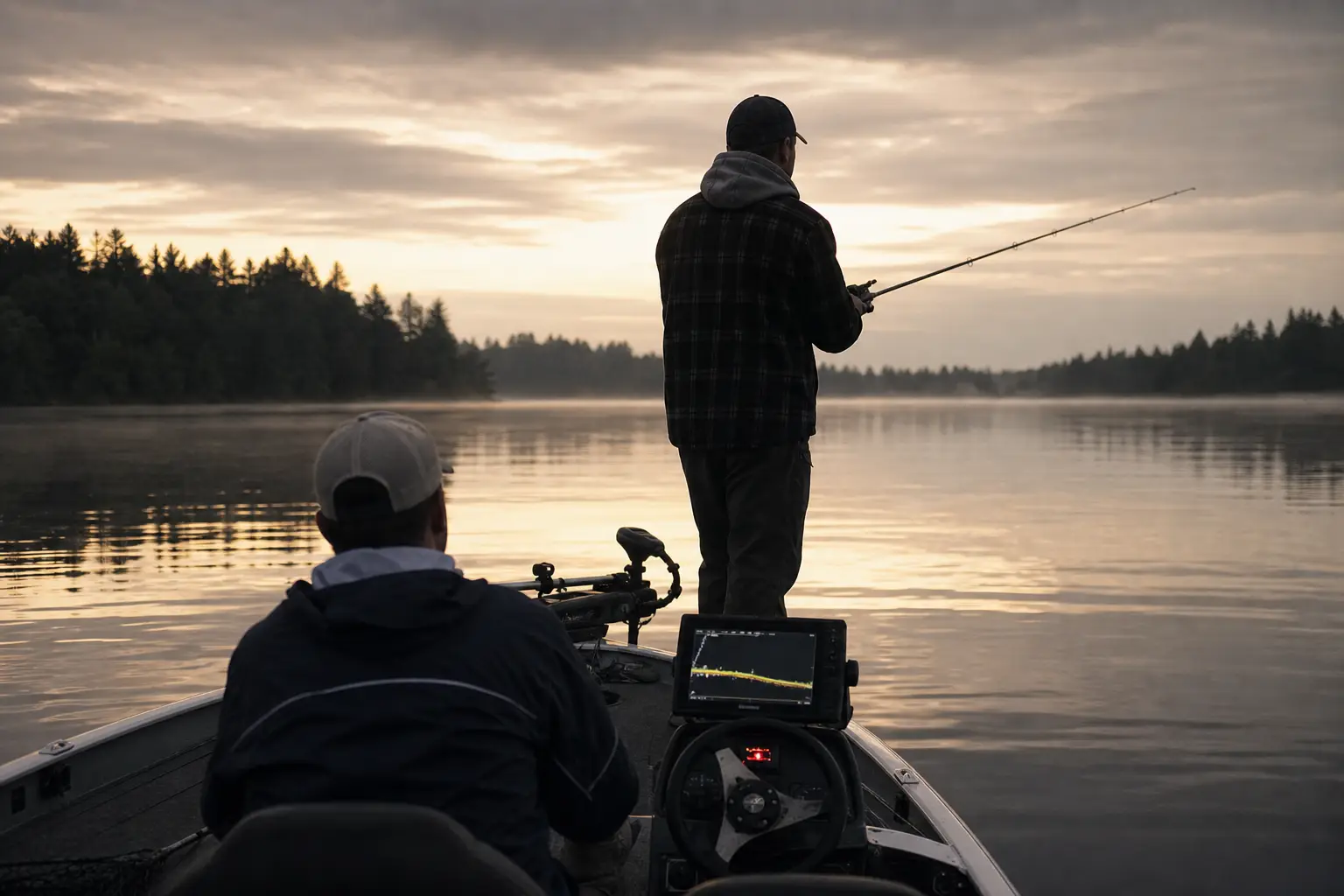
So when I finally did catch a musky, a real one, a 40 and a half inch fish with a face like a freshwater barracuda, I had a guide standing next to me and a thousand dollars worth of sonar humming under the hull. And that is where the problem started.
The Trip
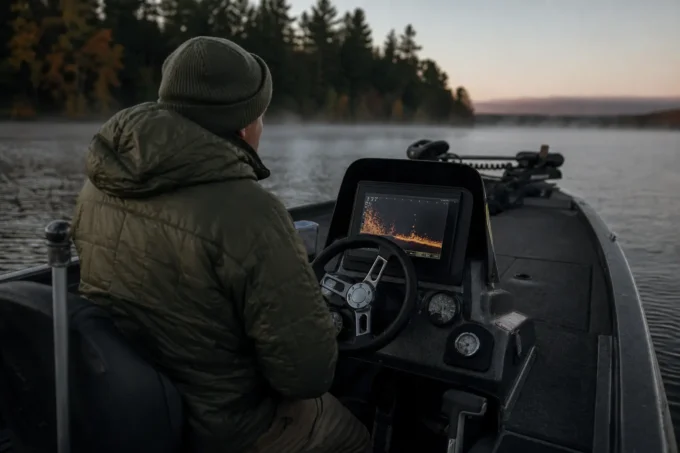
Here is how it went, for anyone who thinks a musky is just a big pike. We left the dock in the dark, which I had never done for a fish before. The guide fired up the electronics the second we hit open water, and suddenly the entire lake was laid out on a screen in front of me like a video game. He called it livescope. It does not just mark fish as little arches on a graph. It shows them, actual fish, hanging in the water column in real time, and it shows your bait drop down next to them.
I will be honest about what that felt like, because it felt like cheating. I expected the guide to say it was cheating. That is the part that surprised me. He did not. He hates the stuff. He told me, in so many words, that livescope wrecked his job, that now he has to run it just to compete with every other guide on the water, and that he wishes the thing had never been invented. Those were his words, roughly. A man selling me a fishing trip, on a boat full of sonar, telling me he wishes the sonar did not exist. I liked him for it.
We worked fish for hours. That part was not cheating, not even close. We would find one on the screen, and then I had to drop a bait to within an inch of a fish that did not want it, over and over, while the guide watched the screen and told me three inches left, now slow down, now stop, you touched his nose, do it again. I touched a lot of noses. Musky are not called the fish of ten thousand casts for nothing. I watched flies. I watched follows. I watched fish look at my bait and decide I was not worth the effort, which is a thing a man does not easily recover from at forty-one.
And then, with five minutes left in the trip, basically parked at the boat ramp, a fish ate. I set the hook, I fought it, we slid the net under it, and there it was. My first musky. I held it the way you are supposed to, in the water, supporting the belly, quick picture, back it went. Done. Ten thousand casts, and I had skipped to the front of the line on a guided boat with a live sonar.
The Hollow Part
Nobody wants to hear a man complain about catching his dream fish, so I mostly kept it to myself. But on the drive home I felt something I could not shake, and it took me a while to name it. It was not that I felt bad. It was that I did not feel as good as I thought I would, and I could not figure out why.
It came down to this. I did not find that fish. The screen found that fish. I did not figure out where it was holding or what it wanted or why it was there in the first light and gone by nine. A computer found it, and a guide told me where to put the bait, and I reeled like I was told. The only muscle memory I used was the part about not dropping the rod. The fish was real. The fight was real. The picture is real, I have it on my phone right now. But the catching, the part that separates a musky from every other bucket of water in the state, that part was done for me.
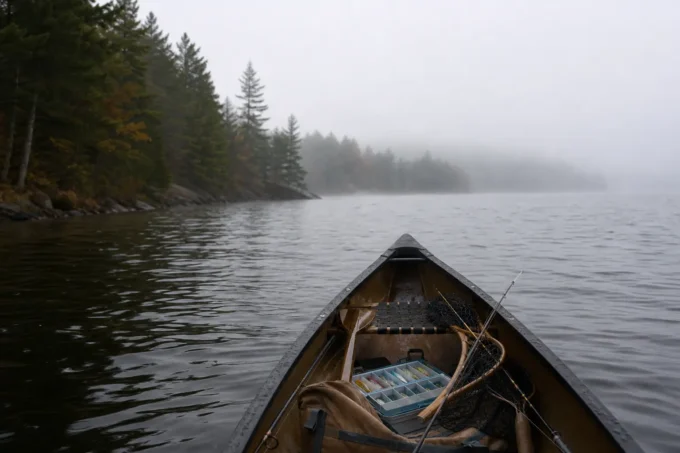
I do not think every man feels this way. Some guys draw the line at a depth finder, some at a trolling motor, some at a cell phone that tells them the moon phase. Everybody draws it somewhere different, and I am not here to tell you where to draw yours. I am telling you what I found out about myself, which is that I want my next musky the way the old-timers got theirs. No screen. No graph. Just me, a canoe, a lake I know, and a lot of time I do not really have.

The Idiot Plan
So here is the plan, and it is a dumb one, which I say with full knowledge of how dumb it is. I am going to go catch a musky out of my own canoe, on my home lake, with no electronics beyond a cheap depth map I already have. The guide told me that is roughly like trying to find a particular house in the dark with a match. He also admitted that fish bite because they have to, not because you found them on a screen, and that plenty of muskies have been caught by men who did not even know what a transducer was.
Here is the honest math. The lake I fish is heavily pressured. The fish in it have seen more lures than a tackle shop clearance bin, and the guide told me that livescope has actually made that worse, that now every guy on the water can find every fish, so the fish have gotten educated. They have seen the same ten jacketed baits dragged past their face a hundred times. They learn. They get lazy or they get picky, and either way you are trying to fool something that has already seen your trick. That is what I am signing up for, on purpose, from a canoe that weighs less than the fish I am chasing.
I will grind it out. I will get skunked, likely a lot. I will tell myself it does not matter, that I already caught one, that the pressure is off. It will not help, because I know the difference now, and I cannot un-know it. A guided musky is a musky I touched but did not really catch. Mine, the one I want, is still out there, probably sitting three feet off a weed line in forty feet of water, watching my lure go by and thinking I am an idiot.
Which, to be fair, is probably accurate.
Why It Matters
None of this is about being a purist, and I want to be clear about that, because there are guys who will read this and assume I am wagging a finger at sonar. I am not. I used it. I would use it again tomorrow if someone handed me the boat. Modern electronics are a genuine marvel, and for a guide trying to put a client on a fish in the dark, they are the difference between a great memory and a long quiet boat ride. I am glad they exist. I am just also glad I got to see what they cost, which is not money.
What they cost, for me at least, was the part of the fish that I actually wanted. The knowing. The finding. The slow grind of paying for a musky in casts instead of in dollars, and then getting exactly one, and knowing in your bones that you earned it. That is the whole reason I got into this late and backwards, with no dad and no uncle and no stories. I did not want to be handed a fish. I wanted to go stand near a lake and figure it out, and fail, and figure it out again.
The forty one and a half inch fish is in the lake somewhere, or maybe it is not, and I will never know for sure, which is kind of the point too. But the next one, the one I find on my own from a canoe with a match in the dark, that one I will not have to argue with myself about. That one just counts.
Ten thousand more casts. I already reset the counter.