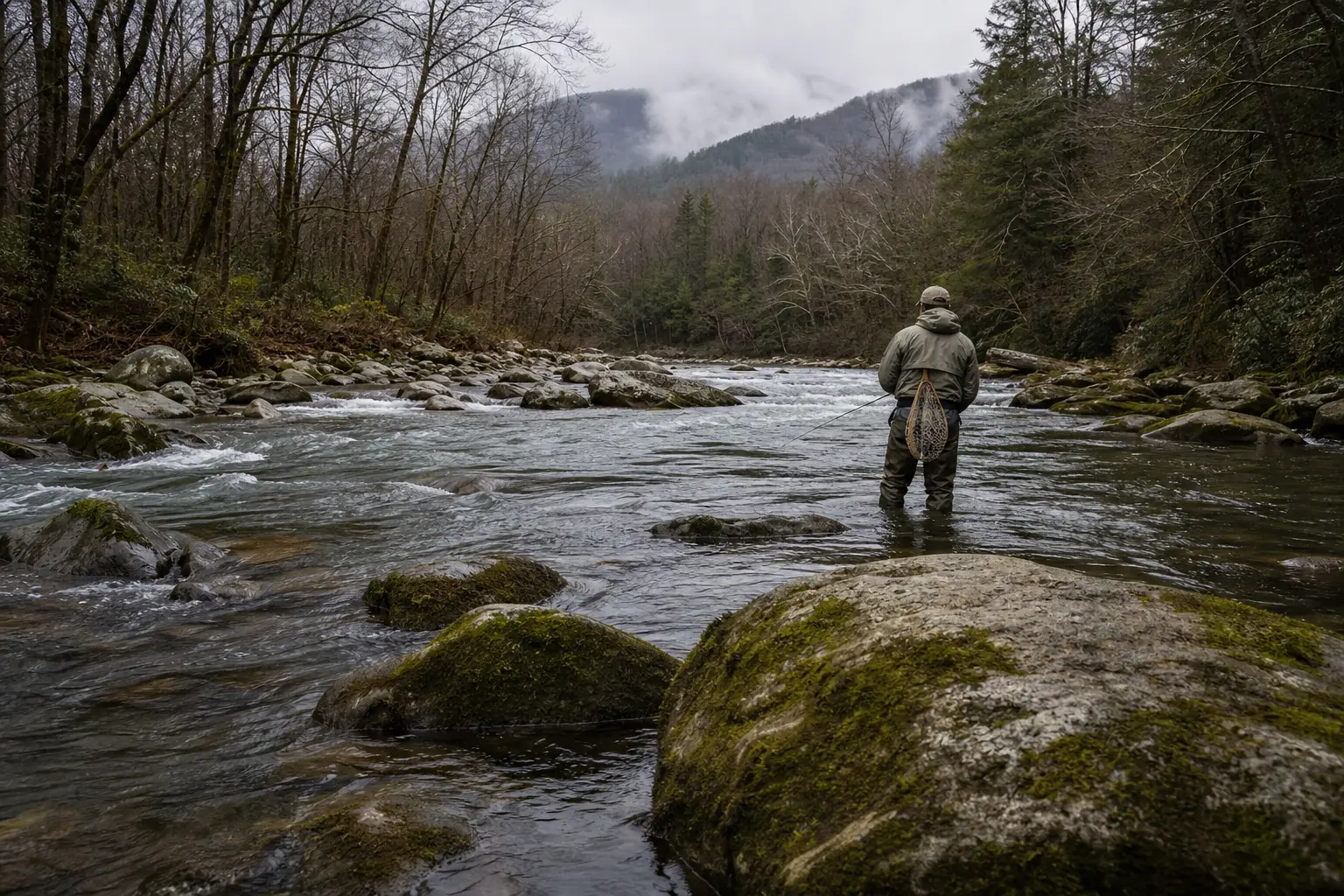
The first time I went fishing by myself, I fell in. Completely in. Waders full of cold river water, rod floating downstream, dignity somewhere at the bottom of a trout pool in the Smokies. I was 22 years old and I’d watched maybe six YouTube videos. That was my entire education.
My uncle had given me an old fly rod — a beat-up 5-weight with a reel that sounded like a coffee grinder — and I’d spent three weeks practicing in my backyard, figuring I was ready. The way those guys on YouTube made it look, fly fishing was just poetry with a stick. Flick the wrist. Lay the line down soft. Watch the drift. Life is beautiful.
What they didn’t show was what happens when you step onto a moss-covered boulder in felt-soled waders and your feet decide they’re going two different directions. I went down like a tree that had been waiting for the right wind. Both hands went up, rod went sideways, and I was suddenly fully submerged in about three feet of fast-moving water that was maybe forty degrees. The shock of it knocked the air out of me before I even registered what happened.
I crawled out shivering, waders full, rod gone. Found it fifty yards downstream wedged between two rocks. Sat on the bank for twenty minutes, soaked to my spine, watching the mist lift off the river. Didn’t catch a single fish that day. Didn’t even make a cast.
That Was Supposed To Be My “Real” Fishing Day
I’d been fishing since I was a kid. Worms on a hook. Bobbers. Bluegill in farm ponds. The kind of fishing where you show up with a pole, a bucket, and no expectations. But fly fishing felt like graduate school. It was deliberate. Artful. You had to read water instead of just throwing bait into it. I wanted to be that guy — the one who could stand in a river and make it look easy.
What I became was the guy who almost drowned in three feet of water because nobody told him moss on river rocks is essentially organic Teflon. I drove two hours home in my underwear because my jeans were still dripping. I had a small cut on my shin from a rock I’d never noticed hitting. I smelled like river bottom and embarrassment.
What Nobody Tells Beginners (And I Had To Learn Wet)
There’s a lot of stuff the YouTube videos skip. Not because the creators are hiding it — because they’ve been doing it so long they forgot it isn’t obvious. Here’s what I wish someone had told me before that first trip.
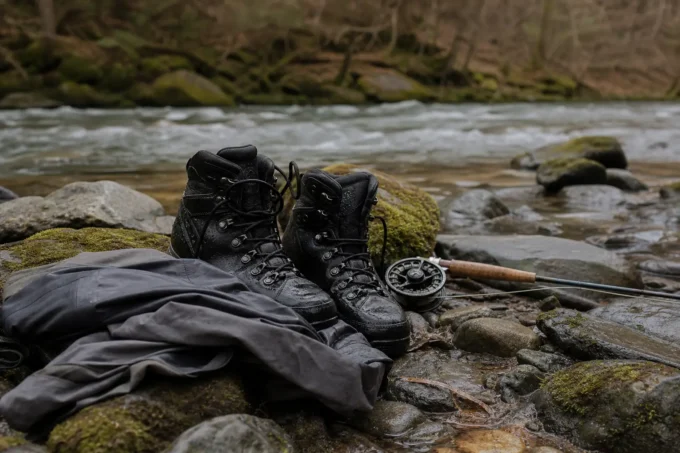
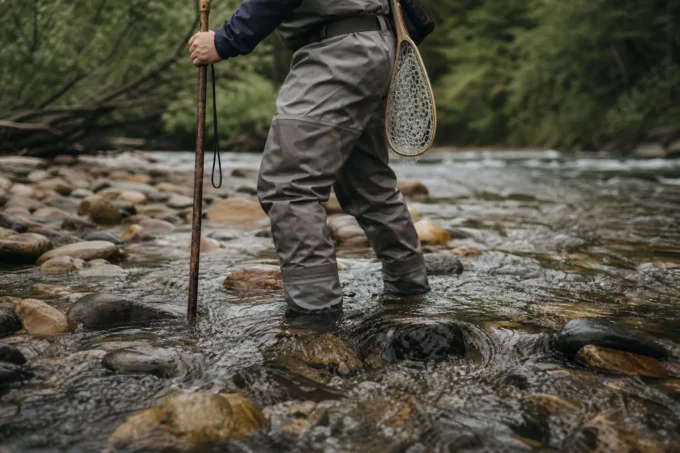
Wading is a skill on its own. Your feet do not automatically know which rocks are stable and which ones will roll the second you shift weight. You have to learn to read the riverbed the same way you learn to read the water surface. Take a wading staff. Plant it before you step. Move sideways into the current, never straight into it. And for the love of everything holy, felt soles are not magic — studded boots or a walking stick will save you more often than any $200 pair of waders.
Your first ten fish will be on someone else’s advice, not your own skill. I caught my first trout on a fly two weeks after the river incident. It was a 12-inch rainbow and I caught it on a Parachute Adams that the guy at the fly shop picked out for me. I was fishing the wrong water at the wrong time with the wrong drift — but the fish was dumb and hungry. I acted like I’d figured something out. I hadn’t. Beginners luck is real, but it doesn’t last. The fish that followed that one did not cooperate. Not for a very long time.
You will lose a lot of flies. Buy cheap ones at first. I tied on a $3 hand-tied Elk Hair Caddis that I’d been saving for a “good day” and lost it on my second cast to a submerged branch. Stood there staring at the empty line like it owed me money. Now I buy a dozen cheap attractor patterns and don’t think twice when one disappears. The tree gets a tithe. That’s part of the deal.
The river doesn’t care about your plan. I showed up that first morning with a mental script: arrive at 6:00, catch the morning hatch, land a few fish, take a photo, be home by lunch. The river didn’t read my itinerary. The hatch happened at 6:40, but I was underwater at 6:17. There is no schedule out there. There’s just showing up and responding to what you find. Some days the fish are feeding. Some days they’re not. You don’t get to negotiate that.
The Day It Clicked
It took a full season. I fished maybe twenty times that year — weekends, early mornings before work, a couple of vacation days I’d banked. Most trips ended with zero fish and a few ended with me still falling on my ass in shallow water because I was rushing to get to the “good spot.” But somewhere around trip fourteen, something shifted.
I stopped trying to catch fish and started trying to understand the water. I’d stand on the bank for ten minutes before even unstringing the rod. I’d watch the surface for rising fish, check the seams where fast water met slow, look for the dark shadows that meant deeper pockets. I stopped casting to where I wanted fish to be and started casting to where they actually were.
One afternoon in late August, I caught a wild brown trout on a size 18 midge that I’d tied myself. Ugly fly. Wrong proportions. The wing was crooked. But the fish didn’t care. I released it without a photo. Didn’t need one. I just stood in the river — dry, for once — and let the moment sit. That was the day I stopped being a guy who went fishing and started being a fisherman.
Start Dumb. Stay Humble.
If you’re thinking about getting into fly fishing — or any kind of fishing — just go. Borrow someone’s rod. Use the $40 combo from Walmart. Fall in the river. Lose a dozen flies. Show up at the wrong time and catch nothing. All of that is better than watching one more video and convincing yourself you’re not ready.
The river doesn’t require knowledge. It just requires showing up. You’ll learn the rest the slow way, which is the only way that sticks. I’ve been fishing for over a decade now and I still make mistakes on almost every trip — bad knots, wrong flies, clumsy wading. The difference is that now I expect those mistakes. They’re the cost of entry. The fish are the bonus.
I still think about that first morning sometimes. The shock of the cold water. The slow walk back to the truck in wet clothes. The certainty that I’d never figure it out. Every time I hook a good fish now, somewhere in the back of my mind is that kid who fell in and kept going. I owe him a lot. He was a wet, shivering disaster, but he showed up. And that’s all it really takes.