The First Time He Walked Past
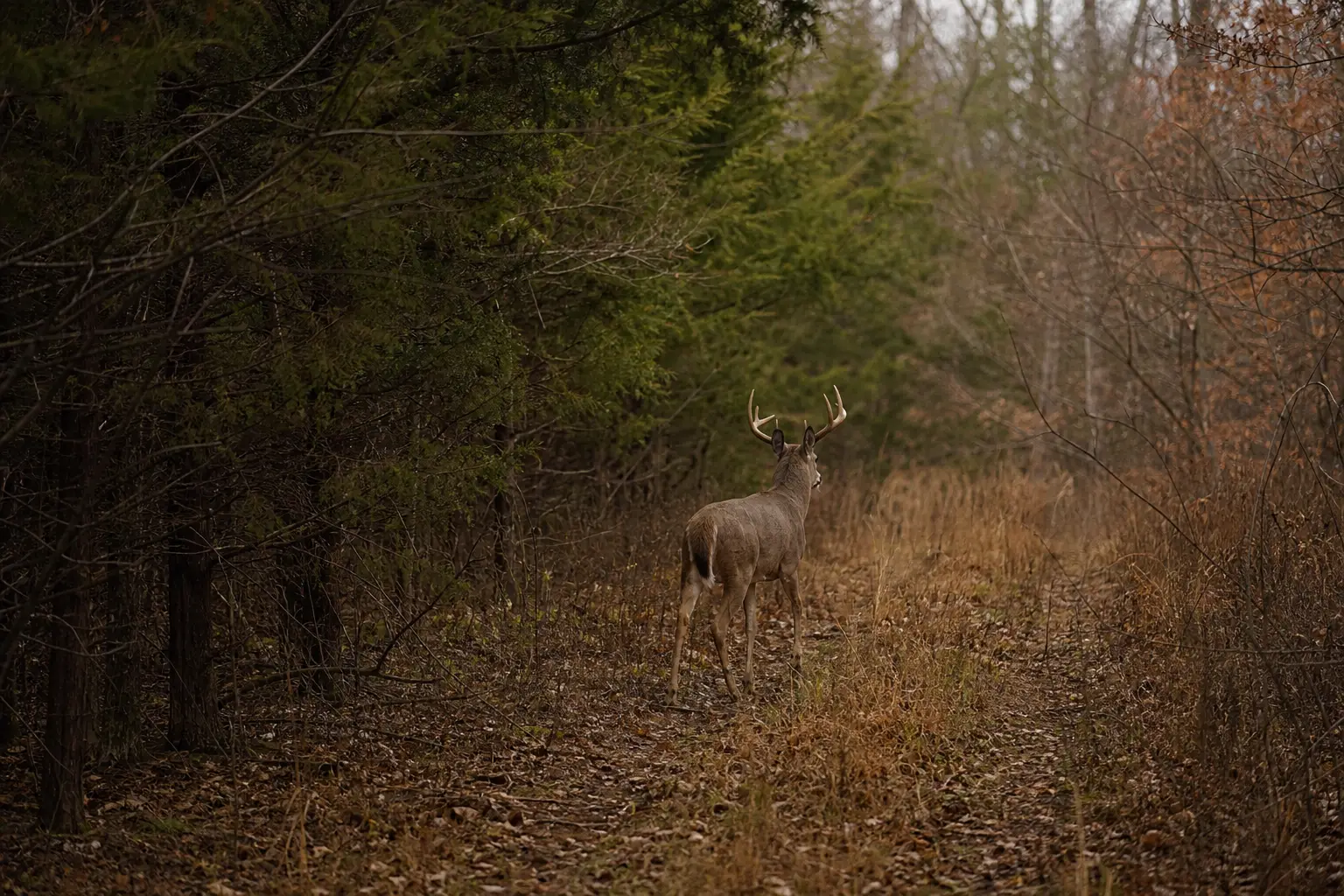
The first time I saw him, he was already leaving. I had been in the same ladder stand since before first light, coffee gone cold, wind right, and I had done everything a serious hunter is supposed to do. Then he came out of the cedar line forty yards to my left, moving like he owned the whole ridge, and I just sat there with my hands empty and my mouth open. He never stopped. He never turned. He walked a straight line through the only gap I could not shoot through, and by the time my brain caught up to my eyes, there was nothing left but the sound of his hooves in the wet leaves. I told myself I had not gotten a shot. That was a lie. I had gotten every shot a man could ask for, and I had been too busy rehearsing how good it would feel to actually draw.
The Buck Gets a Name
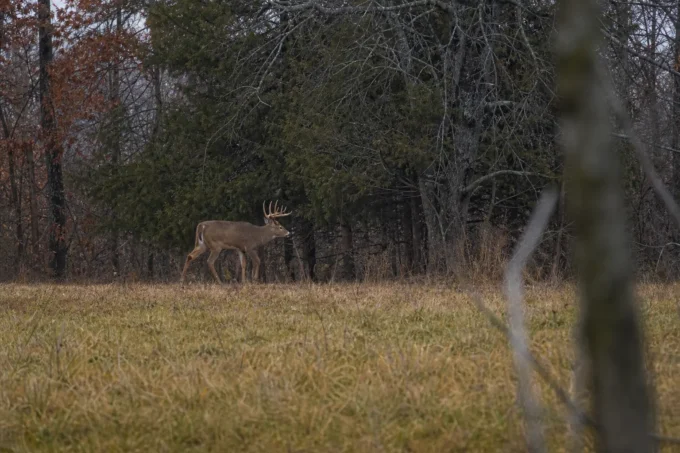
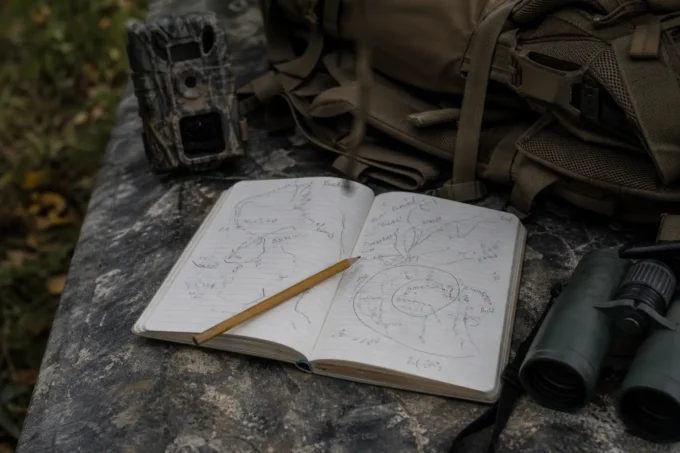
After that morning, he stopped being a deer and became a project. I named him, which was my first mistake. A man does not name an animal he plans to kill unless he has already decided the animal owes him something. I started keeping a notebook. I drew little maps of the ridge with arrows showing where he traveled. I bought a trail camera and pointed it at a scrape he worked. I talked about him at the gas station like he was a boss I was trying to impress. The more time I spent thinking about him, the more convinced I became that I had earned him, that the whole point of the season was for him to show up and let me finish what I had started. That is exactly the kind of thinking that makes a buck of a lifetime walk right past you a second time, which is what he did.
The Second Time Was Worse
The second time, I was ready. I had my release on, my bow in hand, my heart hammering in my ears the way it does when the waiting finally turns real. He stepped out broadside at thirty yards and I did not even hesitate. I drew, settled the pin, and pulled the trigger through him. The arrow tipped a branch I had not seen, a twig no thicker than a pencil, and it went just under his belly and buried itself in the dirt. He did not run. He looked at the arrow, looked at me, and then he turned and walked back into the timber the way a man walks away from a minor inconvenience. The branch was exactly one inch from being nothing. One inch. I sat there for a long time and thought about that inch, and about how for the rest of my life I would be able to describe it perfectly, the way a man remembers a losing lottery number.
Every Man at Deer Camp Has This Story
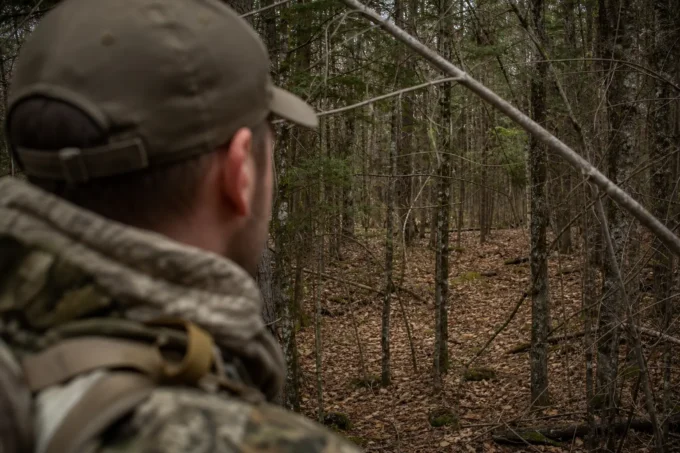
That is when I started noticing that every man I know has the same story. Not the same buck, but the same shape. The old man at deer camp told me about a giant that came charging into a grunt call and stood tucked in the juniper, flailing his drop tines around while he worked a scrape, and then slowly faded back into the timber without offering a single clean angle. Another guy told me about an arrow that hit a tree by an inch and said he was thinking about getting the tree mounted instead of the deer. He was joking, but he was not really joking. The tree is all he has from that morning. We all have our branches, our junipers, our one inch of nothing. We tell these stories with a laugh, but the laugh sits on top of something heavier, because a near miss with a big buck is not the same as a clean miss. A clean miss you can forget. A near miss follows you into every stand you ever sit in again.
Where the Habit Started
I know exactly where my habit started, and it did not start on a ridge. It started in my garage, years before I ever saw him, back when I decided that hunting was mostly about having the right stuff. I bought the expensive bow, the range finder that talks, the boots that cost more than my first car, and I practiced shooting until I could stack arrows in a fist sized group at forty yards like it was a trick I had already mastered. I treated the target like the test, and the test was always the same, and the test always let me pass. A foam deer does not walk past a gap at dusk. A foam deer does not come in chasing a doe and show you nothing but its back. A foam deer gives you the same angle every single time and never moves, and that is why I was so good in the garage and so useless in the real woods. I had trained myself to be ready for the only shot that never actually happens.
The Shot That Is Nearly Always Bad
The truth I refused to learn is that the shot you actually get on a mature buck is nearly always a bad one. It comes through brush, or at a hard quartering angle, or for one single second before he turns and walks off. The buck of a lifetime does not stand broadside and wait politely for you to settle your pin. He turns. He walks. He catches your wind. He shows you his back while a doe gives you chance after chance right there in the open, mocking you, because he knows exactly what he is doing and you do not. I spent three seasons complaining that I never got a good shot, and what I meant the whole time was that I would only take the shot I had rehearsed, and the real animal never once stood still long enough to pose for it. I was not being denied. I was being tested by a deer, and I kept failing the same way, which is to say I kept waiting for the deer to act like the foam target and not like a deer.
Learning to Take the Awkward Shot
The fix was not more gear, which is what I wanted it to be, because more gear is easier than more discipline. The fix was practice that looked almost like failure. I started hanging my target at angles I did not want. I set up behind branches on purpose. I shot arrows at a quartering away silhouette until the awkward angle stopped feeling like a reason to wait and started feeling like just another shot. I learned that the moment when everything feels wrong is not a sign to freeze. It is the moment the buck gives you, which is the only moment you are ever going to get. The animal does not owe me a perfect presentation. He owes me nothing, and the sooner I stopped acting like he did, the sooner I stopped freezing when the shot got ugly.
Why the Buck Still Haunts Me
I never did kill him. I saw him twice more over the next two seasons, each time too far, too quick, or too deep in the cover, and each time I had to sit still and let him walk. But here is the thing I came to understand, the thing that sounds soft until you have lived it. The buck was not the point. The buck was the teacher, and the lesson was not about shooting better, it was about staying ready for a moment that will never announce itself. A mature buck does not walk past you twice by accident. He walks past you twice because you were not actually paying attention either time, and the third time, if you are lucky and honest and a little bit older, you will notice that your hands are already on the bow, your release is already on, and you have been breathing slow all morning like a man who finally understands that the shot is coming whether he is comfortable or not. I still think about him. Every man I know still thinks about the one that got away. The difference now is that I am not thinking about him as the deer I should have killed. I am thinking about him as the deer who taught me to stop waiting for a perfect shot, because a perfect shot is just another way of saying a shot you never actually had to take.