The Shot Was the Easy Part
The buck was down before I could lower the rifle. A clean double-lung at sixty yards, broadside over a scrape he had been working since first light. The shot felt better than it had any right to. I sat in the stand for the full thirty minutes, ticking off the seconds while my heart came down, and I remember thinking the hard part was already wrapped up and put away. That was the first mistake, the one every other mistake in that whole afternoon leaned on. A clean shot is a gift, but a gift you have to carry out on your own back, and I carried mine out wrong.
My wife had asked me a small thing over coffee that morning. She wanted to tan the hide, not just put the head on the wall. She had watched some video about brain-tanning and had gotten it into her head that a buck’s hide, done right, could hang on the wall as soft as a blanket. I said sure, no problem, I will keep the hide whole, and I said it the way a man says sure when he has no idea what keeping a hide whole actually costs. It sounded like a nothing promise. It was not a nothing promise. It was the second mistake, and it rode in my pocket the rest of the day like a receipt I had already signed.
The Promise That Changed the Drag
Here is what a clean buck looks like ten minutes after the shot when you have promised to save the hide. He looks like eight hundred pounds instead of one hundred and fifty. He looks like a job, not a trophy. If I had opened him up right there and done the field dressing the way every other man on that ridge does it, the meat would have cooled and the guts would have been out and the worst of the drag would have been honest work. But you cannot field dress a deer and keep a whole hide for tanning the lazy way, so I made a plan. I grabbed him by an antler and I started walking him down the hill.
The hillside behind that stand was not a trail. It was a logged-out mess of downed timber and brush, a slope a man slips on even when he is empty-handed. I was not empty-handed. I had a whole buck, hide and bones and all of it still inside him, and I dragged him through every log on the way down. I told myself it was fine. I told myself the hide would survive it. I was so focused on the hide I forgot there was something under it that mattered more.
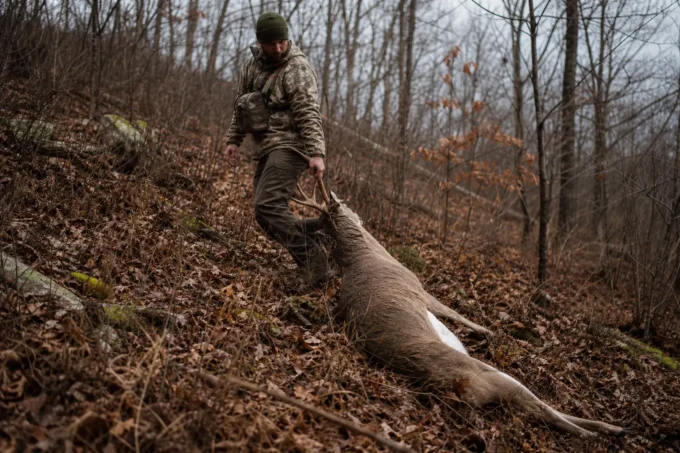
The Ride Down the Hill
A dead animal dragged over downed timber does not float. It flops and it rolls and it catches, and every time it catches, something inside takes the blow. His ribs took most of it. I could hear it, the crunch of bone and meat and lung against the logs, a sound I told myself was just the brush. I heard it a dozen times and every time I heard it I kept pulling, because stopping felt like giving up and I had already decided the whole way down that the hard part was the walk, not the deer. The walk was the easy part. I just did not know it yet.
By the time I got him to the bottom and to the truck, I was sweating and proud of myself. I had saved the hide. I had done the manly thing and dragged him out whole, the way some of the old stories talk about it. I looked at him in the bed of the truck and I saw a whole hide and a whole animal and I saw a job done. I did not see what the logs had done to the meat underneath. I did not see it until the knife came out and the animal laid open, and by then it was too late to take any of it back.
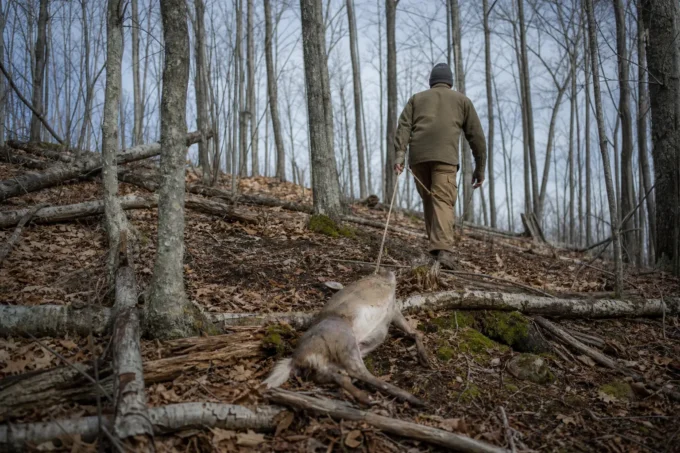
What the Knife Found
Bloodshot is a word that sounds small until you see it spread across a whole side of a deer. It is bruising so deep it turns the meat dark, blood forced out of the broken vessels into the tissue, and it happens when an animal gets knocked around after the shot. A sharp, clean kill does not make bloodshot. A drag through a hundred logs does. I skinned him out and the side that had ridden against the timber was ruined in broad patches, the ribs bright with trauma, the meat we were supposed to eat stained the color of a storm. The butcher would trim what he could and the rest would go somewhere a man does not want to think about, and all of it, every ruined pound, was a thing I did with my own hands after the animal was already dead.
I stood there over the deer I had shot clean and I finally understood the lesson the afternoon had been trying to hand me all along. The shot is not where hunting ends. The shot is where the second job starts, the quiet job nobody posts a picture of, and I had treated that second job like an inconvenience instead of the whole point. I had worked harder than the job required and ruined more than the job allowed, all because I wanted to save a hide and could not be bothered to do it right.
The Rule I Ignored
Every old-timer in camp says the same thing in different words, and I had heard it for years without ever hearing it. Field dress fast. Get the guts out, get the meat cool, keep it clean. That is not a suggestion for other men. It is the reason a clean shot becomes food instead of dog meat. If I had dressed him on that ridge before the drag, half the weight comes out, the meat starts to cool, and I carry him down a hill that suddenly asks less of both of us. I did not do that. I carried the whole animal, warm gut heap and all, and I smashed him against the timber because the hide, the part I was protecting, was worth more to me in that moment than the meat I was supposed to bring home.
The worst part is that I knew better. I have dressed deer before. I know what bloodshot looks like and I know what causes it. I just decided, in a hurry and with a promise ringing in my ears, that this one time the old rules did not apply to me. That is the only way a man ruins a good deer. He does not do it in ignorance. He does it because he is in a rush and he is proud of the small thing he did and he stops respecting the animal somewhere between the shot and the truck.
What I Do Now
These days the knife comes out before the drag, every time. I keep a clean game bag and a sharp blade where I can reach them, and I do the field work on the ground where the animal fell, the way the animal deserves, before I ever think about the hill or the truck. When my wife wants a hide for tanning, I quarter and skin and treat it with the care it needs on the spot, and I accept that doing it right takes longer than doing it proud. The meat stays clean, the hide stays whole, and nothing gets smashed against a log because I am too good to walk back for the frame pack.
The buck from that day still hangs on the wall, a nice rack and a story I do not enjoy telling all the way to the end. The hide my wife wanted is soft on the wall too, and she did a fine job with it, and maybe that is the only part that came out whole. But every time I look at that deer I remember the sound of his ribs on the logs, and I remember that a man can shoot as clean as he has ever shot and still lose the animal in the walk home. The woods do not care how good the shot was. They only care whether you respected the animal on the ground, and I spent a whole afternoon learning that respect is not a thing you show with a rifle.