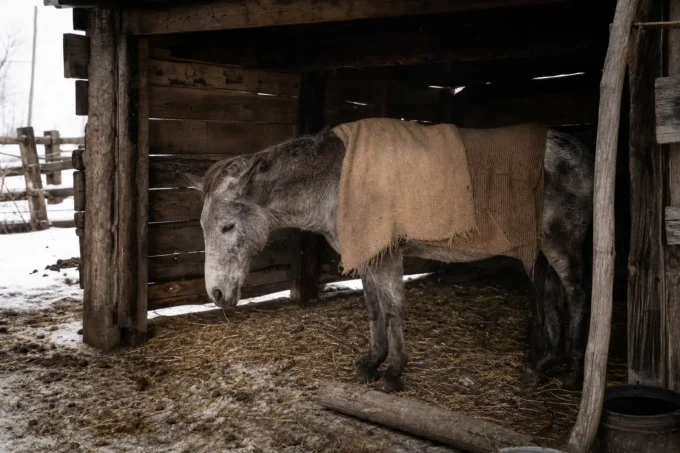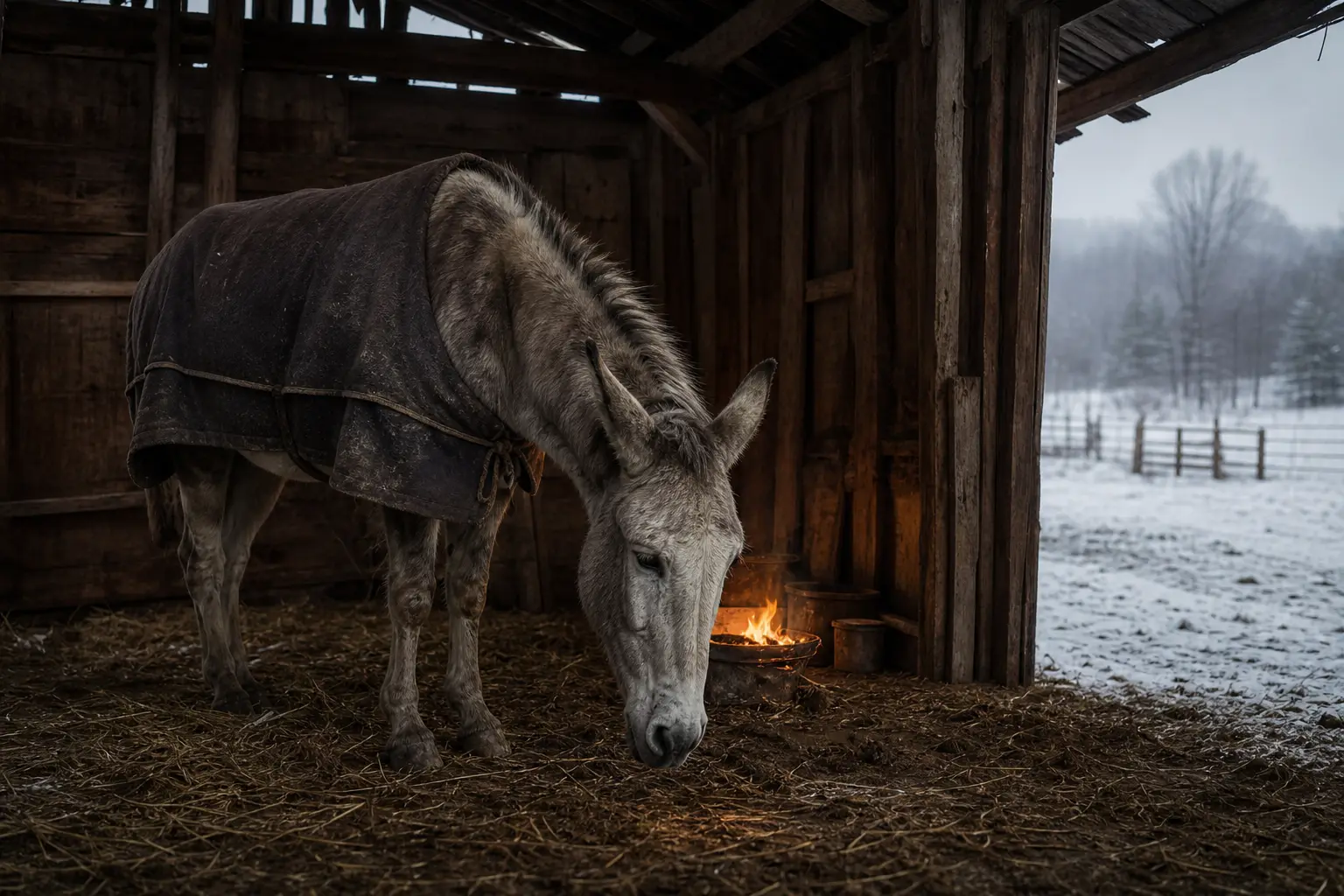
A cold come through the holler last week and took the old mule in the chest. She aint a young mule, that gray one, and she’s pulled every plow line and dragged every cord I ever piled on her, so when she stood in the lean-to this morning with her head down and her ears drooped like wet rope I didn’t have to ask her what ailed her. She done told me without a word.
Thursday, February 4, 1904
Ground’s froze three inches and the wind come out of the northwest like it had a grudge against a man’s coat. I went out to the lean-to at first light and there she stood, that gray mule, not at the hay rack, not pawin, just stood with her nose about a foot off the ground like she was readin somethin wrote in the straw. Off her feed two days now. I run my hand down her flank and she didn’t even lay her ears back, and that’s when you know a mule’s truly sick, when she aint got the spite left to pin em.
Amos’s note in the margin, in the same stub of pencil: “a mule will work herself to death for a man and never once ask him to notice. so when she stands still you’d best notice, cause she aint standin still from choice.”
I built up a fire in the lean-to, not for me, for her, and I spent the day doctrin a critter that’s pulled this place through ten winters. Warmed a mash of corn and hot water and poured a little molasses in it, the way my daddy done for a foundered horse. She wouldn’t take it at first, just stood and breathed it in, till finally she bowed her head and took a few swallows like she was doin me a kindness. I rubbed her legs down with a rag and some coal oil I keep for the purpose, wrapped a old blanket around her middle, and she let me do it, which from that mule is about as much soft as she’s ever handed anybody.
Amos, later, near the bottom, after Martha had brought out a tin of hot coffee and stood with him a while: “a good mule aint a animal, she’s a partner you never shook hands with. you dont know how much a place leans on a mule till she lays down, and then every fence post and every furrow leans with her.”
By dark she’d took most of the mash and her ears come back up some, not much, but enough a man could tell she meant to stay on her feet. I left the lantern hung low in the lean-to and told her I’d be back fore light with more hot mash, and if she was waitin there to take it then the winter could do its worst and we’d both still be standin come spring.