The Water Nobody Wants to Touch Kept Dinner Under It
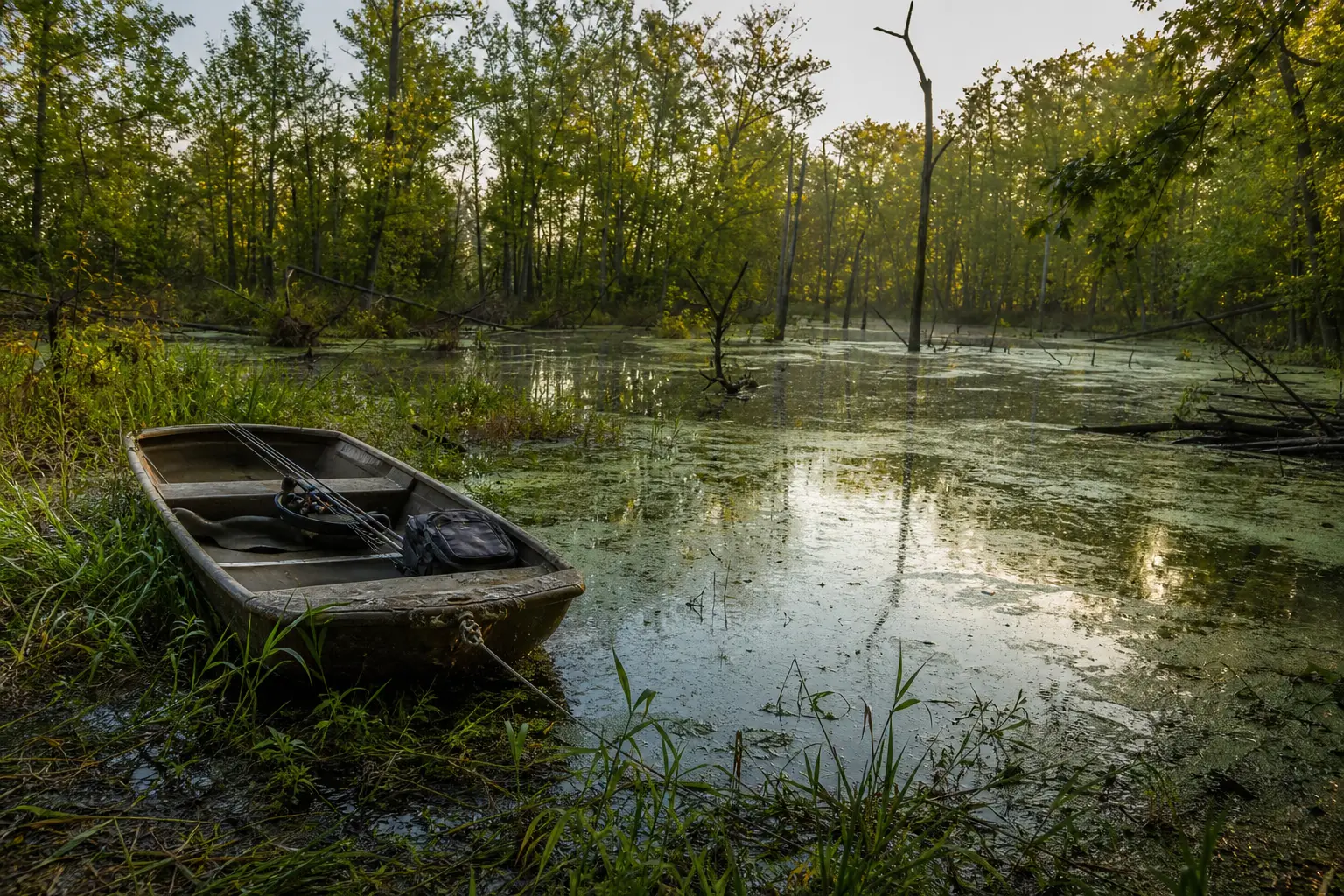
For thirty years I walked past the same slough on the way to the treestand and never once looked at it as anything except an obstacle. It smelled bad in August, it ate one of my boots in 2014, and the only thing I ever thought it held was leeches and a snapping turtle the size of a hubcap. I am a hunter. I shoot deer, I catch trout, and if a food source cannot be approached with a gun or a rod in my hand, my brain files it under scenery. The water was scenery. It turns out the water was a pantry, and I spent three decades treating the door like it was nailed shut.
A Man Who Owns a Frying Pan and a Grudge
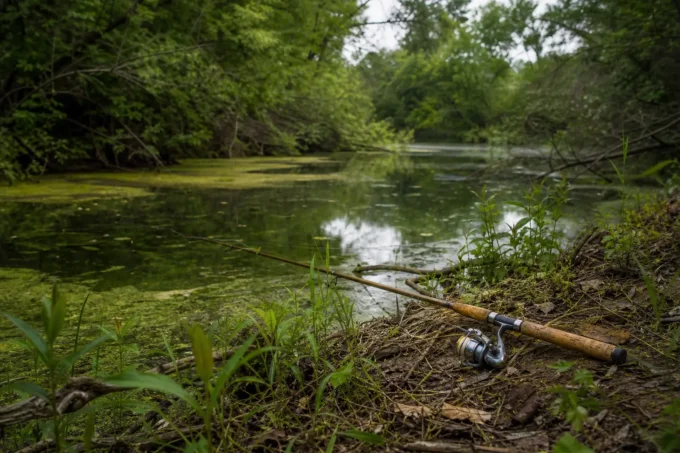
Last fall a friend named Marcus asked what I planned to do with the slough now that the does had moved off the ridge. I said nothing, because that is what I always say about water that does not hold trout. Marcus grew up poor on a river bottom in Arkansas, and he gave me the look a man gives you when you just told him you have been throwing away money because the paper felt unmanly. He asked if I knew what wapato was. I said it sounded like a brand of work boots. He asked if I knew what American lotus root tasted like. I said I did not eat pond weeds, because I am not a carp.
That is the whole problem, and I can see it now with the clarity you only get after you have been wrong in front of somebody for an hour. I had decided that digging food out of mud with my hands was a step down from hunting, as if the deer cared what tool I used to take its life versus what tool I used to dig up a tuber. Hunting was honest work. Gathering was what you did when you could not hunt. I had never once said that out loud, which is how the dumbest beliefs survive, because they are only embarrassing when you have to put words to them. Marcus put words to them for me, and for a while I wanted to push him into the water.
The Root Under the Muck
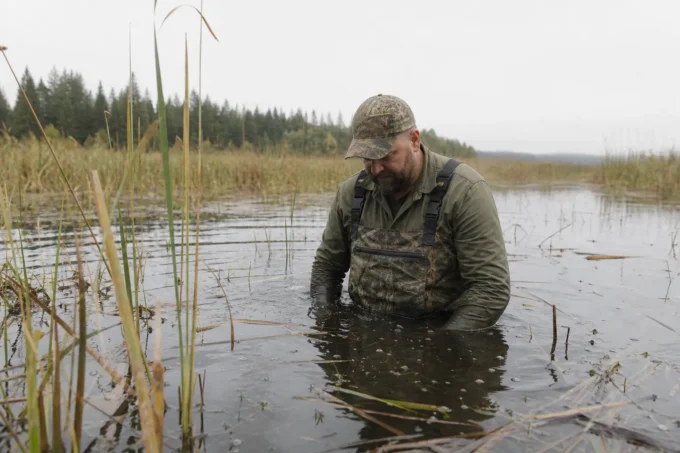
So I waded in. Not gracefully. I am built like a man who uses a four-wheeler even when the walk is short, and standing waist deep in a September slough with the cold creeping up my spine, I understood very quickly why the old timers who remembered wapato were mostly dead and why nobody had bothered to teach me. The cattails grew thick at the edges. The bottom was soft and it took my boots and tried to keep them, and every step felt like the ground was voting on whether to let me back out.
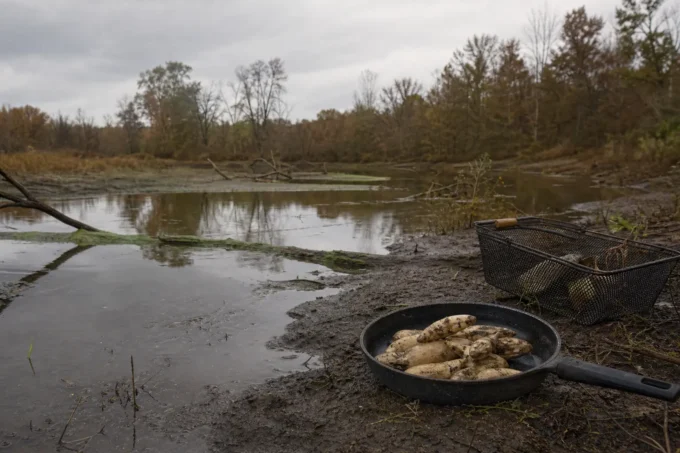
Wapato, also called duck potato or broadleaf arrowhead, is a tuber that grows at the end of long runners in the mud, and the way you find it is the reason the whole practice died out in most of this country. You work it loose with your toes. You stand there in cold water with your socks long gone and you feel for the little walnut sized bulbs down in the black silt, and when your foot rolls over one you pull your leg up and reach down and wrestle it free. It is the least dignified thing I have ever done in service of a meal, and I have gut shot a deer in the rain and then crawled through brambles to find it. This was worse, because at least the deer had the decency to be moving.
The first hour produced nothing but mud in my fingernails and a growing certainty that Marcus was playing a trick on a middle aged man who had once laughed at his mushroom stick. Then my toes found something round and firm, and I pulled up a tuber the size of a golf ball, tan skin, shaped a little like a tiny potato with a pointed end. I held it in my hand and looked at it and felt, for one honest second, like I had just been handed something that people used to survive on and that I had forgotten on purpose. Which I had.
The Lotus Was Never Meant to Be Pretty
American lotus root was the part that almost made me turn back. The plant covers a pond in July and August with leaves the size of dinner trays and seed pods that look like showerheads, and it is beautiful to look at from the bank and a horror to actually harvest from. The root runs through the mud in thick segments, and you do not dig it so much as you follow it, hand over hand, through the cold black muck, because it breaks if you try to yank it. I spent forty minutes bent at the waist with water up to my ribs, following a root that felt like it had no end, while a pair of wood ducks watched me from twenty yards away with the specific pity of animals that know they did not have to be there.
When I finally hauled a section loose and rinsed it off, I held what looked like a length of sausage the water had gone off. I was cold, my back was done, and I had a root that from a distance looked inedible and up close looked like it had already been eaten once. But here is the thing none of the books tell you when they write about foraging as a gentle pastime. You do not clean a lotus root on the bank. You carry the mud home under your fingernails, and you slice the root thin across, and you see those holes that make it look like a lace doily, and then you put it in a pan with butter and salt and a little garlic, and it turns translucent and tastes like a cross between a water chestnut and a very good potato. Nobody in my family had eaten it in four generations. It should have made me proud. It mostly made me sad that I had stood on that bank for thirty years and called it scenery.
What the Mud Cost Me to Learn
I went back three more times before the water went cold, and I learned the actual lessons that matter, the ones that do not fit on a pretty Instagram caption. First, the mud keeps score. Every hour I spent bent over that muck was an hour I used to spend sitting in a treestand waiting for something to wander past and hand itself to me. Hunting rewards patience paid on its own terms too, but gathering asks you to work the whole time, and I had forgotten what that felt like. My first deer, when I was seventeen, dropped in its tracks and I still think about the weight of dragging it out. Wapato makes you earn every single tuber with your feet, one at a time, and it does not let you brag because the work is too stupid looking to brag about.
Second, the food was never the point. The point was that I had drawn a line through the world and decided which parts of it were allowed to feed me, and the line was not based on anything except pride and a gun I liked holding. The slough had been there the whole time. The lotus had been there the whole time. The only thing that had to change was the story I told myself about what a man does with his hands, and changing a story is harder than changing a boot, which I had to do, twice.
Third, and this is the one I keep going back to, none of it was hiding. I was the one who was hidden, hunkered behind a fence post in my own head, certain that the only honest food was the kind I killed with something loud. The water did not keep anything from me. I kept myself from the water, and I dressed the refusal up as taste and then as practicality and then, when both of those ran out, as some idea of what a hunter is allowed to want. It was never about the pond. It was about me, the way every single thing I have ever learned in the woods has turned out to be about me.
I still prefer a deer on the ground to a root in a bucket. I will not pretend the swamp vegetables beat backstrap, because they do not, and anybody who says they do is selling you something. But the night I fried the lotus and roasted the wapato in the oven with oil and salt, and set it next to a venison steak from the buck I took two weeks before, I understood what I had been missing was not a food group. It was the door. The woods and the water have been trying to feed me since I was a boy, and I spent thirty years eating only the parts that could be approached with a weapon because I was scared that opening the rest of the door would make me soft. It did not make me soft. It made me a little less of a fool, and I will take that trade for what it cost me, which was a pair of boots and most of an afternoon and the entire comfortable story I used to tell about who I was.