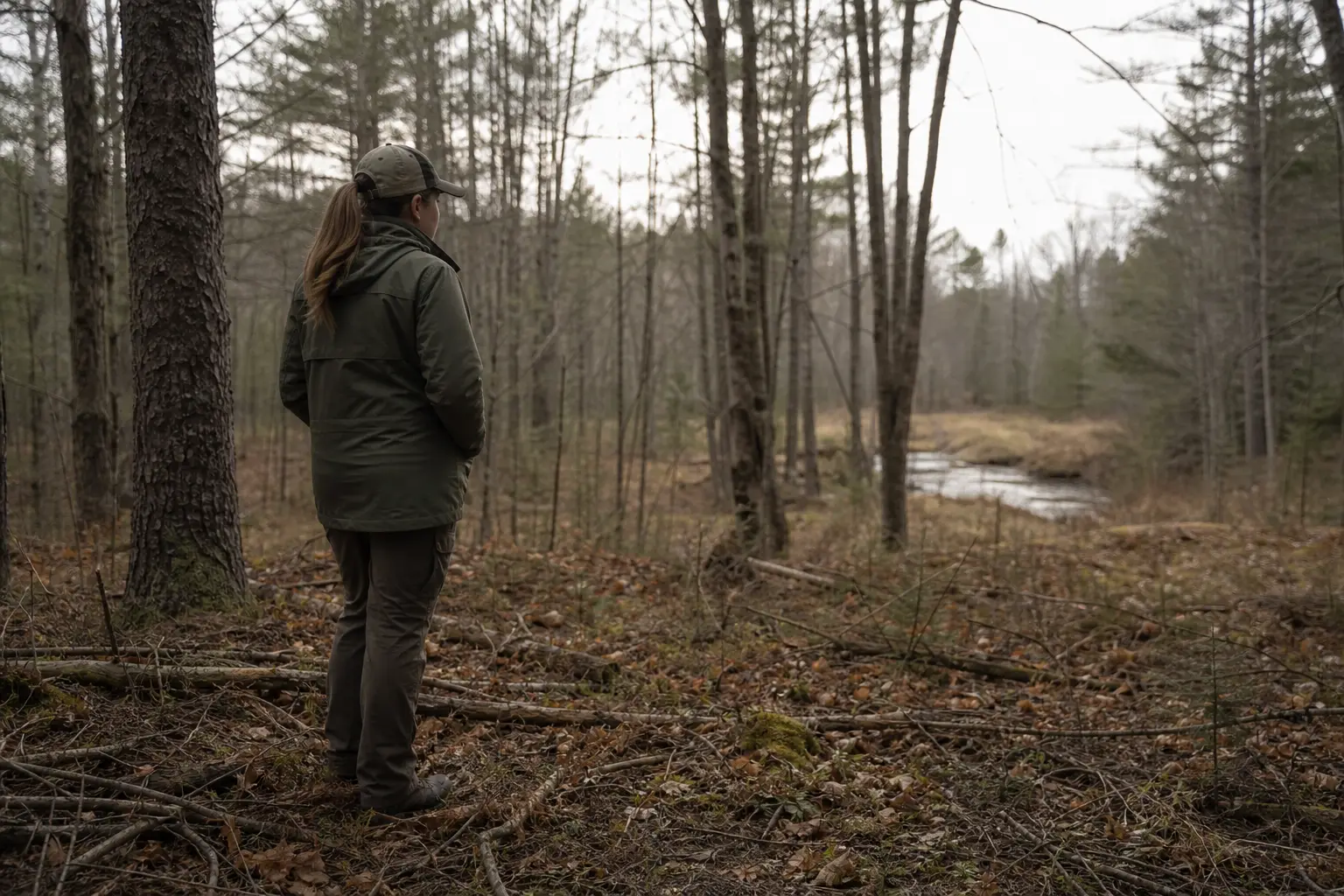
The Question at the Dinner Table
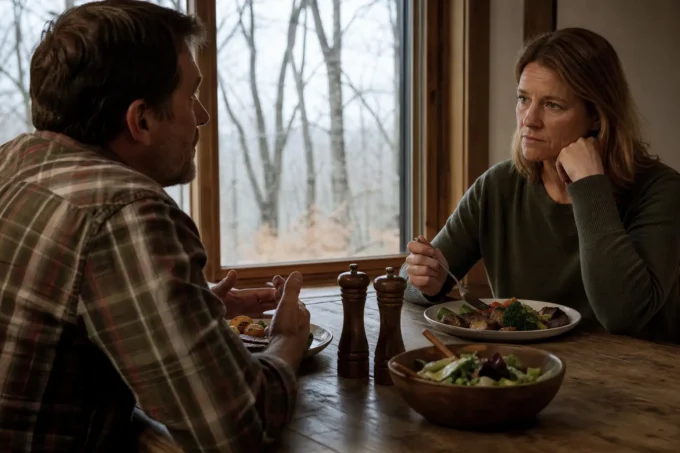
A woman I have known for twenty years put down her fork and asked me, in a voice that was trying hard to stay polite, how I could enjoy killing something. We were eating venison. I had cooked it, which means I had shot it, field dressed it, quartered it, and carried it out of the timber on my own back before it ever became the sliced roast on her plate. She knew all of that. The question was not about the roast. It was about me.
I did what every hunter does in that moment. I opened my mouth and let the wrong answers fall out, one after another, like change from a torn pocket. I said it was about conservation. I said deer populations need management. I said a clean shot is quick and merciful compared to a cow in a feedlot. All of it was true, and none of it was the answer to the question she actually asked, because the word she kept coming back to was enjoy.
That is the word that stings, and it is the word I spent the better part of a decade dodging. I wanted her to understand the reasons, the data, the management plans, the herd health. What I did not want to do was sit there and tell the truth, which is that the worst moment of every season is also the moment I keep going back for.
Killing Is the Smallest Part of the Day
People who do not hunt imagine that the kill is the point of it, the dessert at the end of a long meal of sitting still. They picture a man sighting in on something beautiful and feeling a great wash of triumph when it falls. I understand where the picture comes from. I have seen it painted ten thousand times, and I have bought into pieces of it myself. The picture is a lie.
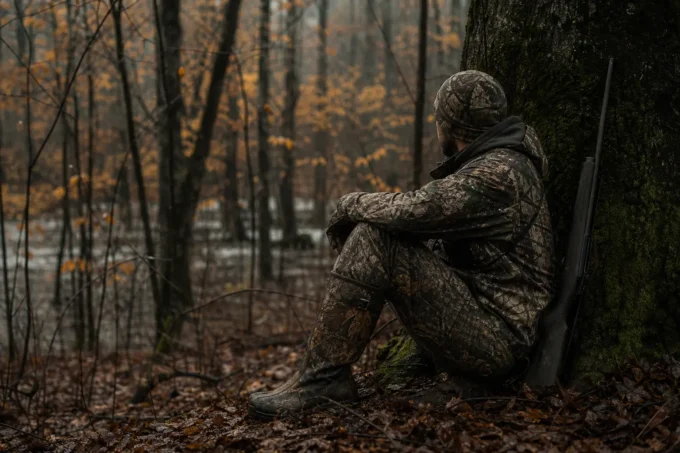
The kill is not the part that fills me. The fill comes long before the trigger, in the hours where nothing has been shot and everything is still possible. It comes at four in the morning by a cold stand, when the woods wake up around you one bird at a time. It comes in the first gray light that tells you the night is finally finished and you did not bail. It comes in the long minutes watching a scrape line and knowing, with a certainty you cannot explain but feel in your spine, that something is moving just outside the dark, and you are not the only breathing thing within a mile.
The trigger pull is about a second of my year. The field dressing is an hour of honest, cold work. The killing is real and it is final and it has weight, but calling hunting the enjoyment of killing is like calling a marriage the enjoyment of signing a contract. The signature matters because of everything on both sides of it. You would never reduce the whole thing to the pen stroke.
Enjoy Is the Wrong Word
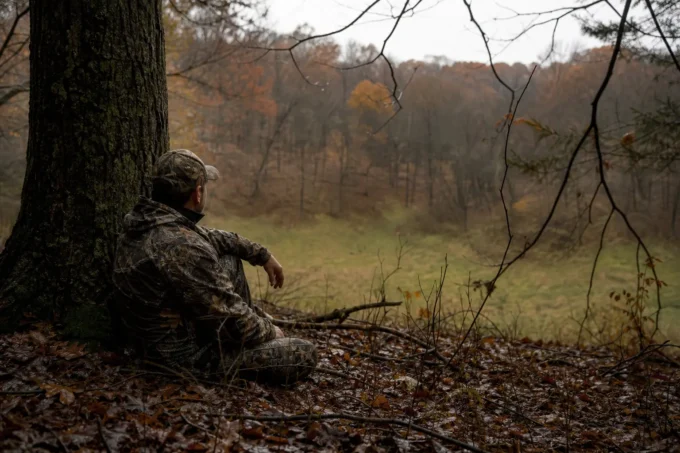
Here is the part I avoided saying at that table, and the part I will say plainly now. I do enjoy it. Not the death. I enjoy the part where an animal steps out and every cell of me that has been half asleep for eleven months snaps awake at once. I enjoy the part where my heart pounds so loud I am sure the deer can hear it, and somehow it does not spook. I enjoy the part where I walk up on what I have shot and kneel down and feel, in equal parts, the satisfaction of a clean kill and the heavy knowledge that a living thing is gone because I decided it should be.
Those two feelings are not enemies. The hunters I trust most are the ones who feel both at full volume. The man who feels only triumph scares me. The man who feels only grief usually stops. The honest place, the one that keeps me going back year after year, is the place where the two sit side by side and neither cancels the other out. That place does not have a tidy name. It is not enjoyment and it is not sorrow. It is the real cost of meat, paid in full and held in your hands while the animal is still warm.
What a Hunter Knows That a Store Shrouds
I did not grow up hunting. I grew up buying meat in white plastic from a bright case, and for a long time that arrangement let me believe some comfortable things. It let me believe that food appears without anyone’s hands getting dirty, that death happens somewhere else to something else, and that the transaction between me and the animal was simply a monetary one. Hunting ended that fantasy in a single morning.
The first deer I ever killed taught me more about what I eat in one hour than twenty years of grocery runs ever did. I learned that an animal is heavy in a way that surprises you. I learned that the work does not end when the animal drops, and that the moment after the shot felt the way it did because I had never before been the direct, unavoidable cause of a death I was then going to feed my family with. That is a strange and clarifying burden, and it is one that a shrink wrapped package spares you. I came to believe that being spared it is not a kindness. It is a quiet way of being separated from the truth of your own dinner.
The Debt You Carry Home
So what is the answer to the question, finally, the one I should have given instead of my recited list? It is this. I kill because it is the only arrangement with meat that has ever made me feel honest, and I keep doing it because the feeling does not go away when the season ends. It follows me to the freezer. It follows me to the table. It is there when I cook for people who have never seen the deer on the hoof, and it is the reason I cook that meat with more care than I ever gave a store bought cut.
The truth is that the killing was never the part I enjoyed, and for years I said the words backward until they stopped meaning anything to me. I enjoy the discipline it demands. I enjoy the silence it requires and the attention it forces. I enjoy being the kind of person who knows exactly what their meal cost, because knowing the cost is the only thing that makes the meal worth a damn. If that scares a person at a dinner table, I do not blame them. It scared me too, right up until the moment it set me straight.
I never did give the woman a good answer that night. I gave her facts and figures and a little bit of defensiveness, and she was too polite to press. But I think about her question more than I think about almost anything else from that year, because she was not wrong to ask it. She was asking the one question a hunter should be able to answer without flinching, and I flinched. Now I do not. I kill what I love spending all year around, and I eat it, and I sit down across from people who cannot understand why, and I try to tell them that the death was never the point. The point is that somebody finally stopped pretending it could be left out.