The folder was never just recipes, and after the last one Amos told the house to flop it shut. Behind the back cover, tied flat with an old boot lace, lay the loose pages that held no recipe at all, each one dated at the top and written the way a man writes when he’s too tired for decoration. Diary pages. Amos kept no ledger and owed no man an account, so these short entries are about as near as he came to settin his own history down.
This one is dated Wednesday, March 3, 1903, and you can tell from the ink it was wrote after dark, by the fire, with the steam of a long day’s boil still on the room. The cedar shingle Amos used for a bookmark has a dog-ear where he set it down wet.
Wednesday, March 3, 1903
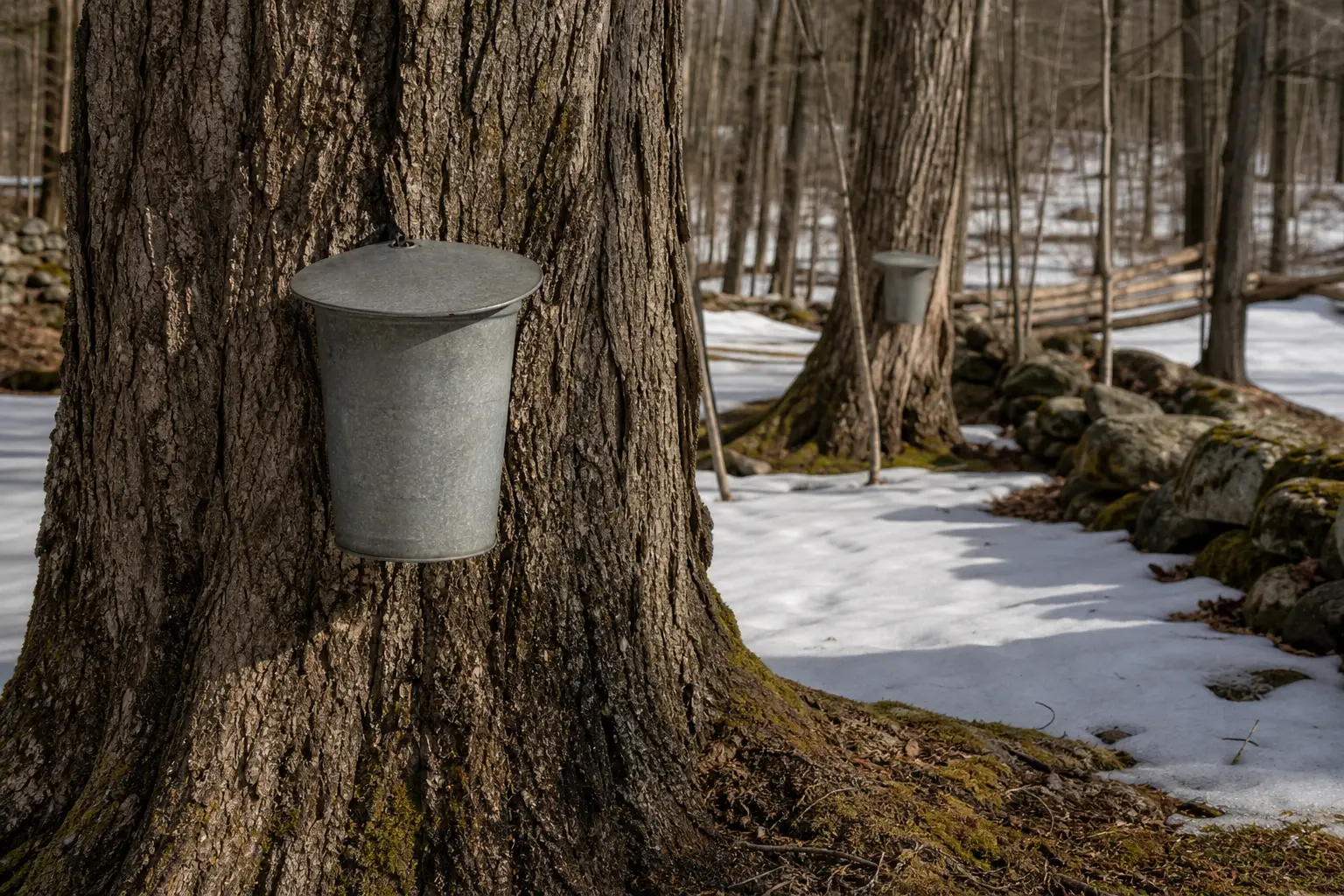
Woke to a thaw. Under the barn the ground let go its freeze with a sound like a man drawin a long breath, and by ten o’clock the snow was runnin off the hill in little rivers you could hear halfway to the house. The sap had got into the maples overnight, the way it does the very day the cold lets up, and I told the boys to fetch the spiles and the buckets, for there aint a tree in the world that keeps a better calendar than a sugar maple.
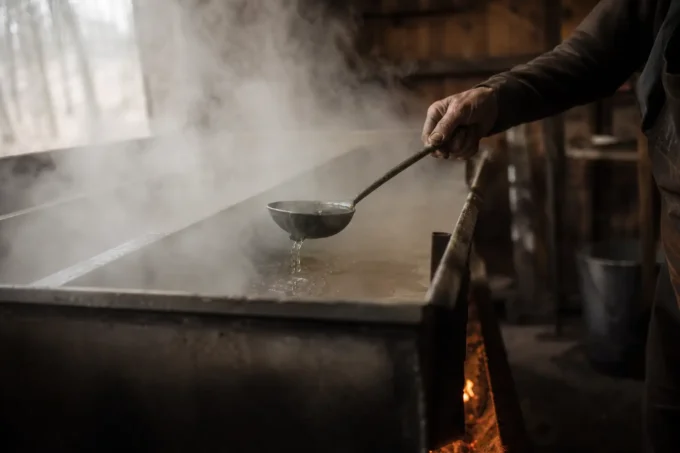
We tapped eighteen trees along the fence line, and the sap run clear and cold as well water, near a full bucket from some of the big old ones. Then come the boil. I kept a long fire goin all day under the flat pan and the boys took turns with the ladle, and Martha stood over me twice to ask was it time to call it syrup yet, and I told her a woman that can thread a needle in the dark ought to know you dont rush a thing that’s been waitin all winter to sweeten.
Amos’s note in the margin, the ink still pale from bein wrote before it dried: “forty gallons of sap and you get maybe one gallon of syrup, and a man spends a whole day standin over a fire to coax it out. that’s the truth of sugaring, and the truth of most every good thing. the sap dont care how long you stand there.”
By dark it had got to syrup, and Martha brought out the cornbread she’d set aside and poured a thin streak of it over a hot pone, and the whole house went quiet at the table while everybody ate it too fast to talk. I liked that better than the sellin of it. Come Saturday I’ll haul what’s left down to Grissom’s and trade it for coffee and a new axe handle, for syrup walks to the store and coffee walks home.
Amos, late, under the date: “a man can tap a tree and get paid in the same week if the weather holds, but the weather dont sign no notes and it dont feel obliged. tomorrow could freeze and shut the whole works down, and the maples would go back to sleep like nothin happened. a man learns to take the sweet when it runs.”
Banked the fire low so the sap that’s still in the pan wouldnt scorch, and hung the buckets back on the nails. You smell a sugarin shack clear to the road, and every man that passes knows what you been at. It’s honest work, sweeter than most, and gone by the time the peepers start up in the creek, so you take it or you do without till the next thaw tells the trees to run again.