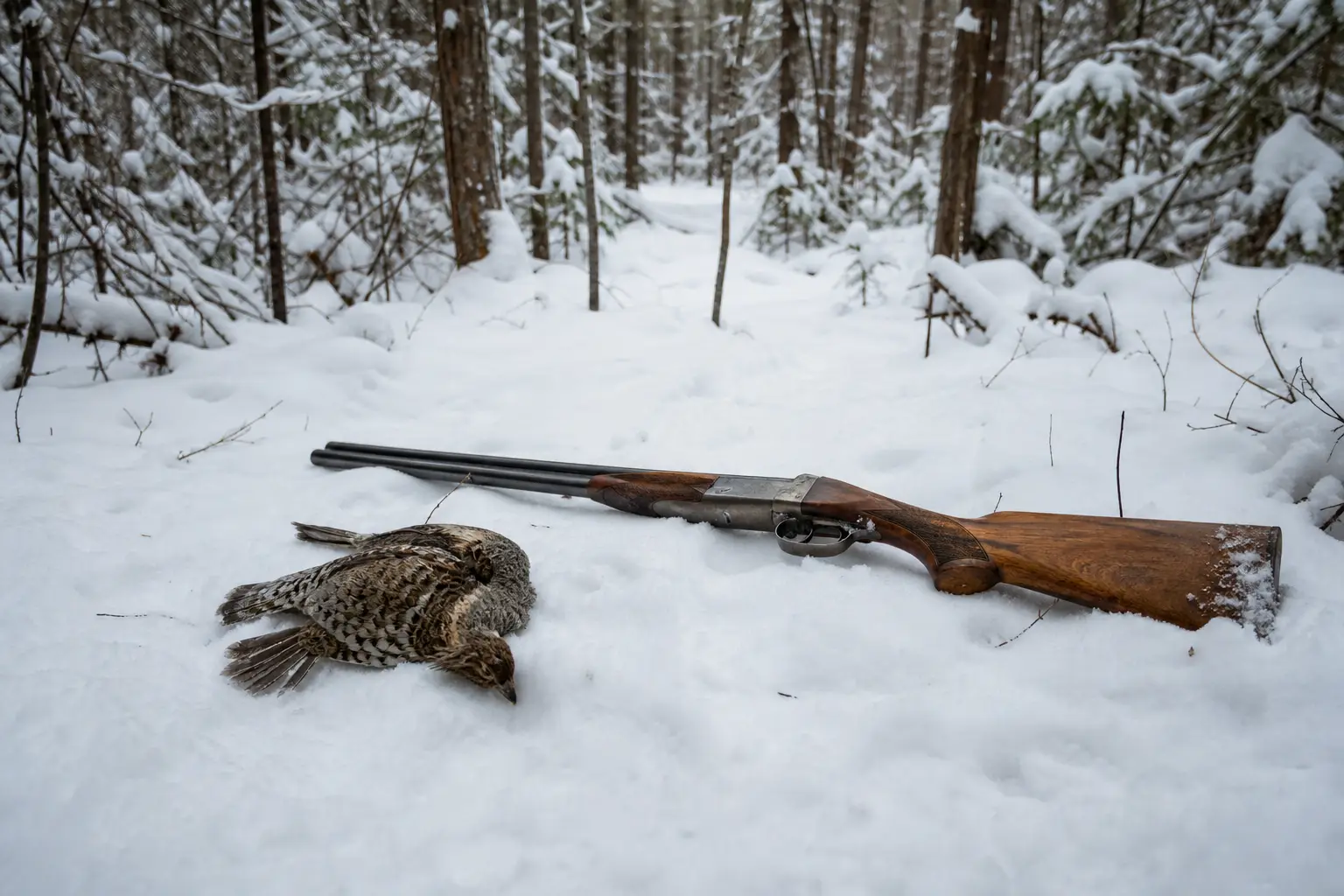
The first grouse I ever shot, I shot by accident. I wasn’t hunting. I was walking back to the truck after a deer season that had gone nowhere, tired and a little sorry for myself, when a bird exploded out of a snowbank three feet from my boot. My gun came up before my brain did, and the bird folded. I stood there holding it, still warm, and I had no idea what had just happened or what I was supposed to feel about it.
Here’s the thing nobody tells you before you buy a grouse stamp and a box of sixes. Grouse hunting is not really a hunt. It’s a walk with a gun, same as the old man on the forum says, and if you try to make it into something bigger than that, you’ll spend a whole season cold and frustrated and empty-handed, telling yourself you’re a bad hunter when really you were never hunting wrong in the first place.
I Tried to Hunt Grouse Like They Were a Real Animal
For three years I treated grouse like a legitimate quarry. You do that because every other thing you chase in the fall has a system. Deer have sign and scrapes and rubs and bedding. Ducks have flyways and weather. Turkeys have roost trees and gobbles. I figured grouse must have something too, some code you could crack if you were smart enough.
So I read everything. I studied aspen stands and food sources and that business about how birds sit tight on one side of a ridge in the morning and the other side in the afternoon. I bought the right gun and the right vest and the right boots, because obviously the problem was my gear and not my head. I’d drive an hour and a half to some chunk of public timber, march three miles with my heart set on limits, and come home with sore legs and one flush that I missed by two feet because my brain was still back at the truck running over the checklist.
Eleven trips one October. Eleven. I shot exactly one bird the whole fall, and that one was a mercy flush, a rooster that held so long I nearly stepped on him. It felt like pity, and this is the moment where I should have figured out that I was the problem.
I didn’t. I blamed the timber. Then I blamed the pressure. Then I blamed the birds for being ghosts. It took an old man who wasn’t even hunting to explain it to me.
The Old Man Who Was Only Out for a Walk
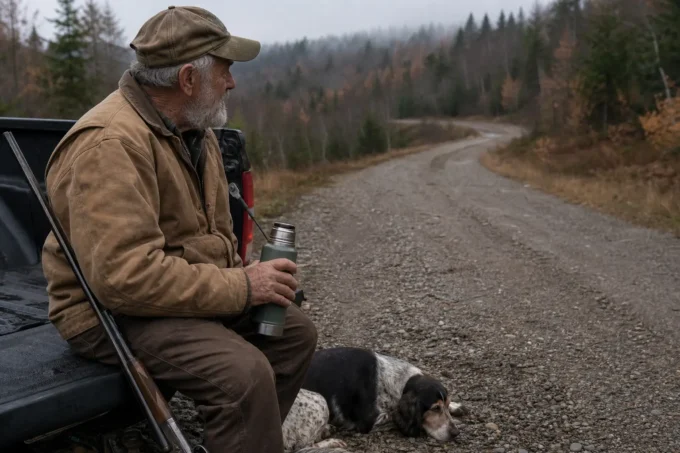
He was sitting on a tailgate at a gravel pull-off in some godforsaken county I can’t remember the name of, drinking coffee from a thermos he’d had since the Carter administration. He had a single-shot .410 leaned against the bumper and a small dog asleep at his feet. I’d just come out of the woods skunked again, and I must have been carrying it on my face, because he waved me over and poured me a cup without being asked.
“How many’d you see?” he wanted to know.
“Three flushes,” I said, like it was a confession. “Didn’t kill anything.”
“Three flushes is a hell of a morning,” he said.
And that was the whole sermon. He told me he’d been twenty-two years running dogs after these birds, and you know what he’d learned? That grouse don’t read the magazines. That the minute you start thinking you can predict a bird that lives its whole life inside forty acres of second-growth, covered in the best camouflage the good Lord ever made, the woods will make a fool of you before lunch. He said the birds that got under his dog’s nose weren’t better hunters than me. They were better walkers.
“A grouse don’t care how far you drove or how much that vest cost,” he said. “He cares if you scare him with your hurry. You walk like you’re hunting, son. Everything in the woods hears you coming from the road.”
He let the dog up, whistled once, and the two of them disappeared into the brush, not hunting. Walking.
I Stopped and the Birds Started Showing Up
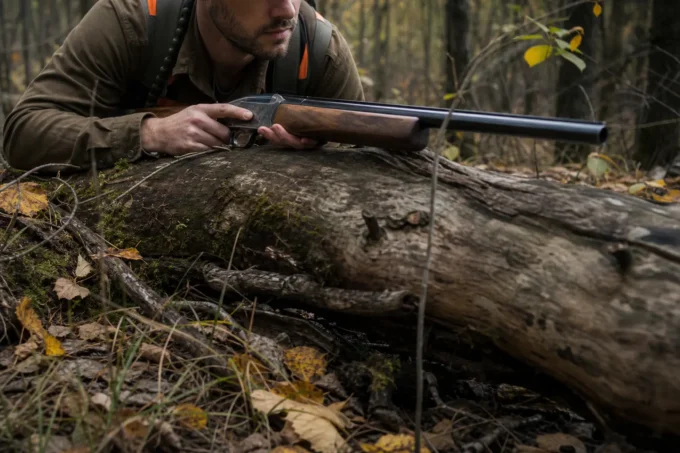
The next Saturday I went back to the same timber with a deliberate decision to be bad at this. No map, no plan, no expectation. I just walked, the way I’d walk a creek with no rod. Slow, quiet, stopping every twenty or thirty yards for no reason other than to look around for a count of ten. Not scanning like a man looking for a target. Just looking, the way you’d look at your own porch.
And it is the strangest thing, what the woods will show a man who stops trying to conquer it.
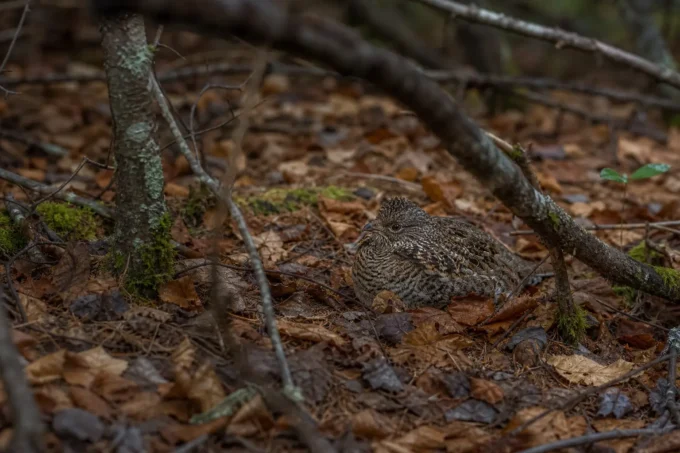
The first bird flushed at eleven steps, and I should have shot it, and I didn’t, because I was finally close enough to see the thing that matters. A grouse sitting in the leaves is not a bird. It’s a collection of dead-color shapes that your eye skates right over, and it doesn’t flush because it’s scared, exactly. It trusts that shape more than it trusts your eyesight. I’d walked past dozens of these birds for eleven years and called them “flushes” without ever once seeing the bird that made them. That’s what the old man meant. I wasn’t being outsmarted by grouse. I was being ignored by them, and I was too busy hurrying to notice the difference.
I shot two that day, both of them after I’d already given up. That’s the pattern I’d unknowingly discovered. The birds come when you stop asking them to.
What a Walk With a Gun Actually Teaches You
Hunting grouse slow for a whole season taught me more about the woods than ten years of deer blinds ever did. Because when you stop being after something, you start noticing everything your need to catch something other than the animal you came for.
I learned to read the snow for dusting. I learned what an aspen bud looks like after a frost and why the birds load up on them in the late season. I learned that a single old apple tree in the middle of a logged lot will hold more birds than a square mile of perfect textbook cover, because the birds don’t care about my map. I learned that edge is a word for where two kinds of ground shake hands, and the birds live in that handshake, halfway visible, halfway gone.
Mostly I learned to walk without a destination. That is a harder skill than it sounds. A man with a gun and a purpose moves like a freight train through the brush, all momentum and noise. A man with a gun and nothing to prove moves like light. The birds can’t tell the difference between the two of you, not really. But one of you gets shots, and the other one buys gas.
The Point Was Never the Limit
I have never once limited out on grouse, and I don’t expect to. I’ve had mornings where I saw nothing and shot nothing and still walked out lighter than I walked in. That took me years to understand, and I wasted a lot of that time being mad at birds that were never doing anything wrong.
The old man with the .410 was right about all of it. Grouse hunting isn’t productive. That’s not the same thing as saying it’s not worth doing. It’s a walk with a rifle in country that would never ask you to be there, and if you can make peace with that, you’ll find the birds were there the whole time, sitting still and watching you hurry past.
I still take the dog now. She’s not a bird dog, just a dog, and half the time she’s flushing rabbits and rolling in dead things and generally making a mess of the morning. But she taught me the last lesson, the one the old man forgot to say out loud. She runs ahead and circles back and doesn’t care if we ever shoot anything, because to her the whole point was always just being out there.
Turns out she was the one who understood it all along. Walk slow, don’t hurry, and shoot when the woods offers. Everything else is just a man making it harder than it has to be.