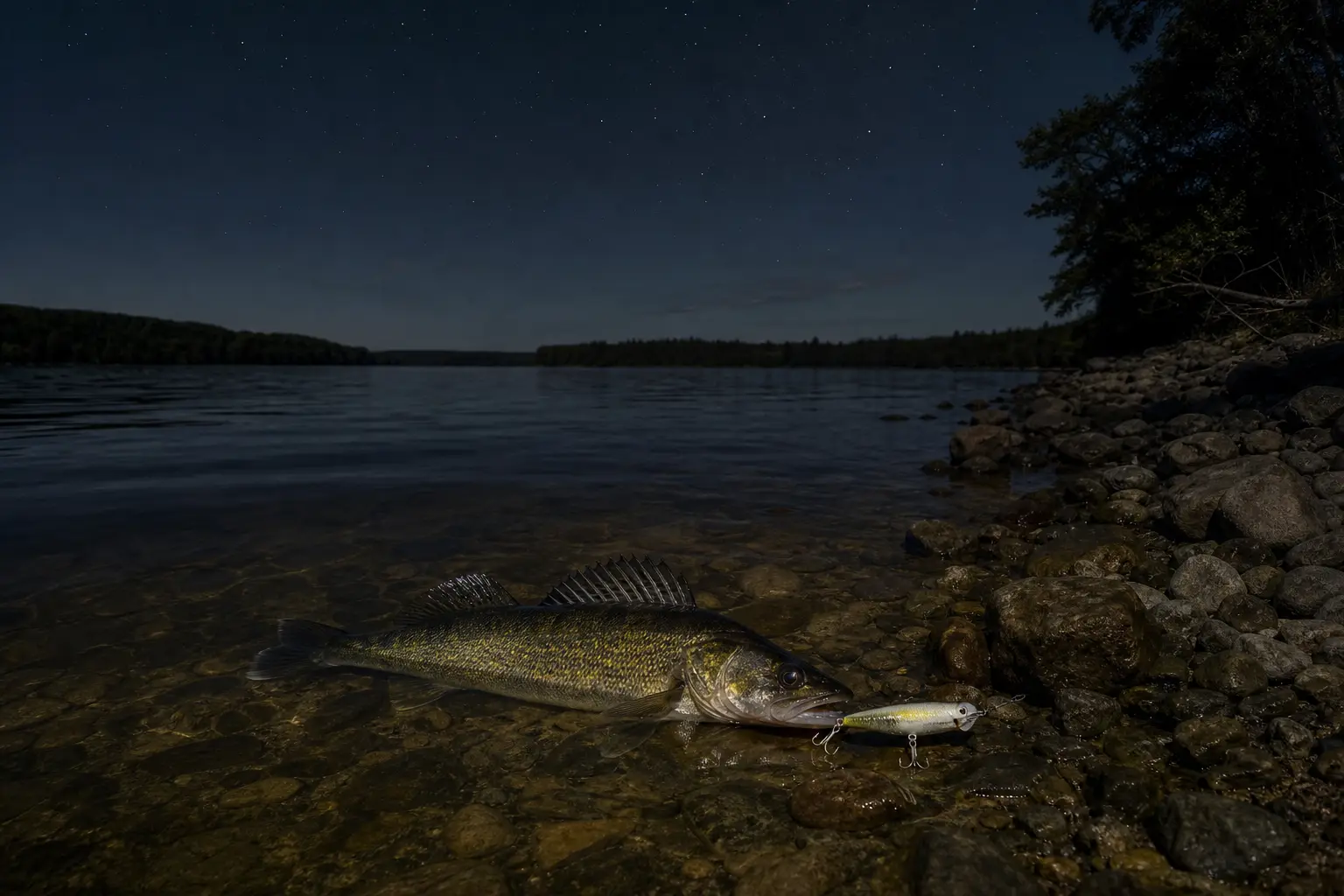
I spent four years believing walleye were a religion with one commandment: fish the bottom. Deep. Slow. A bottom bouncer dragging a crawler harness through twenty-two feet of water, or a jig and a minnow ticked off a rock pile. That is what every video said, every magazine said, every old guy at the boat ramp said. Walleye are low-light, deep-water fish. They eat on the bottom. That is just what they are.
I was wrong in a way that still embarrasses me, because the truth was swimming fifteen feet from my boat the whole time, and I was too busy being correct to notice it.
The Night My Cousin Made Me Look Stupid
It started in August because my cousin Dave came to visit with a box of topwater baits and a grin that I should have recognized as a warning. Dave is the kind of fisherman who catches more fish than looks fair, and he never tells you how. He just shows up, catches ’em, and lets you marinate in it.
“We’re going walleye fishing tonight,” he said, and he held up a plug that looked like a wounded cigar with hooks. A popper. Big, loud, yellow and white. The kind of thing you throw for bass over weed beds in July.
“For walleye?” I said. “Dave, walleye don’t hit topwater. They hug the bottom. They’re not bass.”
He just laughed and said, “You think that because you’ve never tried. Meet me at the dock at nine.”
I went because I wanted to prove him wrong. That is the honest truth. I loaded the boat with every deep-water walleye rig I owned — bottom bouncers, snap weights, planer boards — so when he came up empty I could say “told you so” with some authority. I am occasionally an idiot, and that night I was on my best behavior.
Skinny Water After Dark
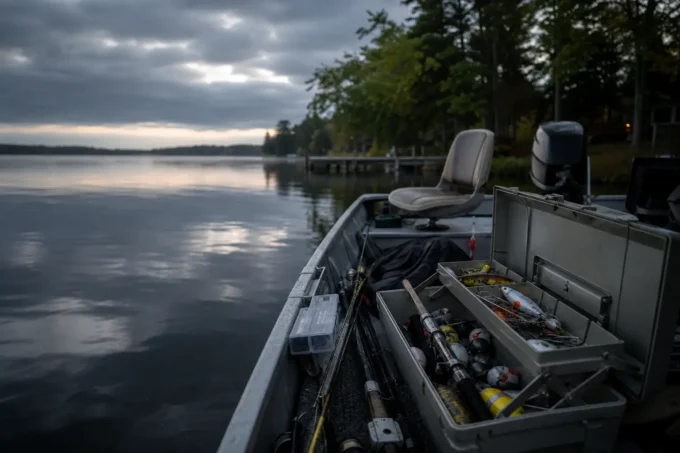
Instead of heading for the deep basin like every decent walleye fisherman would, Dave pointed the bow at the shallow flat off the end of the point. Three feet of water. Maybe four. Coming into the rocky edge where the wind had been pushing all afternoon.
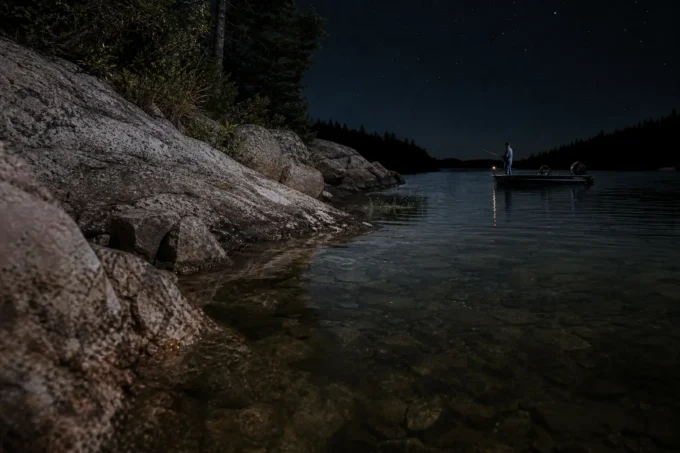
“Right here,” he said, and killed the motor. The water went flat and black and the stars came out like somebody had turned on a ceiling. It was the kind of moonless night where you can hear a fish gulp across the whole cove.
He made one cast toward the rocks. The popper landed with a wet plop, sat for a full three seconds — which felt like an hour — and then he gave it two sharp pops. Blurp. Blurp. Pause. Blurp.
The strike wasn’t violent. It was a heavy, sucking thump, like somebody dropped a cinder block just under the surface. His rod loaded up and stayed down. I remember thinking the word “bass” and almost saying it out loud.
Then the fish rolled, and in the dark I saw that white belly tip and the spiny dorsal come up, and I said a word Dave is still bringing up at Thanksgiving.
Twenty-six inches. A walleye. On a bass popper, in three feet of water, at ten o’clock at night.
What I Had Refused to Understand
Here is the part that actually changed how I fish, and it has nothing to do with the lure.
Walleye are not nocturnal because they are shy. They are nocturnal because their eyes are built for low light. In the dark, they become the top of the food chain in shallow water, and the baitfish know it. Once the sun drops, minnows and shad move up into the shallows to hide from the other predators, and the walleye follow them right up onto the flats. In three feet of water, that bait has nowhere to go but up. And a big walleye with the cover of darkness will absolutely come up through the water column and kill something on the surface.
I had spent four years trolling the deep edges of those same flats in daylight, dragging a crawler through twenty-two feet, and every single evening the walleye had simply moved in behind me, up into the skinny water I was ignoring because the books told me walleye don’t live there.
The fish hadn’t been tough to catch. I had been tough to teach.

How to Do It Without Looking Like a Tourist
I am not going to pretend this works every night, because nothing does. But on a warm, dark, calm night in late summer, when the wind has been pushing bait onto a point or a shallow rock edge, it is the most fun you can have with a walleye, and I will die on that hill.
- Pick the right night. New moon or heavy cloud cover beats a bright moon every time. The darker, the better. Walleye want the whole cove to themselves.
- Fish where the wind pushed the bait. A point, a riprap edge, a weed edge, or the mouth of a creek. Shallow — three to six feet is the sweet spot.
- Slow the lure down. Walleye are not chasing a woodchipper across the flat like a smallmouth will. Pop-pause-pop. Let it sit. The hits come on the pause, not the pop.
- Use something they can find in the dark. Big, loud, high-contrast topwater. Black, chartreuse, or white. If it’s a popper, fine. If it’s a wake bait or a prop bait, even better. The point is noise and silhouette.
- Kill everything. No running lights, no phone in hand, no floodlight over the water. A walleye that slides up onto a flat is already on edge. Light will push it right back out.
The Fish That Finally Humbled Me Back
Dave caught three that night. I caught one, and I nearly dropped the rod setting the hook because I popped when I should have paused and the fish wasn’t there anymore. I came home with a twenty-three inch walleye and a bruised ego, and I have never once gone back to fishing those flats after dark with just a bottom bouncer.
The lesson I actually took home wasn’t about topwater walleye. It was about how easy it is to turn one season’s worth of reading into a rule that isn’t true. I didn’t need a new rod, a new graph, or another $12 crankbait. I needed to stop deciding where the fish were allowed to be and start fishing where they were.
Fish don’t read the magazine you read. They don’t respect the commandments you memorized. And on a hot, black, breathless August night, a walleye will rise up out of four feet of water and blow up a popper like it has been doing it its whole life — whether you believe it or not.