I had been throwing that Whopper Plopper for an hour and four minutes. I know because I kept checking my phone between casts, which is its own problem, but we’ll get to that. The sun was gone behind the tree line and the water had gone that flat gunmetal color it gets about ten minutes before full dark. I hadn’t had a nibble. Not one. The part of me that still thinks I’m owed something by a fish was about done.
So I reeled it in too fast. On purpose. Just a pissed off, screw-this, let’s-go-home crank. The plopper came skipping across the top of the water like a rock somebody threw flat, spitting that little propeller chug the whole way.
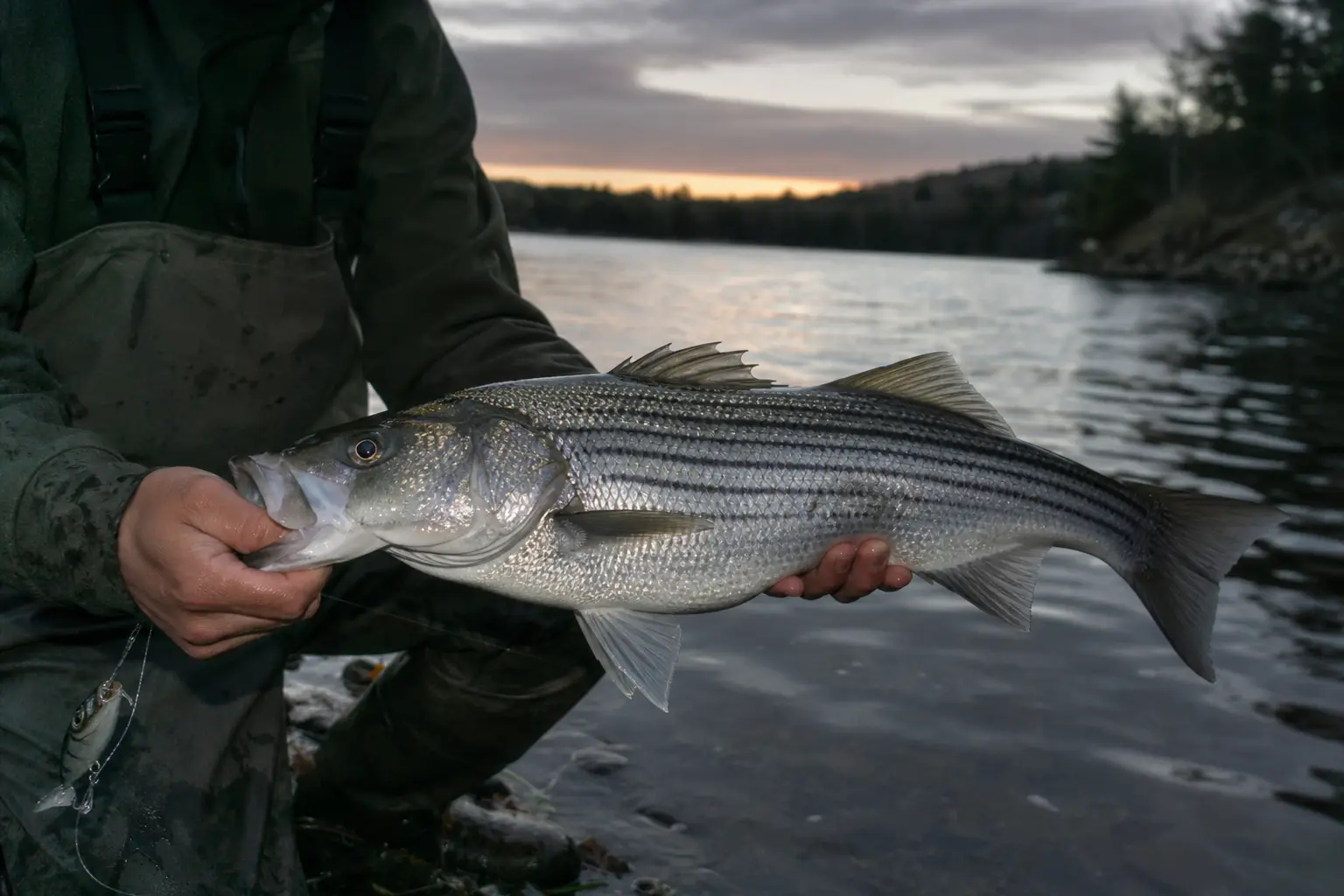
A striper hit it so hard the rod almost left my hand.
I landed it. Good fish, maybe six pounds, the kind of fish that makes a grown man’s hands shake while he’s getting the hook out. And while I’m standing there with one knee on the bank, half-laughing, the dumb part of my brain asks the honest question: was that a fluke?
So I threw it again, and I cranked it the same stupid fast way, and another one drilled it about three rods out. BANG, right at the surface, like he was mad at the thing.
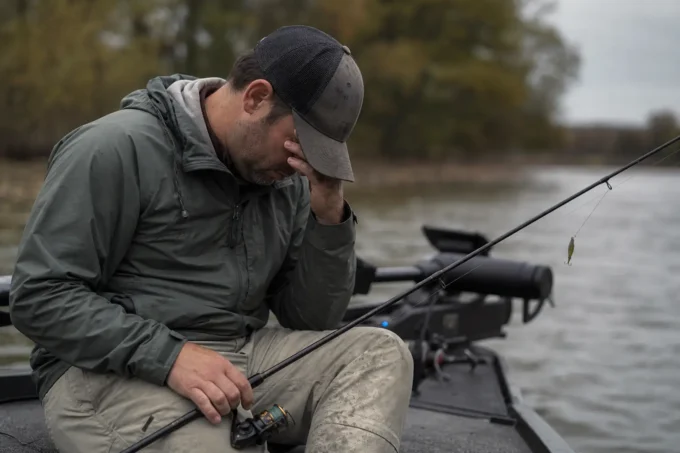
I sat on the bank for a few minutes after that and just kind of stared at the water. Not because I had figured anything out. Because I was embarrassed.
The Retrieve I Thought I Was Supposed to Throw
Here’s the thing I don’t want to admit. For months I had been fishing like I was being graded. Slow and steady. Nice pauses. Let the bait sit. Give the fish time to think about it. Every YouTube video I’d watched told me bass and stripers in warm water want a slow, wounded, easy meal. And sure, some days that works. But I’d turned it into religion. I threw everything slow, all day, whether the fish wanted it or not. When the slow retrieve didn’t work, I didn’t try something else. I tried the same thing slower, which is like turning the volume down on a radio that’s already off.
The fish had been telling me for hours they wanted something else. I just wasn’t listening. I was too busy doing it “right.”
The fast crank out of anger worked because it was a reaction, not a plan. When a fish wants a fleeing bait, it doesn’t care about my feelings. It just sees something moving fast like it’s escaping and its little fish brain says get it. Speed triggers a different bite. A reaction bite. Not a feeding bite. And I’d spent a whole summer ignoring that because I thought being patient made me a better fisherman.
Why Speed Works When Nothing Else Does
I’m not a biologist. I’m a guy who fishes too much and reads less than he should. But here’s what I’ve picked up from a few years of getting it wrong. When the water’s warm and the fish are lazy, a bait that bolts triggers something pure and dumb in them. They don’t have to decide. They just react. You see it with bass around topwater and with stripers chasing baitfish in low light. Slow is a choice. Fast is an instinct.
That doesn’t mean fast always wins. It means speed is a tool in the box, and I’d let it rust because I decided it wasn’t classy. What a stupid thing to decide about a fish.
Here’s a few honest notes from a guy who got humbled twice in ten minutes:
Burn a topwater when your slow retrieve goes dead. A plopper, a buzzbait, a wake bait. Crank it hard enough that it looks like it’s running for its life. If nothing, slow back down. But give the fast one a real shot before you pack it in, especially the last twenty minutes of light.
Second, don’t repeat a dead retrieve. If you’ve thrown the same speed into the same water forty times and nothing’s home, the definition of insanity has your phone number. Change speed before you change lures. Half the guys I know swap baits twelve times and never once change how fast they’re reeling.
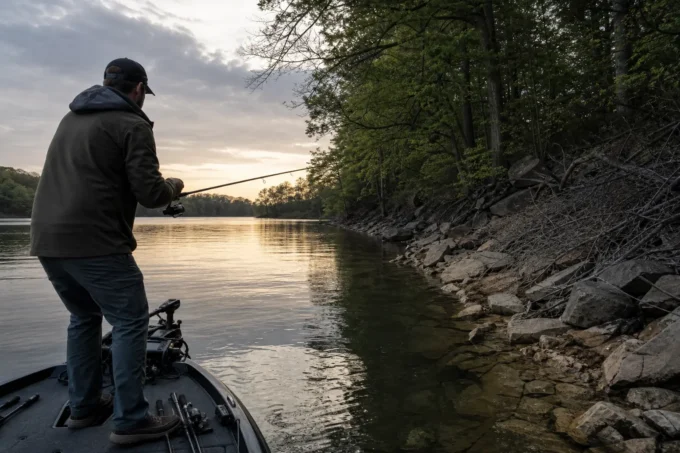
Third, notice where the hit came. Both my fish hit within about thirty feet of the bank, in that skinny water where the baitfish get pushed up at dark. Big fish push bait shallow when the light drops. That’s not a secret. It just took me four seasons to actually believe it instead of casting out to the middle where I assumed the big ones lived.
The Phone Can Stay in the Truck
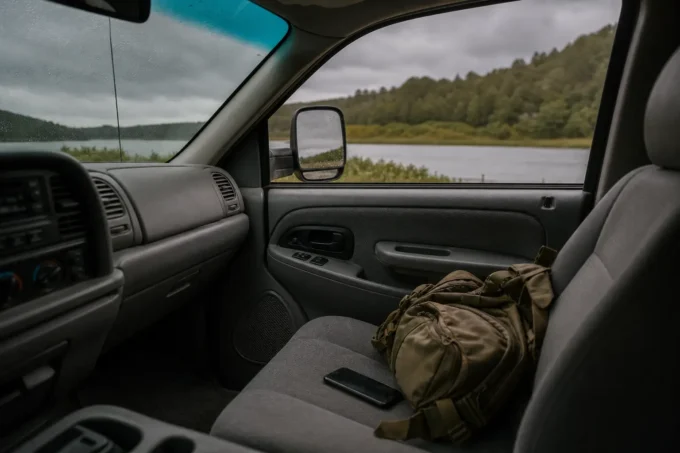
I mentioned the phone. Here’s the truth I’d rather not write. The reason I knew I’d been casting for exactly an hour and four minutes is that I’d checked my phone about eleven times. And every time I checked it, I wasn’t watching the water. I wasn’t feeling the rod. I wasn’t noticing that the baitfish were flicking up against the bank, or that the light had gone that particular shade, or that the fish were telling me, in their fish way, what they wanted.
I didn’t catch those stripers because I made a smart adjustment. I caught them because I got annoyed enough to stop being careful, and the fish rewarded the sloppiness. That’s the embarrassing part. It would feel better to say I studied the conditions and made a calculated change. I didn’t. I rage-reeled and got lucky, and then the luck taught me more in ten minutes than a hundred patient casts had.
The phone goes in the truck now. When I’m holding a rod, I hold the rod. The line is a string to a whole world I can’t see, and I keep cutting that string to look at a screen and see if anybody liked a picture of the last fish I caught instead of catching the next one.
What the Fish Taught Me, Whether I Wanted It or Not
I still throw a slow retrieve plenty. It catches fish. But I don’t treat it like the only respectable speed anymore, and I don’t confuse patience with stubbornness. Patience is staying out half an hour longer when you’re tired. Stubbornness is doing the same thing faster or slower or louder while pretending the fish are the problem.
Those two stripers were the biggest lesson I got all summer, and I earned it by being a jackass. I don’t recommend anger as a technique. But I’ll tell you this: the next time your slow, careful, by-the-book retrieve has gone stone dead for an hour, pick a spot near the bank, let the light drop, and burn that bait back like it stole from you. Then pay attention to what bites.
Sometimes the fish just want you to quit being so careful about it.