I hung my stand in July. That should have told me everything, and it told me nothing.
The first weekend of July I walked out to a white oak flat I had never hunted, a spot I picked off an aerial map because it sat inside a big timber bend and looked like the kind of place a mature buck would bed. I found acorn hulls on the ground from the year before. I found a faint trail crossing a dry creek. I found one old rub on a red oak the size of my leg. I hung a stand, trimmed three shooting lanes, and drove home thinking I had cracked the code. I did not crack anything. I found July.
For the next four months I hunted that stand like it owed me money. I sat it in October, November, three weekends in a row during the rut. I saw does. I saw a spike and a six point and a lot of squirrels. The whole time I told myself the big one was just smarter than I was, moving at a different time, circling me. I moved my entry route once, then twice. I got in earlier. I sat later. Same tree, same empty woods, same long drive home pretending any of it was the deer’s fault.
You ever notice how hard it is to admit the tree is fine and you are the problem? It is the hardest thing in deer hunting, harder than a cold shot at an uphill buck. I spent a whole season doing it.
Here is what I should have seen, and what I finally walked out and found in January of the next year.
The acorn hulls under my stand were a year old, maybe two. They were gray and split and half sunk into the dirt. When I set the stand I kicked a few and took it as sign. That was not sign. That was history. White oaks drop when they drop, and once the ground under a tree is cleaned out, the deer move on. By rifle season that oak had given up every acorn it was going to give, and half the hulls I was staring at had been there since the fall before last. I was sitting over a dead restaurant.
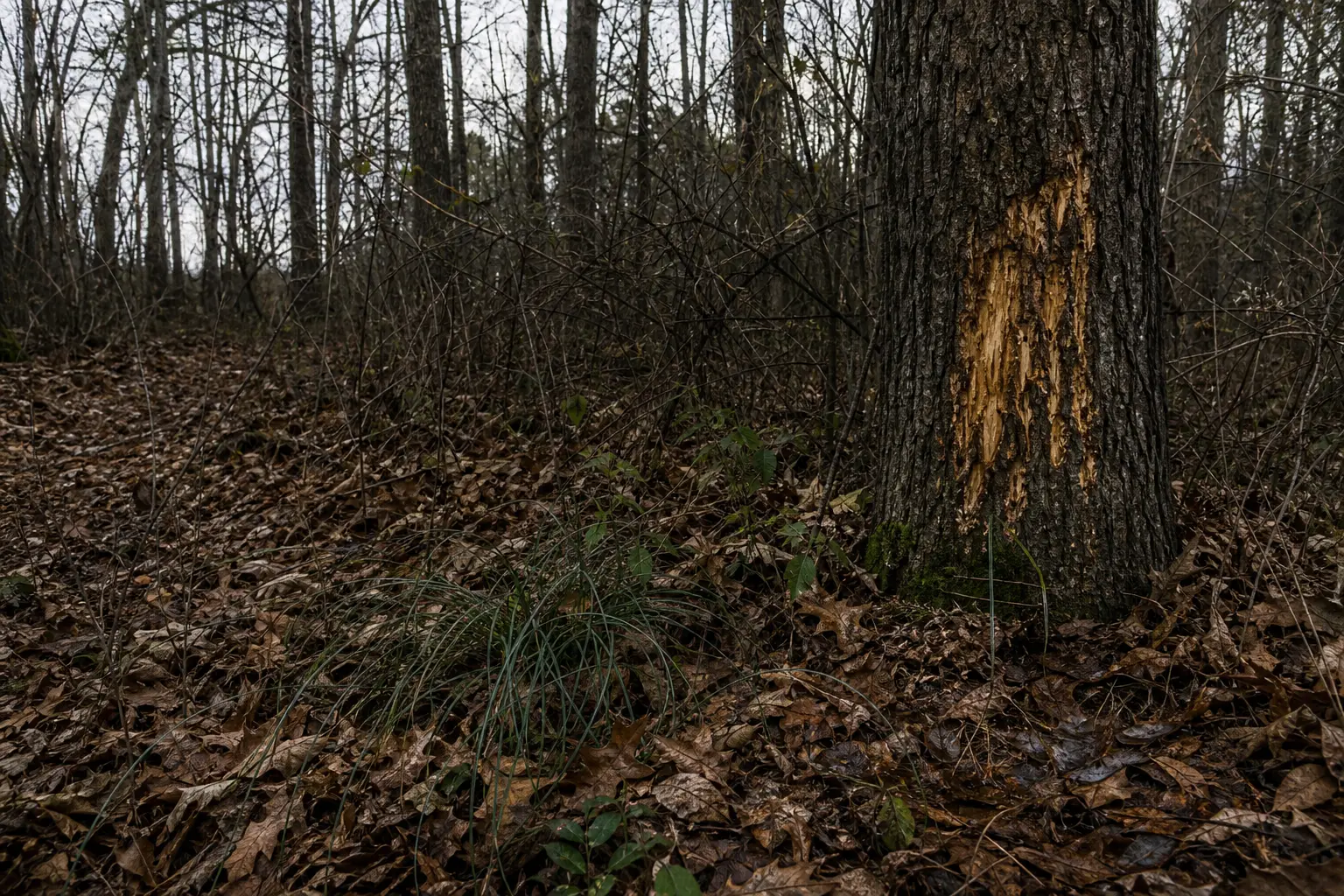
Meanwhile, three hundred yards to the east, a stretch of water oak I had walked past a hundred times was absolutely choked with deer. I know because in January, with the season over and nothing to lose, I followed a fresh track instead of a map. It took me right to a bench where the water oaks touch a little seep and a line of greenbrier the deer were using to travel from the thick stuff to the open timber. There were beds everywhere. Scat. Rubs four feet off the ground. And I had walked within bow range of it every single morning in November, because the only way into my pretty oak stand was right past it.
The deer were not cirling me. They were feeding forty yards off my boot path and I never once looked, because I had decided in July where the deer were going to be, and by God I was going to hunt that decision whether the deer agreed or not.
Here are two things I got wrong, in order, so you can skip the year I burned.
First, I treated July scouting like a prophecy. Deer do not read your notes. What they are eating and bedding in during the summer has very little to do with where they will be when the acorns are fresh, the fields are cut, the pressure pushes them, and the bucks start cruising. A rub from last fall is a nice diary entry, but it does not mean that buck ever walked that line again. Summer sign tells you what was true once, maybe. It does not tell you what will be true in November.
Second, I hung one stand and married it. When the sign under that tree went stale, I doubled down instead of moving. I scouted harder with my eyes shut than I ever scouted with them open. I trimmed lanes and adjusted my approach like that would make acorns appear out of a bald white oak. The honest move would have been to walk the hundred yards to the next bench the first weekend I sat up there and saw nothing fresh, and ask the ground what it was doing now instead of telling my old map what I wanted it to still be doing.
There is a thing the deer do that ruined me, and I did not understand it until I started reading the ground every single sit instead of once in July. Deer are not lazy, but they are efficient. They will not walk past food that is easy to reach to stand under a tree that is empty. When the oaks dropped in late September and the deer hammered that flat for two weeks, I was not there yet, because rifle season was still weeks out and I was at work. By the time I walked back in with the rifle, the food was gone and so were they. I was hunting a memory of a feeding frenzy I never actually saw.
That January walk changed how I do everything, and it did not take a fancy strategy. It took stopping and looking.
Now I scout in season, not just in summer. After every sit with nothing worth shooting, I spend twenty minutes on the way out checking trail edges, creek crossings, and the base of the food sources that are actually dropping that week. I follow fresh tracks when I find them, not the air. I look for where a deer is bedded now, this week, because that is the only version of “where the deer are” that ever matters.
I also hang more than one option now. A stand in July is a guess, nothing more, and I treat it like one. I will hang a summer stand, sure, but I do not marry it, and I do not let it become a reason to stop paying attention. When the food shifts, I shift with it. If I sit a tree and the sign under me is old, I do not sit it again out of stubbornness. I go find the tree the deer actually live under this year.
The next fall I killed a buck on that water oak bench. Not a monster, an eight point, but he walked out of the greenbrier at last light on a Saturday and gave me a thirty yard shot and I was already there, on the ground, leaning against a deadfall, because I had walked that bench three days earlier and seen the freshest rubs I had ever found on that property. I did not hang a stand there in July. I did not see him on a trail camera. I just went where the deer were telling me they were, that week, and it worked the first time.
The white oak stand is still there. I left it in the tree, half as a spare and half as a monument to a season I wasted believing I could decide in the summer where a whitetail was going to stand in the fall. I have not hunted it since, and I probably never will. Not because the tree is bad. Because I finally learned the difference between where the deer were and where the deer are, and one of those is the only thing worth scouting for.