The Reason Nobody Eats Acorns Anymore
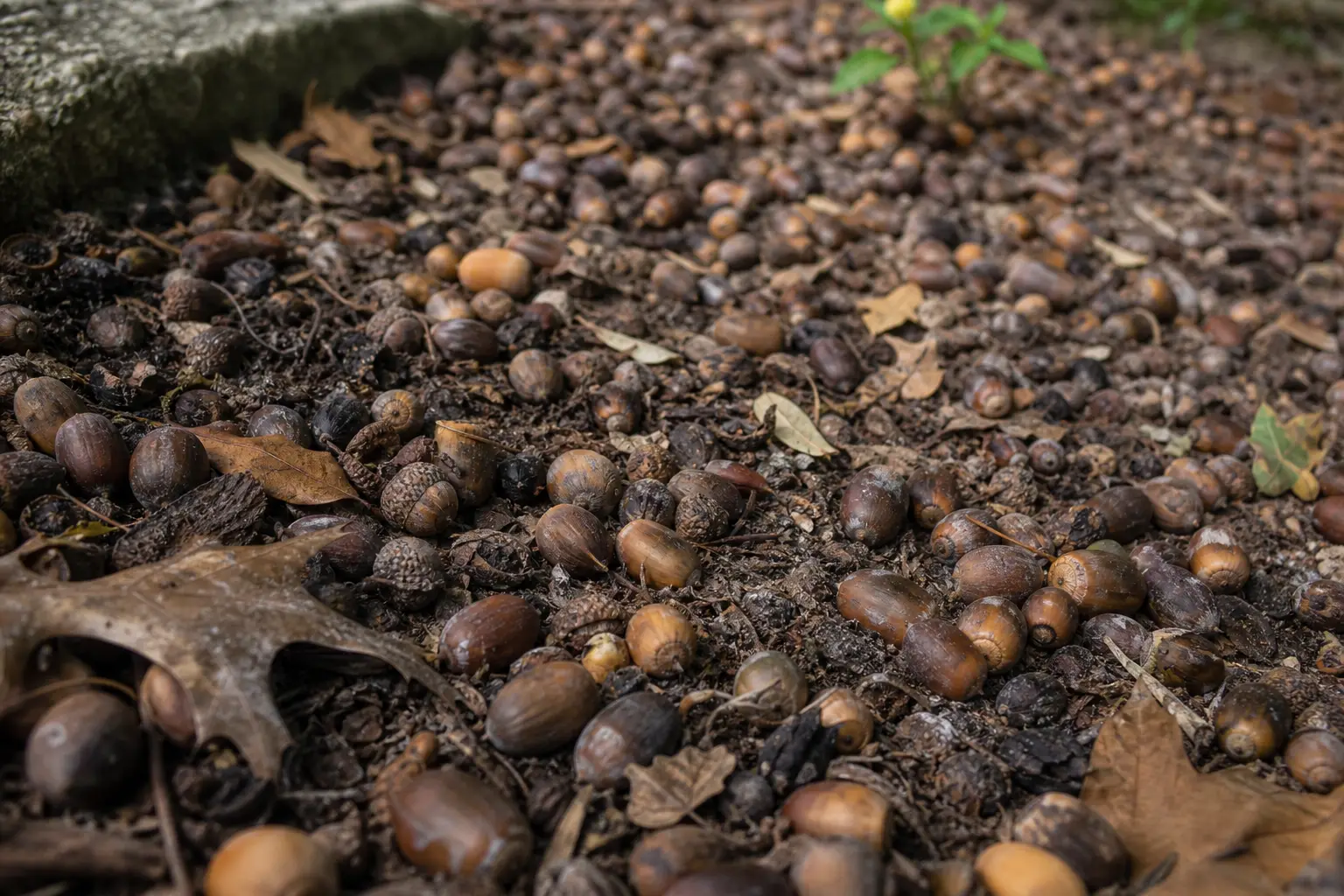
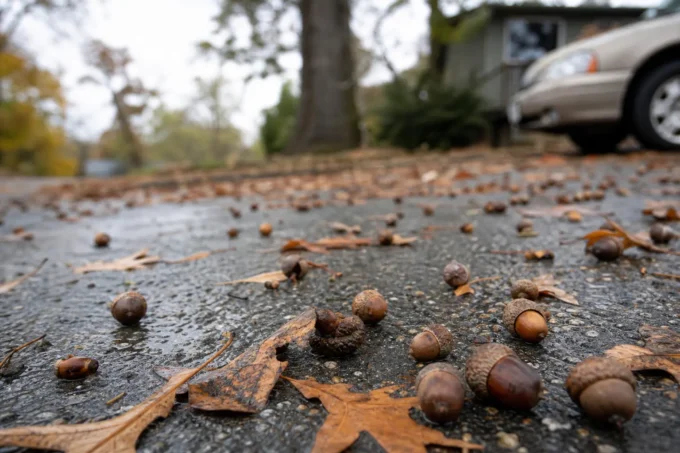
The oak tree behind my house drops about six hundred pounds of food every October, and ninety-nine people out of a hundred would walk right past it and call those things a nuisance. They clog the gutters. They dent the car hood when the wind is bad. They roll under your feet on the driveway and try to break your ankle like a little round land mine with a cap on it. I used to be one of those people. Then I read somewhere that acorns used to be a staple food, that whole civilizations ran on the things, and I got it in my head that I was going to turn my backyard oak into dinner. That was the first dumb decision in a long chain of dumb decisions, and the tree did not make any of them easy on me.
The thing nobody tells you up front is that acorns are bitter. Not a polite little bitter, not the kind you can muscle through with a glass of milk. They are bitter the way a battery is bitter, a tannin load so aggressive it puckers your whole face and leaves a chalky film on your tongue that hangs around for an hour. The squirrels eat them anyway, which is exactly the kind of proof that should have made me stop and think. Instead I decided the bitterness was a myth, that people online were exaggerating, and I cracked one open with a pair of pliers and bit into it raw like an idiot. I spent the next ten minutes at the kitchen sink trying to scrape the taste off my teeth with my tongue and a paper towel. The squirrels were apparently made of sterner stuff than I am.
The Leaching That Almost Broke Me
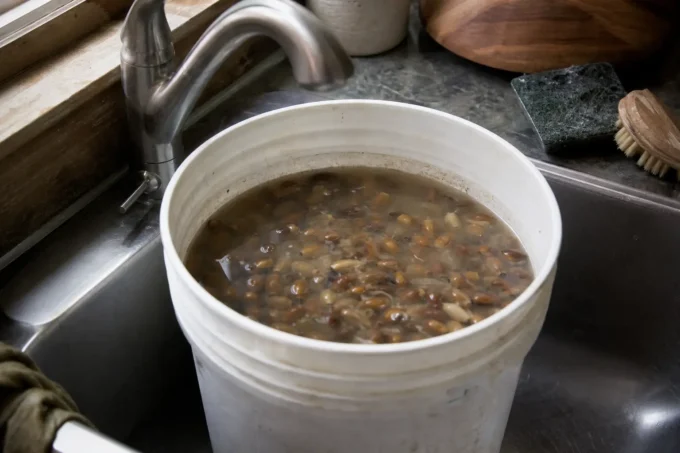
Acorns are toxic if you eat them raw in any real quantity, because of the tannins. The fix is leaching, which is a fancy word for soaking the bitterness out in cold water, changing it every day until the water runs mostly clear and the nutmeal stops tasting like a penny. It sounds easy. It is not easy. The first batch I made, I shelled maybe two pounds of acorns by hammering each one on a cutting board until the shell cracked, and the shell is designed by evolution to not want to be opened, so I was sweating and swearing and sending little shards of acorn flying into the silverware drawer for a good two hours. My thumb looked like I had tried to palm a grater. I was doing everything by hand because I read one article that said cold leaching was the traditional way, and I had talked myself into believing that traditional way meant the way a person with no common sense does it.
Then came the waiting. Cold leaching takes a week, sometimes more, and you do not get a preview of whether it is working until it is too late to fix the dinner you promised yourself. I changed the water every night like I was tending a sourdough starter I hated. By day four the kitchen smelled faintly of wet cardboard and disappointment. My wife told me the bucket looked like something you would skim off a pond. I kept going, because by that point quitting would have meant the two pounds of hammered acorn shrapnel meant nothing, and I cannot stand the thought of wasted effort, which is a personality flaw that has cost me more money than the acorns were ever going to save.
Bitter, Then Suddenly Not
Here is the part that actually surprised me, and the only reason I would ever do this again on purpose. Somewhere around day six, when the leached meal was drying on a sheet pan in a low oven, the whole kitchen started smelling like something. Not cardboard anymore. Not pond. I could not place it at first, and then it hit me like a name you forgot for twenty years. Vanilla. A soft, warm, malted vanilla smell, the kind that makes you think of a bakery even though what is in the oven is just ground-up tree nuts that spent a week in a bucket. I stood there with the oven light on, watching this ugly gray paste slowly dry out, and it smelled better than ninety percent of the rice dishes I make on purpose.
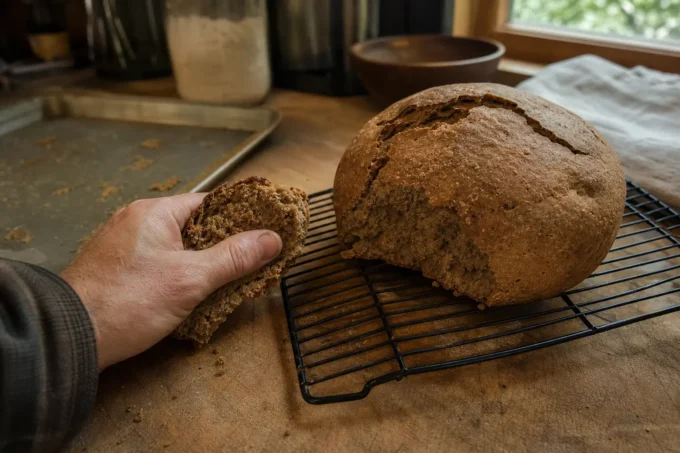
I ground the dried meal in the food processor, mixed it with regular flour, and made a loaf of bread that looked terrible and tasted strange and wonderful. The bitterness was gone almost entirely, just a shadow at the back that you could not tell from whole-wheat earthiness. I ate half the loaf standing up with my hands, because when you have spent eight days and two pounds of hammered effort on a thing, you do not sit down and put it on a plate like a civilized guest. You eat it like a man who just survived his own stupid project and needs to confirm it was worth it before anyone walks in and asks.
The Thing the Tree Was Saying All Along
I have a theory now, which is the kind of theory you only form after you have made the food yourself and wanted to quit midway through. The tannins are not a flaw. They are a test. An oak does not care whether you have a food processor or a week of free evenings or a wife willing to tolerate a pond bucket in the corner of the kitchen. The tree puts out six hundred pounds of perfect food every fall and then laces it with a chemical that says earn me. The squirrels and the deer and the jays already paid that price, which is why they strip the tree and you never see them complain. The only creature who looks at an acorn and sees an inconvenience is the one who forgot he ever knew how to eat it.
I will not pretend I am going to become some backyard acorn baker now. The bucket is back in the garage, and most of what the oak drops this year is going to end up in the gutter like always. But there is half a bag of dried acorn meal in my pantry, and every time I open it, that vanilla-malt smell comes out and reminds me that the food was never hidden. It was just wearing a warning label I was too lazy to read. The deer knew. The squirrels knew. I had to get my face puckered and my thumb grated before I knew it too.