The page after the duck is clean paper for the first two inches, and then it’s ruined, a wide brown stain the exact shape of a shallow pot that somebody set down still warm and left there overnight. Over the stain, in the same hard ink Amos used on the duck, I can make out the tail end of one word, the last two letters pressed deep, and under it runs a long line that folds off the edge of the paper, curling and then straightening like a man drawing the back of something with a fin on it. I spent longer than I should have squinting at that stain trying to raise the word out of it, and then I gave it up and looked at the line instead, and I knew what it was. A fish. A river fish, laid flat, drawn by a man who ate out of that water on a setline every spring.
Amos’s note in the margin, written up the side so it wouldn’t touch the stain: “a gar will turn his nose at a hook on account of his mouth aint made to hold one. a catfish aint so proud. you bait a line and leave it, and in the mornin he’ll be down there holdin on with all eleven of them whiskers.”
Recipe No. 16: Catfish (Fried the Way a Setline Man Fries It)
The Fish
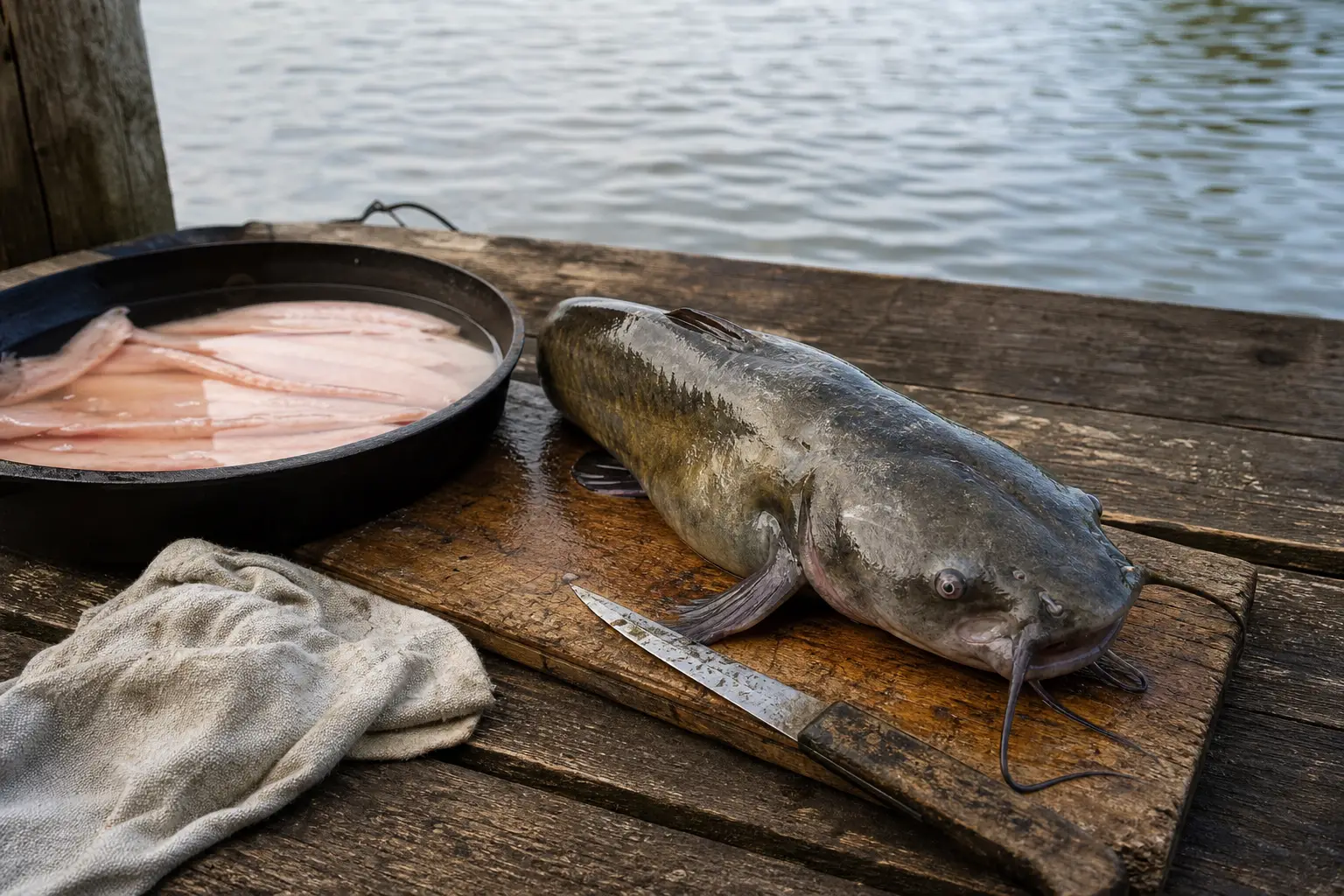
Amos caught channel cats and flatheads, and between the two he liked the channel better on the table because it’s smaller and cleaner and the flesh holds together in the grease. A flathead is a fine fish if you get a young one, but the old buck flatheads ride the bottom by a log and get muddy around the edges, and you’ve got to know what you’re doing to turn one good. His page is mostly about the channel cat and how to handle it, because the handling is what makes the difference between a clean sweet fish and a mouthful of river.
- Kill the fish cold and bleed it right away, then clean it before it goes stiff
- Cut off the head, peel or scrape the skin off, and take the belly flap clean
- Soak the fillets in cold water or buttermilk overnight to pull the river out of them
- Feel every fillet with a finger and pull any bone you find, catfish hide them sideways
The skin is where the mud lives. A catfish has no scales to speak of, just a slick hide that carries the bottom of the river with it, and if you cook that hide on, the whole fish tastes like the mud under the boat ramp. Peel it or scrape it off while the fish is fresh, soak the meat overnight, and you’ve already won the whole fight before you ever light the grease.
Amos’s second note, under the drawing of the fin: “leave the hide on and you’ll chew the river for a week. its like eatin a cat with his boots still on.”
Cooking It
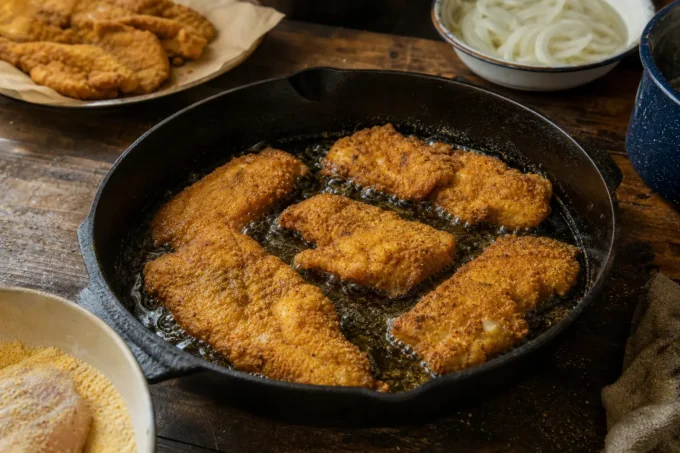
There’s only one way Amos fried a cat, and it’s the same now as it was then, because it can’t be improved on. A shallow pan, grease coming up a half inch, and a dredge of cornmeal and flour and salt and black pepper with a little cayenne if the kids would stand it. His page lays it out plain:
- Dredge the fillets in a mix of cornmeal, flour, salt, and black pepper
- Get the grease hot enough that a pinch of meal hisses and jumps, but not smoking hard
- Lay the fillets in away from you and let them fry without poking at them
- Turn them once when the underside is deep gold, then drain on brown paper or a feed sack
Serve it hot out of the pan with the cornbread that was already aging on the back of the stove, and if there’s onion sliced thin into vinegar, put it on the side. The fillet comes apart in flakes and sweet white meat, a little crisp from the meal on the outside, and nothing tastes like a river bottom of mud at all, which is the proof the cook did his job before the grease did its.
What It Actually Tastes Like
A clean channel cat fried right is one of the sweetest fish in North America, mild and flaky and dense enough to hold the meal, and it has nothing in common with the mud the fish was living in when the line went down. The flathead from deep water is firmer still, more like a steak, and the old buck ones are better baked or boiled into stew than fried, because the grease can’t reach what a long slow cook will pull out. Either way it’s a river meal, meant to be eaten off tin or paper with your hands and a jar of vinegar onions, not fussed over on china.

Practical Notes
- Check your state’s trotline, jug, and limb line rules, and mark the floats and tags the way they want them marked. The warden that runs the river has seen every shortcut and keeps count.
- Bleed and clean the fish cold and fast, then pull the skin. The skin is the whole difference between a clean fish and a muddy one.
- Soak overnight in cold water or buttermilk. It’s not fuss, it’s half the flavor.
- Hot grease and one turn. Fuss with the fish in the pan and the meal falls off and the meat steams instead of crisps.
Amos’s last note, written under the stain in pencil and half-smudged where the pot sat: “a man that wont eat a catfish on account of his whiskers aint never bin hungry with a river full of meat outside his own door. you let the high-toned man turn up his nose. more sweet fish for the ones that aint too good to set a line.”
Next from the folder: the following page is near blank, only a single word written dead center in small letters, and under it a long smudge like a thumb dragged through soot, or like something dark that was pressed into the paper and then rubbed away.
