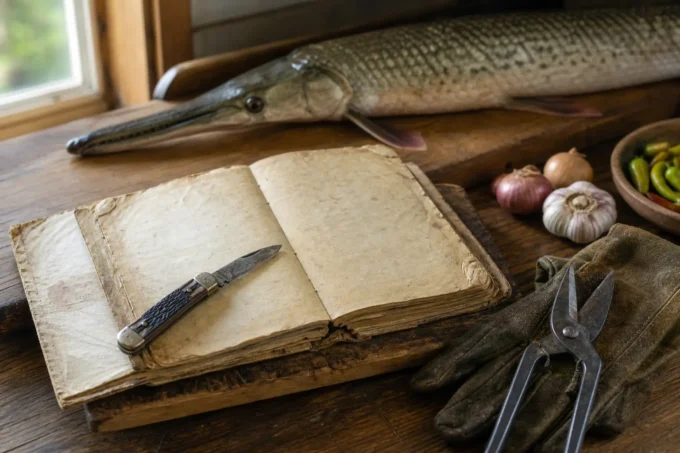
The page after the coot was the first clean sheet in the whole folder, no grease, no burn, no stain of anything. But the paper was thin, and when I turned it to the light I could read the first line of the next recipe straight through the back of it, in Amos’s writing, heavy enough to have pressed through: something about a fish that don’t get caught on a hook the ordinary way, on account of his mouth being all bone and no give. I knew before I even lifted the page what was on it. A gar.
Nobody wasted a bullet or a good line on a gar when there were crappie and catfish to be had, but in a lean spring when the river was low and the slow water was warm and thick with them, Amos said a gar was meat you didn’t have to beg for. The trick, and he wrote it plain, is that a gar won’t take a hook like you think. His snout is a long bar of bone with teeth set in it like a saw blade, and a steel hook just rattles off it and comes back empty, so you don’t fish for him, you either shoot him or you tie him a lie to bite.
Recipe No. 13: Gar (Or, the Fish You Don’t Catch With a Hook)
Getting the Fish
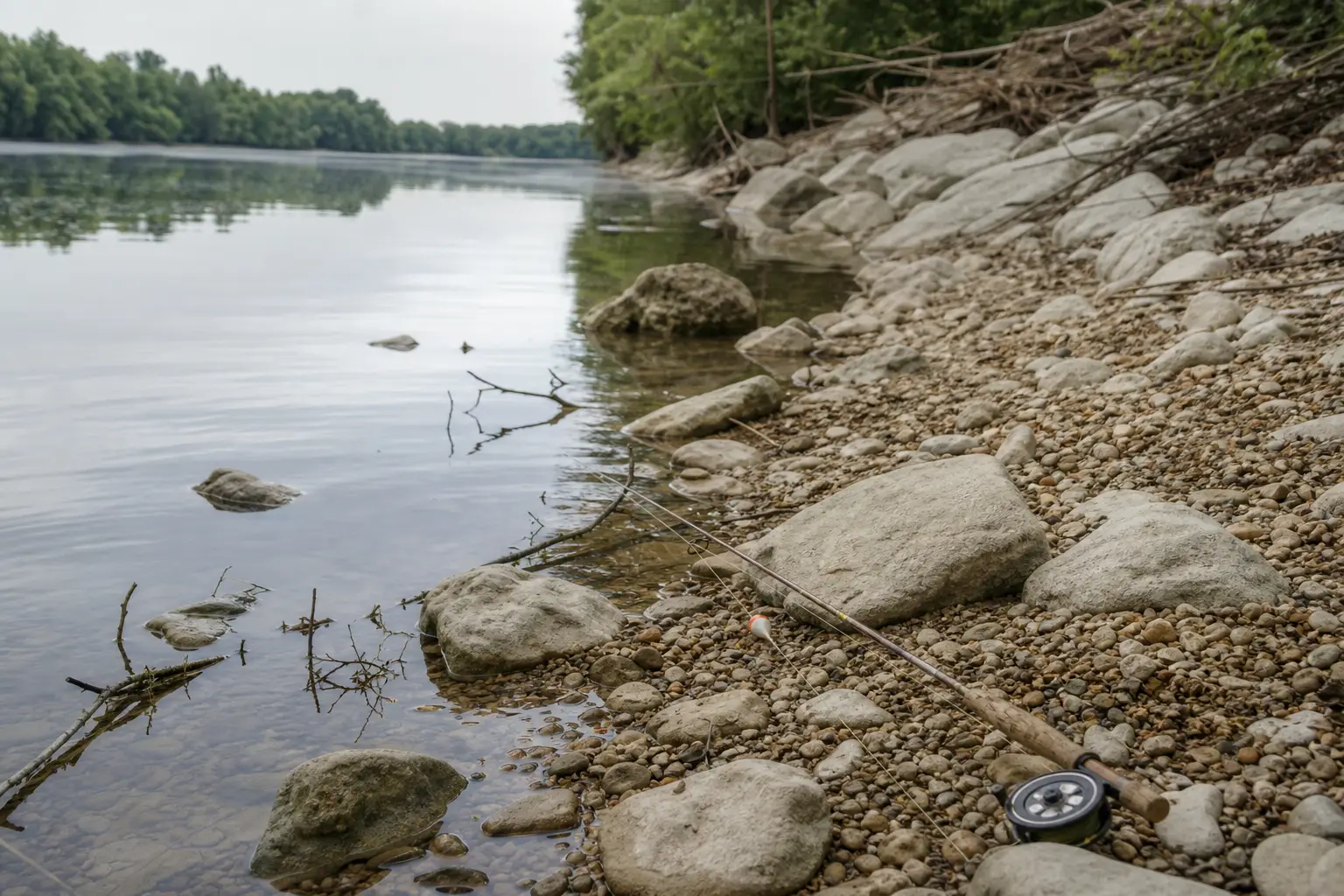
Amos kept it to two ways, and both of them start with the fact that a gar’s face won’t hold a hook. The first is a bow, the same one you’d run a carp with, a big fish arrow and a stout line tied off to a jug, and you wait until one rolls his long back over near the surface on a warm still evening and you let it go. The second is the rope lure, and it’s older than I am. You fray out a foot of white or yellow rope until it’s a mop, tie it to a wire leader, and drag it slow past a gar’s nose. The gar doesn’t eat it, he strikes it and his teeth get tangled in the rope fibers, and you pull him in because he can’t let go, not because the hook set. No hook at all.
Amos’s note, in the margin beside the rope lure: “a gar aint a fish a hook will hold. his mouth is all saw teeth and no meat to set in. you tie him a snarl of rope and let him do the catchin hisself.”
Cleaning Him
This is the part that turns most men around, and Amos was honest about it. A gar wears armor, an outer hide of hard enamel scales that overlap like roof shingles and will dull a knife and snap a fillet blade clean. You don’t skin him with a knife from the outside. You get into him through the back with tin snips or a pair of heavy shears, cut straight down the length of the back from behind the head to the tail, then peel the armor off inward from that cut like a coat. Watch your hands, the scales are sharp enough to cut you back. What’s left inside is a clean white backstrap of meat running the length of the fish, no bones in it to pick, and that’s the whole point.
Amos’s second note, written below a rough drawing of a gar with an arrow pointing at the back: “dont skin him from the outside, youll fight him all day and lose. cut him down the back with the tin snips and open him like a shirt. the meat runs both sides of a center gristle, cut it out and you got the cleanest fish in the river.”
Cooking It
Gar meat is white, firm, and sweet, closer to a lean pork backstrap than any fish you’re used to, and it’ll take whatever you throw at it. Amos’s way was simple and I haven’t improved on it much:
- Cut the backstrap into fingers about as long as your thumb
- Soak them an hour in buttermilk with a pinch of salt
- Roll them in seasoned cornmeal, nothing fancy in the meal but salt and black pepper
- Fry in hot oil or lard until they float and the outside goes gold
Serve them hot with hushpuppies if you got the meal to spare, or over white beans, and don’t tell the kids it’s a gar until they’ve asked for seconds and it’s too late to back out. The same meat holds a long smoke, and Amos had a line about wrapping a gar back in bacon and giving it a slow fire, but the fry is where it wants to be.

What It Actually Tastes Like
Gar don’t taste like the bottom the way a catfish can. It’s clean and firm, with a sweetness under it that catches people who thought they were eating chicken-fried something from a good kitchen. The only thing hard about a gar is getting him open, and once you’ve run the tin snips down his back once you’ll wonder why everybody leaves the river’s cleanest fish for the birds.

Practical Notes
- Check your state before you keep a gar. Alligator gar are protected in a lot of places, and the longnose and spotted gar have size and bag rules you don’t want to ignore.
- Tin snips and a good glove are not optional. The armor will cut you and it will end a kitchen knife.
- The eggs of a gar are toxic, so gut him fully and wash the cavity, and never feed roe to a dog or a kid, no matter what anybody tells you.
- Warm, still, shallow water in late spring is where they roll. Look near the surface on a calm evening and you’ll see the long shadows of the back fin working.
Amos’s last line, written under the whole page like a man dropping a verdict: “a rook and a fool both drink the same water, but it’s the fool that says a gar aint worth eating fo he’s tried him.”
Next from the folder: the next page is darkened around the edges like it laid a long time against something, and through the stain I can make out one word, raised and set off by itself at the top of a recipe. It looks like “TURTLE,” but it’s spelled different than the snapper was, and there’s a drawing under it that I can’t quite make sense of yet.