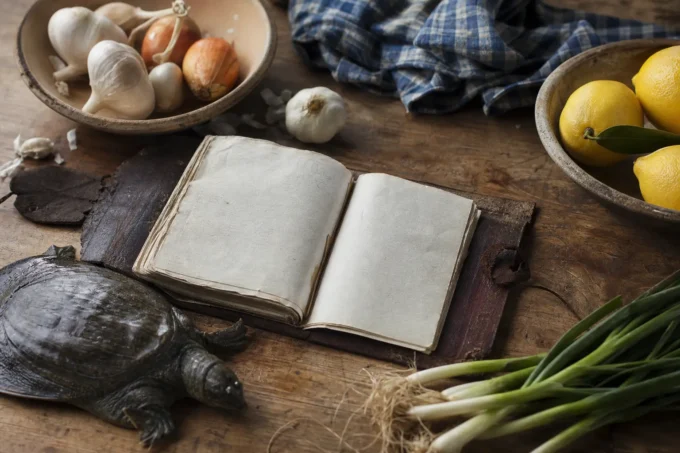
The page after the gar is the last one I pulled out before I set the folder down for the night, and it nearly stopped the whole thing. The edges are darkened like the sheet laid a long time against something wet, and at the top, raised and set off by itself, is one word in Amos’s writing. It says TURTLE. But it isn’t spelled the way it was on the snapper page, which read SNAPPER clear as anything. This one reads different, and under it there’s a drawing that I still can’t make sense of, a flat oval lot wider than it is long, with no kind of hard shell on it and a nose drawn like a little horn. It sat on my desk a full day before I worked out what he meant, and when I did, I had to laugh. He wasn’t teaching the snapper twice. He was teaching the other turtle, the one with the leather back that the snapper men turn their own noses up at.
Amos’s note, in the margin, circled twice: “this aint the snapper and dont you mix um. a snapping turtle will take your finger off. this here one is a soft shelt, and he’ll take it off all the same if you put it in his mouth, only faster.”
Recipe No. 14: Soft-Shell Turtle (Or, the One With the Leather Back)
Getting the Turtle
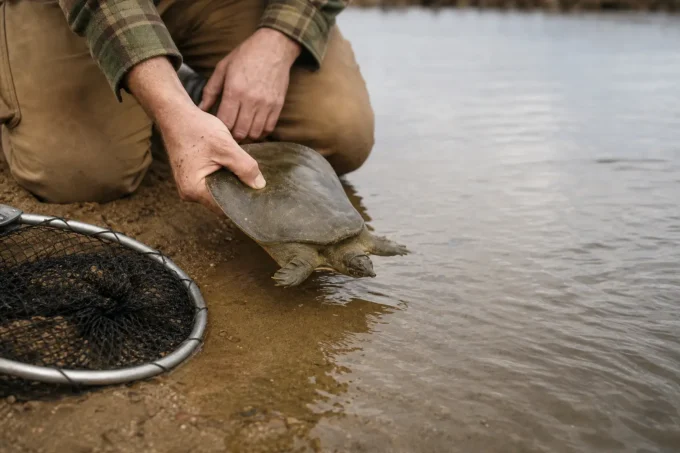
Amos caught softshells the way a man catches a fumble, not a fish. They’ll hit a baited line if you set it, a chunk of cut fish or a chicken neck on the bottom of a sandy creek, but the easier road is a good eye and a quick hand. A softshell will bury itself flat in the sand with nothing but that little pig nose and two eyes showing, and if you spot the pair of dimples in the mud you can scoop him out from behind with a dip net or a shovel before he knows he’s been seen. Grab him by the tail, which is short on a softshell, or better by the back edge of the shell behind the head, and keep every finger out of reach of that neck. It comes out farther than any turtle has a right to, and it comes out mean.
Cleaning Him
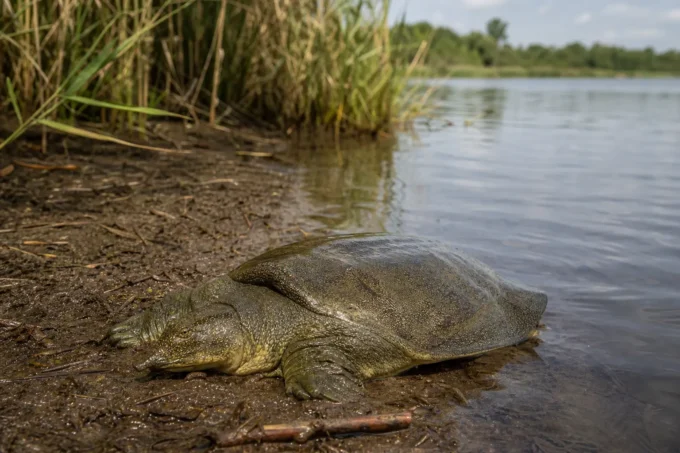
The shell is the whole trick, and it’s why the drawing on the page made no sense until I saw one alive. A softshell don’t wear a box. His back is a flat pancake of leather and gristle with no hard scutes, and the edge is soft like a horse’s ear, so the whole thing flexes when you pick him up. That’s the part that makes you want to set him down. Don’t. Lay him on his back, take his head off with one clean cut at the collar of the neck, and stand back a minute while the nerves settle, because a softshell will keep working that neck after the head is gone the same way a snapper will, and he’ll still try to close on you.
- Cut the head off at the neck and let it bleed a few minutes
- Cut around the edge of the soft shell with a good knife and peel the whole top off in one sheet, then flip him and peel the belly the same way
- Take the four feet off at the ankle, and the short tail
- Gut him, and wash the cavity cold
Some men scald a softshell in hot water for a minute to slip the skin, the way you’d skin a tomato, but Amos peeled his raw and cold, and the meat held up better for the pot. What’s left is two big slabs of white meat off the back, the hind legs, and the tender strips around the edge of the shell that old timers call the skirt. There’s no bony plate to fight, which is the reason a softshell goes clean where a snapper is a half a day of work with a pair of pliers.
Amos’s second note, beside the drawing in a thinner hand: “when you peel him you got the whole turtle or the whole mess. do it off a stump not on your knee, and wash the board fo your woman sees it.”
Cooking It
Softshell meat is white, tender, and mild, sweeter than a snapper and with none of the muddy bottom to it, and the old way to treat it is to fry it, because the meat is already soft and a long boil just turns it to cotton. Amos’s page is plain about it:
- Cut the meat into pieces the size of a palm
- Soak an hour in salted milk or buttermilk
- Roll in cornmeal with salt, black pepper, and a little cayenne if you got it
- Fry in bacon grease until the outside is brown and the meat has curled at the edge
Serve it hot with a twist of lemon if you’re lucky enough to have one, or just black pepper and vinegar. The skirt pieces fry up like the rind on a good piece of chicken, and they’re the part the kids will fight over before they’ve decided whether they’re scared of it.
What It Actually Tastes Like
There’s a reason the fellas who turn their nose up at a gar will still cross a field for a softshell. It don’t taste like turtle in the way people fear. It’s clean and near white and fried crisp, closer to a sweet firm fish than to the dark heavy meat of a snapper, and it’s tender without any boiling because there was never a hard shell to fight. The old men call it the boneless turtle, and it earns the name as much as a turtle can.
Practical Notes
- Check your state law first. Softshells have seasons and size limits in a lot of places, and some of them are protected, so know what’s on your sandbar before you scoop it.
- That neck is the real danger, not the bite. A softshell can reach a hand you’d swear was out of range, so pin the head with a stick before you reach, and keep your fingers behind the shell.
- Softshells bury in clean sand in warm shallows, so look for the two little nostrils and the eyes in the dimples, not the whole animal.
- The skirt around the edge of the shell is worth saving. Don’t throw it to the birds because it looks like gristle; it fries better than anything on the plate.
Amos’s last line, written under the page in pencil that’s gone faint with age: “a man thatll eat a snapper and turn down a soft shelt has got his frogs on the same string aint he. one turtle is dinner and the other is the same dinner easy, and a fool dont know the easy one when its diggin itself out from under his own boot.”
Next from the folder: the next page is chipped along one edge, and where the corner is torn I can just make out the end of a word drawn in heavy ink, and something that looks like a wing.