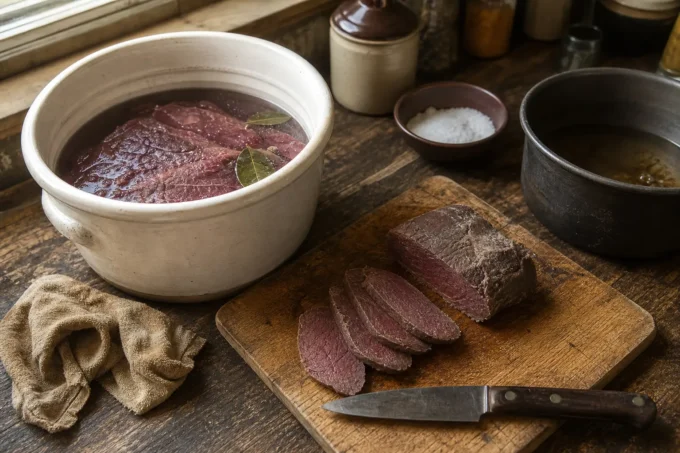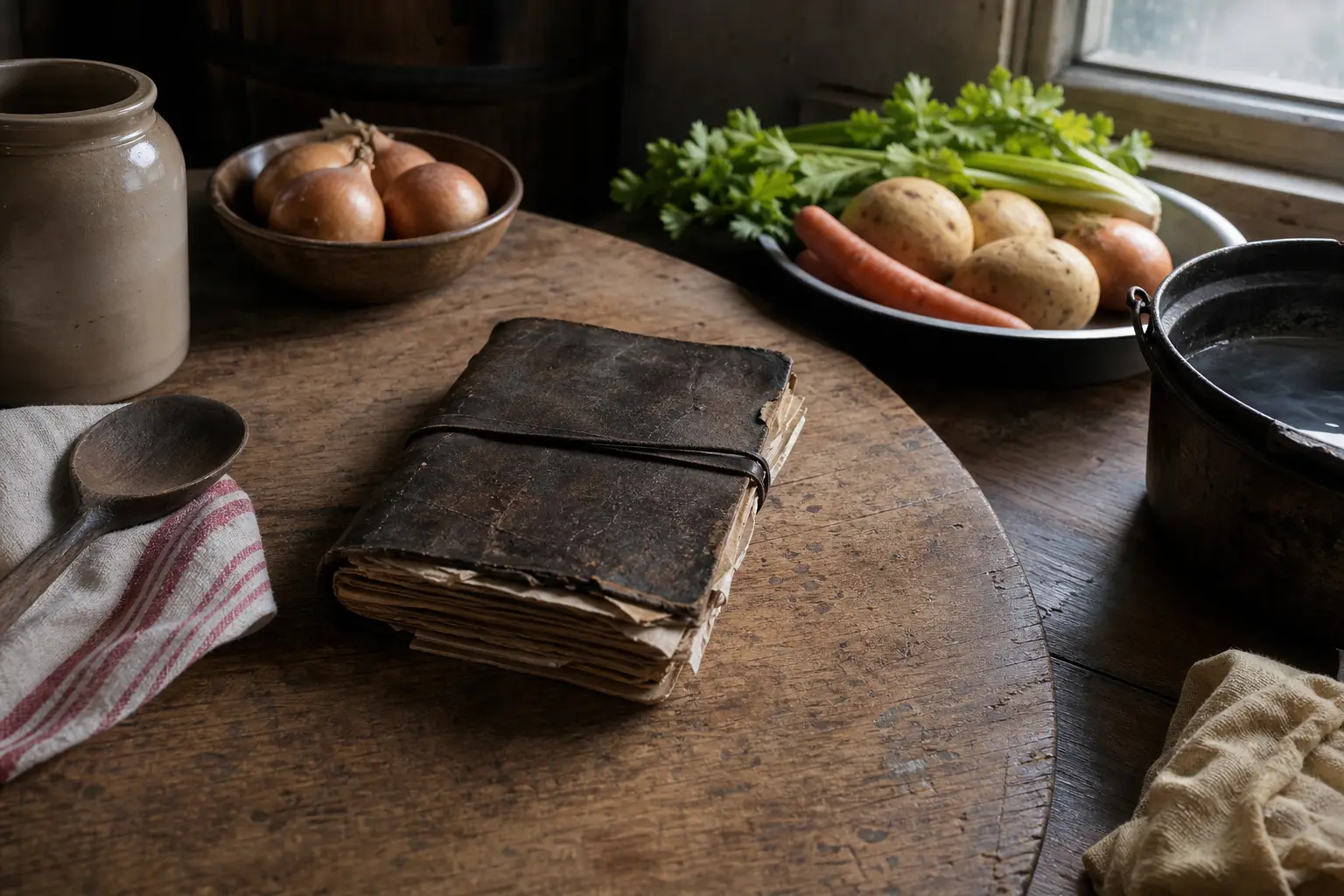
The page that tore away from Recipe No. 9 had left a sliver of the next one showing, and all I could make out was the top of a capital and the word “BRINE” in Amos’s heavy hand. When the sheet finally peeled free, it was thicker than the rest, stiff with something that had soaked through and dried brown at the edges, and the ink had bled in a few places where a man’s wet thumb had gone. At the top, underlined three times, it said “CORNED VENISON or POOR MANS CORN BEEF.” Amos hadn’t dotted the i in “venison,” and the last s hung off the line like it was trying to escape.
A barrel of corned beef cost money Amos didn’t have, and a steer was a thing you bought, not a thing you pulled out of the woods for free. So when a deer came down in the cold months, a haunch would go into a crock of brine to turn into something that’d keep without ice and eat like the fancy salt beef the town folk bought by the pound. The recipe sat on a page that had clearly been used and reused, the corners soft, the folding steady and breaking at the creases.
Recipe No. 10: Corned Venison (Poor Man’s Corned Beef)
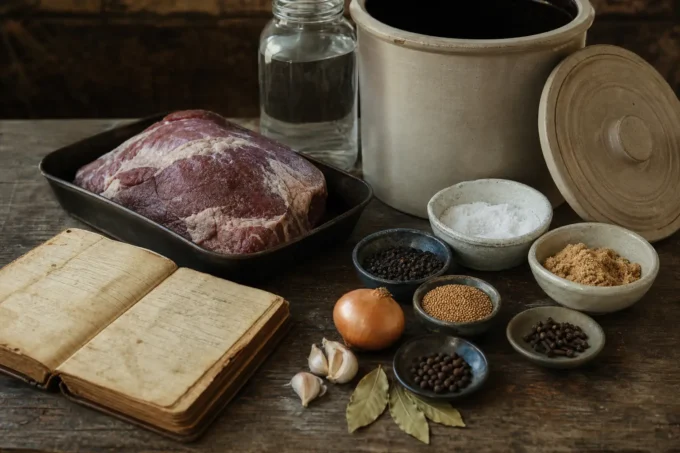
Ingredients
- 1 venison haunch or front shoulder, 4 to 6 pounds, bone in or boned out
- 1 gallon cold water
- 1 cup kosher salt
- 1/2 cup brown sugar
- 2 teaspoons saltpeter (potassium nitrate), or 1 teaspoon pink curing salt (optional, for color)
- 2 tablespoons whole black peppercorns
- 1 tablespoon whole allspice
- 1 tablespoon mustard seed
- 4 bay leaves
- 6 whole cloves
- 1 small onion, quartered
- 3 cloves garlic, smashed
- A stoneware crock or a food-grade plastic bucket that’ll close up
The Brine
Put the water in a big pot and bring it to a boil. Stir in the salt and brown sugar until they’re gone, then drop in the peppercorns, allspice, mustard seed, bay leaves, cloves, onion, and garlic. If you’re using the saltpeter or curing salt, it goes in now too. Boil it a few minutes so everything talks to everything, then pull it off the fire and let it go completely cold. A warm brine will spoil your meat while you wait, so don’t hurry it. Cold brine is the whole trick.
Amos’s note, jammed in beside the boil line: “git yor brine stone cold fo it touches the meat. warm brine aint preservin nothin, it’s rotin it polite.”
Procedure
Step 1 — Clean it. Trim the venison of any hair, sinew, and most of the fat. Deer fat goes rancid in a brine and turns the whole crock, so be ruthless with it. Give the haunch a rinse and pat it dry.
Step 2 — Submerge it. Lay the meat in the crock and pour the cold brine over it until the meat is covered by a good two fingers. Set a clean plate or a boiled rock on top to hold it under, because anything floating is going to spoil. Put a lid or a cloth over the crock and get it somewhere cold.
Step 3 — Wait it out. Leave it in the brine for five to seven days, depending on how big the piece is. A thick haunch wants closer to a week; a thinner shoulder, maybe five. Turn the meat over once a day and skim anything that floats. In cold weather Amos just set the whole crock in the root cellar or out on the north side of the cabin where the frost stayed late.
Amos’s second note, in the margin near the days count: “a week in the brine and a deer shoulder turns into somethin a man’d pay four bits for in town. they dont need to know yor deer was free.”
Step 4 — Cook it. Pull the meat out of the brine, rinse it good, and put it in a pot with fresh cold water to cover. Bring it to a boil, then back it down to a low simmer with the lid on, and let it go three to four hours until a fork slides in without a fight. The meat comes out a deep, dull red all the way through, salty and spiced, and it’ll slice like the best corned beef a man ever fattened a steer for, and cost him nothing but powder.
Amos’s last line, at the bottom, next to a drawing of what looked like a slice of bread wearing a little hat: “slice it thin the day after it cools and eat it with cabbage if you got cabbage and mustard if you got mustard and yor fingers if you aint got neither.”
What It Actually Tastes Like
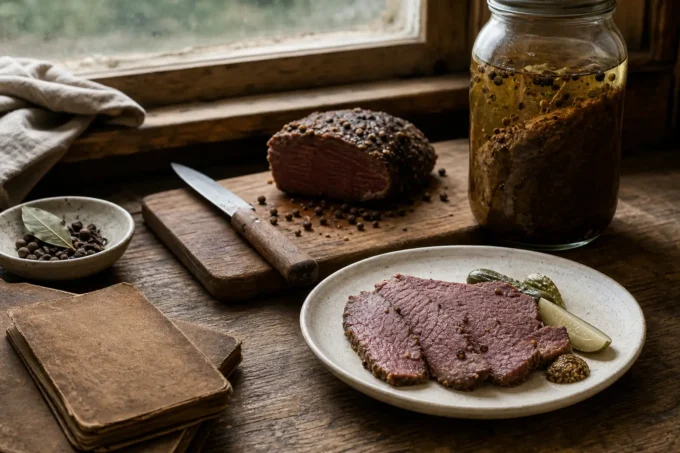
The venison stops tasting wild somewhere around day three in the brine. What’s left is meat with a clean, sharp salt to it and a spiced warmth from the allspice and cloves underneath, dense but tender when it’s been simmered right. Sliced cold the next day, it’s as good in a sandwich as any brisket, and it’ll keep in the cold longer than fresh meat ever would. Amos was right that people’d pay for it, because it doesn’t announce itself as deer.
Practical Notes
- The saltpeter is only there for the pink color and a bit of keeping power. You can leave it out and the meat comes out grey, which eats exactly the same.
- Two fingers of brine over the top is the rule. Weigh that meat down or you’ll be fishing it out spoilt and swearing Amos’s own swears.
- Fifteen to twenty minutes of boil time kills the saltpeter’s burn if you used a heavy hand with it. Simmer low, or the meat goes stringy.
- Check your state’s rules on baiting and seasons before a cold-month deer, and keep the liver and heart if the law and your stomach both allow it, because Amos never let a good thing go to the dogs.
Next from the folder: the page behind the corned venison has a stain I took for rust until I turned it to the light, and it’s rust all right, a brown ring from some old iron lid. Under it, the next recipe starts with the words “OLD HEN” and something about a pot. We’ll get there.