The Cow Is Down and You Have Until the Sun Touches the Bluffs
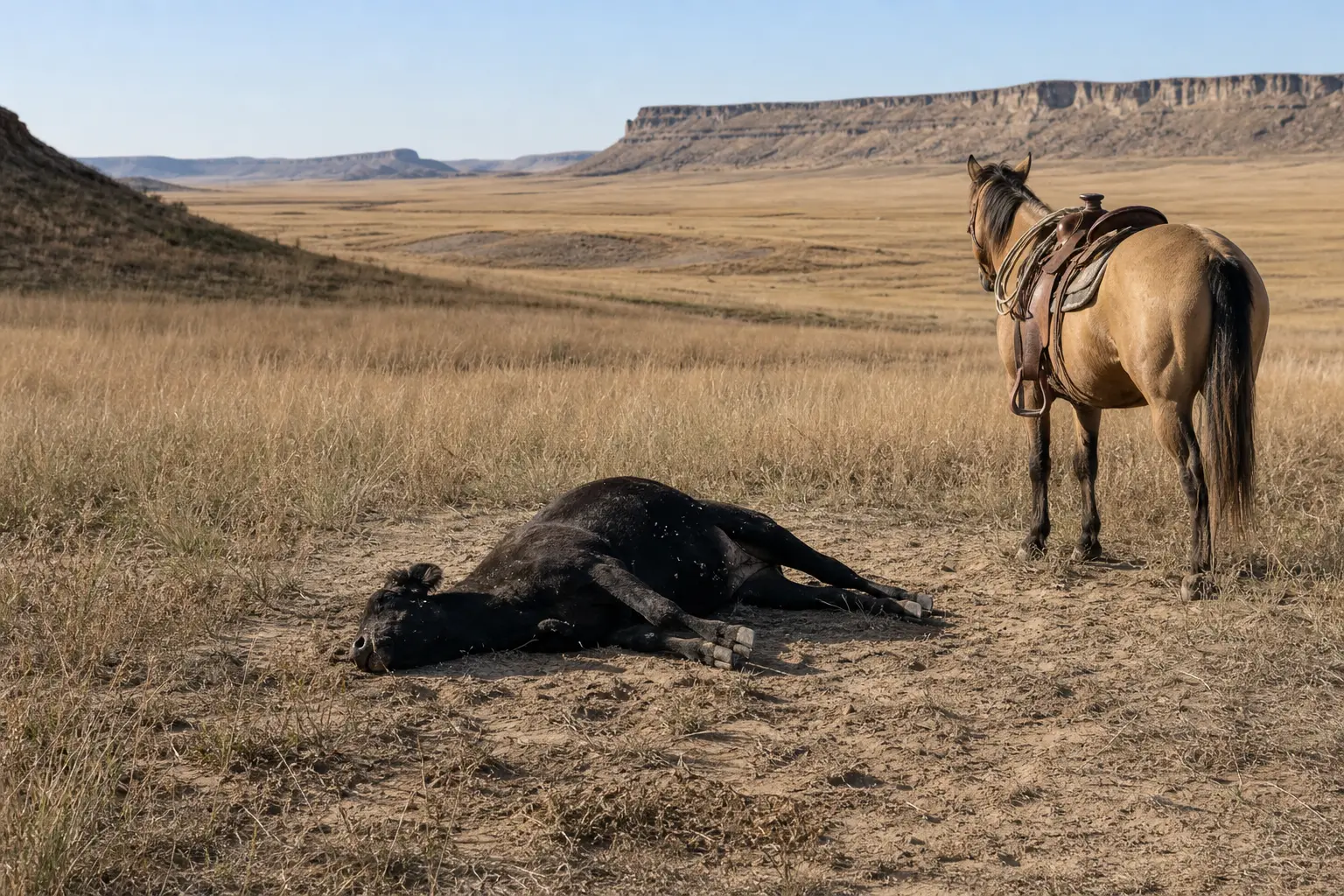
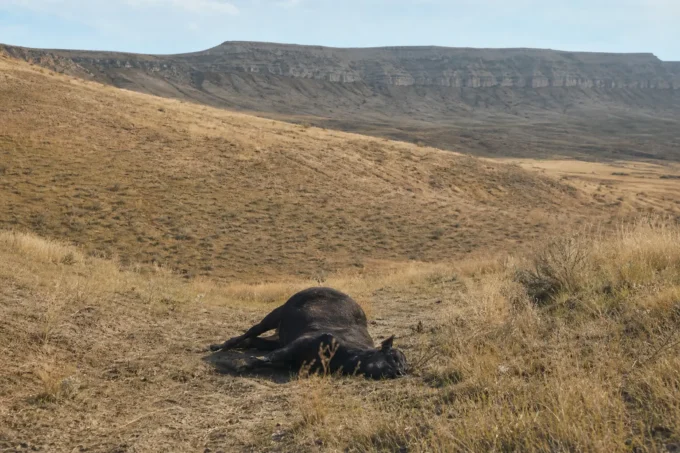
Early October, 1848. Two days west of the Sweetwater, where the grass thins and the ground turns to pale dust you taste with every breath. You come over a low rise and the stench hits first, thick and gamey, before you see the black shape laid out at the bottom of the draw. The cow went down clean under the Hawken, one ball behind the shoulder, and she did not run twenty yards. Now she lies on her side, nearly a thousand pounds of warm animal, and the sun is already climbing toward the bluffs. It will reach them in maybe three hours, and after that the meat starts to turn. Nobody is going to say it out loud, but you know the arithmetic before anyone opens their mouth: you have one wagon, four hands that can hold a knife, and more meat here than any of you have seen in a year. Most of it will not leave this draw.
The Problem Is Never the Shot. It Is the Clock
You have taken buffalo before at Fort Laramie, back when a hunt was something traders paid to watch. That was sport with a roof over it and men to lift the heavy parts. This is different. This is the cow that has to carry the wagon through a winter you have not seen yet, and she is worth every pound only if you can cut her up and dry her before the flies find you. Morrison used to say the buffalo was the only animal in the territory that gave a family a whole season in one afternoon, and then Morrison died of the flux before he could say the rest of the sentence. The rest of the sentence is the part that matters. You get one afternoon, and what you do not cut and hang by dark is gone by morning. Sam is already walking toward the cow with the skinning knife, and Hannah is handing you the whetstone without a word, and you understand with a cold certainty that the work is not the shooting. The work starts the moment the animal stops breathing and it does not slow down for anybody.
One Cow, and What She Actually Gives You
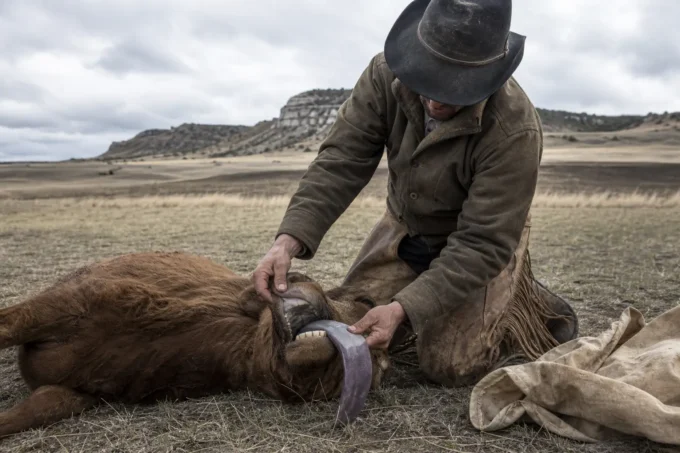
Start with the tongue. You kneel at the head and open the jaw, and your fingers are inside the warm mouth before you let yourself think about it, and the tongue comes out long and heavy, a good twelve pounds by itself. That is a delicacy a trader at Fort Laramie will trade almost anything for, but you are not going to Fort Laramie this trip, so it goes into the salt sack for your own wagon. The heart comes next, a fist of dark lean that weighs six or seven pounds, and the liver, and the kidneys. Then the hump, the great ribbed hump over the shoulders, which a man could not lift alone and which holds the sweetest meat on the whole animal. The hindquarters are where the real weight lives. You cut the great rounds and the flanks and the ribs, and you work in the smell of warm blood and the dust that sticks to it, and the sweat runs into your eyes until you are half blind. The flies arrive exactly when Sam said they would, a black buzzing line that finds the cut meat before you finish the first hindquarter.
The Count That Never Comes Out Even
Here is the number nobody writes in the journals, because it is ugly. A buffalo cow dresses out somewhere between four and five hundred pounds of usable meat, and a family of four with one wagon can carry maybe a hundred and fifty pounds of it dried, on top of the flour and the beans and the children’s shoes and the spare axle. You do the math with your hands, not your head, because the knife keeps moving while you think. The hump goes up first, cut thin with the grain for drying. The rounds and the flanks go next. The ribs get split and piled. And somewhere around the second hindquarter you look at the great red heap still on the ground and you understand that half of that animal is going to feed the coyotes by tomorrow noon, because the wagon will not hold it and the sun will not wait. It is the hardest thing a hunting man ever learns on this ground: the waste is not a failure. The waste is the cost of taking what you can carry off a country that gives all at once or not at all.
The Quiet Part
Hannah does not waste a single motion. She spreads the salt where it will do the most good and bends over the drying rack and works the strips flat with the flat of her hand, and she does not look up at the heap that is going to waste. The Miller boy sits on a rock and stares at the cow’s head, at the tongue you already cut out, and he asks you, in a voice that cracks once, whether the rest of it is going to sit there until it is bones. You tell him the truth because there is no softer version: the wolves and the ravens will take it, and the country will take it back, and next year there will be more buffalo than any of you can count. He does not answer. He just keeps staring at the cow, and you think briefly about people back east who have never seen a single animal give more meat than they could carry, and who will never have to throw half of it away. You think this without envy and without comfort, because neither one of them has any weight out here.
The Sun Beats You by Twenty Minutes
The complication is the heat, and it is the same heat every hunting man on this trail loses to. You cut the last hindquarter too slow, your knife dulling against the bone, and by the time you get the strips onto the drying rack the air has gone soft and heavy with the smell of meat starting to turn. A west wind that had been holding off the flies dies, and the flies come down in a black cloud on everything you have not hung yet. You lose maybe a quarter of the rounds before you get the smudge going, damp grass and green willow branches, and the smoke drives them back but not before a whole flank has gone gray at the edges. You trim it, you throw the bad part to the dog, and you watch the dog eat what three hours ago was a living animal and know that this is how it always ends out here. You do not win against the sun. You finish before it finishes you, and some days you only tie.
What Was Real
A mature buffalo cow dressed out to roughly 400 to 600 pounds of usable meat, and a bull could run past 800 dressed pounds. The hump, the tongue, and the hindquarters were the prized cuts, and the tongue alone was a recognized trade good at posts like Fort Laramie and Fort Bridger. Frontier families could realistically preserve and carry only a fraction of that on a single wagon, and the rest was routinely left for scavengers. Being unable to haul away what you killed was not considered waste in the modern sense; it was the ordinary arithmetic of subsistence hunting, where the animal arrived in one overwhelming afternoon and the family took what the wagon and the sun would allow.
The buffalo hunt on the plains was subsistence labor first and sport a distant second, a distinction the eastern sporting press rarely captured. The great slaughter that reduced an estimated 30 million bison to fewer than a thousand by the 1880s was driven by hide hunting, the railroad hide market, and deliberate campaign policy, which had almost nothing to do with the way a frontier family butchered one cow for a winter’s meat. Subsistence hunters took the tongue, the hump, the choice rounds, and the fat they could render, and they left the rest because the country offered no way to keep it.
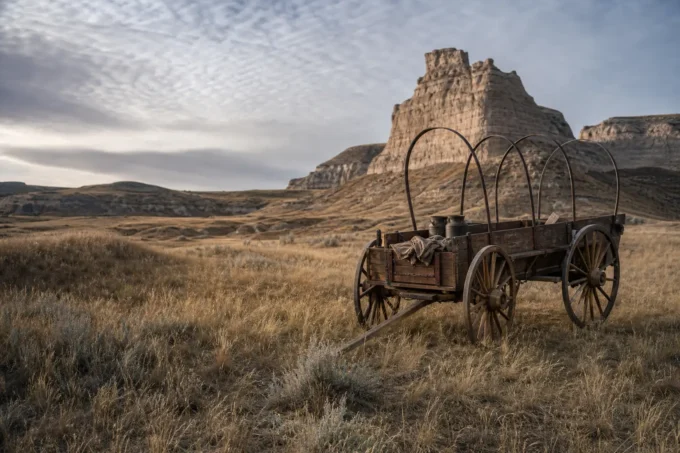
Months later, several hundred emigrant families would pass this same dirt each year. The Oregon and California trails moved roughly 400,000 people between 1841 and 1869, and the buffalo they took along the way was often the difference between a wagon that reached the far mountains with food and one that did not.