For two years I treated the wind like a math problem with a clean answer. There had to be a formula. Plug in the terrain, the time of day, the forecast, and out pops the one stand where my scent never touched a deer’s nose. I read forum threads at midnight. I bought a little powder puffer, then a fancier powder puffer, then a bottle of milkweed seeds that lived in my pack like a good luck charm. I was going to solve the wind in hill country.
The wind, as it turns out, does not care that I am a man who likes to solve things. It swirls. That was the whole problem, and I refused to accept it for two solid seasons.
The Map I Couldn’t Draw
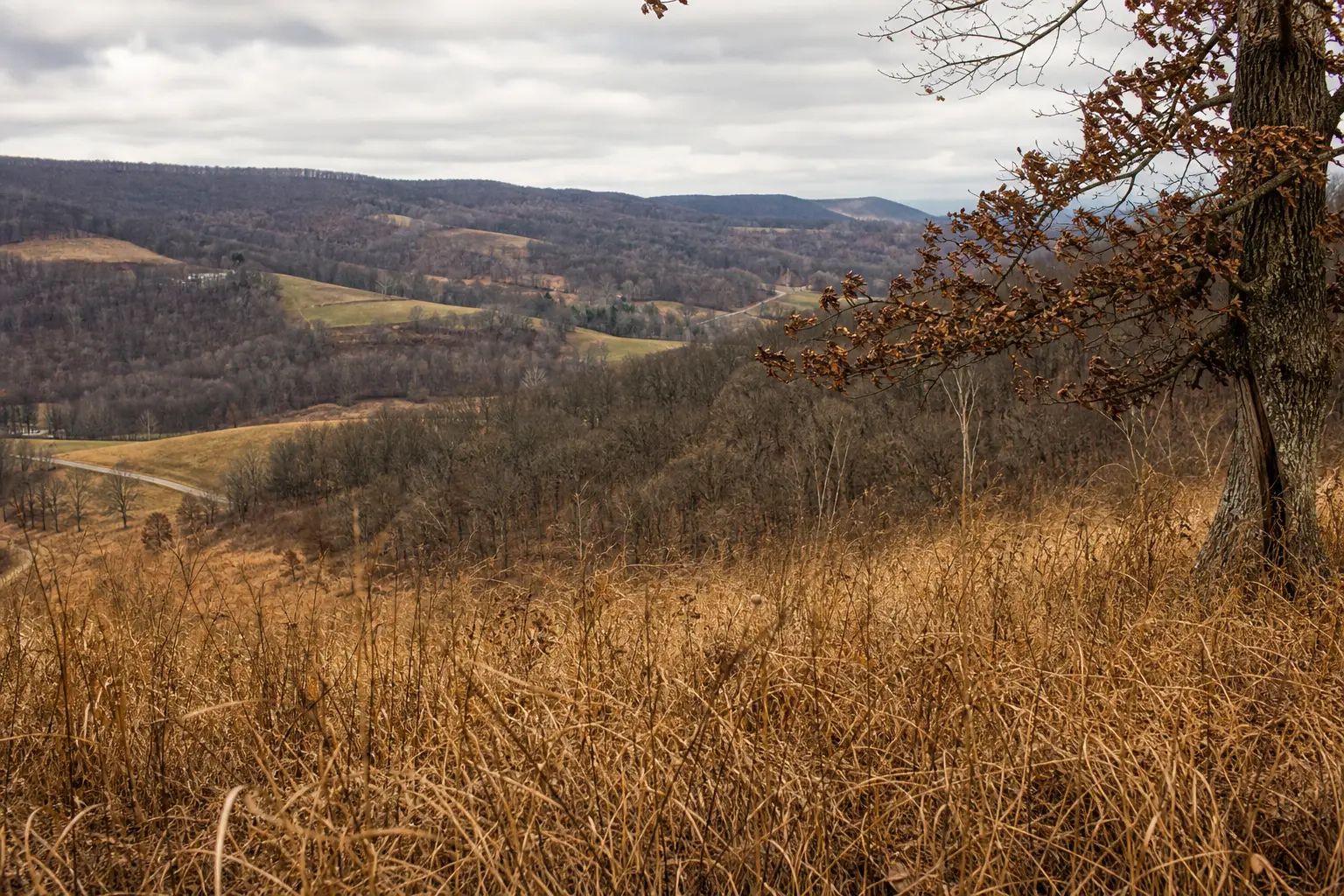
I hunt mixed farm ground and big timber in central Pennsylvania, ridges and hollows that climb five hundred feet from the creek bottoms to the top. Rolling hills, gentle slopes, no real mountain for half a mile in any direction. You’d think with that much elevation you’d get clean, predictable thermals. Morning air rises up the slope as it warms, evening air sinks as it cools. That’s the theory, and on paper it’s beautiful.
In real life, every five minutes my milkweed seed goes a different direction no matter where I stand. Up the ridge, then down the hollow, then sideways across the bench, then nowhere at all, hanging in the still air like it’s waiting for me to admit I have no idea what’s happening. I could never find a pattern, and not finding a pattern drove me quietly crazy, because I had convinced myself there was one and I was just too stupid to see it.
The only days I could predict anything were the extreme ones. Pouring rain, I’d slink in with my noise and scent both washed out and almost shoot a decent buck at forty yards. Thirty-mile-an-hour wind, I’d edge onto the downwind side of a thicket and get a shot at another one. Those days worked because the air was moving hard enough to flatten all that terrain mess into one direction. The calm days, the average days, the days I actually hunt most of the season, the air did whatever it wanted around every little ridge and hollow.
The Thing Nobody Wanted to Tell Me
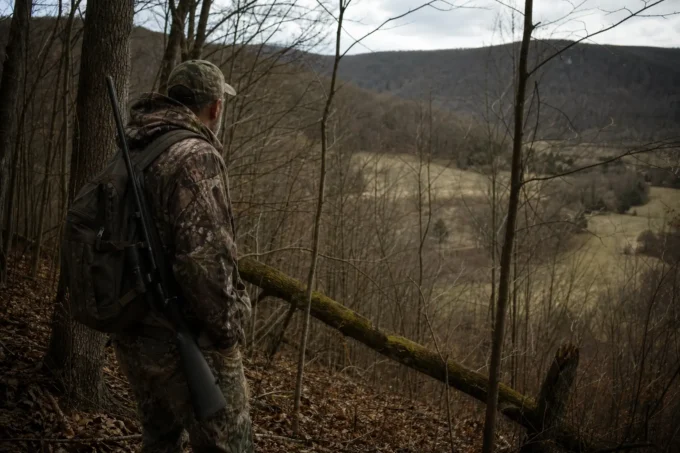
I finally got honest advice from a stranger, and it stung because it was boring. He told me there is no good solution. Wind swirls along ridges and hillsides, period. You do the best you can for that specific spot, and then you hunt it. He also said something that rearranged my whole head: the wind where you’re standing can be completely different from the spot you’re watching, even a hundred yards away.
I had been trying to predict one wind for an entire hillside, when the hillside is a hundred little winds all doing their own thing. No app could fix that, because no app is standing where the deer is standing.
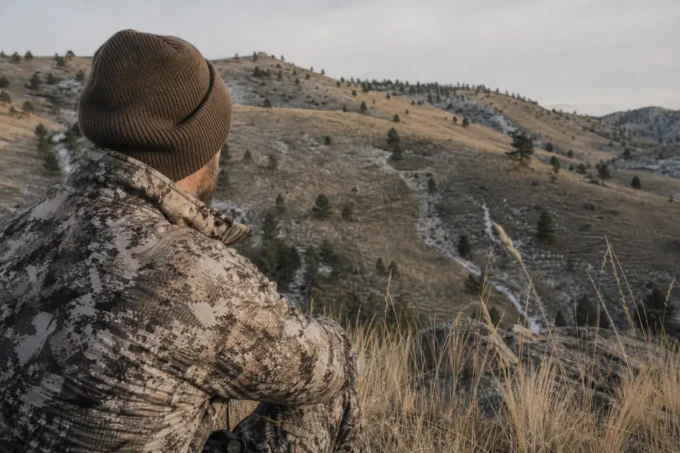
The second thing I learned was slower and more useful. There are a couple of threads you actually can pull on. Thermals are real, just fickle. Morning air climbs the side of a valley as the sun warms it, evening air sinks as the shade cools it back down. The side of a slope with sun on it, the air climbs. The shaded side, it drops. The switch happens around sunrise and sunset, but every hillside flips on its own schedule, and it only matters right where you are sitting, not down the road.
What Finally Worked
I stopped trying to beat the wind and started trying to hunt it. Three things changed my season.
First, know the prevailing wind. Where I hunt it’s mostly one direction most of the time, and I plan my sets around that instead of around whatever the app says this exact hour. If the prevailing wind is wrong for a spot, I don’t force it. I go somewhere the prevailing wind actually favors.
Second, read the air right where you sit, not on your phone. One milkweed seed every fifty yards on the walk in tells you what the air is doing at your stand, not what a forecast guesses it should be doing twenty miles away. Cheap, quiet, and more honest than any puffer of powder I ever bought. The seed that hangs in the dead air is the one that taught me the most, because it’s the one that said the wind quit, and there’s nothing to read but the quiet.
Third, hunt the lee side of a ridge when the wind is steady from one direction. Deer travel just below the crest where the wind is broken but they can still catch scent drifting down on them. You get a few hours of predictable movement there before the thermal shift ruins it. That little window won me more looks than a season of trying to be clever.
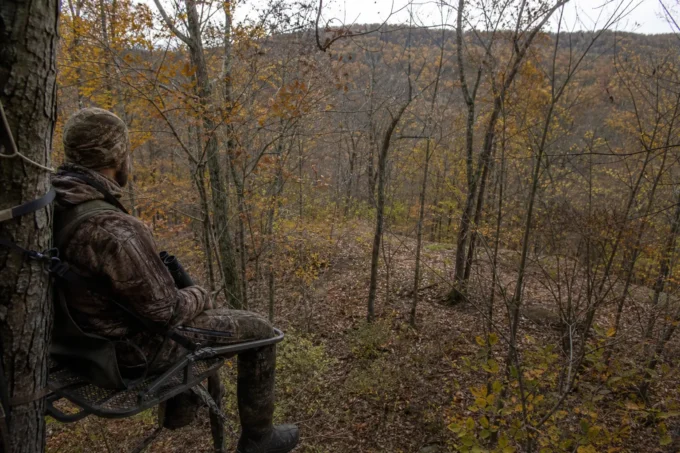
I also got up off the ground. A treestand raises you above a lot of the swirling layer that curls right along the dirt, and it’s the cheapest one-way ticket I ever bought for keeping my scent out of a deer’s kitchen. Kept my clothes out in the shed where the house smells couldn’t soak into them, and I stopped dousing myself in sprays I half believed in and half didn’t.
The Wind Isn’t a Problem to Solve
Here’s the part I needed two years and a bruised ego to write down: the wind is not a riddle with an answer. It’s weather moving over dirt, and it’s messy, and some days you genuinely cannot win it, you can only hunt it well enough and let the honest days make up for the sideways ones.
I used to think the guys who killed deer every year had cracked some secret code I was too dumb to find. Now I think most of them just know two things I didn’t. They know which way the wind usually blows on their ground, and they know that standing in one spot reading the actual air is worth more than a hundred forecast screens. The code wasn’t a code. It was patience, a milkweed seed, and accepting that a swirling wind is part of the ground you hunt, not a problem to fix.