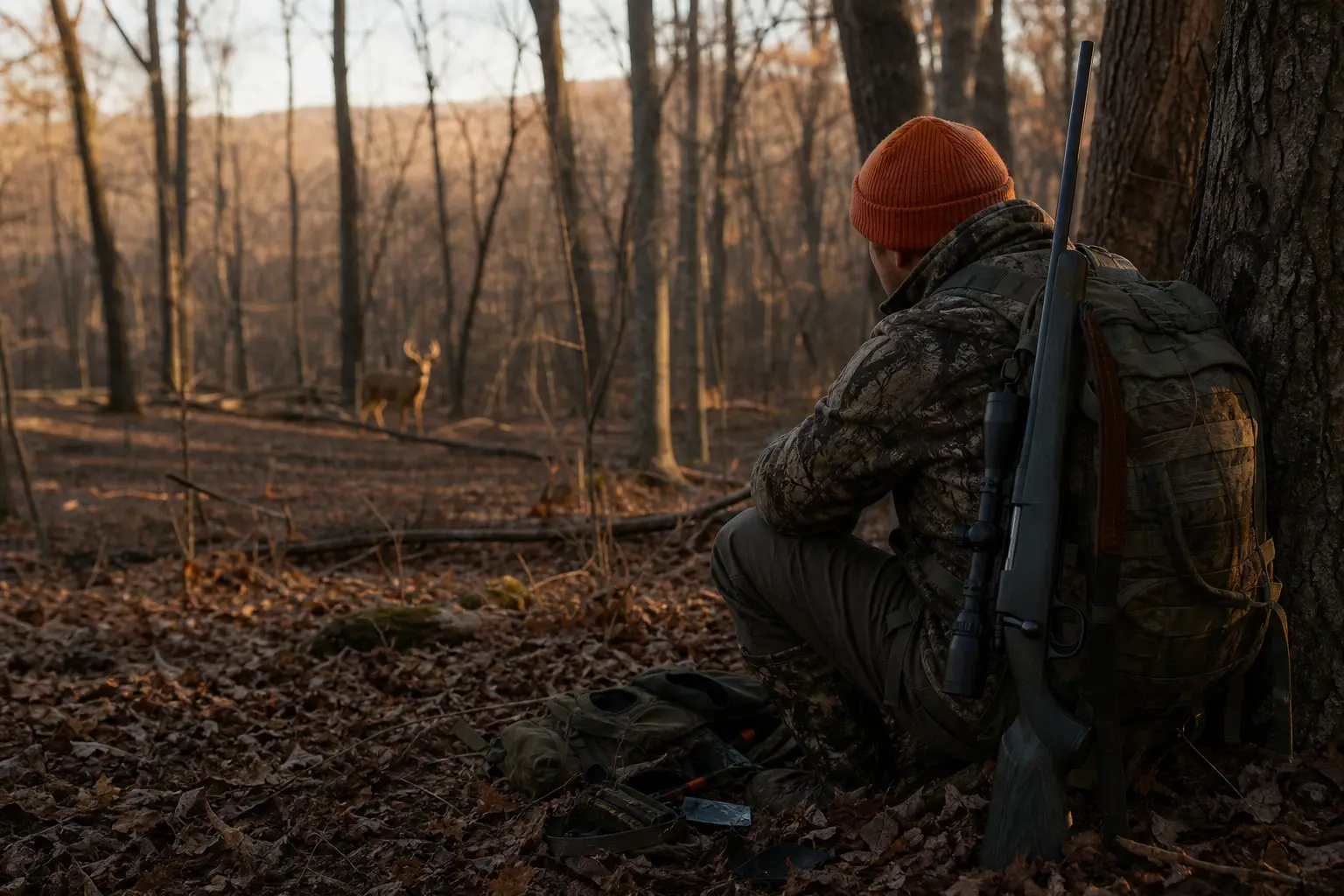
I drove two hundred and forty miles with an empty gun.
Let me rephrase that. I drove two hundred and forty miles with a fully functional rifle, a brand new scope I’d spent three weekends zeroing, a backpack packed like I was deploying to a combat zone, three different jackets because I couldn’t decide on the weather, two sandwiches, a thermos of coffee, a backup thermos of coffee, and exactly zero rounds of ammunition.
The gun wasn’t empty. I just didn’t bring anything to put in it.
The Plan Was Solid (The Execution Was Not)
This was three years ago. Opening weekend of rifle season in northern Wisconsin. I’d drawn a public land tag for a chunk of county forest I’d been scouting on Google Earth for months. Found a saddle between two ridges, good oak flat below it, fresh rubs on my trail camera from October. I had it all mapped out.
I left at 3 AM Friday morning. Truck loaded the night before. Rifle case in the back seat. Boots by the door. I even remembered to fill up the gas tank, which for me is basically a miracle.
What I did not remember, apparently, was the part where you need bullets to shoot things.
I discovered this at 6:15 AM, crouched against a deadfall oak, watching a decent eight-pointer work his way down the ridge about 120 yards out. He was taking his time. Stopping to sniff. Looking around. Beautiful morning — frost on the ground, that orange sunrise light coming through the bare trees, no wind. Perfect. Everything was perfect.
I reached into my jacket pocket for the little plastic ammo wallet I always keep there.
Not there.
Checked the other pocket. Nothing. Checked my pack — unzipped every compartment, quietly as I could, heart starting to pound for all the wrong reasons. The buck took another twenty yards downhill, giving me a beautiful broadside angle. I could see the morning light catching his antlers. Gorgeous animal.
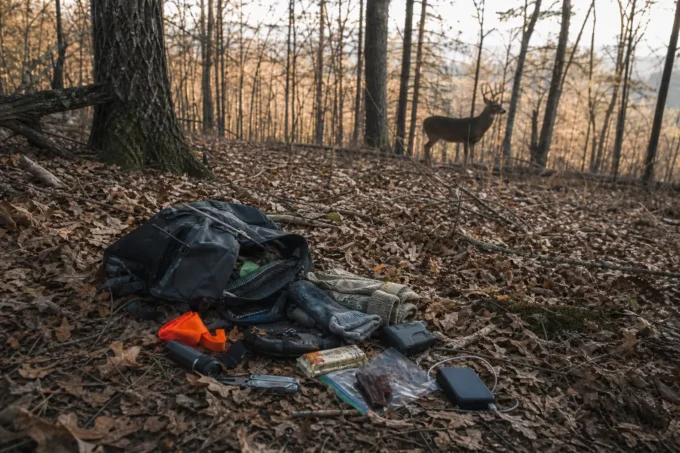
And I’m kneeling in the leaves, dumping my backpack contents onto the ground, finding — in order — a spare headlamp, a roll of flagging tape, three granola bars, a Leatherman, my hunting knife, a small bag of jerky, my range finder, an extra pair of socks, a portable charger I didn’t need, and precisely no .308 Winchester.
The Mental Math of an Idiot
Here’s where my brain went, in real time:
Maybe I loaded the magazine at home.
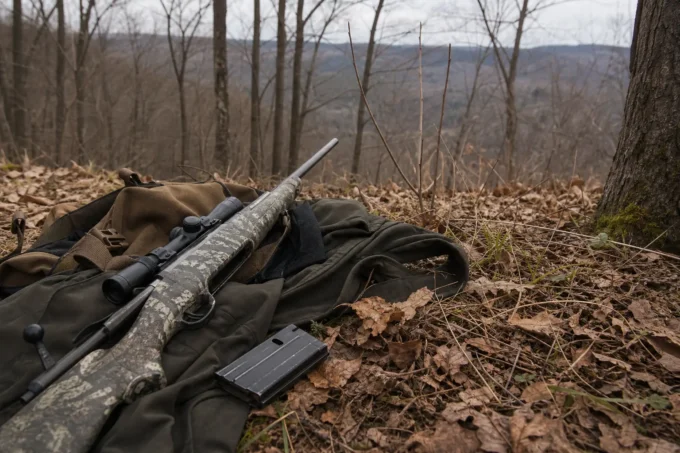
I pulled the bolt back. Empty chamber. Dropped the magazine. Empty magazine. Just a metal box full of air and disappointment.
Maybe there’s a round in the truck.
The truck was a mile back at the parking area. The buck was eighty yards out and closing.
Maybe I could throw a rock.
I actually considered this. I am not proud of it.
The buck eventually fed his way over the ridge and disappeared. I sat there in the leaves for a solid ten minutes, staring at my pile of useless gear, trying to figure out exactly where in my packing routine the wheels had come off.
Here’s what happened: I clean my rifle after every range session. Standard practice. Removed the bolt, removed the ammo, cleaned it, put it in the case. The ammo wallet — the one that lives in my jacket pocket — I’d taken out after my last range day to clean the jacket, left it on the workbench in the garage, and walked past it three times while loading the truck.
Three times. I literally walked past my own ammunition and didn’t register it.
The Walk of Shame
I hiked back to the truck. Drove forty minutes to the nearest gas station that sold ammo. The selection was what you’d expect from a rural Wisconsin gas station at 7 AM on opening day — one box of .30-06, two boxes of .270, some 12 gauge slugs, and a dusty box of .308 Winchester that looked like it had been on the shelf since the Clinton administration.
I bought it anyway. Thirty-two dollars for twenty rounds of questionable provenance. The box had a slight tear and the cardboard felt damp at some point in its life. I didn’t care. I was going back in.
But here’s the thing about gas station ammo you’ve never shot before — you have no idea where it hits. Zero was established with my handloads. This stuff? Different bullet weight, different velocity, who knows what kind of grouping. I spent the next hour walking logging roads, trying to find a spot to take a confirmation shot without scaring every deer in the county.
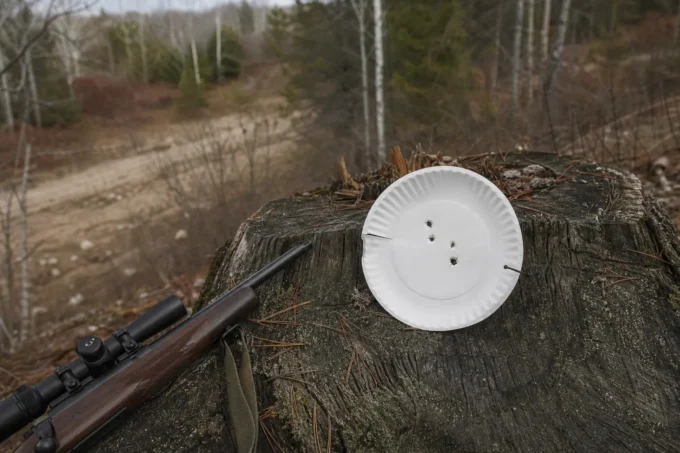
Found a dirt berm behind an old gravel pit. Fired two rounds at a paper plate I stuck to a stump at 80 yards. Hit four inches high and right. Adjusted. Fired one more — closer, but now I’m burning daylight and ammunition and the morning hunt is basically over.
I never saw another deer that weekend. Sat two more sits, froze my ass off, watched squirrels and one very confused turkey, and drove home Sunday afternoon having learned a lesson that cost me two hundred and forty miles of gasoline, a weekend of my life, and whatever shred of dignity I had left.
What I Do Now (Because I’m Not Making That Drive Again)
That experience rewired how I pack for hunting. It’s not complicated. Here’s the system:
- Range bag stays packed. I don’t empty it anymore. Ammo wallet, ear pro, chamber flag, small tool kit — it all lives in the range bag, and the range bag lives in the truck during hunting season. Period.
- Magazine loaded the night before. Not “I’ll grab it on the way out.” Not “it’s probably in my jacket.” Loaded magazine in the rifle case, confirmed by touch before the case gets zipped.
- Spare box in the glovebox. A full box of whatever I’m shooting that season. Even if I forget everything else, I’ve got twenty rounds within arm’s reach. Cost me maybe thirty bucks a year to keep it there and rotate it out. Cheapest insurance I’ve ever bought.
- Pre-trip checklist, written down. I know — that sounds like some Boy Scout nonsense. But I keep a notecard in my hunting tote: rifle, ammo, tag, license, knife, rangefinder, water, snacks. Takes thirty seconds to run through it. That card has saved my ass at least twice since.
The funny thing is, I’m not a disorganized person. I don’t lose my keys. I remember appointments. But something about the excitement of opening weekend — the 3 AM coffee, the drive through the dark, the anticipation — it makes your brain skip basic functions. You’re thinking about the buck you’re going to shoot, not the box of cartridges sitting on your workbench.
I’ve told this story to a few hunting buddies, and every single one of them had a version. One guy drove three hours to his elk spot and realized his bolt was still in the gun safe at home. Another one packed his wife’s .243 ammo instead of his .308 and didn’t notice until he was loading the magazine at the trailhead. A third showed up to duck camp with waders, decoys, and shotgun shells — but no shotgun.
If you hunt long enough, you will do something stupid. The only question is how far from home you’ll be when it happens.
I did mine at two hundred and forty miles. Could have been worse. The guy who forgot his bolt had driven to Colorado from Iowa.
So if you’re reading this the night before opening day, do yourself a favor: open your rifle case. Look inside. Touch the ammunition with your actual hands. It takes five seconds and it beats the hell out of watching a buck walk away while you’re holding seventeen pounds of useless metal and plastic.
Trust me on this one. I’ve got the gas receipts to prove it.