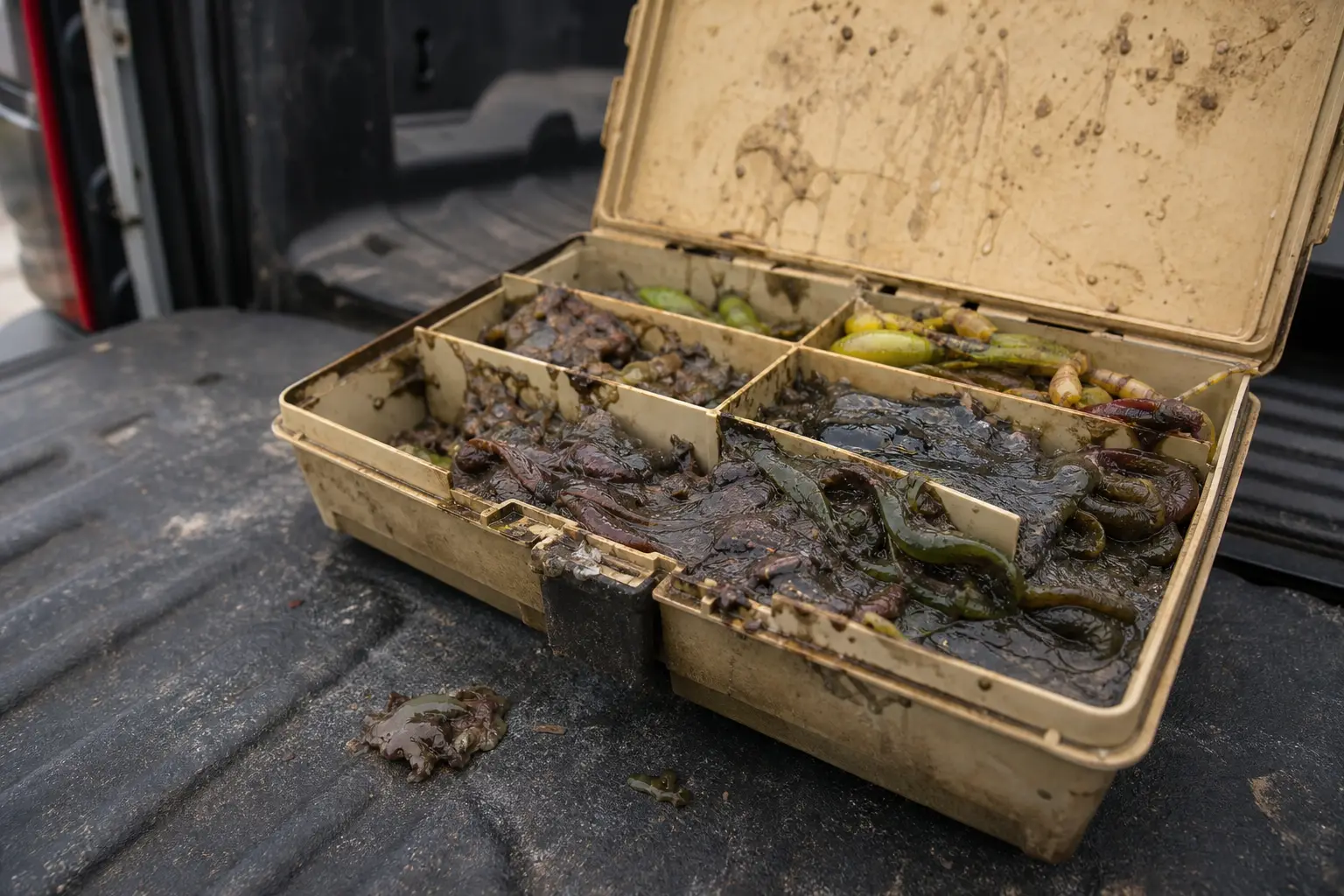
I found it in July, baking in the bed of my truck under the tonneau cover. I’d forgotten it in there after a trip to the lake in May, the way you forget a half-drunk bottle of water until it’s warm and useless. I popped the latches and the smell hit me first. Sweet and chemical, like melted crayons and tanning-lotion-flavored gum.
Every soft plastic grub, worm, and craw in that ten-dollar tackle box had turned into one single glob. Fifteen bucks of plastic fused together into something that looked like a gas station empanada that had been left on a dashboard. The tray dividers had warped. A couple of the baits had eaten straight through the bottom of the box and were fused to the bed liner.
I am, occasionally, a dumbass. This was one of those times.
You Left WHAT in There
The thing is, I knew better. Every summer I tell myself the same thing: don’t leave the soft plastics in the truck. And every couple of years, I leave them in the truck. The back of a pickup in July hits well over 120 degrees. Soft plastic bait doesn’t survive 120 degrees. It doesn’t even survive 100 most of the time depending on how long it sits.
But the melting wasn’t the part that surprised me. I expected melting. What I didn’t expect was the tackle box itself getting destroyed. The plastic baits had reacted with the plastic of the box. Where a green pumpkin worm had been resting, there was a hole through the bottom, like the worm had burned its way through with acid.
I stood there in the driveway holding a tackle box that looked like a failed science experiment, and my wife walked past and said, “You left it in the truck again, didn’t you.” She didn’t even look. She just knew.
It’s Not Just the Heat
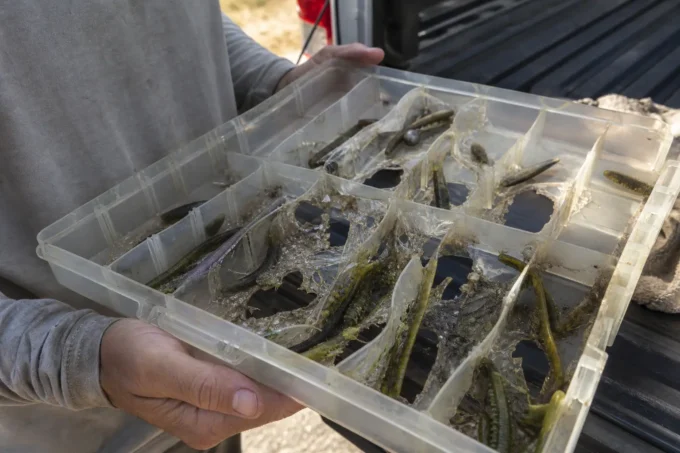
Here’s the part nobody told me when I started fishing. Soft plastics are made of oil. Polyvinyl chloride, plastisol, all that. And plastisol doesn’t just melt when it gets hot. It can straight-up dissolve other plastic. The plasticizers in the bait will soften a cheap tackle box from the inside, warping the trays and eating through the bottom.
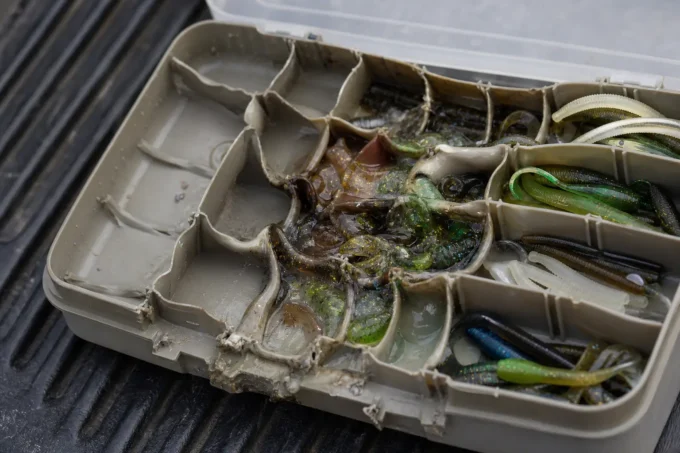
And mixing brands is its own problem. Different companies use different formulas, and some of them are flat-out incompatible with each other. You dump a Z-Man ElaZtech bait in the same tray as a generic PVC worm and leave them touching for a week, and they’ll fuse together into a puddle. I’ve seen it happen. I’ve also seen a guy’s entire Z-Man box turn to soup because he’d mixed a couple of other brands in there as a “temporary” thing back in March and forgot.
Z-Man baits are the famous example because their plastic is a different animal. It’s tough, it’s stretchy, it lasts. But it doesn’t get along with other plastics, and it doesn’t get along with certain hard plastic boxes. You leave them loose in a box that isn’t worm-safe and you’ll come back to a melted mess and a ruined tray.
What I Do Now
After my driveway meltdown, I stopped treating lure storage like an afterthought. Here’s what actually sticks:
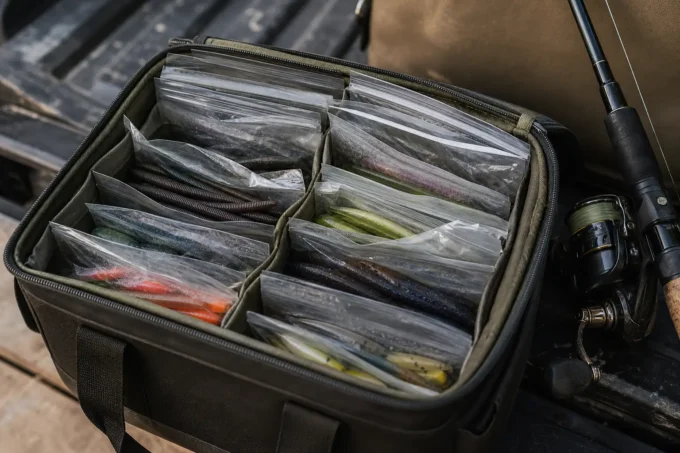
- Keep soft plastics in the bags they came in. The manufacturer tested them against that bag. They did not test them against your fifteen-dollar Plano knockoff. Original bag, every time.
- Don’t mix brands in storage. You can mix them on the water if you want, but when you get home, separate them back out. Especially Z-Man. Keep ElaZtech with ElaZtech.
- Look for “worm-safe” boxes. If the box doesn’t say worm-safe, assume it isn’t. A truly worm-safe box is fine with soft plastics, but even then I don’t toss random brands in together.
- Bring the damn box inside. I know. You’re tired after a day on the water. You’ll “do it tomorrow.” Tomorrow is when it’s 98 degrees and the bed of your truck is an oven. Just carry the box inside like an adult.
I picked up a soft-sided bait binder to hold the original bags. It stays in the garage, out of the sun, and it goes in the cab of the truck when I fish, not the bed. The melted mess cost me about fifteen bucks in plastic, but the lesson would’ve cost me a lot more if I’d kept doing it.
There’s no glory in this one. You don’t post a melted tackle box to social media and get a hero’s welcome. You get people laughing at you and one guy in the comments saying, “I thought that was your lunch.” He wasn’t wrong. It looked like a wrecked TV dinner.
But everybody who fishes has done it, or will. The trick is to do it once, lose the fifteen bucks, and never do it again. I’m on year three now without a single melted worm. Which probably just means I’m due.