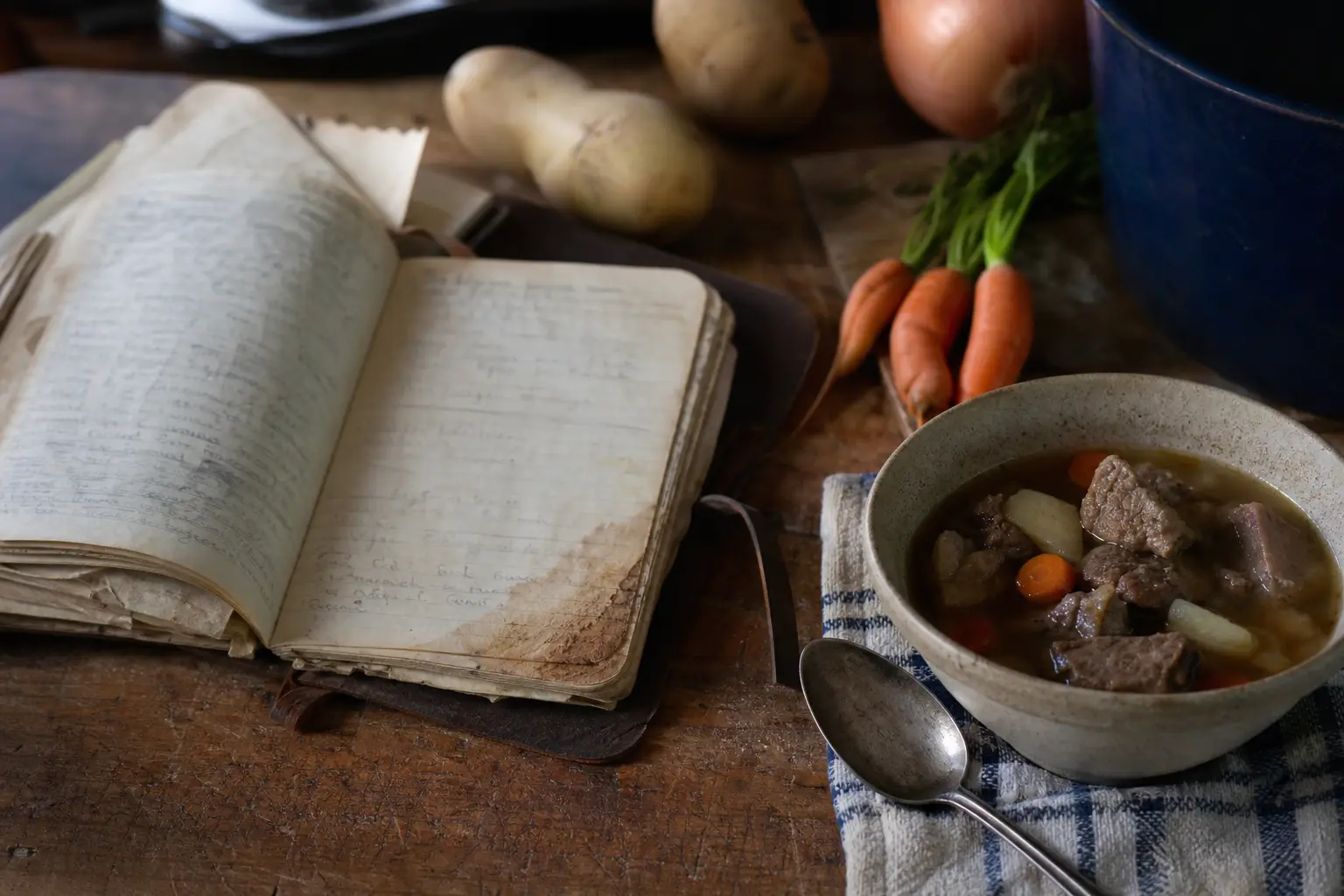
Recipe No. 6 is stuck to the page under it, and you can tell Amos spilled something sweet on it once, because the corner went stiff and brown. His heading is shorter than usual, like he was running out of both patience and pencil: “MUSKRAT. boil it first.” Under that, crammed toward the bottom of the margin, he wrote the line that’s on the front of the folder’s next page too, so he clearly meant for a person to see it: “muskrat aint bad if you got the stomach for skinnin the little devils.”
Muskrat never got the respect it earned in the bottoms. It’s small, it’s slick, and you’ve got to skin a lot of them to feed a family, which is exactly the kind of work that sends a man looking for a deer. But wild muskrat, done right, eats like dark, sweet rabbit with a hint of pond to it, and during the Depression it kept more Ozark tables full than anybody with a store-bought appetite would believe. Amos trapped them because they were easy to find and nobody else wanted the work, and over the years he’d worked out how to make the little devils taste like a proper meal.
Recipe No. 6: Muskrat
Ingredients
- 2-3 muskrats, skinned, cleaned, and glanded
- 1/2 cup salt for the soak
- 1/2 cup apple cider vinegar
- 1 large onion, quartered
- 2 carrots, chopped
- 3 cloves garlic, smashed
- 2 bay leaves
- 1 teaspoon black pepper
- 1/2 cup flour, for dredging
- 4 tablespoons lard or butter
- 2 cups broth or strained cooking water
- 1/2 cup heavy cream, if you want a gravy
Procedure
Step 1 — Skin them while they’re easy. A muskrat skinned cold is a fight; skinned warm, it comes off in one pull like a wet glove. Get the hide off as soon as you can after dispatch. Then two things have to come out before anything else: the scent glands. These sit near the base of the tail and inside the hind legs, small dark knots that carry the whole musky smell. Take them out clean, and if you nick one, wash the knife and board before you go on. Trim any visible fat, same as you would a coon, because that’s where the pond taste lives.
Amos’s margin note next to a rough drawing of a rat-shaped thing reads: “git them gland sacks out while the rat is warm or yor woman will throw yor skinnin knife at yor head. ask me how i know.”
Step 2 — Soak it. Cut each muskrat into halves or quarters and put them in cold water with a half cup of salt and the vinegar. Soak them overnight, and if you can, change the water once. The vinegar does the heavy lifting here, pulling out blood and a good deal of the wild taste. A day and a night won’t hurt an old buck muskrat at all.
Step 3 — Boil it first. Drain the pieces and drop them in a pot with fresh water to cover, the onion, carrots, garlic, bay leaves, and black pepper. Bring it to a boil, skim the foam, then simmer for an hour, maybe an hour and a half for a big old one. This is the step Amos underlined twice, and it’s the difference between meat you’d cook twice and meat you’d serve once. Pull the pieces out and save the cooking water if you want it for the pan.
Step 4 — Fry it or braise it. From here you can go either way. For fried, dredge the pieces in flour and brown them in lard until the outside is crisp and the inside is just done. For a braise, brown them the same way, then add the broth or cooking water, cover, and let them go low and slow for another hour until the meat pulls off the bone. If you’ve got cream, whisk it into the pan at the end and let it thicken into a gravy that belongs over mashed potatoes.
Step 5 — Serve it hot. Muskrat goes best with potatoes and greens, same as any honest piece of dark meat. Spoon the pan juice over the top and don’t be shy. If you fried it, serve it right out of the skillet while the outside is still crisp, because that’s the window where it eats like something way fancier than a pond rat.
What It Actually Tastes Like
Wild muskrat tastes closest to dark rabbit, with a little more richness to it and, if you skipped the vinegar soak, a faint pond-after-rain note that some folks like and some don’t. The boil is what tames it into something almost everyone will eat. Done wrong, it’s greasy and musk-forward enough to put a kid off the table. Done right, fried crisp in lard with a splash of gravy, it’s a meal you’d order twice if somebody else was cleaning them.
Amos’s closing note on the page, scored hard into the paper: “a muskrat is a fine meal on four legs if you aint proud. the proud ones can go hungry and see how that sets with em.”
Practical Notes
- Trap them from November through late winter, when the hides are prime and the meat is clean. Cold-water muskrats carry less of the pond taste than summer ones.
- Skin them warm, right away. A cold muskrat is twice the work for the same meat.
- Get the scent glands out first, and don’t nick them. That’s the whole ballgame.
- Don’t skip the boil. It’s the one step Amos underlined in his own hand, twice.
- Check your state’s trapping regs. Muskrat seasons and methods vary a lot, and some places require a trapping license.
Next from the folder: Recipe No. 7 — Groundhog. Amos’s note reads: “a groundhog aint a pig but it’ll do when it aint pig weather.”