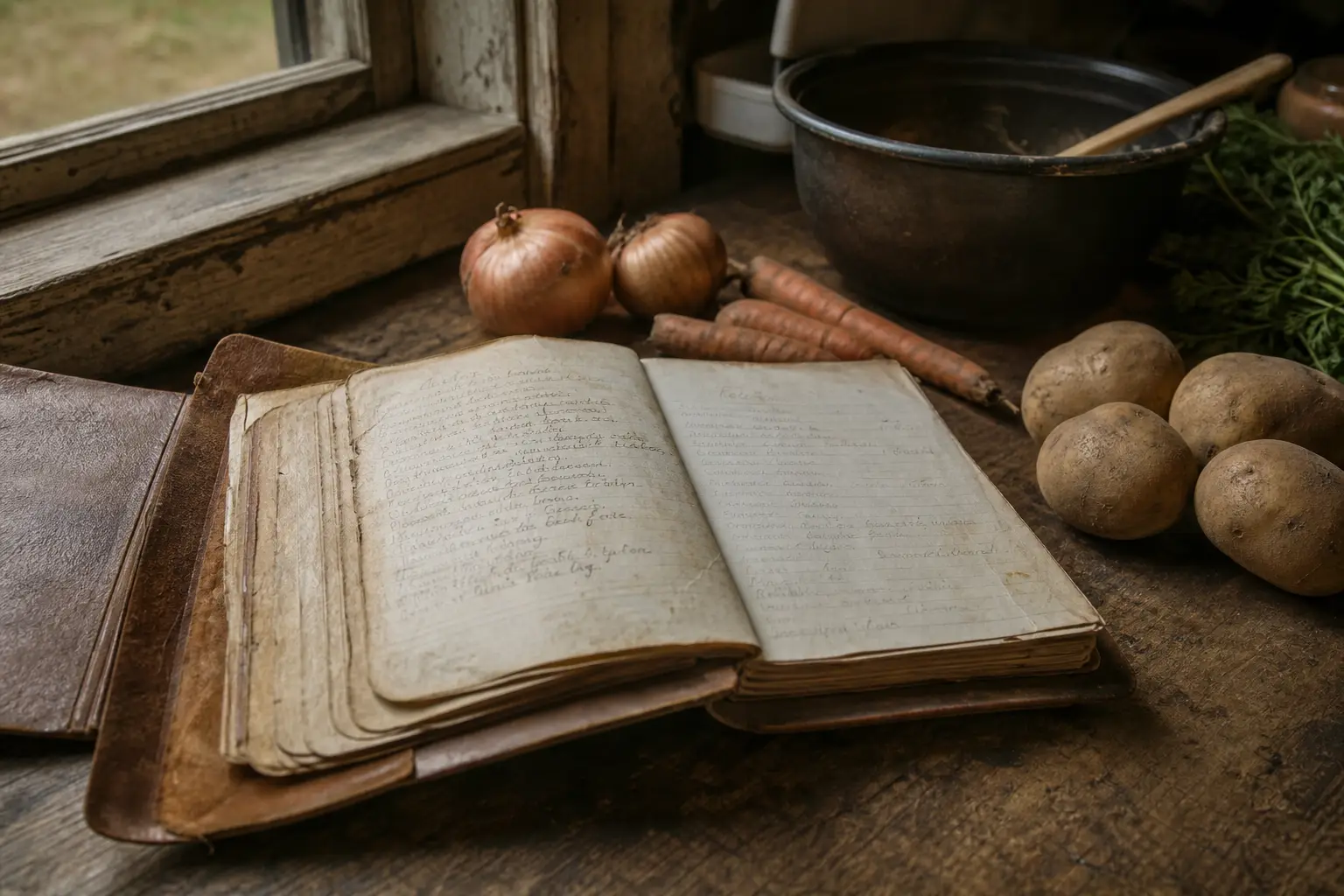
Recipe No. 7 lives on the last clean page before the folder’s pages start going soft at the corners, and Amos pressed so hard with his pencil that you can feel the letters from the back side. His heading is plain: “GROUNDHOG.” Under it, in smaller hand, he added the note that must have made sense to him in February, when the lard was low and the hogs were a long ways from slaughter: “a groundhog aint a pig but it’ll do when it aint pig weather.”
A groundhog is a lot of meat nobody asks for. It’s a fat, slow-moving animal that digs under barns and eats your garden like it owes you nothing, so when a farmer got one, he didn’t waste it. The trick is the same as any critter that lives on grass and roots: get the scent glands out, get the fat trimmed, and cook it low and slow so the tough old muscles let go. Done right, a young groundhog roasts up like a cross between rabbit and a dark, sweet pork that spent its whole life outside. Done wrong, you’ll chew the same bite until the county fair comes back around.
Recipe No. 7: Groundhog
Ingredients
- 1 groundhog, skinned, cleaned, and glanded
- 1/2 cup salt for the soak
- 1/2 cup apple cider vinegar
- 2 tablespoons bacon fat or lard
- 1 large onion, chopped
- 2 carrots, chopped
- 2 cloves garlic, smashed
- 1 bay leaf
- 1 teaspoon black pepper
- 1 teaspoon dried thyme
- 2 cups broth or water
- 2-3 potatoes, quartered
- A few hardy roots or turnips, if you have them
Procedure
Step 1 — Take out the scent glands and the fat. A groundhog carries small scent glands under the forelegs and near the small of the back, and those have to come out clean before the cooking starts. Treat them like you would a coon’s. Then trim the fat. A groundhog puts away a lot of fat, and it holds the worst of the animal’s diet, so be generous with the knife and don’t leave any of the yellowed stuff behind. You want lean, dark meat.
Amos’s note, scratched above a drawing of a squat creature that looks more like a potato with legs: “cut the glands out or yor dinner will taste like the hole it lives in. and trim the yella fat or git ready to chew yor arm off.”
Step 2 — Soak it overnight. Cut the groundhog into quarters and put it in cold water with the salt and vinegar. Let it soak overnight, changing the water once if you’re up for it. This does for a groundhog what the parboil does, but slow. An old one will thank you for a full day in the soak.
Step 3 — Brown it and build the pot. Melt the bacon fat in a heavy pot and brown the pieces on all sides. Take them out and toss in the onion, carrots, and garlic, scraping up the good brown bits. Lay the meat back in, add the bay leaf, pepper, thyme, and enough broth to come halfway up the pieces. Bring it to a simmer, cover, and drop the heat low.
Step 4 — Cook it low and slow. Let it go for two to three hours, until the meat starts to pull from the bone. A young groundhog comes around quicker; an old boar needs the full stretch. About an hour before it’s done, drop in the potatoes and any roots so they cook in the juice without turning to mush.
Step 5 — Rest it and serve. Pull the pot off the heat and let it sit ten minutes, then serve the pieces with the vegetables and a ladle of the pot juice over the top. If the liquid is thin, set the meat aside and boil the gravy down hard for five minutes until it coats a spoon.
What It Actually Tastes Like
Young groundhog, cooked slow, eats like dark chicken thigh with a little more pull to it, sweetened by the vegetables it spent the summer stealing. The older ones lean more toward a leaner, firmer pork that you’d swear came from a pen if you didn’t know better. The whole point of the long braise is patience; a groundhog won’t be hurried into tenderness, and if you try, you’ll be eating a sandal. With potatoes and turnips soaked in the pot juice, it’s a full Depression meal from a single animal most people leave in the garden.
Amos’s closing line, written sideways in the margin so it fit: “a groundhog will fill yor pot and yor kids and then eat yor beans next spring. hunt em hard and hold yor nose when you clean em.”

Practical Notes
- Take young ones in June and July while the grass is sweet. Old boars dug out of a burrow in late summer are tougher and more strongly flavored.
- Get the glands and the fat out before you do anything else. That’s the difference between a meal and a mistake.
- Don’t rush the pot. Low and slow turns a groundhog from boot leather into something you’d ask for again.
- A groundhog isn’t game everywhere, and the rules on shooting or trapping them change county by county, so check before you put one in the pot.
Next from the folder: Recipe No. 8 — Woodchuck gravy over biscuit, and the page is stained so deep it might be the gravy itself. Amos’s note reads: “save the juice, aint nobody lived through the thirties without gravy twice a week.”