The Shot That Felt Like the Finish Line
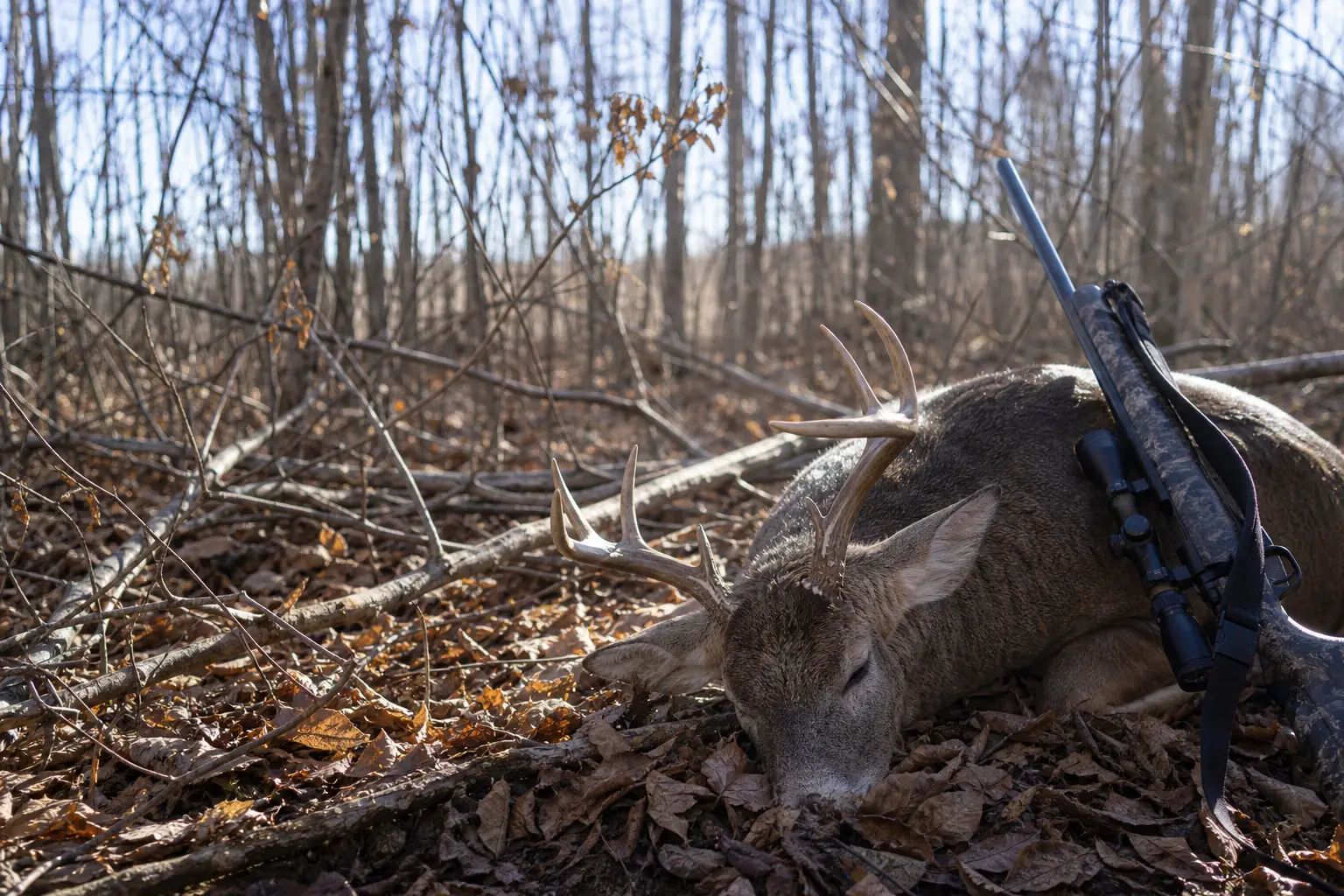
The rifle opened the second morning of firearm season, and the buck piled up forty yards into a blowing aspen thicket. I walked up on him like a man crossing a finish line, arms out, grinning at nothing. Lung shot. Clean. He was a heavy-bodied eight point, the kind of deer that makes a grown man pull out his phone before his knife. I took the hero picture with the rifle leaned against his shoulder and sent it to three group chats before I checked my watch. It was fifty-one degrees, warm for late November, the sun flat and high through the bare trees. The picture looked good, so the deer was taken care of.
Here is the thing nobody flexes about on opening weekend. The shot is the easy part. Everything after it, the part with no audience, is where a deer becomes food or regret. I knew that the abstract way a man knows a stop sign at an intersection he has never driven through. I owned a gambrel and a knife I sharpened twice a season, plus a beat-up cooler in the bed with a half-melted bag of ice rattling around like a promise from last August.
I used none of it that morning. I dragged him by the antlers because dragging by the antlers past other hunters looked better than quartering on the ground. That was the whole decision, and it was about how the thing photographed.
The Warm Truck Bed and the Long Drive
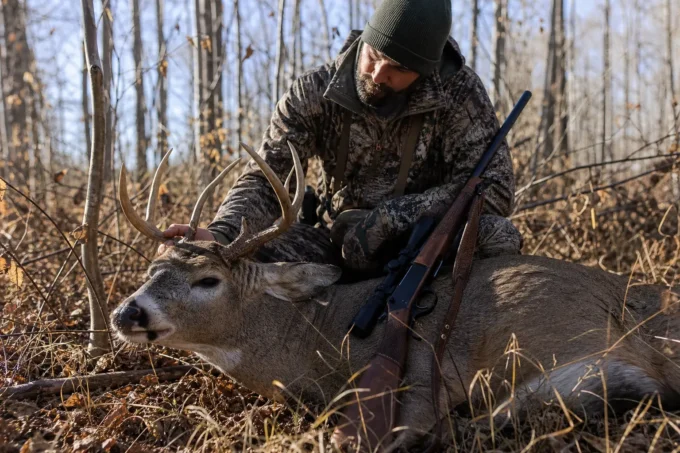
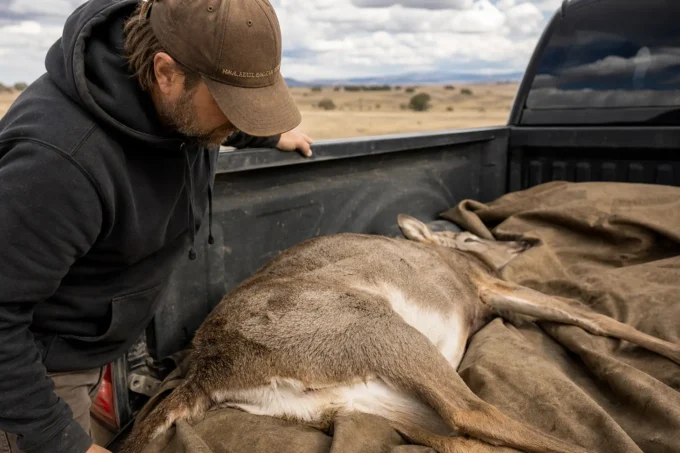
Bacteria do not care about your hero picture. That sentence should be stitched into the brim of my hat. A field-dressed deer with the hide still on is a furnace in a warm bed. The open cavity helps, but the hide is insulation, and the thick hindquarters hold heat long after the animal is down. Past about forty degrees the clock moves fast. Spoilage starts at the surface and works inward, and a deer left whole in fifty-degree sun tips every minute toward meat you will not want to feed your family.
I drove to the check station, then for coffee, then to my buddy’s to show him, and the truck sat in the sun an hour while we stood over the tailgate telling the story the way you tell one you plan to repeat. Two hours, maybe more, before the hide came off and the quarters hit the cooler. Maybe six pounds of wet ice. Ice on top, heat underneath. I told myself the cold had done its job because saying it made it feel true.
The Myth of the Good Enough Cooler
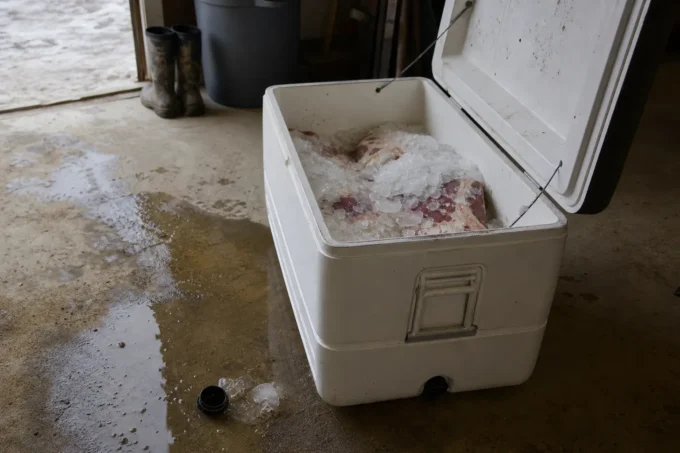
The second lie was the cooler. One half full of loose ice is a suggestion that will fail you. The backstraps and quarters went in on top of slush, the drain plug cracked, so all night meltwater leaked onto the garage floor while the meat sat above a shrinking bed of cold. I did not check until morning. When I did, the inside had that faint warm-barn smell standing at the door of rot. I flipped the quarters, buried them deeper in the slush, and told myself that is how everybody does it. It is how everybody who loses meat does it.
A deer needs to cool fast and stay cool. Get the hide off and the meat hanging or cold within a few hours when it is warm. Ice in a closed cooler is fine if there is enough of it, the water drains, and the meat is not swimming in blood-tinged melt. Mine was swimming. Smaller pieces help the cold reach the center. Whole quarters on top of wet ice in fifty degrees is how you turn a tag into a stomachache.
Quartering Is the Boring Habit That Saves the Whole Animal
Here is what I should have done, and it is so boring it hurts. Field-dress, then take the deer apart at the joints where it lies and get the pieces cooling instead of hauling a whole carcass. Quartering is not butchering. Four cuts at the seams plus the backstraps and tenderloins turn a two-hundred-pound furnace into six pieces with surface the cold can reach. On a tarp in the woods it takes twenty minutes with a sharp knife. The point is getting heat out of the middle of the thickest muscle, and you cannot do that through a hide and a rib cage.
I had watched one quartering video and decided I would figure it out when the time came. The time came, the deer was huge, and I took the path that photographed better. That is the pattern. I knew the skill, and knowing made me feel like I had done it, so I skipped the doing. A field skill is not a thing you know. It is a thing your hands do in the dark with cold fingers before you can second-guess yourself. I had the knowing and none of the doing.
The Processor Took What Was Left
I dropped the quarters at the processor two days later, and the man behind the counter gave the first honest look of disappointment I had seen all week. He trimmed a lot. He never said spoiled, but he trimmed enough off those hindquarters that what I picked up felt lighter than I had imagined. Some of it was normal trim. Some of it was not, but the alternative was admitting a clean-shot deer had been going soft while I stood around a tailgate playing it cool.
The burger was fine. The steaks had a slightly off, sweet undertone that made me eat them fast and not talk about them. A deer that lived wild and died quick, and I turned a chunk of it into meat you wolf down in the garage so nobody asks. That is what I keep coming back to. The shot was perfect, the meat mediocre, both made by the same hands the same day. The deer did not fail me. The care failed the deer.
What Warm Weather Actually Demands
None of this is secret wisdom. It sits in every regulation handbook and gets whispered by every old deer camp cook, and I ignored it because the picture in my phone was so good. Warm weather changes the whole afternoon. Field-dress immediately. Skin fast, because the hide is a blanket holding heat. Quarter into pieces you can pack or ice properly. Get real ice, more than you think, drain the meltwater, keep the meat out of the slush. Over forty degrees and more than an hour from cold storage, you are on the clock, and that clock has nothing to do with legal shooting light.
The cold facts never argue. I write them down now, a note to check the drain plug the way I would write a reminder to buy milk. A deer is a lot of work to put in the freezer, and almost none of that work is the trigger. The trigger is the moment. The work is the afternoon, and the afternoon is where the animal gets honored or wasted.
The Deer That Died Twice
That buck died once from a clean shot, then a piece of him died again slowly in the back of my truck and the bottom of my cooler while I was busy being the man in the photograph. I still have the picture, rifle leaning on his shoulder, both of us looking like a magazine cover from a season that went off without a hitch. The picture is a lie and a truth. The shot was real. The care was not.
Next warm opener I will quarter on a tarp before I drag a single antler anywhere, and I will drive home with the meat in a cooler full of ice instead of a story full of excuses. The hero picture can wait until the animal is taken care of, which is the order I should have had from the start. A deer does not ask much after you kill it. It asks that you remember it is food and treat those next few hours like part of the hunt, because they are. They are the part with no audience, and the part that decides whether the freezer fills or the garage goes quiet.