The Roadkill Buck I Drove Past All Season
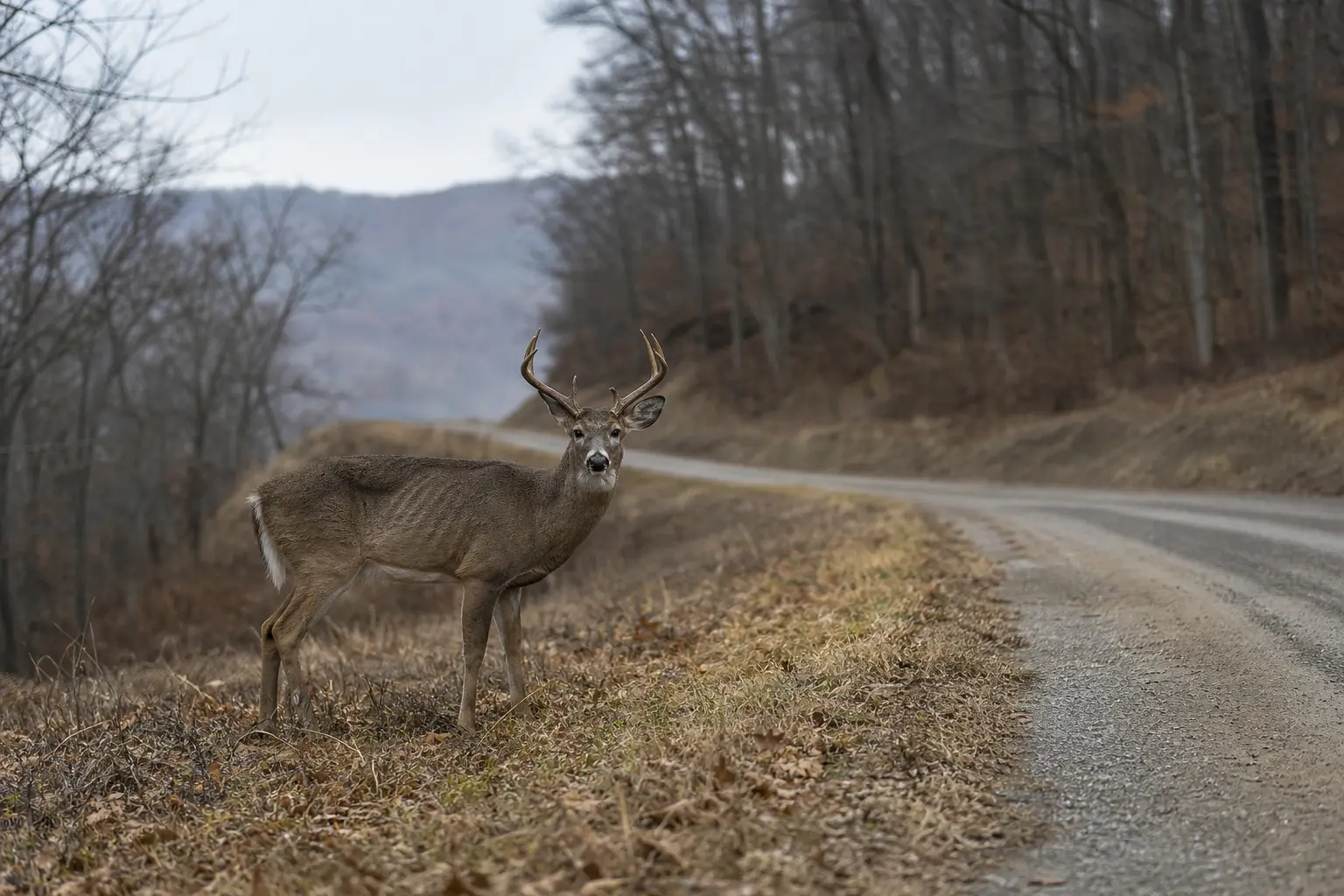
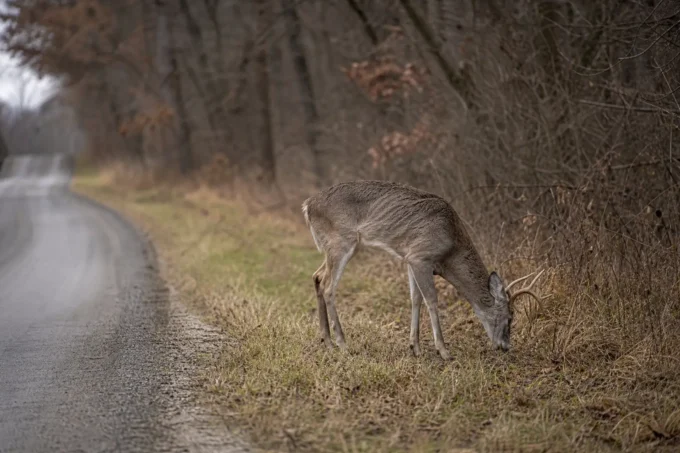
There was a buck hanging around our section of county road for about six weeks before anyone said anything. He would stand in the ditch in broad daylight, ribs starting to show through the gray November coat, head down, swaying a little like a man who had been up too long. A healthy deer does not stand there while a truck full of men rolls past at forty miles an hour. A healthy deer is gone before the gravel settles. This one watched us go by and went back to eating nothing.
We did what every deer camp does when the thing in front of us is ugly and inconvenient. We gave it a nickname. We decided it was probably a jaw injury, that somebody clipped it with a car and that explained why it acted weird. Three of us built a complete medical file on an animal none of us had ever been within fifty yards of, all so we would not have to do the one thing a serious hunter is supposed to do when a deer wastes away in the open and does not spook. Test it.
How to Talk Yourself Out of One Phone Call
I am telling this straight because pretending I did the right thing is its own kind of disease. I knew about chronic wasting disease. I had read the maps with the red dots spreading across the state line and watched the harvest stations pop up on the check list. I could have pulled out my phone in that ditch, called the game warden, and been done. One number. Instead I did the hunter math that keeps a season comfortable.
The math goes like this. If I report it, they sample the brain stem, and if it comes back positive, then suddenly there is a positive deer four miles from my stand. Then come the special hunts and the carcass restrictions and the questions about what we feed the deer and where we gut them. Me reporting one skinny buck is me inviting the whole regulatory machine into my corner of the woods, and I did not want that anywhere near my freezer strategy. So I looked at that buck, decided he was not my problem, and drove on. Conservation, for a lot of us, is a thing we support until it costs us a Saturday.
The Prion Does Not Care How Well You Explain It
The reason CWD scares people who actually understand it is that it is not a germ you can kill. It is a misfolded protein, a prion. It sheds in saliva and urine and blood, persists in soil for years, and a deer can carry it for two years looking completely normal before the brain starts to go. The wasting shake at the end is the last act. The whole time before that, the buck is licking the same salt and scraping the same post and breeding the same does, moving the disease through the herd like a rumor nobody wants to repeat.
I knew all of this in the abstract, the way a man knows smoking is bad while he lights one. Knowledge that never changes a single decision is just decoration. I could describe a prion to you in that truck and still not make the call. That is the exact gap conservation lives in. Knowing and doing are two rooms, and I only ever rented the first one.
The Morning the Test Came Back
The buck finally died near the end of the season, and an old neighbor in the township found him against his fence line and called it in himself because he is the kind of man who does the thing. They sent the lymph nodes to the lab. It took a few weeks, enough time for a man to convince himself it would come back clean. I did. I told myself the animal was old and it had been a hard fall. Then the email went out to every licensed hunter in the zone, and the word was positive.
Reading that notice felt the way it does when you learn the squeak in the truck was the bearings. Small thing you ignored, big thing it always was. The county listed the section where the buck had been living, and it overlapped our stand by a mile and a half. Suddenly every deer I had watched all year, every camera picture, every gut pile we had left in the creek bottom the way our fathers left gut piles, turned into a question. Had I shot a deer and not gotten it tested? Yes. Had I eaten the backstrap before any test? Yes. Was I going to keep talking my way out of it? Not anymore.
What Works Is Embarrassingly Simple
I called the warden myself that week, not as the guy avoiding him but as the guy who needed the procedure, and found out the whole system runs on cooperation hunters mostly refuse to give for free. In a CWD zone, you bring the head to a drop off kiosk. They sample, you get a result, and if it is positive you do not eat the meat. That is the entire technology. There is no lab in your kitchen and no secret, just a tagged bag and a refrigerator and a few days of waiting. The disease keeps moving because men skip the simple thing, and the simple thing is boring and slightly inconvenient and might interfere with the fantasy that their herd is clean.
What I know now that I did not want to know then is that testing is for the herd as much as the hunter. One negative result does not make you safe. It makes the map accurate. Every tested deer is a data point that tells the state where the disease is, and the only way that map gets drawn is if thousands of us hand over a lymph node and stand there for the result. The disease does not care about your freezer, only about the deer, and the only people who can slow it are the ones feeding off the same herd.
The Job Nobody Photographs
Conservation has a marketing problem, and I am proof of it. The version we love has a rack in it, a trout gliding back into the water, a ribbon cutting on a habitat project, a swamp full of ducks at dawn. What it does not have is a photograph of a man kneeling in a freezer bag, pulling a lymph node out of a deer head at a drop off kiosk in the rain. Nobody posts that. And because nobody posts it, it dies out of the conversation, and the next hunter figures if he never sees it then it must not be the real work. But that is the work. The anonymous, cold-fingered part is the entire dam holding the ugly thing back.
I used to think the heroes of a hunting season were the men who filled tags. I do not think that anymore. The hero is the fifty year old who shoots a doe, bleeds it, saws the skull plate off, bags the head, drives six miles out of his way to a freezer, and closes it without anyone clapping. Multiply him by ten thousand across a state line and the red dots stop moving. The rack hunters did not build a single one of those freezers. Ordinary men who did the boring right thing built every one of them.
The Buck Is Still There, Even When He Is Gone
The sick buck is dead now and the season is over, but the section stays on the list, and it will stay for years because a prion outlasts the animal that carries it. I avoided one phone call because I wanted my woods to stay simple, and the woods did not stay simple. It got more complicated in exactly the way I was afraid of. The disease showed up whether I acknowledged it or not. My looking away did not slow it down for one single day.
The lesson is not that I am uniquely stupid. I am the normal kind of stupid, which is worse, because the whole system depends on a few thousand men deciding every fall to override the voice that says drive on. I gave that voice a vote for a long time, and the vote always went to my comfort. Now the comfort is gone and so is the buck and the herd is thinner than it was. The only thing I can do is make the call next time and every time after. That is the whole job. Conservation is a series of small, boring, correct decisions that nobody cheers for, and a herd holds together or falls apart depending on how many of us decide the boring thing is our problem before it is too late.