The Chart Was Always Right, and the Deer Was Never Flat
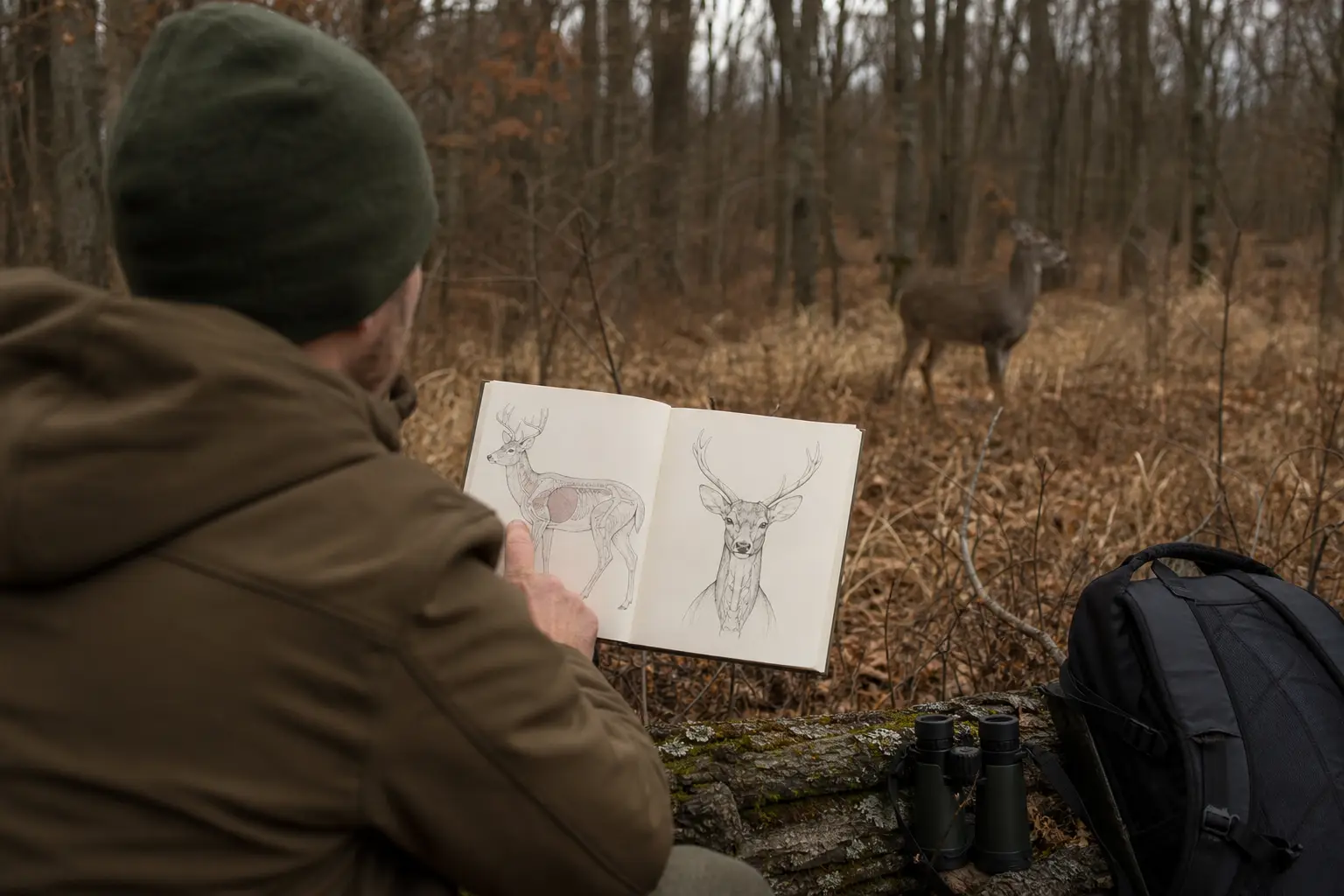
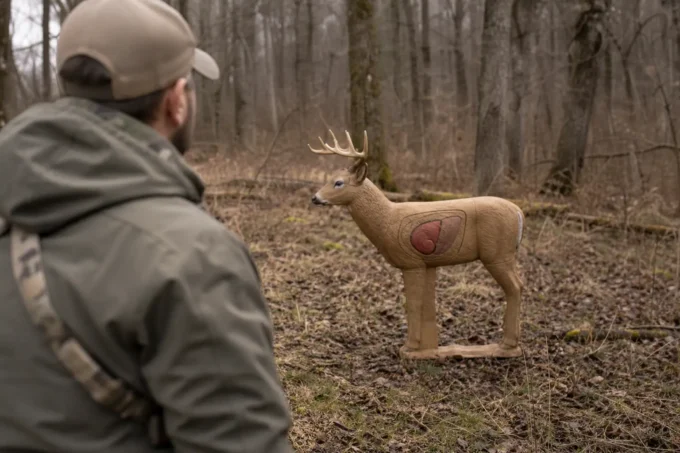
A man can stare at a vital-zone diagram until the paper goes soft and still have no idea where to put the bullet when the animal finally shows up. The chart shows a deer standing perfectly broadside, lungs drawn in red, heart a neat little fist behind the elbow, everything labeled and still. Real deer do not stand like that. Real deer quarter toward you, turn away, tip their head down to browse, stand behind a single dead limb that hides the one spot you needed to see. The chart taught me the geometry of a dead-flat animal that never existed outside a classroom. I spent a hundred dollars on a foam 3D target with a heart and lungs printed inside it, and I shot that foam thing until the arrows grouped into a fist-sized hole right where the red lungs sat. I told myself the hard part was over. That was the first lie.
The Reader Learns in Two Dimensions
There is a certain kind of confidence that comes from studying, and it is almost worse than ignorance. A man who has read four books and watched forty videos thinks he has earned his shot. He can name the scapula, the diaphragm, the liver, the paunch, and he can recite why you hold low and tight behind the front leg for a double lung hit. None of that is wrong. All of it is flat. The books show you the animal from the side, and from straight on, and from top down, each one a clean silhouette with the organs floating in place like a diagram in a high school textbook. The books cannot show you what it looks like when a live buck steps out of a cedar thicket at thirty yards, broadside for half a second, then turns toward you just enough that the near shoulder swings across the heart and the far shoulder swings out of reach. The books cannot show you your own hands shaking, or how fast you will forget every line you memorized when the animal is breathing and blinking and about to spook.
The Shot I Planned for a Different Deer
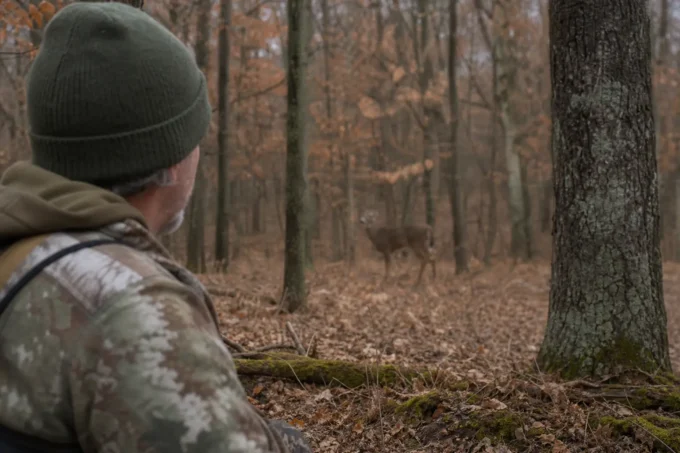
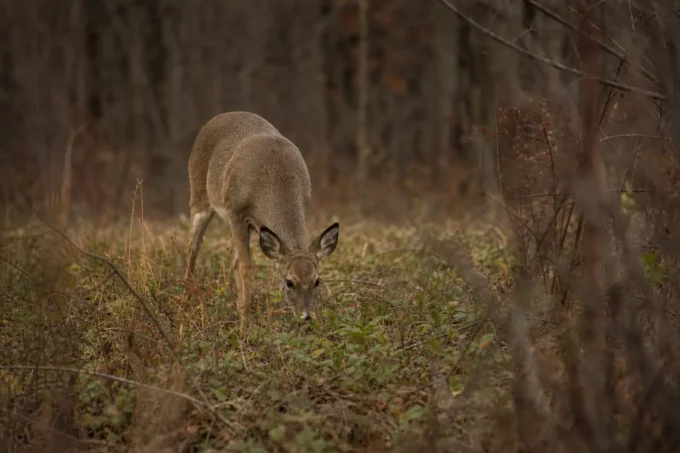
The first deer I shot was not standing still. She was a mature doe, and she came out of the brush at an angle I had not practiced, quartering hard toward me, head down, feeding slow. In my head I had replayed the broadside shot ten thousand times. The deer in my head stood exactly like the foam target. The deer in front of me did not. I raised the bow anyway, because I had waited three seasons for a shot and I was not about to let a little angle take it away. I picked a spot that looked like the right spot, the spot the chart would have approved of, except the chart did not account for the way her shoulder blade had rolled forward to cover what I was aiming at. I released, and the arrow hit her high and back, behind the lungs, through the liver. She ran off with her tail down and I sat in the stand and told myself it was a good hit, because admitting the truth would have meant admitting that everything I studied had not saved me from a bad shot.
The Hard Part Is Never the Part You Practiced
Finding her took hours, and the work that followed was the kind of work nobody puts in a magazine. I had practiced shooting for years and I had practiced field dressing exactly zero times. The first time I put a knife into a real deer, my hands did not know what my eyes had watched so many times on video. I made a mess of it. I got it done, eventually, because the walk out of the woods only ever ends one way, through the gutting and the quartering and the dragging, and I did all of it badly and knew it. The liver shot had not been a clean kill, and the animal had suffered longer than it should have, and the only reason her meat was still good was that it was cold and I found her fast. Skill had nothing to do with it. I got lucky, and luck is the worst thing to mistake for competence.
What a Live Animal Actually Teaches
The foam target taught me to shoot one angle. The live deer taught me that the vitals are a moving target, and that the spot I aim for changes with every degree the animal turns. Quartering to, the near shoulder armors the heart, so you hold farther forward than the chart suggests. Quartering away, the far shoulder blocks the far lung, so you hold to the back edge of the near side and angle through. A deer that turns its head away invites you to wait, because the shot is not there yet. These are not secrets. They are in half the books I read. The difference was that I had read them as trivia, lines to remember for a test that I thought would be multiple choice. Nothing on the test stands still, and everything loses points in the tense half second after the animal steps clear of the brush.
Practice the Ugly Angles
What fixed me was not more reading. It was making the target turn. I quit shooting the foam buck only from broadside. I walked around it, set it quartering to and quartering away and even dead-on, and I shot every angle until the exact spot changed automatically in my head without me having to think it through. I practiced on a deer silhouette carved from cardboard and propped at odd angles. I stood the target behind a stick and learned to find the opening instead of waiting for a clean lane that never came. The boring, unglamorous truth is that shot placement is a field skill like any other, and you build it the same way you build a callus, by repetition on the angles you do not want to shoot until they stop being the angles you are afraid of.
The deer do not care how many books you read or how many videos you watched. They show up at the one angle you skipped, every single time, and they leave you about two seconds to decide whether you actually know where the vitals went or whether you still think of them as a red shape on a flat page. All those images on the target, the little red lungs and the fist-shaped heart, are true. They are just never where you practiced them once the animal turns, and the only way to learn the difference is to practice the turning.