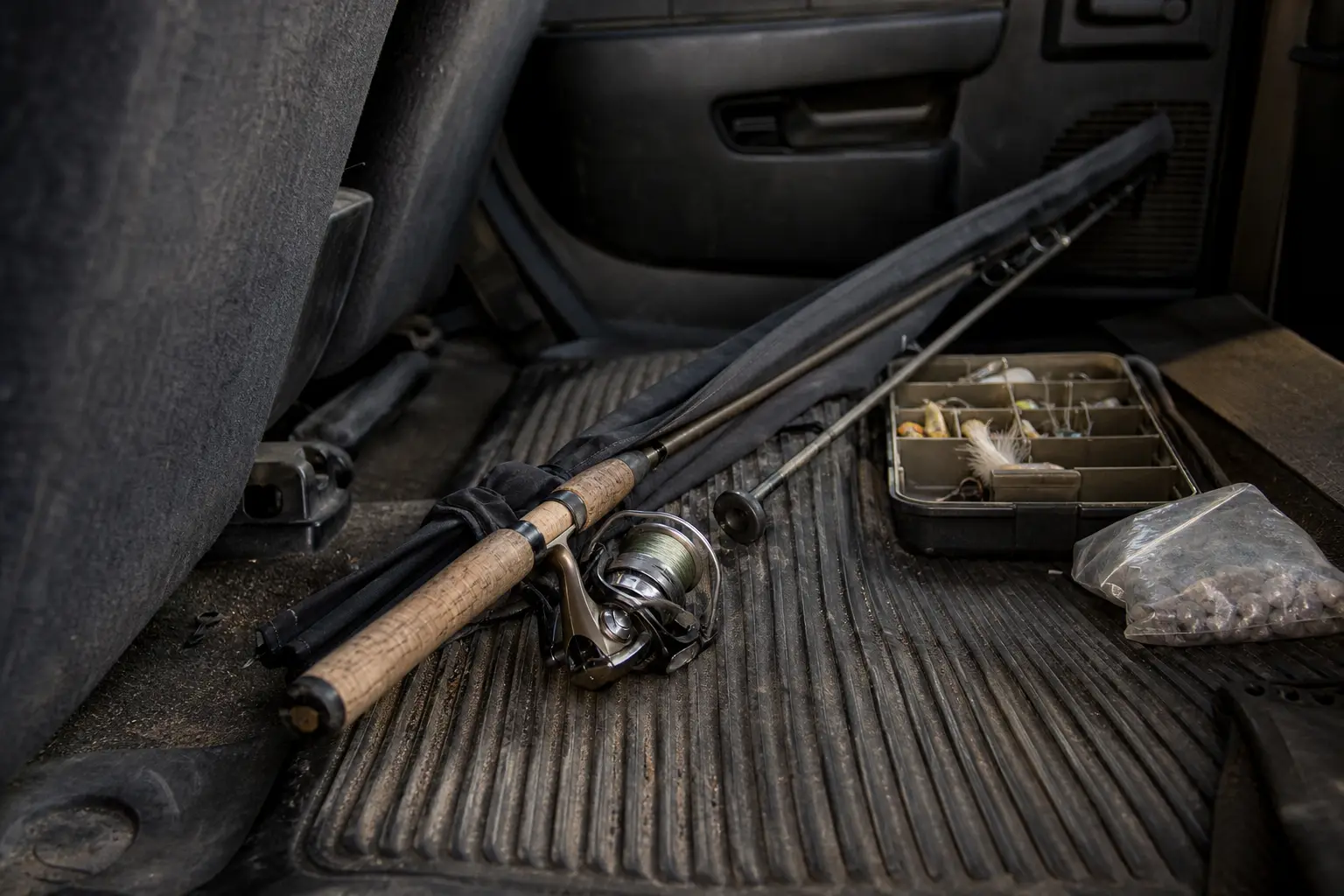
I kept a fishing rod in my truck for three years. Not a cheap one. A two hundred dollar spinning combo in a rod sock, tucked behind the back seat with a small tackle tray and a roll of frozen bait I was always going to replace. I told myself it made me ready. The way I figured it, any time I passed water, I could pull over, throw a line, and be a fisherman.
In three years I used that rod exactly once. The fish broke me off, and I found out later why. But before I get to that, I should explain why the rod was there in the first place.
The Man Who Is Always Ready
I bought the trunk rod the year my kid was born. That was the year I stopped having time to fish, which I handled the way a lot of men handle losing a thing they love. I didn’t admit it was gone. I just built a monument to it in the back of my pickup and drove around feeling prepared.
Every bridge I crossed, every drainage ditch, every pond behind a gas station, I’d glance at and think, I could be on that right now. That thought did a lot of heavy lifting for me. It was better than actually fishing, because actually fishing required time I didn’t have, and the thought required nothing except a rod in the truck and a vague sense that I was one pulled-over afternoon away from being the man I used to be.
I was a dumbass, obviously. A rod you never use isn’t readiness. It’s a security blanket with a reel seat.
The One Time I Actually Stopped
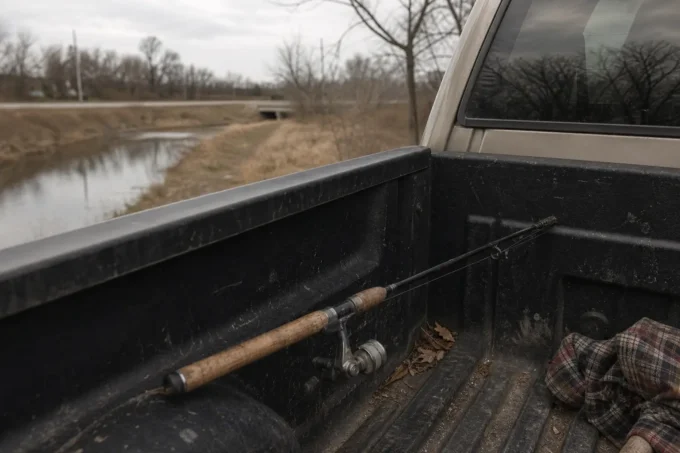
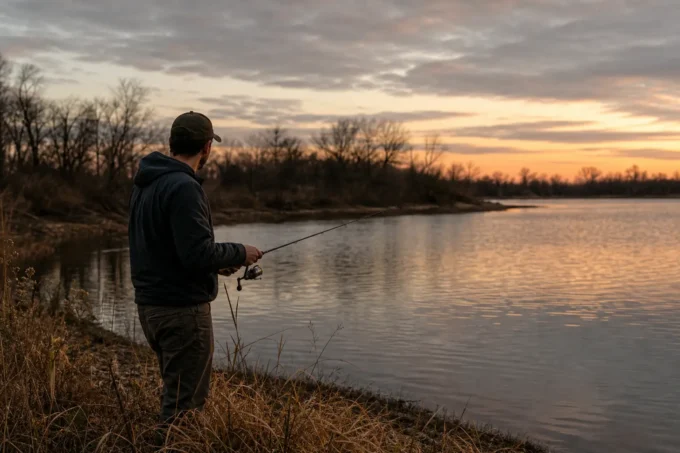
It happened on a Tuesday. I was driving home from a job site, sun going down, and I passed a little county lake I’d always told myself I’d fish. For once I had forty minutes. I pulled over, slid the rod out of the sock, and actually felt something like pride. Three years, and it was finally paying off. I was the guy I’d been pretending to be.
I tied on a spinnerbait and made maybe fifteen casts. On one of them a fish hit it like a truck. Good fish. The rod loaded, the drag sang, my heart did the thing, and then the line just went slack. Not a knot failure. The line snapped mid-cast on the next throw, clean, like it had been waiting to break. I pulled in my bare leader and stood there holding a rod that had just told me something I didn’t want to hear.
What Three Summers in a Truck Cab Do to a Fishing Rod
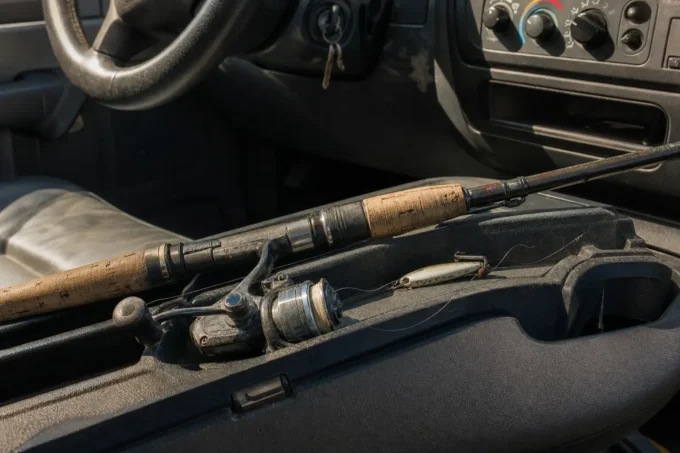
I learned the word for it later. The line was cooked. Three summer seasons of sitting in a truck cab in the sun, parked in a black interior that hit a hundred and thirty degrees on its bad days, and the monofilament had gone brittle. Heat and UV light degrade fishing line. Monofilament especially. It gets stiff, loses strength, starts breaking at a fraction of what it should hold. I’d been driving around with a rod that was ready for nothing and a spool of line that had spent thirty six months quietly turning into thread.
The reel didn’t fare much better. The grease had dried out enough that the handle turned like a screen door with a bad hinge. The lure had bleached on one side where the sun hit the tray. I hadn’t maintained any of it, because maintaining it would have meant admitting I was actually going to use it, and the entire point of the trunk rod was that I never had to.
There’s a whole culture of this, by the way. People call them car rods, trunk rods. Guys keep five rods in a sedan, or a travel combo under the back seat “just in case.” Some of them are smart about it. I wasn’t. I kept one expensive rod, never touched it, and told myself I was ready. The rod was doing the fishing for me, spiritually, while I sat in traffic thinking about tailing reds.
The Cheap Fix That Actually Works
After the snapped line, I had two choices. I could go buy another nice combo and make the same three year mistake with better equipment, or I could admit what the trunk rod had always really been. I went cheap. I bought a forty dollar telescoping spinning rod and a fifteen dollar reel, kept it in a padded case under the seat, and I actually started using it. Because here’s the thing nobody puts on the rod rack at the tackle shop: a cheap rod you’ll actually grab every time beats an expensive one you’re too precious about to touch.
I got in the habit of respooling it. Fresh line every couple of months, or whenever it sat through a string of hot days. It takes five minutes and a seven dollar spool. The telescoping rod fits anywhere, so I stopped having an excuse about the sock or the rear seat being full. More important, I stopped treating it like a secret weapon and started treating it like what it is, which is a tool for a Tuesday afternoon when forty minutes opens up.
Ready Isn’t a Rod in the Truck
I thought the rod made me a fisherman. It made me a man with a rod in his truck. Those are two different animals, and one of them had dry grease and cooked line and three years of daydreaming where the fishing was supposed to be.
The first fish I landed on the cheap setup was a bluegill the size of my palm, and I remember it more clearly than any fish from the years before, because I was actually there for it. The ready part had never been about the gear. It was about whether I’d pull over when the water showed up. I’d spent three years keeping a monument instead of keeping a habit, and the monument had been quietly falling apart in the heat the whole time.
Keep a rod in your truck if it makes you happy. Keep it if it gets you on the water on the odd stolen afternoon. Just don’t fool yourself about what it is. A rod you never wet isn’t readiness. It’s a promise you keep making to a man who isn’t there.