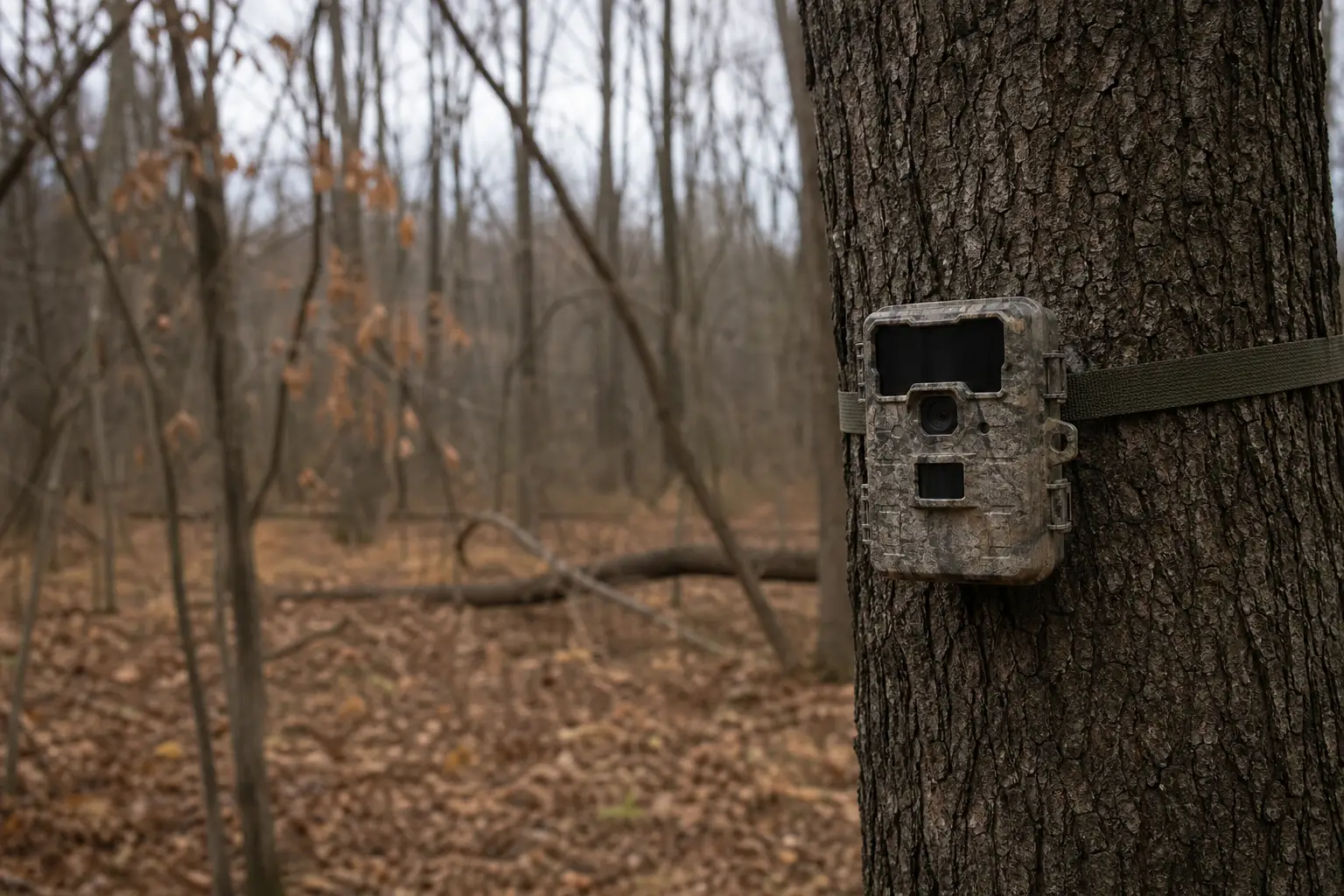
I bought my first trail camera the way a man buys a lie detector for his own marriage. I had been hunting the same two hundred acres of public timber for four seasons and I had nothing to show for it but a drawer full of tags and a theory. The theory was that I was a good hunter. The camera was going to prove it.
What it proved instead was that deer walked every single trail I had ever glassed, bedded in the same thicket I’d been sitting forty yards from for years, and passed through my best stand at 2:14 AM every night while I was home asleep. The camera showed me a whole herd of bucks I had never once seen in daylight. And instead of reading that as instruction, I read it as ownership. Those were my deer, and that was my proof, and anybody who wanted to know what I’d found could buy their own camera.
The Camera Made Me a Landlord Who Owned Nothing
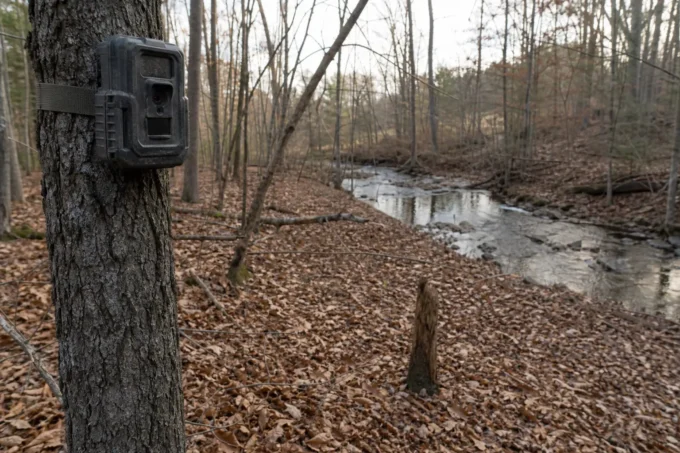
Here’s the thing nobody warns you about when you strap a hundred-dollar camera to a pine tree on public land. It doesn’t just show you deer. It shows you the gap between what you thought you knew and what’s actually out there, and that gap feels like a wound you have to defend. I started thinking of that creek bottom as mine. I had scouted it, I had set the camera, I had named the buck with the short right brow tine Larry. Larry was mine. Larry just didn’t know it yet.
Then opening day came, and I got to my tree an hour before light, and there was a boot print at the base of it that did not belong to me. Fresh. The leaves were still settling. Somebody else had walked my ridge, found my camera maybe, seen my deer. I sat up there all morning vibrating with a kind of rage I am embarrassed to describe, watching a hollow I had never once seen Larry walk into during shooting hours, and I convinced myself the other guy had run him off. Him. Not the wind, not my own clanging entrance, not the four seasons of proof that I was looking at wrong spots. The invisible other guy.
Then I Met the Other Guy
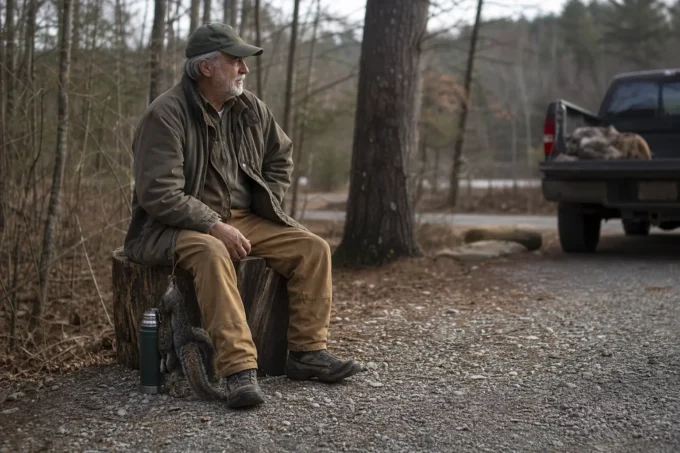
His name was Ray and he was sixty-some years old and he was sitting on a stump by the parking pull-off when I came out, gut full of nothing and ego full of accusations I hadn’t said out loud yet. Ray had a stringer of squirrel and a thermos and the easy posture of a man who has been losing deer to other men for forty years and stopped caring which one of them got the shot so long as somebody showed the animal respect.
I asked him how the morning went, and I made sure to mention I’d had a camera a half mile up the creek, real casual, like a man flashing a deed. Ray just nodded and said he’d seen it. He said he’d even looked at the pictures. Then he said the thing that ended me.
“You got a nice buck in there. But he don’t live where the camera is. He comes through at two in the morning on his way somewhere else. You been hunting the mailbox, son. The man lives at the end of the road.”
The camera wasn’t a title to Larry. The camera was a snapshot of Larry walking past my tree on his way to where he actually lived, and I had been so proud of catching him in the act of leaving that I built a whole season around the mailbox.
The Difference Between Scouting and Staking a Claim
It took me longer than it should have to learn what Ray already knew, which is that public land is public. Not because the sign says so, but because the deer know it. Larry didn’t read the property lines and he didn’t read my camera SD card and he sure didn’t care which human had walked which ridge first. He moved according to thermals and acorn drops and the schedules of does I had never bothered to learn because I was too busy feeling wronged by a man who had shown up to the same free woods I had shown up to.
The moral question that ate at me wasn’t really about the camera at all. It was about whether I could stand next to another hunter on shared ground and not turn into a guard dog. And the answer, for a long time, was no. I wanted the woods to be a contest with winners, and I wanted to be the winner, and the camera was just the latest machine I’d bought to count points while the actual living thing walked out the back of my blind spot every single night.
What the Camera Taught Me After It Stopped Feeding My Ego
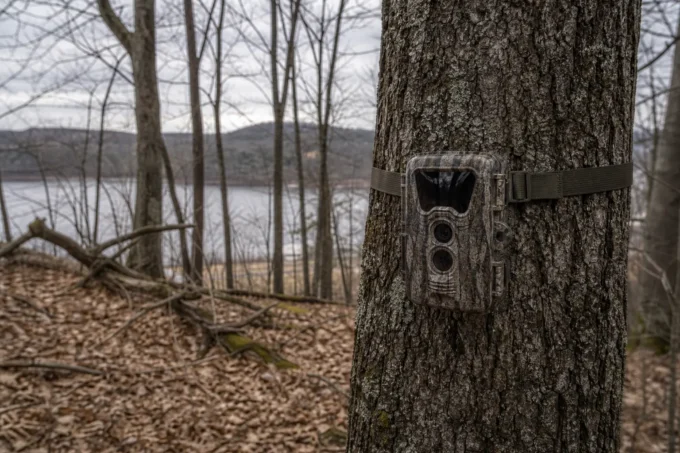
I still run the camera now. I still check it. But I read it different. When I see Larry at 2:14 AM, I don’t think mine anymore. I think there, moving toward cover, which means he beds somewhere south by dawn, which means the morning I should be sitting is not the morning by the mailbox. The camera stopped being a territory marker and went back to being what it always was. A note a deer leaves on my porch because he happens to walk my path between two places that matter more to him than I ever will.
Ray got Larry in mid-November, two seasons back, on a ridge I had written off because the camera never once caught him there in the daytime. When he showed me the picture he didn’t gloat. He just said the deer finally told him where he lived. And I believed him, because I’d finally started listening to the woods instead of to my own name for the parts of it I wished were mine.
The camera was never the problem. I was the problem. I treated a shared, living place like it was a ledger I could balance in my favor by watching it hard enough. The deer didn’t care, and eventually the camera taught me not to either.