The Argument Over the Feeders
My dad and me closed on one hundred ninety nine acres in late March. It was the kind of purchase that makes a grown man’s hands shake a little when he signs, and then makes his father’s hands shake a whole lot more. We celebrated by driving the fenceline in his side by side and talking about every buck we were going to kill off that place before we were even sure where the water ran.
That was the whole problem, if I’m honest. We bought dirt and acorns and a holler full of hardwoods, and the first thing we did was start arguing about how to manage it before we had managed to walk half of it.
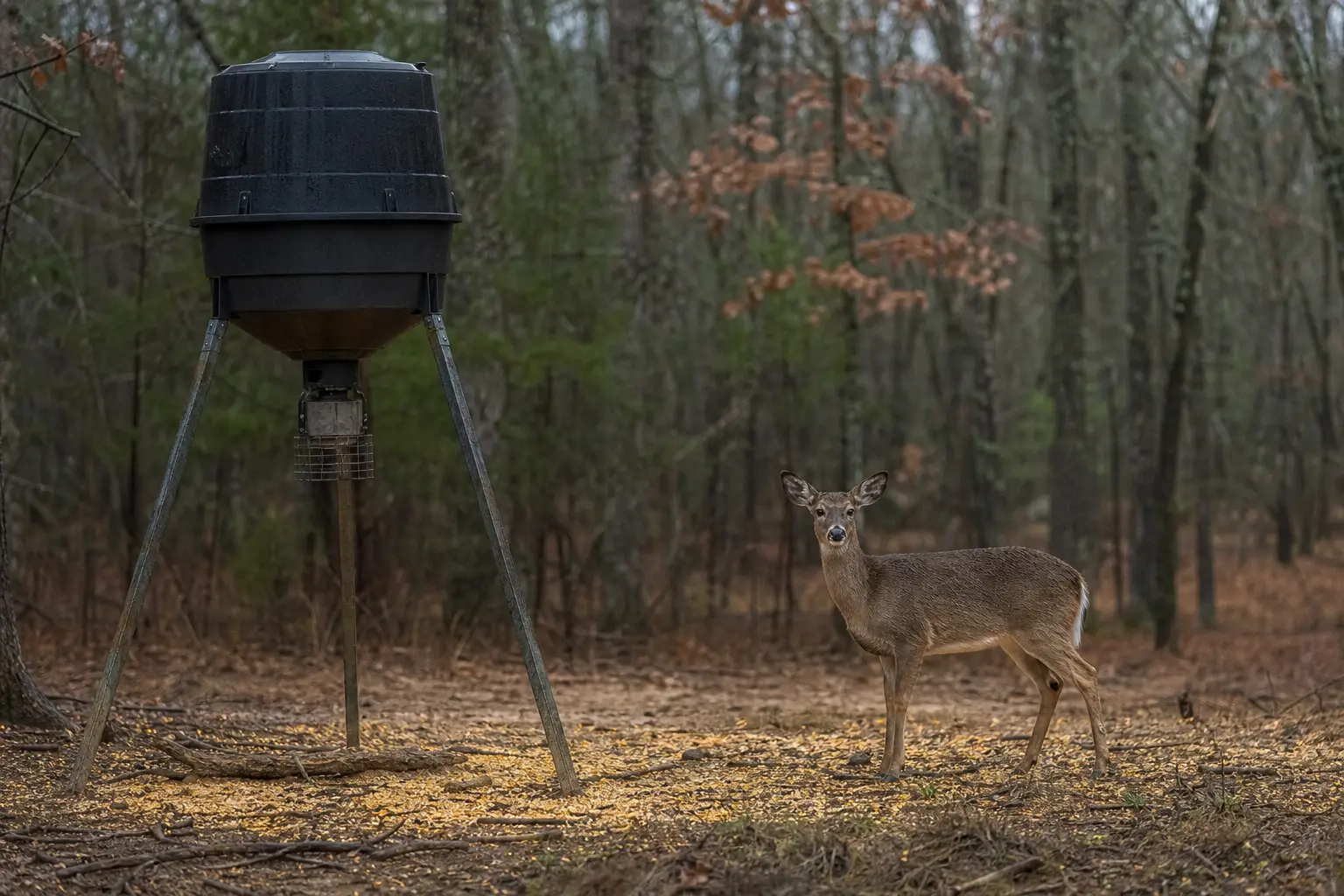
My dad wanted feeders. He wanted corn out every week, hung up on a schedule so tight you could set a watch to it. I wanted us to stop stomping around. I told him we had plenty of acorns on the ground, water in two creeks, and undergrowth chewed down in a way that told you deer were bedding close. I kept saying the word “presence” like I had read it somewhere and it made me sound smart. I said every time we rode that side by side in to top off a feeder, we were leaving scent and painting a big sign that said we lived here.
He told me I was thinking with my feelings. I told him he was thinking with a corn bag. Neither one of us was right, and neither one of us was wrong enough to shut up about it, which is how a father and son burn a perfectly good spring.
The Dinner Bell I Didn’t Believe In
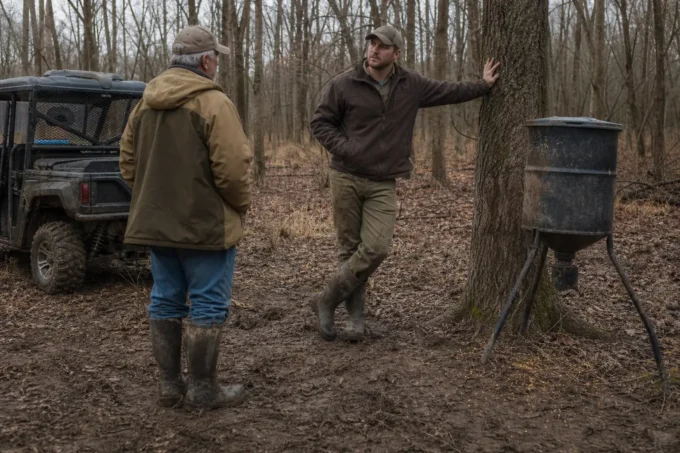
By July he had three feeders running. He ran them Wednesday at noon, rain or shine, and he wanted me there for every single fill so I could see what I was missing. I rode along and sulked. Every Wednesday I watched him back that side by side up to a barrel, dump a bag of yellow, and rattle off. I was so sure the deer were watching from the thick stuff and learning to fear that engine.
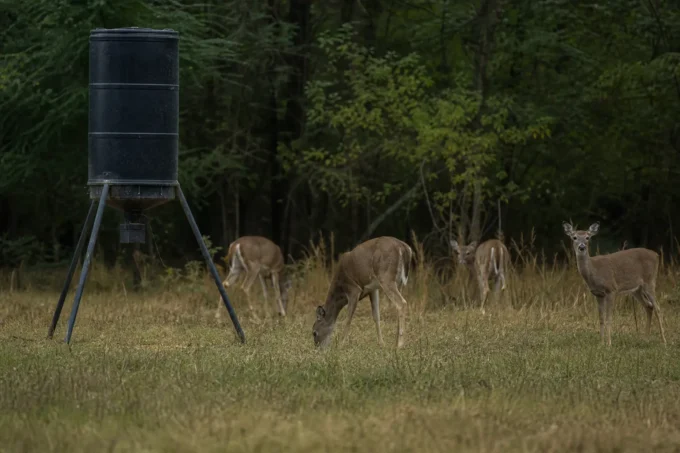
Then I started pulling the camera cards for him, mostly to prove my point. What I kept seeing made me mad in a whole different way. Less than ten minutes after he pulled out, the does were standing in front of that feeder like they had a reservation. By the third week they showed up faster. By August the sound of that side by side was a dinner bell, and I mean that literally. The deer had my old man patterned closer than he had them.
I argued against that too. I told him sure, you got does on a schedule, but a mature buck don’t clock in for corn. He heard me, which was worse, because it meant for the first time I was saying something that rhymed with the truth and I didn’t even know it yet.
The Buck That Wouldn’t Take the Bait
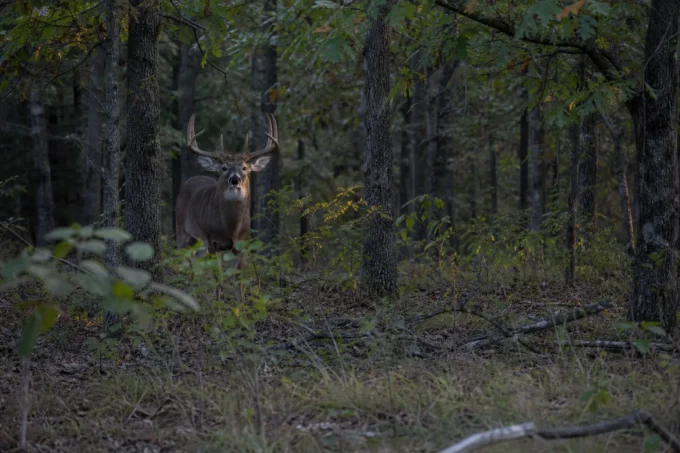
September came and we started getting a good buck on camera. Not at any feeder. Never once at corn, not in daylight, not at night, nothing. He was on the back forty under a stand of white oaks we hadn’t messed with because it was too far and too thick to bother. He was there at first light and last light, a heavy ten point with a neck like a fence post, and he lived where the acorns dropped on their own.
My dad pored over those cards like they owed him money. He moved a feeder twice to try to pull that buck into range. The does went right along with it. The buck didn’t budge. He sat his oaks and let the does fight over the corn, and every one of us learned the same lesson from different ends of it.
A corn pile will buy you a shot at a deer. It won’t buy you the deer. The old buck on the back forty didn’t need us for groceries. He had his own food, his own bedding, and his own water, and he wasn’t about to trade any of that for a pile of yellow a fool in a side by side dumped out once a week.
What the Old Buck Taught Me About Myself
So I did the thing a man does when he has been wrong and can’t stand it. I quit talking and started walking. I started spending every other weekend out there, riding the roads, brushing trails, cutting fire breaks. I left scent everywhere, on purpose this time, because it finally clicked that a deer will write off the thing it sees all the time and never once gets hurt by. The engine that used to spook them is the same engine that drops the groceries. They got used to it because it never meant them any harm. My “presence” fear was backwards. Showing up enough was the thing that made us invisible.
Opening morning of archery, I didn’t hunt the feeder. I went to the back forty with the wind in my face and my face shut, and I climbed a tree I had been eyeing since June. That ten point never knew I was in the county. He stepped out at twenty two yards walking slow, nose down in the acorns, a deer that had never been fooled and never been bothered. I put the arrow through both lungs and watched him fold in forty yards.
He wasn’t the reward for outsmarting a feeder. He was the reward for finally understanding that a big old buck don’t do favors and don’t chase groceries somebody else measured out for him.
Stop Fighting the Ground You Bought
If you’re sitting on a new piece of dirt with your old man and you’re arguing about feeders, here’s everything I actually know after a season of being mad at nothing. Food, water, bedding and safety are the four things a deer needs, and if your ground already grows the first three, you’re better off giving them the fourth than you are giving them extra groceries. Plant apples and oaks if you want to refill something. Let the land feed them.
Routine beats silence. A man who shows up on a schedule with an engine and a bag of corn becomes as familiar as the wind. A man who never sets foot on his place until opening morning shows up loud and strange and alarms everything for a mile. Pick your routine and stick to it, so come season the deer already know your face.
And if you want to kill a deer, corn is fine. If you want to kill the deer, the one that lives back in the thick stuff where the acorns drop on their own, you better go where he already eats. He doesn’t care what you’re putting out. He’s already got everything he needs, and he’s been watching you run your mouth since March.