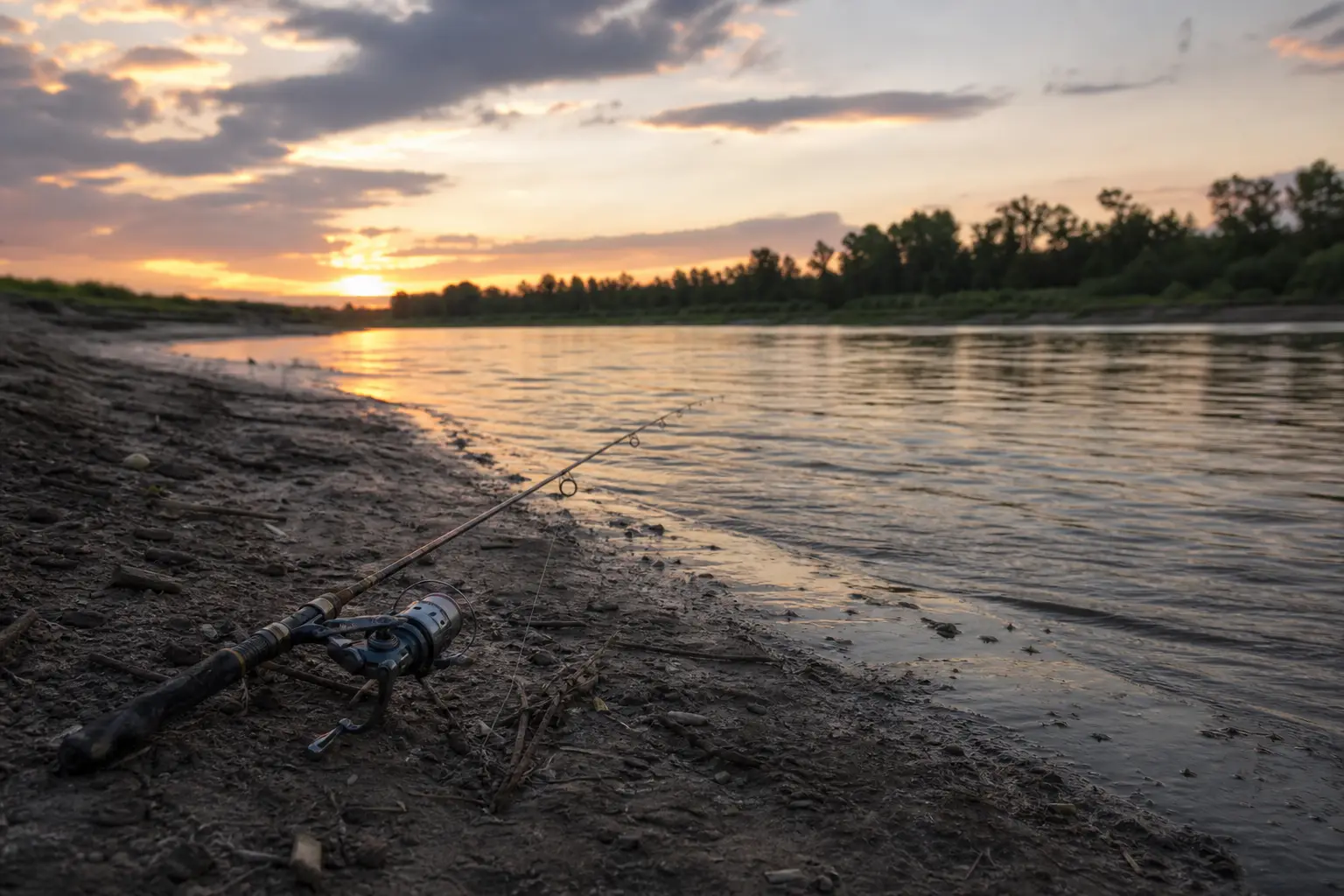
I don’t know how long I fought that fish. Fifteen minutes, maybe twenty. Long enough for the sun to drop behind the treeline and for my arms to start burning in that specific way that tells you you’re not as strong as you think you are.
It was August, central Kansas, a stretch of the Arkansas River I’d been fishing for three summers. I knew that bend like I knew my truck’s radio presets — every eddy, every submerged log, every gravel bar where a channel cat liked to tuck in during the heat of the day. I’d pulled plenty of fish out of there before. Five-pounders, mostly. A couple of eights. One twelve-pounder that I’d mounted, because I was twenty-four and thought that was what you were supposed to do.
This was different.
The Hit
I was using cut shad on a Carolina rig, nothing fancy. The rod was a $40 Shakespeare Ugly Stik I’d bought at Walmart three years earlier. The reel was some Abu Garcia spinning reel that had probably seen better days but still turned smooth enough. Fifteen-pound mono. No leader. No nothing.
When the fish hit, it didn’t tap. It didn’t nibble. It just took off like someone had hooked my line to a truck bumper. The drag screamed — and I mean screamed, that high-pitched whine that makes your brain short-circuit — and I watched the line disappear from the spool faster than I’d ever seen.
I tightened the drag. Dumb. I know that now. But in the moment, watching your line evaporate does something to your brain. Panic isn’t the right word. It’s more like your hands decide they know better than your head, and your head is too busy processing what’s happening to argue.
Twenty Minutes of Stupid
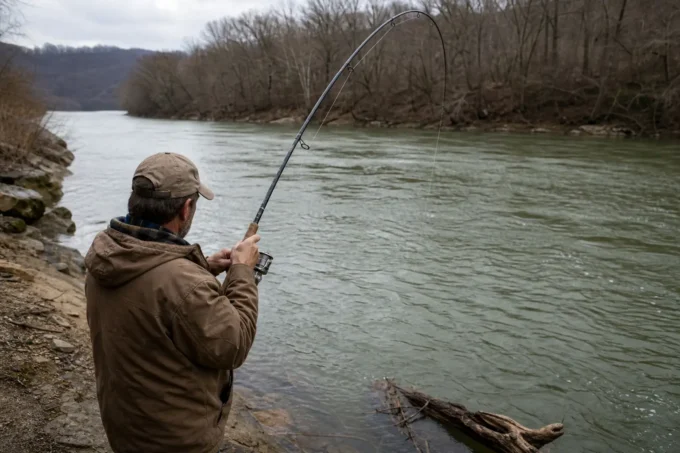
The fight was ugly. I horsed the fish when I shouldn’t have. I gave it slack when I should’ve kept tension. My drag adjustment was a mess — too tight, then too loose, then too tight again. If someone had been filming, it would’ve been a how-not-to video.
But I was making progress. The fish was tiring. I could feel it. The runs were getting shorter, the head shakes less violent. I started backing up the bank, trying to find a spot where I could land it without sliding into the water.
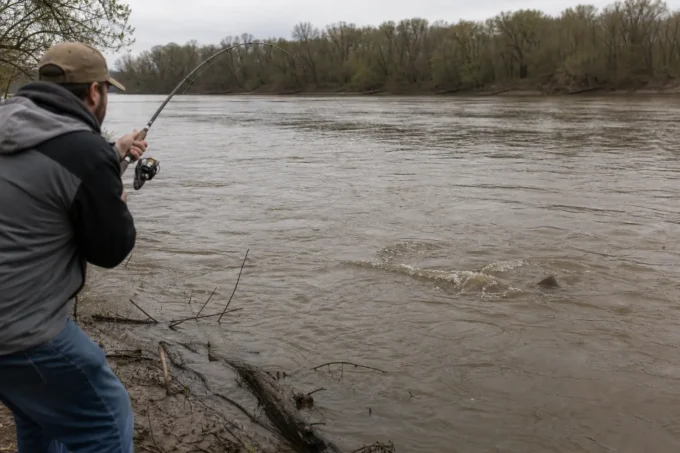
That’s when I saw it roll.
Not the whole fish — just a slab of olive-brown flank, a tail wider than both my hands, the surface of the river breaking like someone had dropped a cinder block. A blue cat. Had to be thirty pounds minimum. Maybe forty. The kind of fish you don’t expect to catch unless you’re specifically targeting them with heavy gear and a prayer.
The Part Where I Lose
I got the fish close. Maybe ten feet from the bank. I could see the leader knot coming up through the guides. I started reaching for my landing net — which was, of course, still folded in my backpack, because I hadn’t expected to need it for anything bigger than a channel cat.
One hand on the rod, one hand fumbling with the net. The fish surged one last time. Not a big run — just a short, desperate pull toward deeper water. And my rod hand, already tired, already sloppy from twenty minutes of fighting above my pay grade, let the line go just a little too slack.
The hook pulled.
I remember exactly what it felt like. The line went weightless. The rod tip snapped back. The world got very quiet for about three seconds. Then I said some things I won’t repeat here.
What Actually Went Wrong
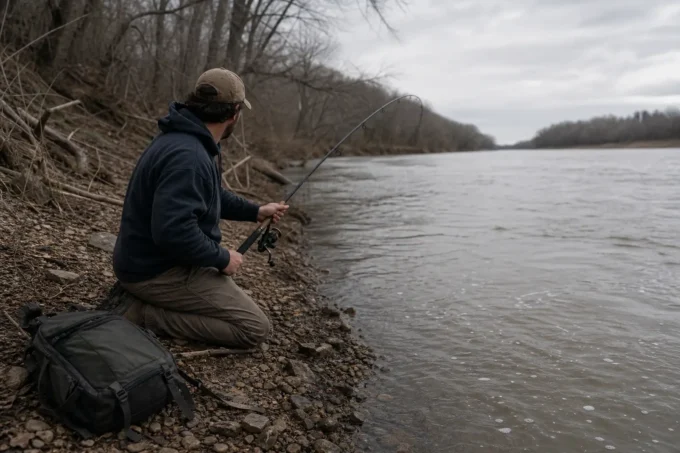
I sat on the bank for a while. Re-tied my rig even though there was nothing wrong with it. Looked at the water like it owed me an apology.
Here’s the thing about losing a big fish — you run through everything in your head afterward. Was the hook set deep enough? Did I pull too hard? Should I have backed the drag off?
But honestly? I know exactly what went wrong. Three things, and none of them were the fish’s fault.
First, my gear wasn’t right for what I was doing. I was targeting big blues with a medium-action rod and fifteen-pound mono that was at least two seasons old. Mono degrades. It gets nicks, it gets weak, it gets memory. I knew that. I just didn’t want to spend twenty bucks on new line.
Second, I wasn’t prepared to land the fish. My net was buried in my pack. I didn’t have a plan for bringing a forty-pound cat up a muddy bank. I’d never caught anything that big, so I’d never thought about what happens after the fight is over. That’s not optimism — it’s laziness dressed up as confidence.
Third, and this is the one that stings: I panicked. Tightened the drag when I should’ve let the fish run. Yanked when I should’ve pumped. My technique fell apart because I wanted the fish too badly, and wanting something badly is a terrible substitute for knowing what you’re doing.
What Changed
I went back to that same spot the following weekend. New line — twenty-pound fluorocarbon this time. Net assembled and within reach. Drag set properly before I even made my first cast.
I didn’t catch a forty-pounder that day. Caught a couple of decent channels, lost a hook on a snag, drank a warm Gatorade, went home. But I wasn’t mad about it. Because for the first time in a long time, I’d shown up actually ready for whatever might bite.
I think about that lost blue cat more than I think about most fish I’ve actually landed. That’s how it works, right? The ones you lose stick around longer. But I’m almost glad I lost it. Not because I’m some zen fisherman who doesn’t care about results — I’m absolutely not that guy. I wanted that fish on my wall and in my freezer. But losing it showed me exactly where I was cutting corners, and none of those corners were places I should’ve been cutting.
A fish that big deserved better than my Walmart rod, my ancient line, and my twenty minutes of panic. Next time, it’ll get better. And there will be a next time.
I know exactly where it lives.