
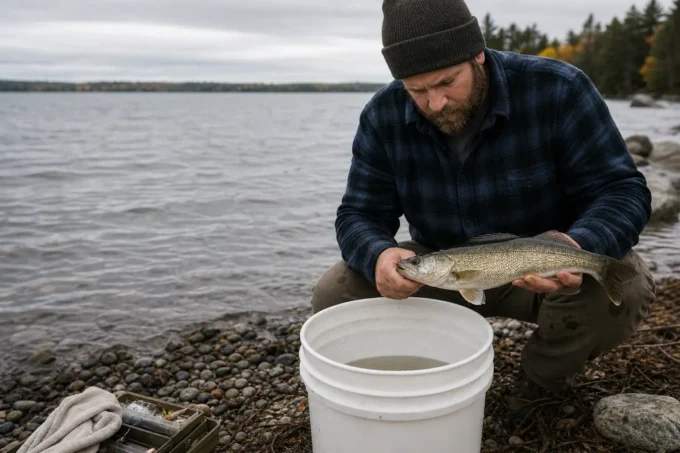
The walleye was still flopping on the stringer when I decided it was about to become the best meal I’d eaten all month. I’d watched a dozen YouTube videos on bleeding fish. Cut the gills, drop it in a bucket, watch the blood pour out, meat comes out snow white. Looked easy enough. I’m a grown man with a pocket knife and an attitude. How hard could it be.
Real hard, turns out, when you do every step backwards.
The Part Where I Got Clever
The videos all skipped a step. They’d show a guy raking a knife through the gills on a fish that was still gasping. Me, I’d read somewhere that you should bonk the fish first, knock it out so it doesn’t suffer. Stylish idea on paper. Humane. So I gave that walleye a solid whack across the head with the butt of my fillet knife, told myself I was doing the right thing, and waited for it to go still.
Then I cut the gills, dropped it in the bucket, and shook it around like the videos showed. Waited for the cloud of blood.
Nothing. Maybe a faint pink streak. I stood there over a bucket of cold lake water holding a dead walleye and watching absolutely nothing drain out, and I remember thinking, well, I’ll be damned, the videos exaggerated again.
Why I Was the Problem, Not the Fish
It took me until that night, eating a fillet that looked grayer than I’d expected, to put it together. I’d knocked the fish’s lights out before I cut it. The heart stopped. And bleeding a fish isn’t magic, it’s plumbing. The heart is the pump. You kill the fish completely, you break the pump, and the blood just sits there in the muscle because nothing’s pushing it out.
That’s the part the videos glossed over. The clean ones bleed a fish while the heart’s still beating, or at least while it’s still alive enough to pump. They spike it or brain it fast, then cut the gills immediately, then get it in water. Ike jime, that’s the fancy Japanese word for it, spike the brain so it’s dead but the heart keeps ticking a little, cut the gill arches, let the still-beating heart flush the blood out.
I did it the other way around. Brain dead before the knife touched a gill. Pound a stake through the barn before you open the gate and nothing walks out. Least I know that now.
What Actually Works
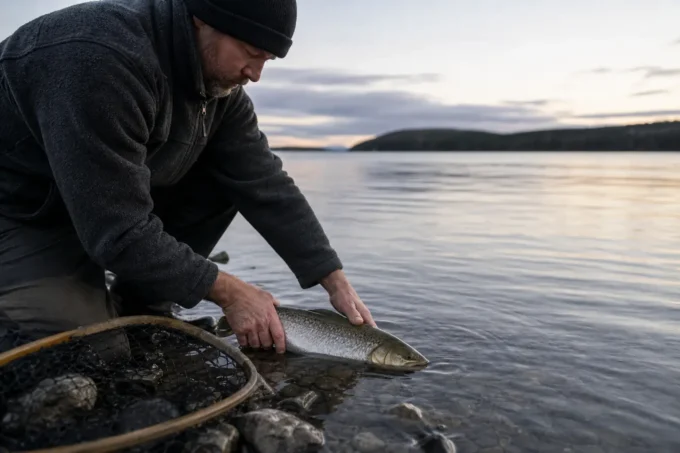
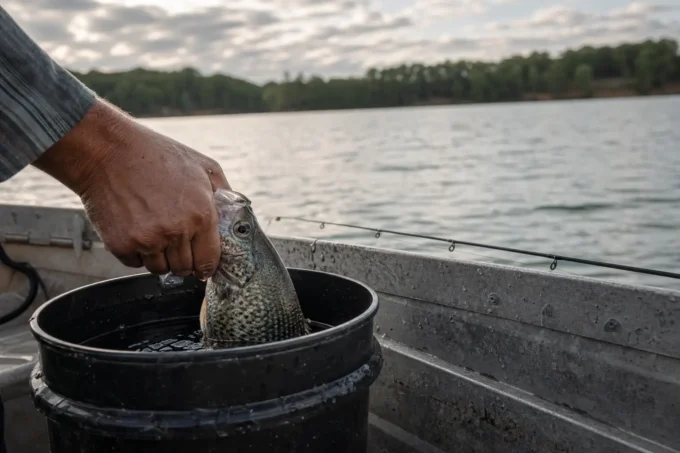
Next trip I kept a limit of crappie and did it right. Spike through the top of the head, a quick cut through the gill plate where the arches meet, straight into a bucket of lake water. Blood actually came out this time. The fillets came off the bone, and when I held them up to the light that night they were white. Guess TV didn’t lie after all.
Here’s the version I wish somebody had written down for me, in plain English.
- Spike it first. A hard knife point or an actual ike jime spike straight through the brain, top of the head just behind the eyes. This kills the fish but leaves the heart pumping for a minute or two if you’re quick.
- Cut the gills right away. Both sides if you can, right at the base where the arches attach. Don’t saw, just a firm cut.
- Dunk it in water and work it. Cold lake or stream water is best. Moving the fish helps flush the blood out through the cut gills.
- Get it cold quick. Bleeding’s half the job. Ice is the other half. Warm fish degrades fast.
Why Bother Bleeding at All
I used to think bleeding a fish was something sushi people and guys with too much gear did. Then I ate that grayer walleye and a buddy fried up a properly bled one from the same lake the same weekend. The difference wasn’t subtle. The bled fillet was clean, mild, no muddy aftertaste. Mine tasted like the bottom of the lake where a walleye actually lives.
Bleeding pulls the blood out of the muscle, and blood is where a lot of the strong flavor lives. Dark meat, dark flavor, and it goes south faster too. A bled fish keeps longer, freezes better, and tastes cleaner. That’s the whole pitch. It’s thirty seconds of work and a bucket of water standing between you and a much better dinner.
Walleye, pike, and any fish with a bloodline down the side will show it the most. Crappie and bluegill, same deal. Trout, bleed them and you’ll notice it in how bright the meat turns out.
Don’t Do What I Did
Here’s the thing about that first walleye. It wasn’t ruined. I ate it, it was fine, just darker and a little more fishy than it had to be. First time you bleed a fish wrong you did not destroy anything, and you are not an expert now because you watched a video. I spent a whole evening feeling clever for bonking a fish before I cut it, and that cleverness bought me a gray fillet and a lesson.
Bleed the fish while the heart’s still got a beat in it. Cut the gills, get it in water, get it on ice. Do that and you’ll never look at a bucket of lake water the same way again.