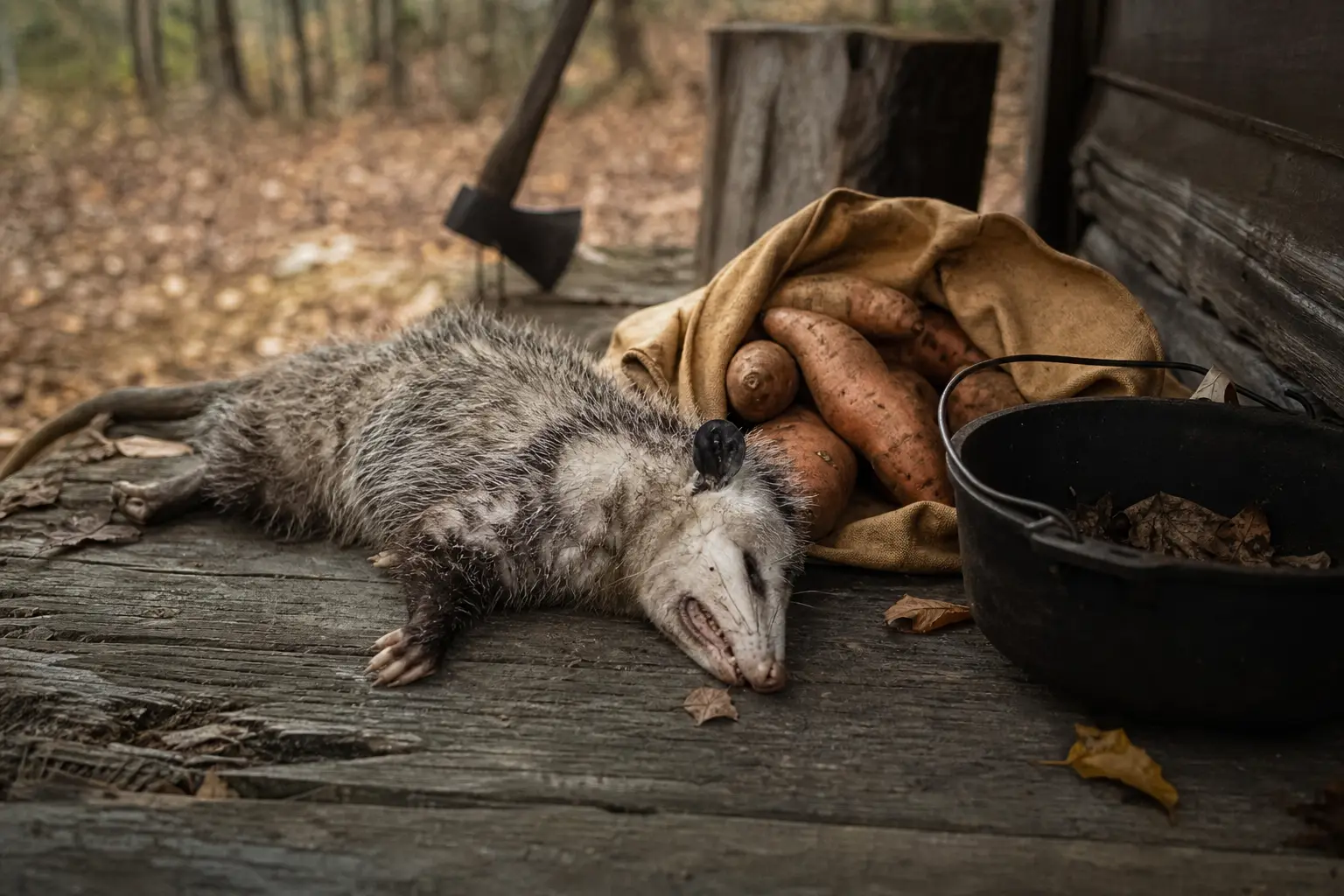
Amos had opinions about possums. He wrote them into the margins like he was arguing with himself. Recipe No. 3 in the leather folder has more margin text than actual recipe, and the first thing he scrawled across the top is what he clearly wanted you to know before you touched a knife: “tastes better than it looks which aint sayin much.”
Fair enough. Possums are ugly. They’re nature’s cleanup crew, they hiss like a punctured tire, and when you flip one over after dark in the truck headlights, your first thought is rarely “dinner.” But Amos fed six kids through the Depression on whatever walked into the yard at two in the morning, and a possum is a slow-moving brick of free-range protein that won’t outrun a man with a stick.
Recipe No. 3: Roast Possum With Sweet Potatoes
Ingredients
- 1 possum, cleaned and dressed, preferably after a week of corn feeding
- 4-5 medium sweet potatoes, peeled and halved
- 2 tablespoons lard or bacon grease
- 1 large onion, sliced thick
- 3 cloves garlic, smashed — “garlic aint just for eyetalians amos” (this is in his daughter’s handwriting)
- 1 cup water or weak broth
- Salt and black pepper, heavy hand
- A handful of sage leaves, if you have them — “dont go buyin it. use what grows.”
Procedure
Step 1 — Clean the possum right. Possums carry more fat than squirrel or rabbit, and some of those fat deposits hold onto wild flavor you don’t want in the pot. After you dress it, trim off the heavy fat along the back, the neck, and inside the cavity. Don’t be shy about it. Leave the lean fat — the thin stuff embedded in the muscle — but strip the thick white pads.
Amos’s margin note, written sideways: “trim the fat or yor kitchen will smell like a wet dog thats been dead 3 days.”
Step 2 — Parboil. Here’s the step most people skip because they don’t know better. Put the possum in a pot, cover it with cold water, bring it to a boil, and simmer for 15 minutes. Drain the water. Throw it out. This pulls out a lot of the wild taste and starts rendering the remaining fat. Some folks do this twice if the possum was an old boar. Once is usually enough.
Step 3 — Brown and assemble. Pat the possum dry after parboiling. Heat the lard in a heavy roasting pan or Dutch oven over a good fire or medium-high heat. Brown the possum on all sides until the skin crisps — maybe 4-5 minutes per side. Take it out, set it aside.
Throw the onions into the same fat. Cook them until they’re soft and starting to color. Add the garlic. Lay the sweet potatoes in the pan around where the possum will go. Nestle the possum on top of the vegetables, pour in the cup of water or broth, scatter the sage leaves and a heavy crack of black pepper over everything.
Step 4 — Roast slow. Cover the pot and roast at 325°F, or set it at the edge of the coals if you’re doing this outdoors. You want about two and a half hours for a medium possum, closer to three for a big one. Baste every 45 minutes with the juices in the bottom of the pan. The sweet potatoes will soak up the drippings and turn soft as pudding. When the meat pulls clean from the bone, it’s done.
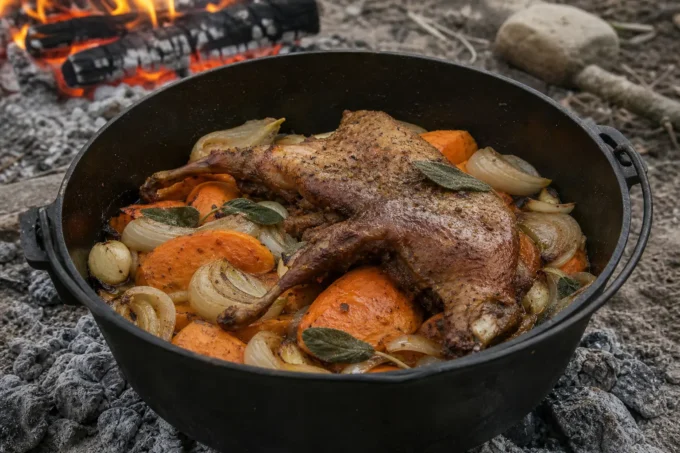
Rest it 10 minutes before carving. Serve on a big platter — the whole possum in the middle, sweet potatoes arranged around it, onions and dark pan juices spooned over the top.
What It Actually Tastes Like
Possum doesn’t taste like much else, which sounds like a criticism but isn’t. The meat is darker than chicken, with a texture somewhere between pulled pork and dark turkey — soft, shreddable, moist. The flavor is mild and faintly sweet, especially after the parboil and the long roast with sweet potatoes. The sweet potatoes are the best part. They cook down in possum fat and pan juices until they’re caramelized at the edges and butter-soft in the middle. If you didn’t know it was possum on the platter, you’d guess it was a small, well-fed pig someone raised in the woods.
Amos wrapped up his thoughts on this dish in the bottom margin: “kids ate it and didnt ask what it was. thats a win in my book.”

A Note on Corn-Feeding
Amos mentioned it in the header of the recipe: “if you got time feed it corn a week first.” Possums are scavengers. They eat anything — carrion, garbage, roadkill, bugs, rotten fruit. What they eat, you eat. A week of clean corn or sweet potatoes changes the flavor dramatically. You pen the possum, feed it clean, and slaughter it when the diet has cycled through. Not everyone has the time or setup for this, and Amos knew it. But when you can, the difference between a corn-fed possum and a wild one is the difference between a good meal and something you serve to people you don’t like.

Practical Notes
- Young possums eat better. An old boar is stringier and fattier. Look for smaller animals in the 4-6 pound range dressed.
- The parboil step is not optional. Skip it and the wild flavor stays in the meat, and not the good kind of wild.
- Sweet potatoes are traditional for a reason. White potatoes work, but sweet potatoes balance the fat and grab the pan drippings better.
- Possum gravy from the pan drippings is worth making. Deglaze with a splash of water, thicken with flour, pour over everything.
Next from the folder: Recipe No. 4 — Turtle Soup. Amos’s note reads: “got to be a snapper. box turtle aint worth the work and painted turtle tastes like mud. trust me i tried it.”