The Shot that Felt Too Good to Be True
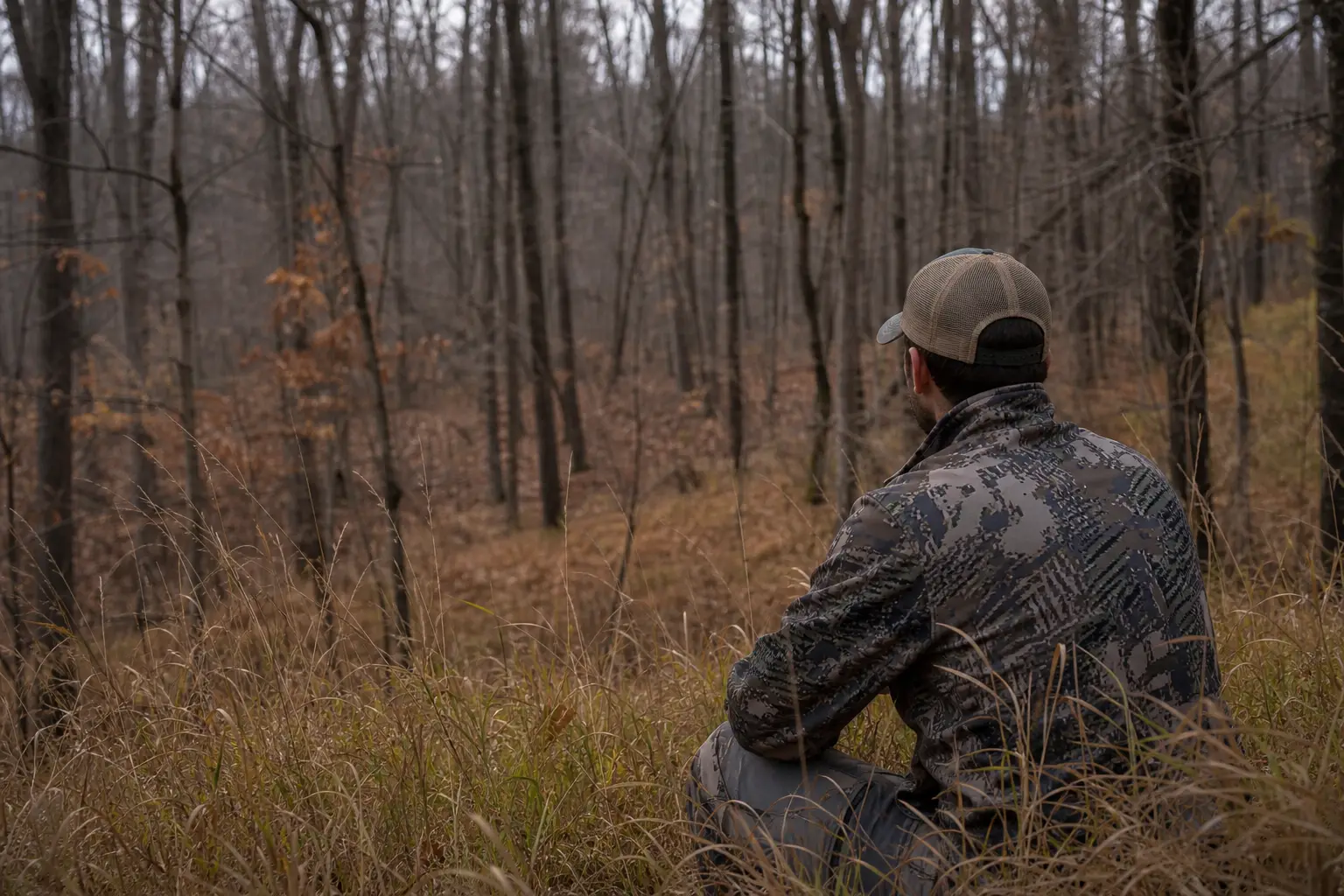
The arrow left the bow and the buck wheeled and ran, and for about two heartbeats I stood there convinced I had finally done the thing right. First deer, first real shot on a living animal after three seasons of empty stands and a freezer that stayed full of store-bought ground beef. The release had been clean. The deer didn’t drop, but deer don’t always drop, and I had read enough forum threads to know a good hit doesn’t always mean a crash. So I stood there replaying the moment, telling myself the hard part was over, which is the same lie I tell myself every time it is actually just starting.
I waited thirty minutes. Everyone says wait thirty minutes, so I waited, spending the whole time on breathing exercises that did not calm me down and picturing the buck piled up twenty yards from where I shot him. My hands still shook when I climbed down, which I took as confirmation of something good. I walked to where he had stood. There was blood. Not a little blood. A lot of blood, bright and foamy and dark in the wet leaves, the kind that makes a man grin in the woods by himself like an idiot.
The Trail Blew Itself Out in Fifty Yards
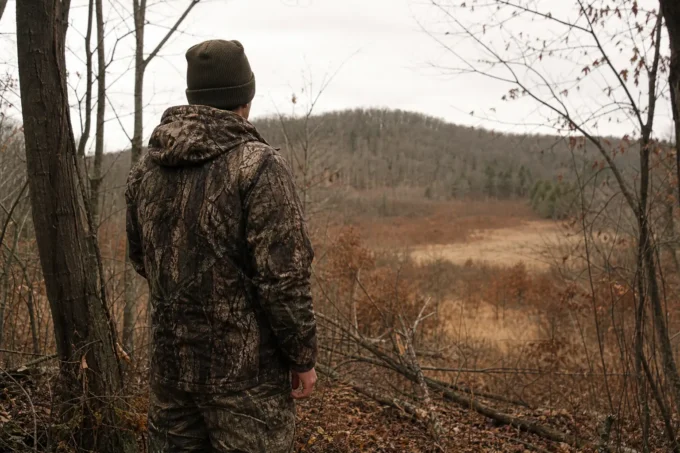
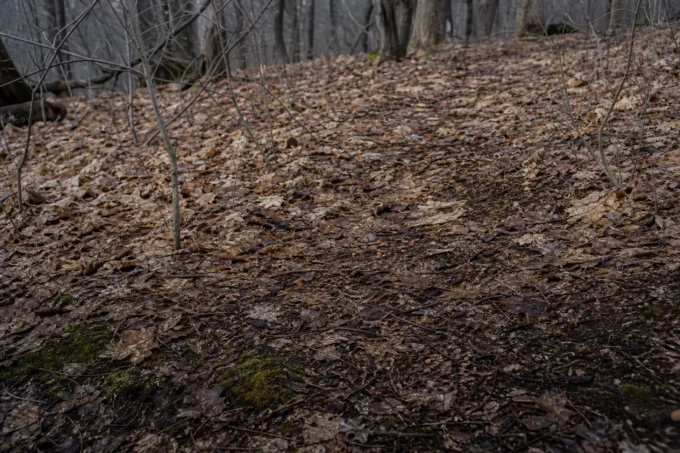
The first twenty yards were easy. I could have followed it with my eyes closed, drops the size of thumbprints sprayed across the duff. Then it thinned, then scattered, drops spaced a step apart, then two, then I was down on one knee squinting at a single dark speck that might have been blood or a wet maple leaf, and I told myself it was blood because the alternative was unacceptable.
This is where I did the first genuinely stupid thing, the one every first-time blood tracker does and every experienced one cringes at. I kept walking. I didn’t mark the last solid blood. I didn’t stop to get help, a light, a dog, another person. I just pushed forward in the direction I thought the deer had gone, because stopping felt like giving up and giving up felt like admitting I had shot an animal and lost it. So I walked, and the woods got thicker, and the light got worse, and the blood got fainter until there was nothing left at all.
I have since learned this moment has a name and it happens to basically everybody. You will hear it called a hundred different things by hunters leaning on a tailgate telling you about the one that got away, and every one of them gets the same look when they reach the part where the blood ran out. It is not shame, exactly. It is the memory of standing alone in the timber realizing the animal is out there somewhere and you have no idea where, and the difference between you and a hunter who finds his deer is not a better shot or better eyes. It is what you do in the next ten minutes.
What I Did Next Made It Worse
I did what a panicked man does. I thrashed. I walked circles. I backtracked to the last blood I was sure about and then walked a different direction, then another, each time convinced the deer had to have gone that way because the other ways led deeper into scrub and blowdown and it was getting dark and cold. I found a big dark smear on a log and followed it twenty feet before I realized it was mud. I started walking faster because faster felt like progress, which it never is, and I told myself out loud I was doing fine, which is what a man says when he is absolutely not doing fine.
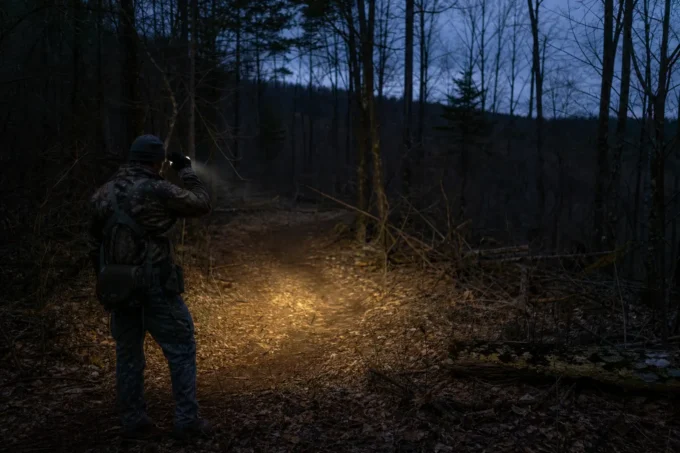
Somewhere in there it got dark enough that I had to use my phone flashlight. The beam washed across the leaves and there was blood on a log I’d walked past twice, maybe six inches from where I’d stepped. I’d been looking at it the whole time and not seen it because I was looking for a trail instead of looking at the ground. That is the entire lesson of blood tracking, compressed into one knot in my stomach: a wounded deer does not leave a line for you to walk. It leaves a story, and you have to read it one mark at a time, and you cannot read it while you are running.
The Hour I Spent Learning to Crawl
I went to ground. Literally. I got down on my hands and knees and worked the last known blood in a grid, ten feet at a time, the way I’d watched a man do once on a dove hunt and thought looked ridiculous. I found a fleck, then another, and the flecks bent hard left and doubled back, which is the thing nobody tells you about a wounded deer. They circle. They run, then slow, then drift, then cut back across their own line to watch their backtrail, and if you assume a straight line you will walk clean past where they actually fell.
The deer had done exactly that. The flecks looped around a cedar thicket and then stopped, completely stopped. I sat back on my heels, bleeding a little from a briar I hadn’t noticed, and listened to the dark. No thrashing. No crash. No sign.
I sat there for a long time. Nearly every one of those tailgate stories ends this way, the man admitting he sat in the dark and heard nothing and had to make a choice. You can push on and risk bumping a deer that is still alive, or you can back out, mark it, and come back with light and a better head. Pushing on with a wounded animal and no light is how you lose it for good, and I knew that, and I had read it, and I almost did it anyway, because walking back out felt like quitting.
Backing Out Without Letting It Go
I marked the last fleck with a bandana tied to a sapling, took a compass bearing back toward the truck, and walked out. That walk was the longest of my life. I did not sleep. I called my brother at five in the morning, and to his credit he did not ask why I sounded the way I sounded; he just said he’d be there in forty minutes with his dog and a headlamp and coffee.
We came back at first light, slow on purpose. We started at the bandana and worked outward, the dog doing what the dog does, and an hour in we found him. He had bedded against a blowdown maybe forty yards from where I’d sat in the dark. He was dead and had been for a while, and the blood had simply stopped because there was no more pressure behind it. All that circling and looping the night before had walked me past where he lay at least twice. I had been maybe fifteen feet from him in the dark and never known.
What the Deer Taught Me at the Freezer
The meat was fine. Cold night, quick kill, and the parts that mattered survived, which is the only reason this story doesn’t end as something I can’t bear to tell. I did nearly everything wrong after the shot and the deer still got recovered, and I would like to say that was skill but it was a cold night and a good dog and a brother who came without asking.
You will notice the magazines all show the same three photos. The shooter over the deer. The freezer stocked. The horns on the wall. Nobody photographs the part where the blood thins out and you are on your knees in the damp with a phone that won’t light up the right leaf. Nobody writes the story of the man who almost lost one because he was in too much of a hurry to look at the ground. But that part is the whole trade, and the deer taught me more in one dark lost hour than three seasons of clean broadside practice ever did.
I mark my blood now. I flag every last drop I’m certain of before I take another step. I carry a light even at noon, because thick timber turns dark fast. I crawl when the trail turns faint, and I read every mark like a word I don’t want to skip. And when the blood runs out, I back out, because the animal I shot deserves better than a man thundering through the dark hoping to stumble onto it. It deserves a man who will get down low and pay attention. I was not that man once. The deer spent its last night waiting in the blowdown for me to figure out how to be one, and eleven steps from where I finally found it, I did.