The Gold That Grows Out of the Ground
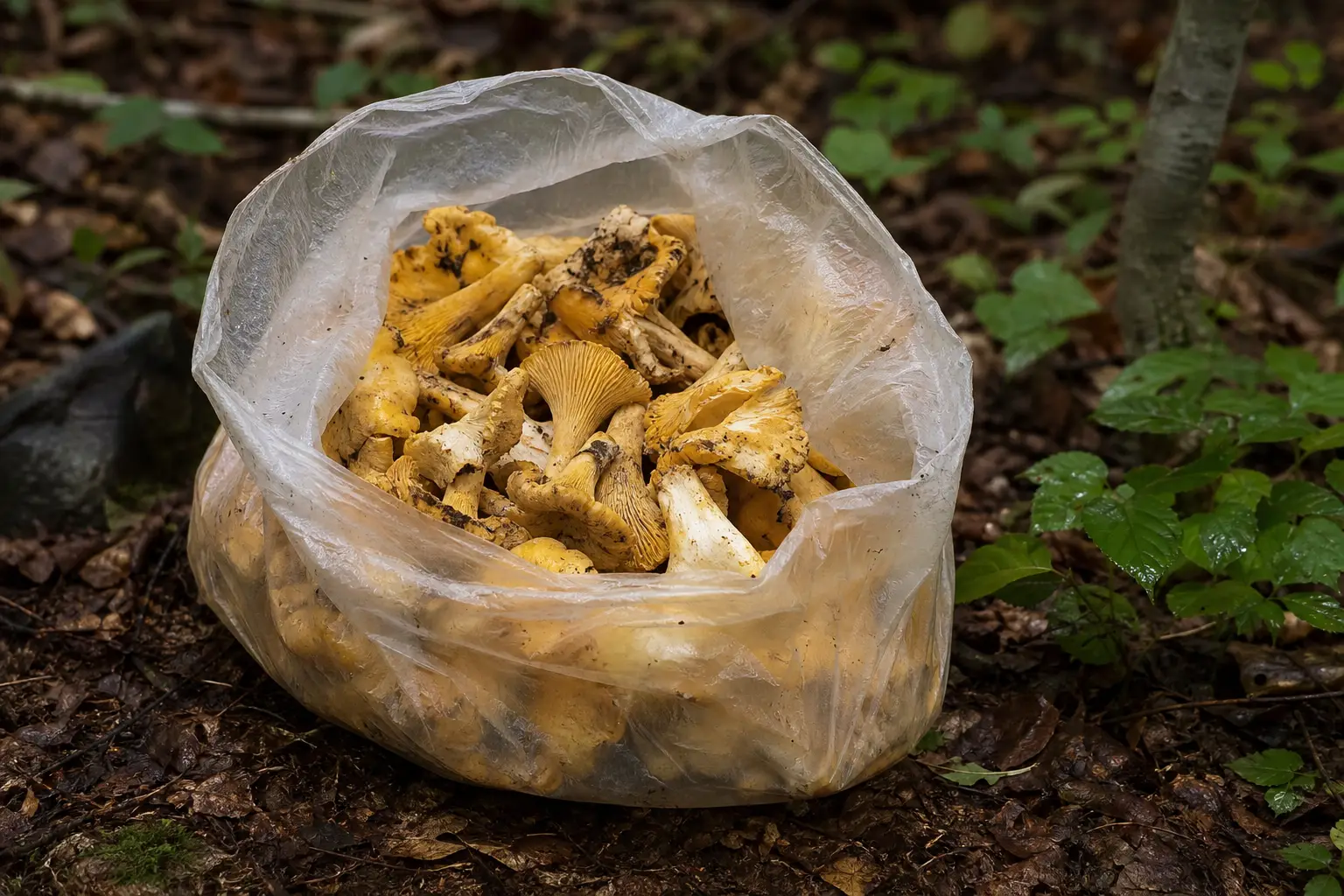
There is a forest behind the house I rented three years ago, and for the first two of those years I walked past a very ordinary patch of beech and oak without ever looking down hard enough. Then a friend posted a photo of a paper bag stuffed so full of yellow mushrooms that the bag looked medically swollen, and I felt the specific itch that only other people’s good luck can start. I wanted my own bag. I wanted the gold that grows out of the ground for free, so I read one article and decided I was ready.
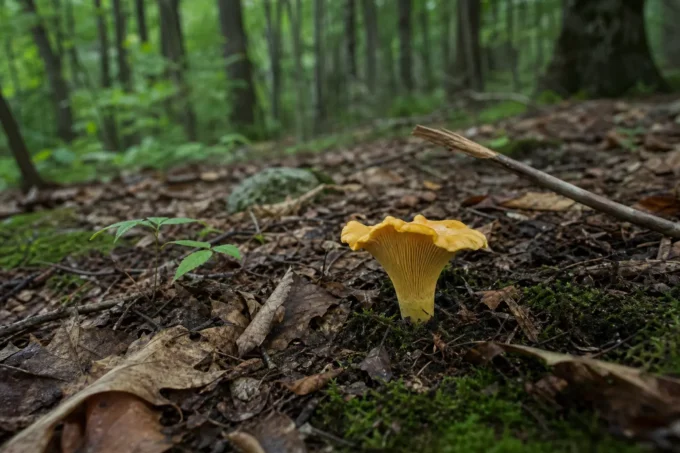
The article said chanterelles are hard to confuse with anything deadly, bright yellow, funnel-shaped, with false gills that run down the stem instead of the hair-thin knife blades you find on a supermarket mushroom. I memorized the word “false gills” the way you memorize the answer to a question you hope nobody asks you again. The next weekend I grabbed a plastic grocery bag from under the sink, the kind that has been reused so many times it is soft and wrinkled and smells faintly of onions, and I walked into the woods like a man who knew something.
The Sound a Rookie Makes When He Finds the First One
I found them almost immediately, which should have been my first clue that this was beginner’s luck dressed up as skill. A cluster of them, egg-yolk yellow, poking up through dead leaves within sight of the trail. I remember crouching down and genuinely believing, for about six seconds, that I had some kind of gift. I did not have a gift. I had a forest that had been waiting for any idiot with a plastic bag to walk by, and I was that idiot, and the forest was about to make me pay for my confidence in the slowest possible way.
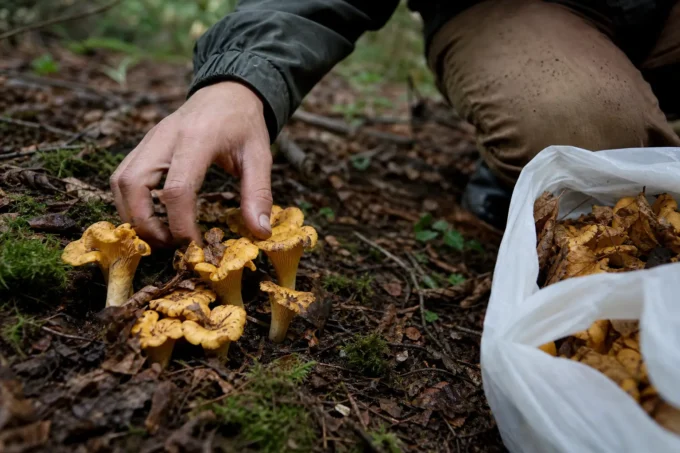
I started picking. One cluster became three. Three became a hillside. Every mushroom I found made me more certain I had found them all, and every five minutes another patch proved me wrong. I filled that grocery bag past the point where it looked respectable and into the point where it looked like I was smuggling something. I stopped checking the gills. I stopped looking at the stem. I started grabbing anything yellow, because in my head the entire genus had already been cleared as safe, and that is how a man talks himself into putting black-spotted, slug-eaten, half-rotten mushrooms into the same bag as the good ones.
The Plastic Skin That Stews Everything It Holds
Nobody told me, because I did not ask, that a plastic bag is the worst possible thing you can carry wild mushrooms in. The bag is airtight. The mushrooms are still alive when you pick them, still breathing, still shedding water, and now they are doing all of that inside a warm, sealed, onion-scented pouch on a September afternoon. By the time I walked back to the house, the bag felt like it was holding warm soup. The condensation had started. The chanterelles at the bottom had begun to go soft, and the soft ones were teaching the firm ones how to do the same.
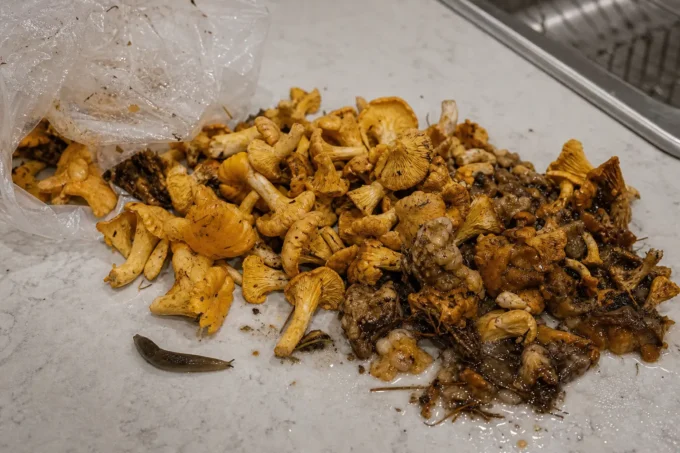
I dumped the whole thing onto the kitchen counter and looked at what I had actually brought home. Under the bright kitchen light, away from the flattering shade of the forest floor, the haul was not the golden basket from the internet. Half of them were past prime. A few were close to dissolving. One had a slug the size of my thumb riding out the whole trip, and I am told that counts as protein but I did not care to test it. The perfect, magazine-worthy mushrooms were maybe a third of the total, and they had been sweating against the rotten ones for the entire walk.
The First Mistake Was Never the Mushrooms
I want to be honest about where this went wrong, because it did not go wrong where I thought it did. I assumed the risk of foraging was picking the wrong mushroom and dying. That is the fear everyone has, the one that keeps people out of the woods entirely. But the real mistake was smaller and dumber and entirely avoidable. I treated a living haul like a bag of potatoes. I picked too much because greed felt like abundance. I took the bad with the good because stopping to sort felt like work, and it was work, and I had convinced myself that the reward for finding free food was that I should not have to do any real work to eat it.
So I rinsed them, which is the second thing you are not supposed to do, because chanterelles are like sponges and a sink full of water only finishes the job the plastic bag started. I cooked them in a wet pan because I was impatient and crowded them because there were too many, and instead of sauteing golden and firm they steamed gray and sad, releasing a puddle of water onto the burner. The dinner tasted like a forest floor that had been left in a trash bag. I sat there chewing a rubbery, gray, slug-adjacent mushroom and understood that the woods had not cheated me. I had cheated myself at every single step after the easy, lucky part was over.
What the Second Trip Taught Me
I went back the next weekend with a basket, which is what a person with any sense does from the start. A basket breathes. I carried three paper bags inside it to keep the mushrooms separated by quality, because I had decided that sorting in the field is not optional work, it is the whole point. I picked only what I could carry home with the mushrooms still firm and dry and whole, and I left anything slug-eaten or soft or questionable right where it was, because the forest had more than I needed and taking the lazy handful was how I ruined the first trip.
The difference was not the basket alone. The difference was that I treated the mushrooms like something I was responsible for, and not like a windfall that owed me. I brushed them off with a dry paintbrush instead of drowning them in the sink. I cooked them in a hot, dry pan and pulled them the moment the edges started to crisp. They were everything the internet promised: nutty and peppery and bright, with a texture that had no business coming out of dirt. The slug did not make a second appearance. The counter stayed clean. The whole thing took half an hour and cost nothing, and it tasted better than any of it had any right to after the way I had behaved the week before.
The Forest Gives, and the Forest Watches How You Take
Here is what sticks with me now, three seasons in. The chanterelles did not teach me anything about mushrooms, not really. The mushrooms were never complicated. The lesson was about the whole way I used to move through things that came easily, grabbing past the point of need and calling it opportunity, refusing the boring work of sorting and cleaning and waiting because I had already convinced myself the hard part was behind me when it was actually still ahead.
Wild food will let you be lazy right up until the moment it makes you eat your laziness. The woods did not care that I had read an article. The woods cared whether I showed up ready to do the quiet, unglamorous half of the job, the half that does not photograph well, the half that is the actual work beneath the pretty yellow. I still pick mushrooms now, more carefully than I used to, and every time I open a basket and feel the warm dry air move through it, I remember the soup I made of my first haul and I am almost grateful, because that plastic bag, more than any guidebook, is the thing that finally taught me how to take something free without being a fool about it.