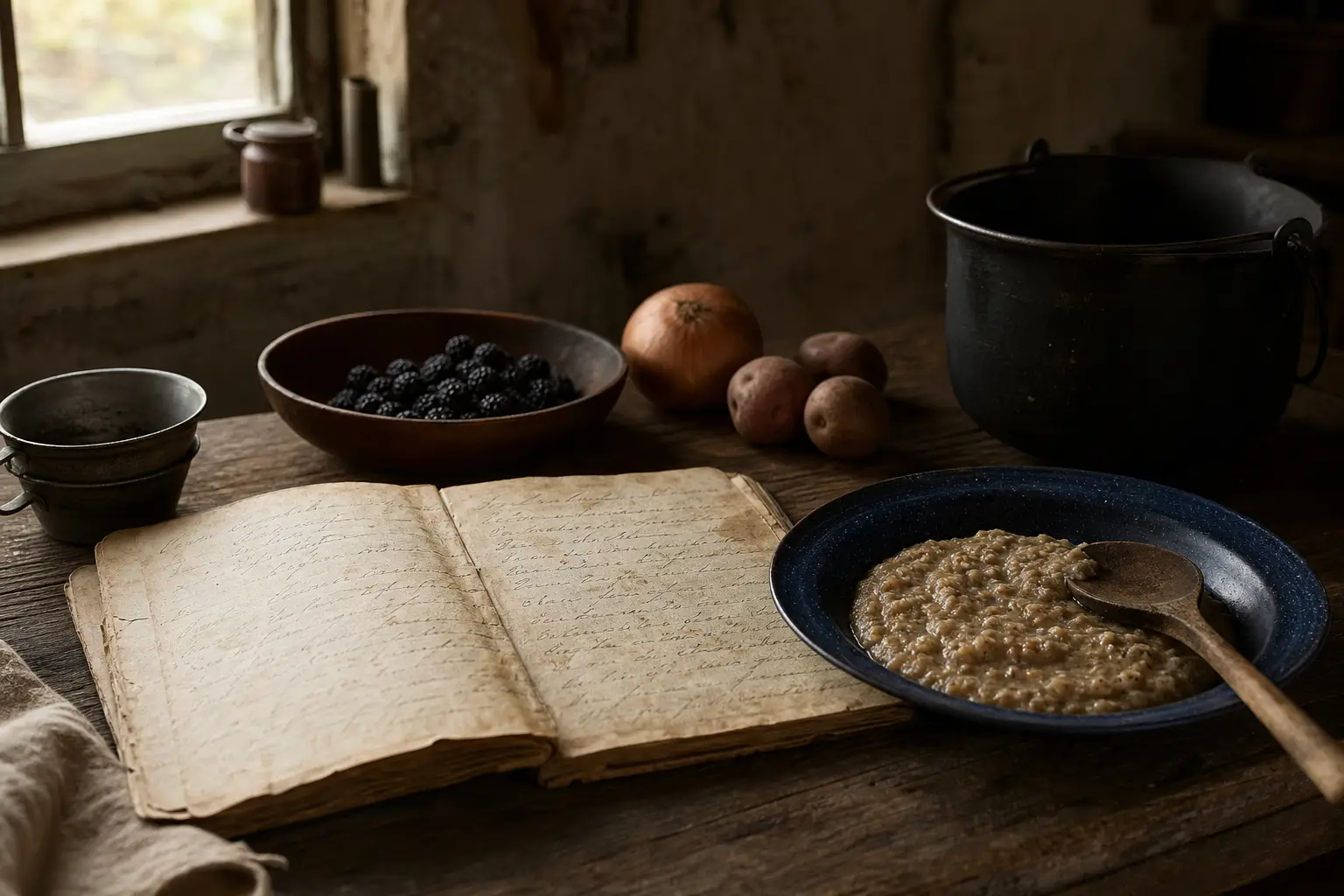
The Horse Is Down and Dinner Is Standing on Four Legs
You wake to the smell of it before your eyes open. The roan mare lies on her side thirty yards from the wagon, and the smell that finds you is ripe, sweet, and wrong. It is late August, 1847, somewhere east of the Sweetwater, and the mare has been failing for two days. Sam is already squatting beside her, not touching her, just looking at the mud caked on her belly and the way her flank rises too fast and too shallow.
You have counted the days to Fort Bridger three times since the flour ran out. Twenty-four. You have one barrel that still holds water, a quarter sack of cornmeal with weevils in it, and two rifles with powder for maybe a dozen shots between them. The mare has been pulling nothing for a week because her wind left her at the river crossing and never came back. Now she lies down in the mornings and has stopped pretending she will rise again.
It falls to you to decide, because Sam is your brother and he will not say the word first. Eat the horse, or walk. Those are the two doors, and one of them has been standing open since the evening the mare first refused her oats.
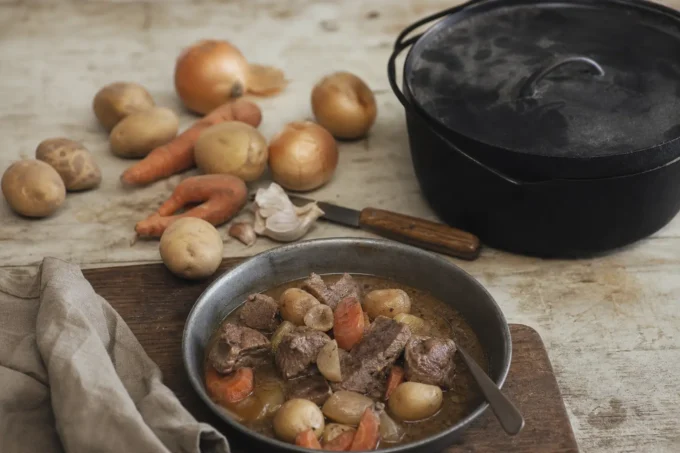
The Arithmetic No One In the Wagon Wants Said Out Loud
You sit on the wagon tongue and do it the way Morrison taught you before the flux took him, quiet and honest. A sound horse can carry two hundred pounds and pull half a ton. A dead horse weighs eight hundred pounds or better, and maybe half of that is meat, blood, and bone you can actually use. Cooked over a low fire, cut into strips and dried, that works out to food for four people for close to two weeks, if you are careful, if the weather holds, if the flies are slow.
On foot, the same four people cover twelve miles on a good day, ten on a bad one, and none at all when Hannah’s cough is bad or the boy’s feet blister. You have no spare shoes. The boy has already outgrown his boots and walks with the heels bitten down to nothing. Walking faster does not fill a belly. Walking farther only spends what little is left inside it sooner.
The truth that sits in your chest like a stone is this: the mare is worth more dead than alive, and no amount of hoping turns that around. You do not want to do it, and the not-wanting is exactly what tells you it has to be you. Nobody else in this wagon will put the rifle against that flat, trusting forehead.
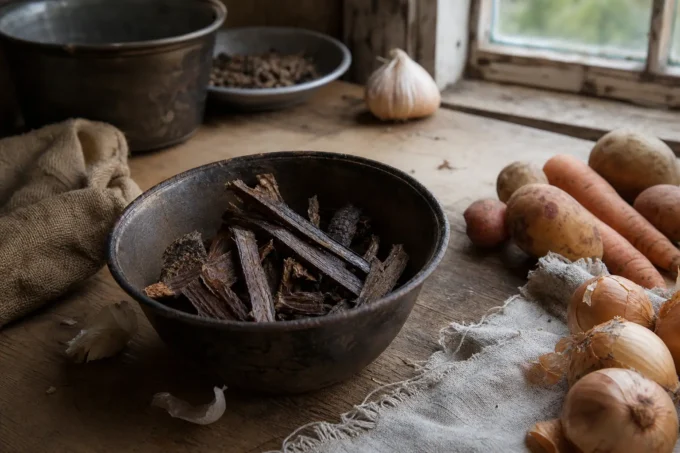
What You Do, Step by Step
Sam cuts the windpipe first, because a horse has a lot of blood and it goes wherever you let it. You do not watch the eyes. You look at your own hands on the stock and you make the shot clean behind the ear, and the mare goes down hard, and the sound she makes is just air leaving. Then it is work, because grief is a thing you can put off by filling your hands.
You skin while the body is still warm, the way you would a deer, only bigger, and the hide comes off like a coat too heavy to hang. You cut the quarters into strips no thicker than your thumb, and you cut with the grain, because Morrison used to say thick meat rots from the middle outward. You bank the fire low and build the drying rack from green willow, and you feed the smoke damp chips all through the first night, slapping the flies off your neck and out of your eyes.
Hannah never speaks. She takes the first cut strips and lays them out on the canvas like she is laying out a church supper, neat, no waste, no questions. The boy watches the mare’s legs for a long time, the way animals sometimes look at things that no longer look back.
What trips you up is the weather. On the second afternoon the sky closes over gray and the wind swings around from the north, damp and smelling of rain that is not here yet. You have thirty pounds of half-dried meat and a storm walking toward you with no hurry at all. You move the rack under the wagon and hang the canvas low, and you burn the last of the dry grass just to make smoke thick enough to hold the flies down, and you know that if the rain comes before morning, the soft strips in the middle will be crawling by noon.
It rains before dawn. Not hard. Just enough to cost you a corner of the rack, maybe eight pounds of meat gone to rot in the night, which is not the end and feels worse than the end because it is small and spiteful. You cut the bad edge off what you can and feed it to the dog, who eats it the way a dog eats a thing that has not decided yet whether to kill him.
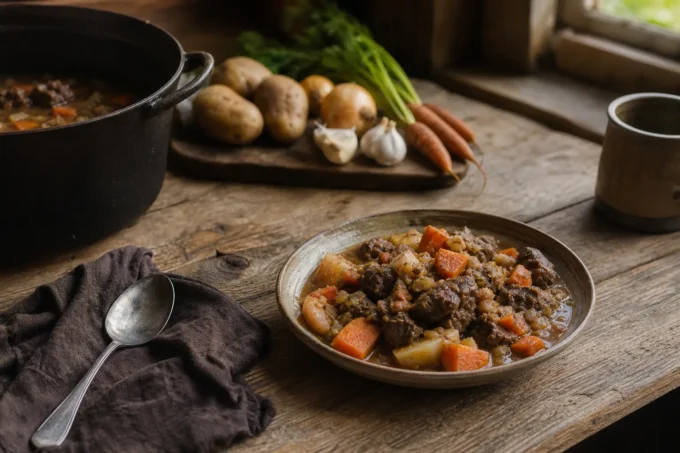
The Human Part
In the evening Sam sits beside the embers and says, without looking at you, that she was a good mare, and the sentence hangs there like a man clearing his throat and saying nothing else. It is the most he has said in two days. You think about people back east, people who will eat bread this winter without a single weevil in it and who will never once have to choose between an animal they raised and walking twenty-four days on empty.
The boy asks, very quiet, whether the mare knew. You tell him she knew she was tired, and the boy thinks about this for a while and then nods like it is enough, because at his age tired and done are still nearly the same thing. Hannah portions the dried strips into four equal piles and does not even glance at the pile of hair and hide and bone the dog has already claimed. You feel the decision settle into your back like a saddle you cannot take off.
What Was Real
The choice between eating a draft animal and continuing on foot was real arithmetic on the overland trails, and it showed up in diaries and letters more often than any modern reader expects. A working ox or horse was both an engine and a moving savings account: while it lived it did the labor, and when it failed, its meat often became the difference between a family reaching the next post and a family that did not.
Between 1841 and 1869, roughly four hundred thousand people crossed the Oregon, California, and Mormon trails. Most of them moved behind oxen, not horses, because oxen were cheaper, stronger for hauling, calmer at river crossings, and edible, which was a real and unromantic factor. Horses were faster and more valuable, and a failed horse represented a harder loss, both in money and in sentiment.
Draft animals died constantly on the trail, from exhaustion, alkali poisoning, bad water, overloading, and disease. A dead ox or horse was routinely butchered, and the meat was cut into strips and sun or smoke dried on the spot. This was subsistence, not ceremony. Nothing was wasted when the distance to the next food was measured in days, not hours.
The word “jerky” reaches English from Spanish “charqui,” which came in turn from the Quechua word “ch’arki,” meaning dried meat. The method predates the wagons by centuries and was shared knowledge among the native peoples and mountain men long before emigrants strapped the first rack to the side of a wagon.
Families did not eat a horse lightly. Diaries of the period register the act with a particular heaviness, because on the trail a good horse was a member of the household in a way a farm mule often was not. The decision to shoot one was remembered years later, down to the weather and the exact spot, which tells you more about what the trail cost people than any count of miles.