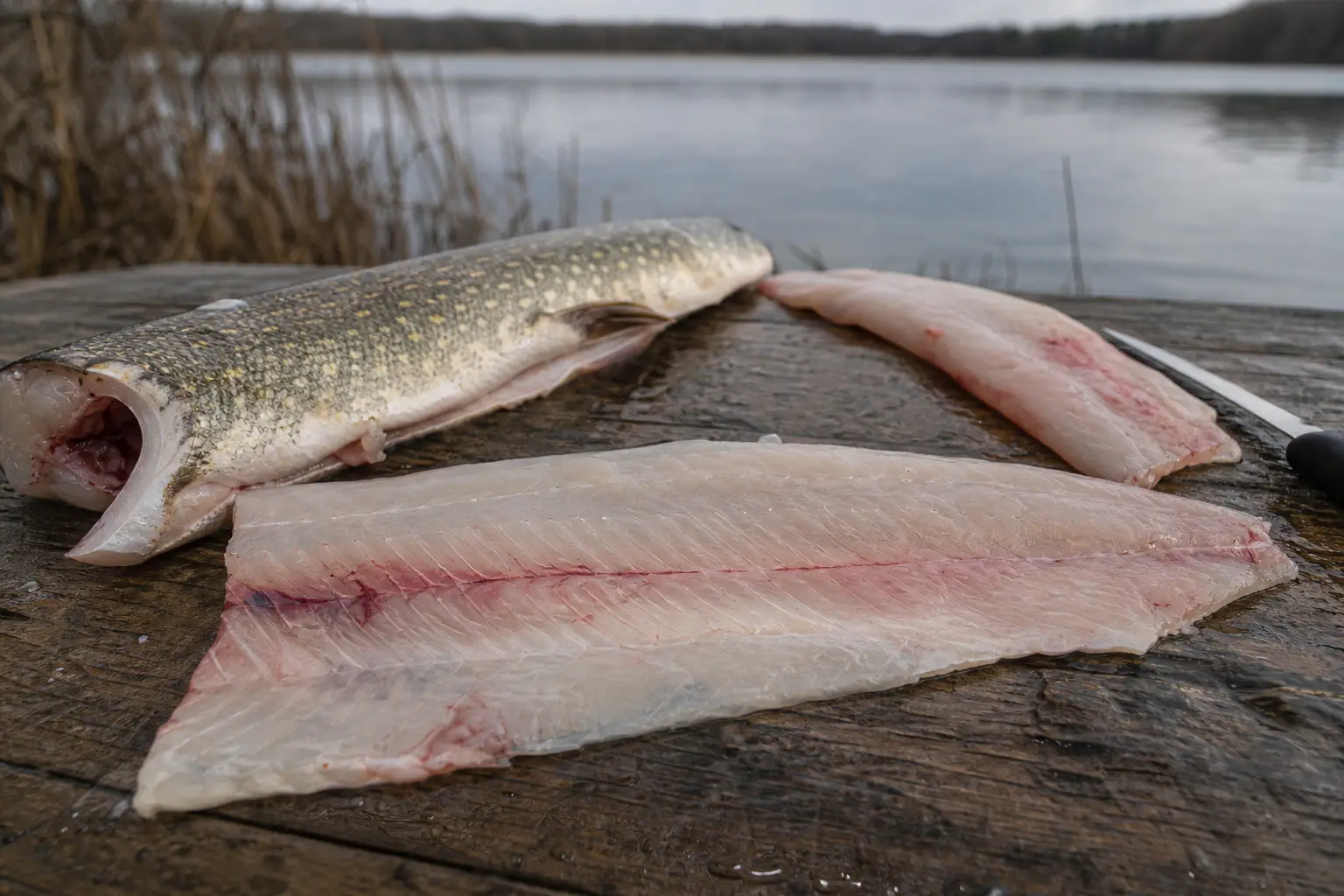
I caught my first northern pike on a spinnerbait I had no business throwing, in a weedy little bay on a lake I fished wrong for years. I was twenty, all confidence, and I treated that fish the same way I treated everything back then: fast and loose. I filleted it the way I’d filleted maybe forty bluegill and half a dozen bass, and I sat down that night to a plate of fried pike that nearly broke a tooth. I bit down on a bone I didn’t know was there, and that bone is still the moment I started to learn that some fish will not be rushed.
The Fish That Punched Back
Northern pike are mean, fast, and plenty willing to bite a lure twice their head size. That part I loved. What I didn’t know is that a pike carries a row of bones inside him that a bass or a bluegill simply doesn’t have. They’re called Y-bones, because each one forks like a letter Y laying on its side, and they run along the top of the fillet in a line that’s easy to miss if nobody ever showed you. Nobody ever showed me. My old man was a panfish and walleye guy. He thought pike were trash fish, all slime and bones, and he passed that down to me without ever putting a knife to one.
The first fillet I cut came off clean enough. I was proud of it, actually. I breaded it, dropped it in hot oil, and I can still hear the pop-bone sound my back tooth made. I reached into my mouth and pulled out two thin white slivers that looked like toothpicks somebody had snapped. My girlfriend at the time looked at me and said, “You sure you know what you’re doing?” I did not. I’d filleted a fish that needed a different knife and a different plan, and I did it blind.
Why the Y-Bone Hides
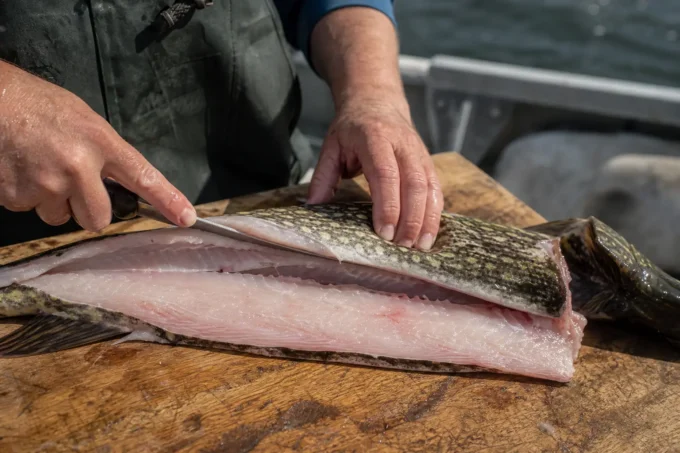
Here’s the thing I couldn’t get around for a while: a pike fillet actually contains the Y-bones, and you have to cut them out. On a bass, the ribs run along the belly and you just lift them out. On a pike, there’s a second line of forked bones up near the spine, and if you slice a normal fillet straight through, you carry those bones right onto the plate. The fish didn’t do anything wrong. I read later that a pike can live past twenty years and grow long enough that a grown man has to stretch both arms out to hold it, and some part of me just wanted to respect that by doing the job right instead of fast.
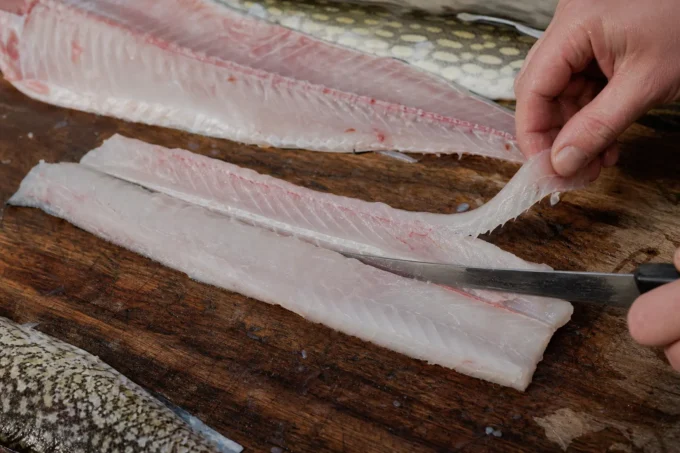
So I looked up how to get the Y-bones out, and most instructions made it sound worse than it was. The honest truth is it’s a five-cut job once you see it once. You fillet the pike like normal, skin side down. Then you run your finger down the top of the fillet and you can feel the bone line. You cut along one side of that ridge, then along the other, then you lift the strip out, and what you’re left with is bone-free clean white meat that a walleye fisherman would pay good money for. The first time I got it right, I couldn’t believe I’d avoided pike for years because of two extra passes with a knife.
The Fish I Threw Away Came Back
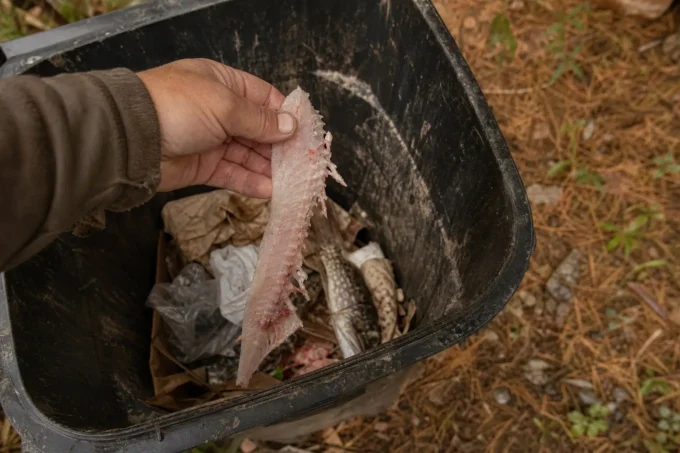
The bad part is what I did before I learned all that. That first pike, the one I bit bone out of, ended up half-eaten and half in the trash because I was embarrassed and didn’t want to pick through a plate of my own sloppy work. I remember scraping it into the bin and telling myself it was no loss, it’s just a trash fish, my old man would’ve done the same. That was the real dumb part, not the bones. I killed a healthy fish and then wasted good meat because I was too proud to finish the job I started. A pike that size would have fed two people if I’d only slowed down and done it right the first time.
It took me a couple years and a lot of trout and bass that didn’t fight back nearly as hard to come around. But pike kept showing up, and the more I caught them, the more I noticed they were everywhere I already fished, just sitting there under the weeds waiting for a man to stop treating them like a mistake. Now I honestly think a clean pike fillet eats as well as any walleye I’ve ever brought home, and it flushes out in the pan so white it looks store-bought. I just had to stop blaming the fish for my own hurry.
What I Do Now
When I clean a pike now, I do it the slow way and I don’t apologize for it. Sharp fillet knife, a board that doesn’t slide, and I feel for the bone line with my finger before I ever make the second cut. I keep a pair of needle-nose pliers in the tackle bucket anyway, because even a careful man leaves a bone sometimes and the pliers make short work of it at the table instead of in my teeth. And I make sure there’s enough oil hot before the fish goes in, because a pike fillet that stews in lukewarm grease is nobody’s favorite meal.
My old man never did change his mind about pike, and I don’t push it. But last spring I fried a mess of pike fingers for a fish fry, battered light with a little cayenne, and my nephew asked what kind of fish it was and then went back for thirds before I could answer. That’s about as good as it gets. The bones were in the bucket, not on the plate, and the fish that used to embarrass me had become the one I brag about.
If you’ve never kept a pike because somebody told you they’re trash, that advice probably came from a man who filleted one wrong, bit a bone, and blamed the fish. I know because I was that man. Y-bones aren’t a reason to throw the fish back. They’re just a two-minute job you learn once, and after that the only thing standing between you and a good meal is whether you’re willing to slow down and do it right.