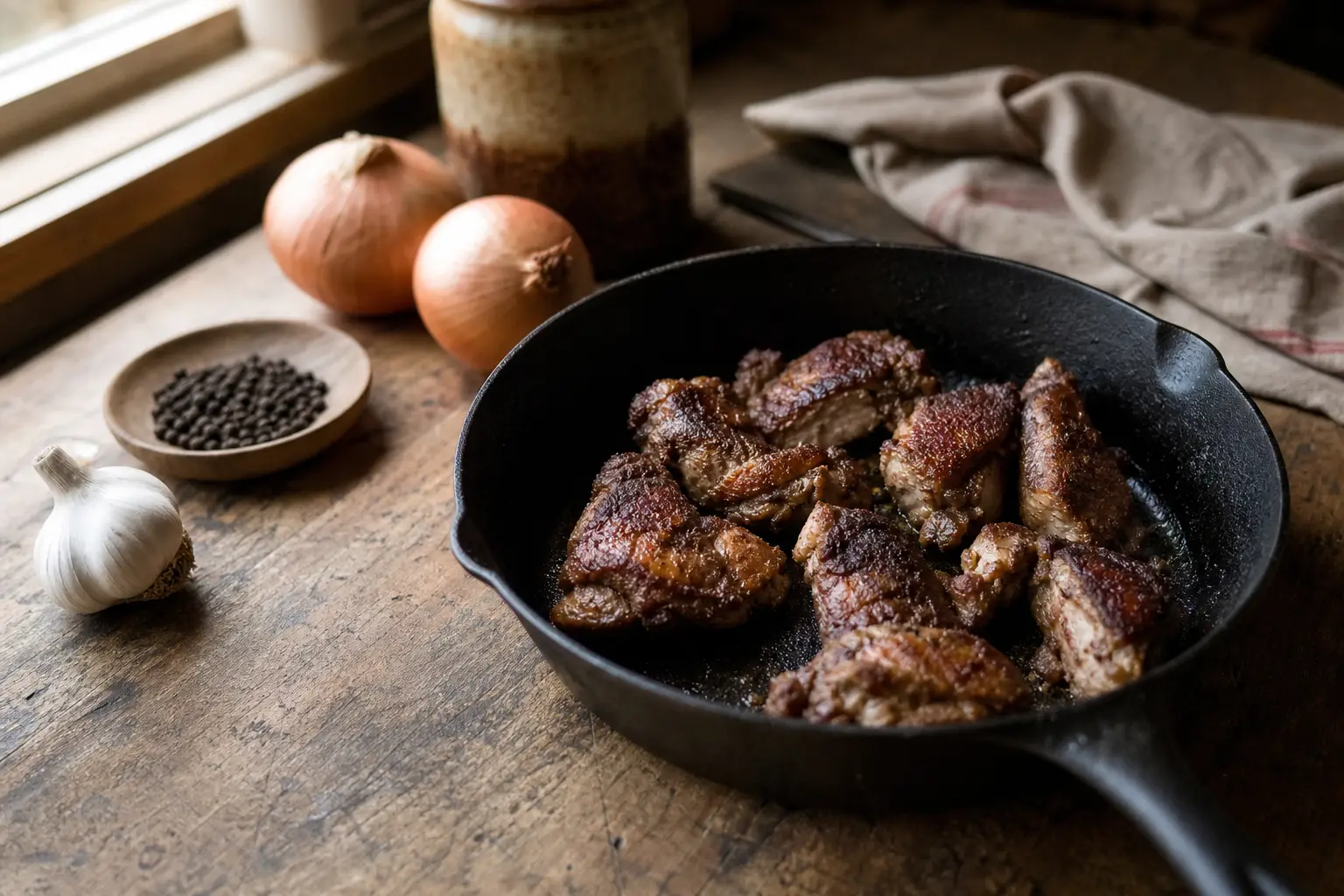
The first squirrel I ever cooked I cooked like chicken, because I was twenty-two and I figured meat was meat. I skinned a fat gray fox squirrel out of the hickory flat behind my uncle’s place, cut it into pieces the way you’d break down a fryer, dusted it in flour and dropped it in a skillet of hot grease like I was going to make Sunday dinner out of a bird. Forty minutes later I sat down to a plate of what I can only describe as boot leather with teeth in it. Every piece fought back. The grease had turned it hard as cedar shake, and the gravy I’d poured over the top out of guilt just sat there on the surface like oil on a rock. I ate maybe half of it because I was too stubborn to admit the whole thing, and I privately decided squirrel was trash meat, food for people with no better options and no shame.
That was the dumbest conclusion I have ever drawn about a wild animal, and I held onto it for almost ten years, which tells you exactly the kind of man I was.
The Problem Was Never the Squirrel
Here’s the thing about a squirrel that nobody on the cooking shows ever bothers to say, because it doesn’t make for a pretty television segment: a squirrel is not a bird, and it sure as hell is not a chicken. A squirrel spends its whole life climbing and leaping and ripping apart hickory hulls with its front teeth, which means every ounce of meat on it is dense, dark, and strung through with connective tissue. The hind legs especially, which is where most of the meat lives, are solid red muscle with almost no fat to speak of. Squirrel is leaner than rabbit and tougher than a boot hefted forty yards across a pasture. If you cook a young squirrel hot and fast, you’ll get something edible by accident maybe one time in ten. If you cook an old boar squirrel hot and fast, you might as well make a box for the bird and nail it shut.
The way you cook squirrel is the way my great-uncle Amos cooked it, and the way every old-timer between the Appalachians and the Ozarks cooked it before anybody had a stove with a temperature dial: low and slow, in liquid, until the meat lets go. You braise it. You simmer it. You boil it down to where the meat falls off the bone on its own and the toughness — all that connective tissue I was cursing — melts into one of the richest, most honest gravies a man will ever pour over a biscuit. The thing I’d been frying into garbage was, cooked right, the whole reason people made dumplings.
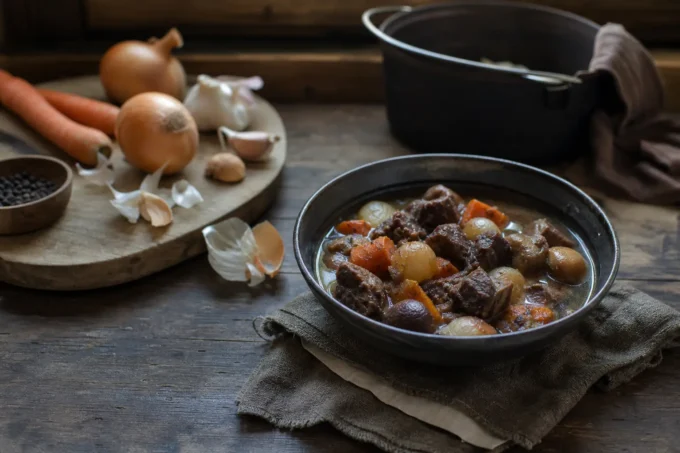
Squirrel and Dumplings, the Only Way That Matters
I’m going to give you the recipe the way it was taught to me by a man who’d eaten it every week of his life and never once called it by a fancier name than “squirrel,” because it didn’t need one. This is not fussy food. This is fallen-to-the-bottom-of-the-pot food, and that’s a compliment.
- Skin the squirrels clean and cut each one into pieces. Keep the hind legs whole if you can, because that’s the good meat, and drop the rest in too. Two gray squirrels will feed a hungry man; three will feed him and a kid.
- Brown the pieces in a little bacon grease in the bottom of a heavy pot. You’re not cooking them here, just getting color and the bottom crust that’ll make the gravy.
- Cover the meat with water or weak broth, drop in a quartered onion, a good pinch of salt, and plenty of black pepper, and clamp a lid on.
- Keep it at a bare simmer for an hour and a half to two hours, until the meat is about to fall off the bone. Not a rolling boil — a simmer, so quiet you only know it’s working because steam leaks out around the lid.
- Make a simple biscuit dough, drop it by spoonfuls on top of the simmering meat, cover tight, and let those dumplings steam about twelve minutes without lifting the lid.
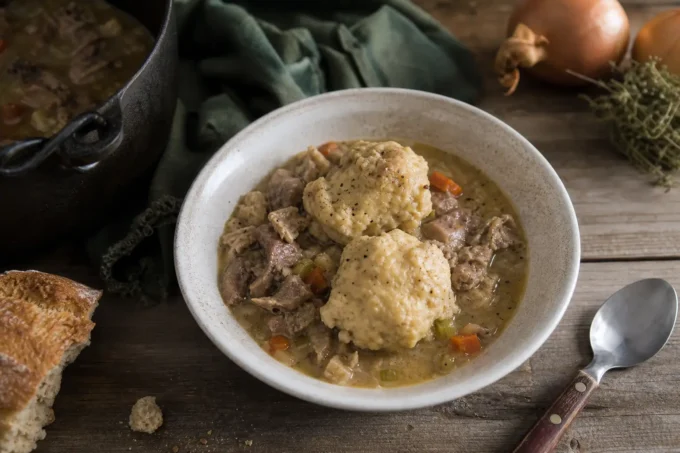
What comes out is squirrel so tender it separates at the touch of a fork, swimming in a thin brown gravy that tastes like the woods and the hickory and everything a store-bought chicken will never taste like, with dumplings sopped down into it. The meat is dark and a little sweet, nothing like the shoe leather I made at twenty-two, and I’d put a plate of it up against any chicken-and-dumplings this side of Tennessee. Not that it’s a contest. They’re two different animals and two different meals, and if you cook them both the same way you’re doing one of them wrong.
What It Actually Tastes Like
If you’ve never had it, squirrel cooked right lands somewhere between dark-meat chicken and rabbit, only wilder and with more of a spine to it. There’s a nutty undertone to a fall squirrel that’s been living on hickory and acorn and black walnut, and the more of that mast the squirrel got into before you shot it, the better the pot is going to smell while it simmers. The young ones, the ones with gray-tipped fur and meat that’s pale and soft under the skin, are tender enough to come close to frying well. The big old boars — the ones with the scarred ears and the heavy front shoulders and testicles you can spot from across a branch — you do not fry those. You simmer those. You simmer them until they give up, and then you thank them for it.
Why I Was Such a Fool About It
I tell this story with my own face burning a little, because the truth is I didn’t ruin that first squirrel because I didn’t know how to cook it. I ruined it because I went into the whole thing half-convinced squirrel was beneath me. I’d grown up hearing it called “tree chicken” and “poor folks’ meat” and laughing at the idea that anybody would set out for the woods on purpose to kill something you could buy in frozen four-packs at the gas station for three dollars. I cooked it like chicken because I couldn’t be bothered to find out what it actually was, and when it turned out bad, I used that as proof that I’d been right all along. The squirrel never stood a chance. The meat didn’t fail me. My own lazy, sneering certainty did.
And here’s the part that cuts a little deeper now that I’m older: I wasted that first squirrel. I skinned it, mangled it in a skillet, and threw half of it away because it was tough. A clean animal went into the trash because the man holding the knife was too proud to do it right. If you take an animal’s life, you owe it more than a half-hearted fry and a shrug. That’s not just cooking. That’s the whole point of the wild food thing, and it took me ten years and an old man’s pot of dumplings to understand it.
Practical Notes
- Check your state’s small game seasons and bag limits before you go. Squirrel is open in a lot of places when nothing else is, which is part of why it’s been feeding people so long, but the warden doesn’t care how honest your intentions are.
- Skin cold and skin soon. A warm squirrel is easier to skin than a cold one, but either way, pelting it fast keeps the meat clean and keeps hair off everything else in your kitchen.
- Old boars go in the pot, never the skillet. Braise or pressure-cook them and the toughness turns into your best meal of the week.
- Don’t throw away the front shoulders and ribs just because there’s less meat on them. Simmered down, they’re what makes the broth taste like something.
So now, every fall, when the hickories start dropping and the squirrels get to chattering like they own the timber, I take the twenty-two out and I come home with a game bag full of gray fur, and I cook them the slow way, the way they were meant to be cooked. And I don’t think of them as trash meat anymore. I think of them as one of the few wild things a working man can still walk out his own door and bring home with nothing but a rifle and a little patience, and turn into a supper good enough that his kids fight over the last dumpling. A man who won’t eat that because he’s too good for it probably never went hungry enough, or paid attention enough, to know what he was missing. More squirrels for the rest of us.